Da Vito Ristorante
Our verdict
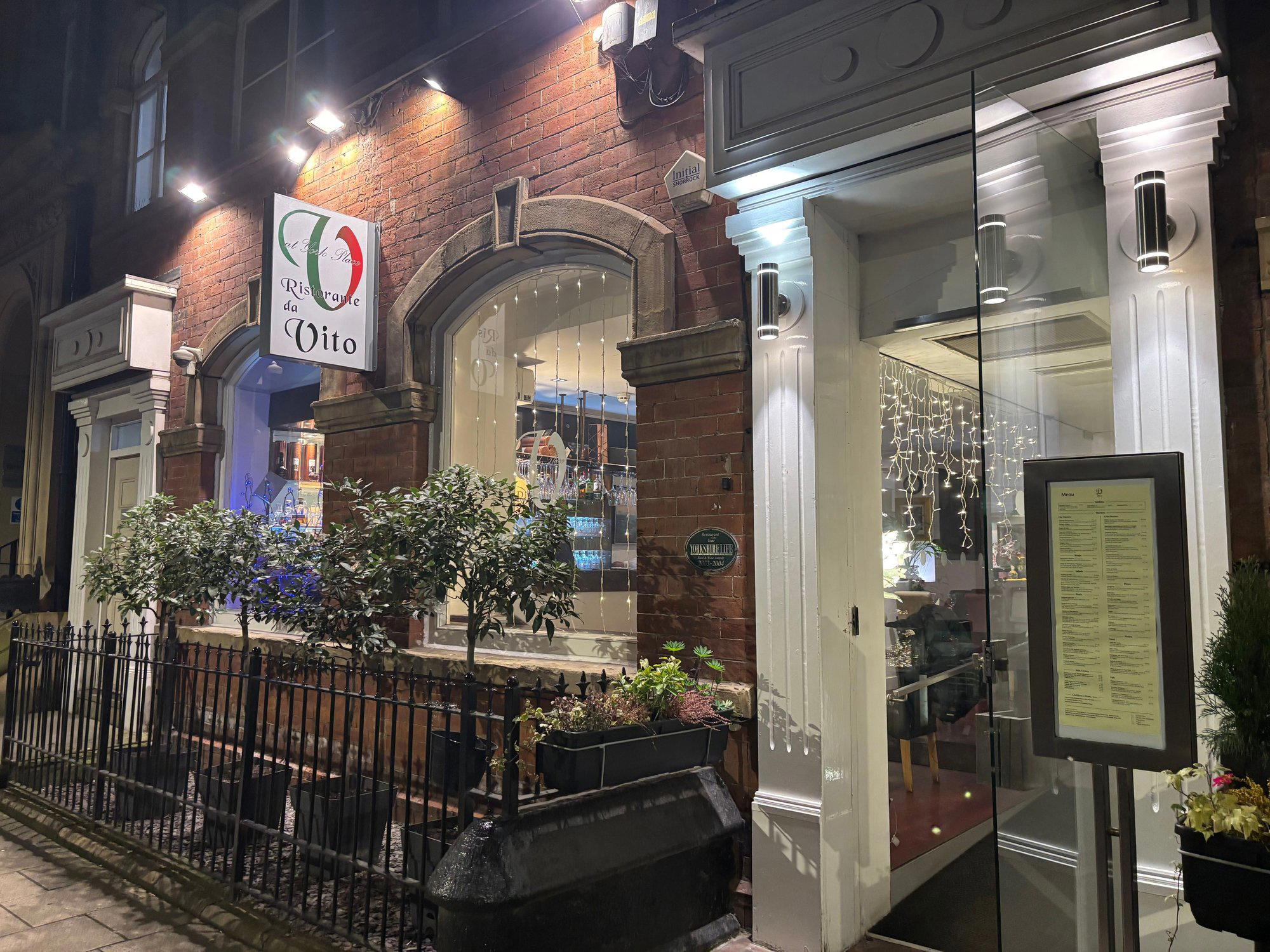
Da Vito Ristorante serves authentic Italian trattoria cooking at 3 York Pl, with pesto trofie, pizza, tiramisu, and an extensive wine list.

Pearl is the En Primeur Club membership app, where members save venues, book tables and use the concierge.
The menu
What to order
- Braised Lamb Shank with Parmesan Mash
- Tagliolini alla Pescatora
- Tagliolini ai Due Salmoni
- Calamari
- Carbonara
Italian Cooking and the Question of Provenance on the Leeds Plate
York Place cuts through the financial district of Leeds city centre with the kind of quiet confidence that distinguishes working professional streets from tourist thoroughfares. The buildings here are Georgian and Victorian in character, their stone facades carrying the accumulated weight of civic seriousness. It is an address that frames expectations before a door is opened, and Da Vito Ristorante, at number 3, sits within that frame. The setting places it among a tier of Leeds restaurants that serve a lunchtime and evening clientele drawn from the surrounding offices and law chambers, a crowd that tends to know what it wants and has the context to judge whether it gets it.
Italian cooking in northern English cities has undergone a sustained re-evaluation over the past decade. The red-sauce trattoria model that dominated high streets through the 1980s and 1990s has largely given way to a more differentiated field: regional Italian menus that distinguish between Neapolitan, Roman, Sicilian, and northern traditions; wine lists that treat the peninsula’s appellations with the same seriousness once reserved for French regions; and kitchens that increasingly make the source of their ingredients a central editorial point. Da Vito operates within this evolved context, and its position on York Place signals an alignment with the professional-dining tier of the Leeds restaurant market rather than the casual-Italian bracket.
What Ingredient Sourcing Tells You About a Kitchen
The ingredient sourcing question is the most reliable proxy for kitchen philosophy that a diner has. In Italian cooking specifically, it cuts to the core of what the tradition actually values. Pasta made from single-origin semolina behaves differently at the table from commodity flour. San Marzano tomatoes grown in volcanic Campanian soil carry an acid-sugar balance that industrial equivalents do not replicate. Aged Parmigiano-Reggiano from a named producer consortium communicates through texture and depth in ways that block Parmesan cannot approximate. These distinctions are not ornamental; they are structural, and they determine whether a dish reads as Italian cooking or merely Italian-themed cooking.
The broader pattern in Italian restaurants that take sourcing seriously is a menu that contracts rather than expands. Fewer dishes, executed with more precision on better raw material, is the house logic. This positions a restaurant differently from the broad-menu operators that have historically dominated the Italian segment in UK cities. Leeds has seen this shift play out across its dining scene over the past several years, with a number of operators moving toward tighter, more market-responsive menus. For Italian-format restaurants in the city, the comparison set now includes venues that draw their identity from what arrives at the back door as much as from what leaves the kitchen pass.
Leeds’ dining scene as a whole has grown significantly more differentiated. Arusuvai brings South Indian cooking to a city that has traditionally indexed heavily on South Asian breadth rather than regional specificity. Dastaan Leeds operates at the more considered end of the subcontinental spectrum. Casa Susanna applies a similar regional seriousness to Mexican cooking. The pattern across these operators is consistent: less breadth, more depth, sourcing made legible to the diner. Da Vito sits within this pattern at the Italian end.
The York Place Address and What It Signals
Location in Leeds says something about target clientele and, by extension, about price positioning and service register. The city centre’s restaurant geography has a clear logic: the waterfront and South Bank attract a younger, more casual demographic; the Victoria Quarter and surrounding streets draw a retail-and-leisure crowd; the financial and legal district around Park Row and York Place feeds a lunch trade and pre-theatre dinner trade oriented toward the professional sector. A restaurant at 3 York Place is not fishing for the spontaneous weekend walk-in; it is positioned for the lunch booking made that morning and the dinner reservation placed a week ahead.
This has implications for how the kitchen plans. A professional-district clientele tends toward predictable weekly rhythms, which allows for tighter purchasing patterns and reduces the waste that makes sourcing from premium suppliers economically difficult. It is the structural reason why this kind of address often supports better ingredient procurement than a higher-traffic tourist location, even at comparable price points.
For context on what formal dining in the UK’s broader market looks like at its upper registers, venues like L’Enclume in Cartmel, Moor Hall in Aughton, and CORE by Clare Smyth in London have made ingredient provenance a central part of their public-facing identity, a position that was once considered precious and is now read as a baseline marker of seriousness. Le Manoir aux Quat’Saisons in Oxford built this into its model before the conversation became mainstream. The diffusion of that logic down through the market is what gives a city-centre Italian restaurant in Leeds the framework to make similar claims credibly.
Leeds Dining in 2024: Where Italian Fits
The Italian segment in Leeds does not have the equivalent of the sharp competitive differentiation visible in, say, the city’s Indian or contemporary European categories. That makes clarity of positioning more valuable, not less. A restaurant that knows precisely what it is, where its produce comes from, and which tier of the market it occupies can hold a consistent identity in a way that generalist operators struggle to. emba and Eat Your Greens represent the more exploratory, plant-forward end of the Leeds dining conversation; Da Vito sits at a different point on the axis, grounded in classical Italian format.
Internationally, the template for Italian cooking that takes its sourcing seriously has been set in cities like New York, where Le Bernardin demonstrated that rigorous ingredient procurement could anchor a flagship dining identity for decades, and Atomix has shown how the same logic translates into Korean fine dining at the highest level. The principle transfers across traditions: start with the leading possible raw material, then step back. Closer to home, Midsummer House in Cambridge and Opheem in Birmingham apply comparable discipline in their respective categories. Da Vito’s proposition, in the Italian category in Leeds, draws on the same underlying logic.
Planning Your Visit
Da Vito Ristorante is located at 3 York Place, Leeds LS1 2DR, within a short walk of Leeds railway station and the city’s central business district. The York Place address is direct to reach on foot from the station in under ten minutes. Given the professional-district positioning and the nature of a focused Italian kitchen, booking in advance is the prudent approach, particularly for weekday lunches when the surrounding office demand is at its highest. For a broader map of where Da Vito fits among the city’s Italian and European options, our full Leeds restaurants guide provides comparative context across categories and price tiers.
Frequently asked questions
What part of town is Da Vito Ristorante in?
Da Vito Ristorante is located at 3 York Pl, Leeds LS1 2DR, United Kingdom, Leeds.
Does Da Vito Ristorante suit a business lunch in Leeds city centre?
The York Place address places Da Vito Ristorante directly inside Leeds' financial and legal district, within walking distance of the city's major commercial offices and Leeds railway station at LS1 2DR. Italian restaurants in this corridor consistently serve a professional midday trade, making the format well-suited to working lunches where a structured, course-based meal is preferable to a casual setting.
What dish is Da Vito Ristorante famous for?
Italian restaurants on York Place in Leeds tend to anchor their menus around pasta and regional secondi, and a conversation with the front-of-house team at 3 York Place will give you the clearest picture of what the kitchen considers its centrepiece dishes on any given service.
Can I walk in to Da Vito Ristorante?
Walk-in policy at Da Vito Ristorante has not been formally documented. Given the York Place address in Leeds city centre, the restaurant draws a lunchtime professional crowd alongside evening diners, which can create pressure on covers during peak periods. Contacting the restaurant directly before arriving is the safest approach.
What has Da Vito Ristorante built its reputation on?
Da Vito Ristorante occupies a considered address at 3 York Place, within the Leeds financial district, which points to a clientele that expects consistent, serious Italian cooking rather than novelty. Italian restaurants that sustain themselves in this kind of city-centre professional corridor typically build reputation through reliable execution and service register rather than seasonal reinvention.
What if I have allergies at Da Vito Ristorante?
Specific allergen information for Da Vito Ristorante's menu is not catalogued here. Under UK food regulations, all restaurants are legally required to provide allergen information on request, so raising your requirements directly with the team at 3 York Place, Leeds LS1 2DR before or on arrival is both your right and the most reliable course of action.
Is a meal at Da Vito Ristorante worth the investment?
Italian restaurants in the Leeds city centre financial district generally price at a mid-to-upper level reflecting location costs and professional clientele expectations. The York Place address signals a certain seriousness of intent, and cross-referencing current diner reviews will give you the most accurate read on current value.
In Context: Similar Options
Comparable venues nearby, for context on price, style, and recognition.
| Venue | Cuisine | Price | Awards | Notes |
|---|---|---|---|---|
| Da Vito RistoranteThis venue (the venue you are viewing) | Traditional Italian | $20–30 | Not listed | Not listed |
| Kendells Bistro | Classic French Bistro | $30–50 | Not listed | Quarry Hill |
| Zucco | Modern Italian Small Plates | $30–50 | The Good Food Guide GFG Good | Meanwood |
| Salvo's | Contemporary Southern Italian | Not listed | Not listed | Headingley |
| The Swine Bistro | Modern British Bistro | $30–50 | SquareMeal UK Top 100 Restaurants #57 | Headingley |
| Eat Your Greens | Organic Seasonal European | $20–30 | The Good Food Guide GFG Good | Leeds City Centre |
Continue exploring
More in Leeds
Restaurants in Leeds
All restaurants in Leeds →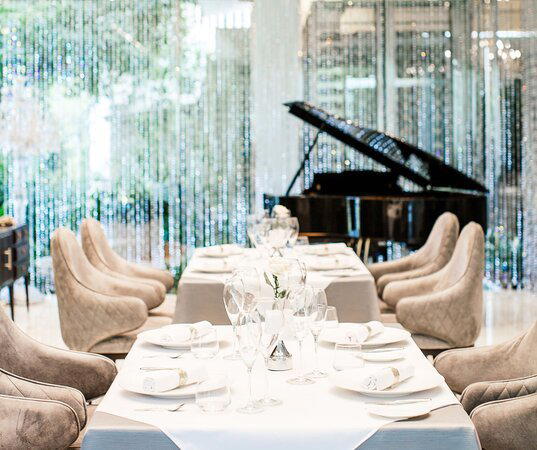


Details
- Cozy
- Classic
- Group Dining
- Family
- Celebration
- Casual Hangout
- Standalone
- Extensive Wine List
- Local Sourcing
- A La Carte
- Wine
- Vegetarian Friendly
- Vegan Options
- Gluten Free Options
Current opening hours
- Monday
- Closed
- Tuesday
- 12–2:30 PM, 5–9:30 PM
- Wednesday
- 12–2:30 PM, 5–9:30 PM
- Thursday
- 12–2:30 PM, 5–9:30 PM
- Friday
- 12–2:30 PM, 5–9:30 PM
- Saturday
- 12–2:30 PM, 5–9:30 PM
- Sunday
- Closed
Hours can change for holidays and private events. Hours as of .
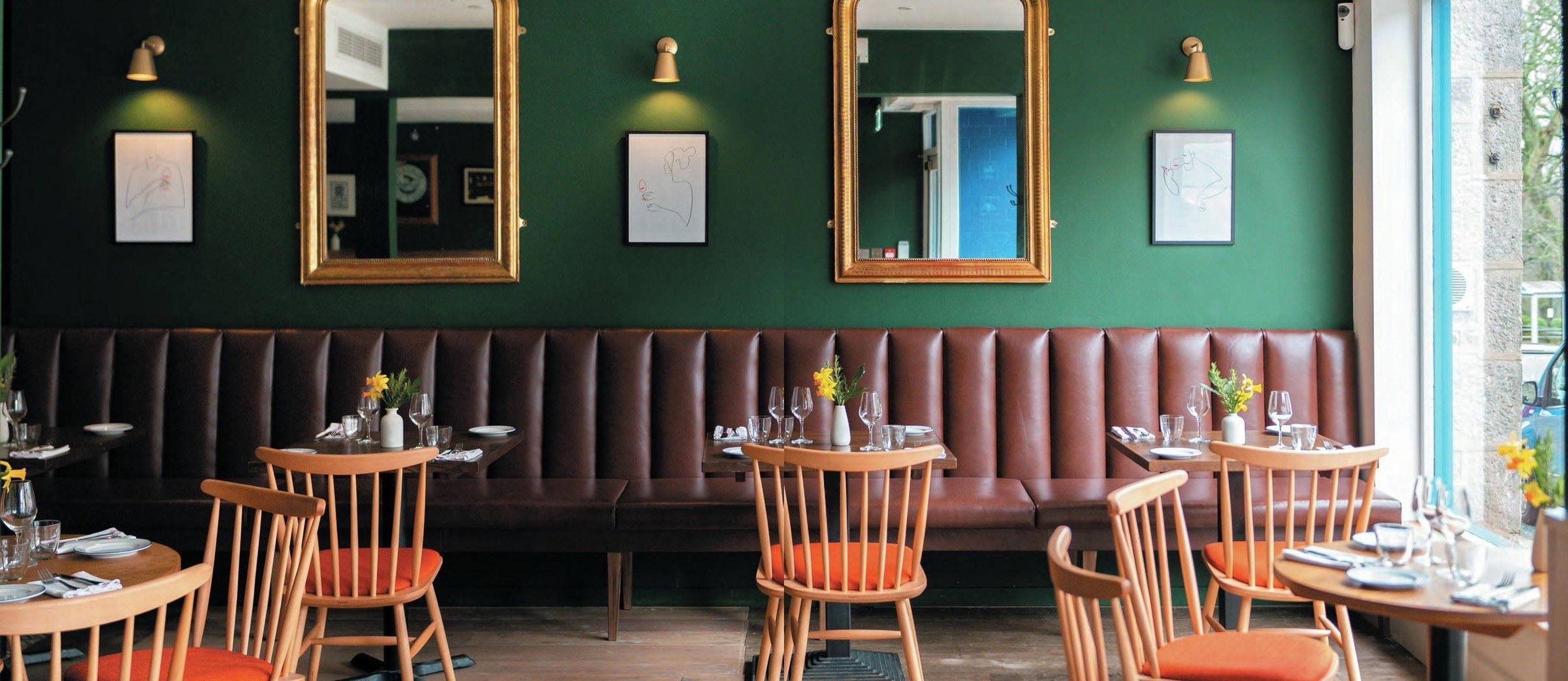
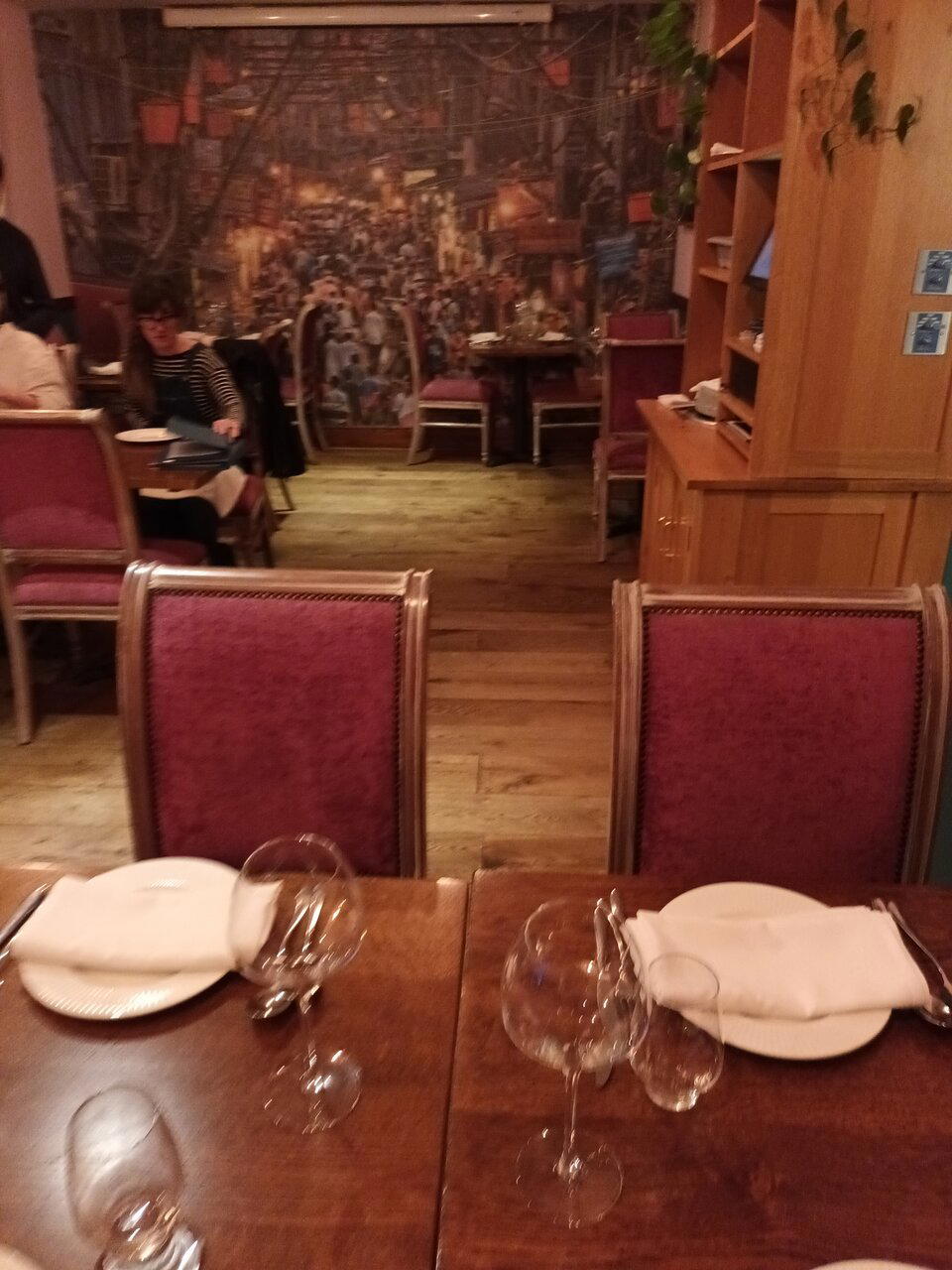
Warm, cosy, family-run Italian dining with soft twinkling lights and a friendly, relaxed atmosphere.