Box Tree


Established in 1962 within a pair of 18th-century sandstone cottages on Church Street, Box Tree is Ilkley's most formally ambitious restaurant. A 2024 kitchen overhaul under chef Brayden Davies has shifted the format toward a modern no-choice tasting menu, while the antique-furnished dining rooms and tableside saucing keep the occasion firmly in special-event territory. Two wine flight options accompany the food, and the cocktail programme is among the strongest in West Yorkshire.
Pearl is the En Primeur Club membership app — saves, bookings, and concierge access live there. Same editors, same standards.
- Address
- 35-37 Church St, Ilkley LS29 9DR, United Kingdom
- Phone
- +44 1943 608484
- Website
- theboxtree.co.uk
- Directions
- Get directions
 Saves & bookings on Pearl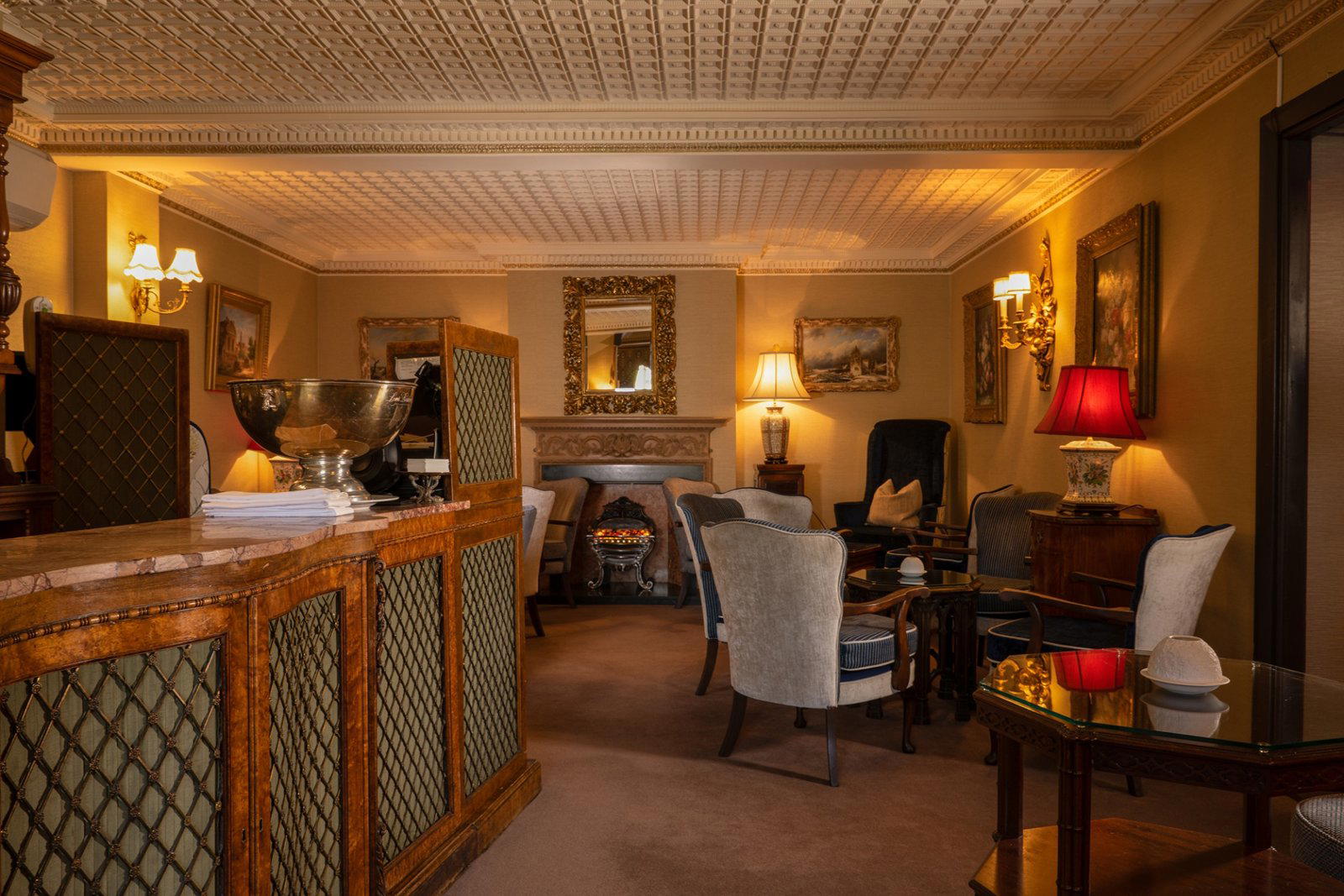
A Grand House Relearning Its Ambition
The sandstone cottages at 35-37 Church Street have been staging formal dinners since 1962, which makes Box Tree one of the longer-running fine-dining addresses in Yorkshire. That longevity counts for something in a country where destination restaurants tend to cluster around cities, and where rural fine dining has, for much of the past two decades, meant either a hotel dining room or a gastropub conversion. Box Tree belongs to neither category. It arrived as a full-blown French-accented restaurant at a time when that meant white gloves, silver service, and a room full of porcelain ornamentation, and it has spent the decades since deciding how much of that inheritance to keep.
The answer, since early 2024, is: some of it. The porcelain dogs still stand at the door. The fireplaces, the curtains, the heavy carpeting, all present. But white-gloved service is gone, replaced by a modern tasting menu format and a kitchen headed by Brayden Davies, who came up through Grantley Hall and Northcote before arriving in Ilkley. This is the pattern that has reshaped the higher end of British dining outside the capital: kitchens with serious pedigree, housed in rooms with historical weight, reorienting toward a contemporary no-choice format without abandoning the occasion-dining register entirely.
For broader context on where this sits in the national conversation around tasting-menu-led dining, venues like L'Enclume in Cartmel and Moor Hall in Aughton have defined what northern England can do at the highest tier. Box Tree operates a step below that recognition level but shares the same structural logic: a single tasting menu, formal service, and a room that asks something of the diner as well as the kitchen.
The Room Before the Food
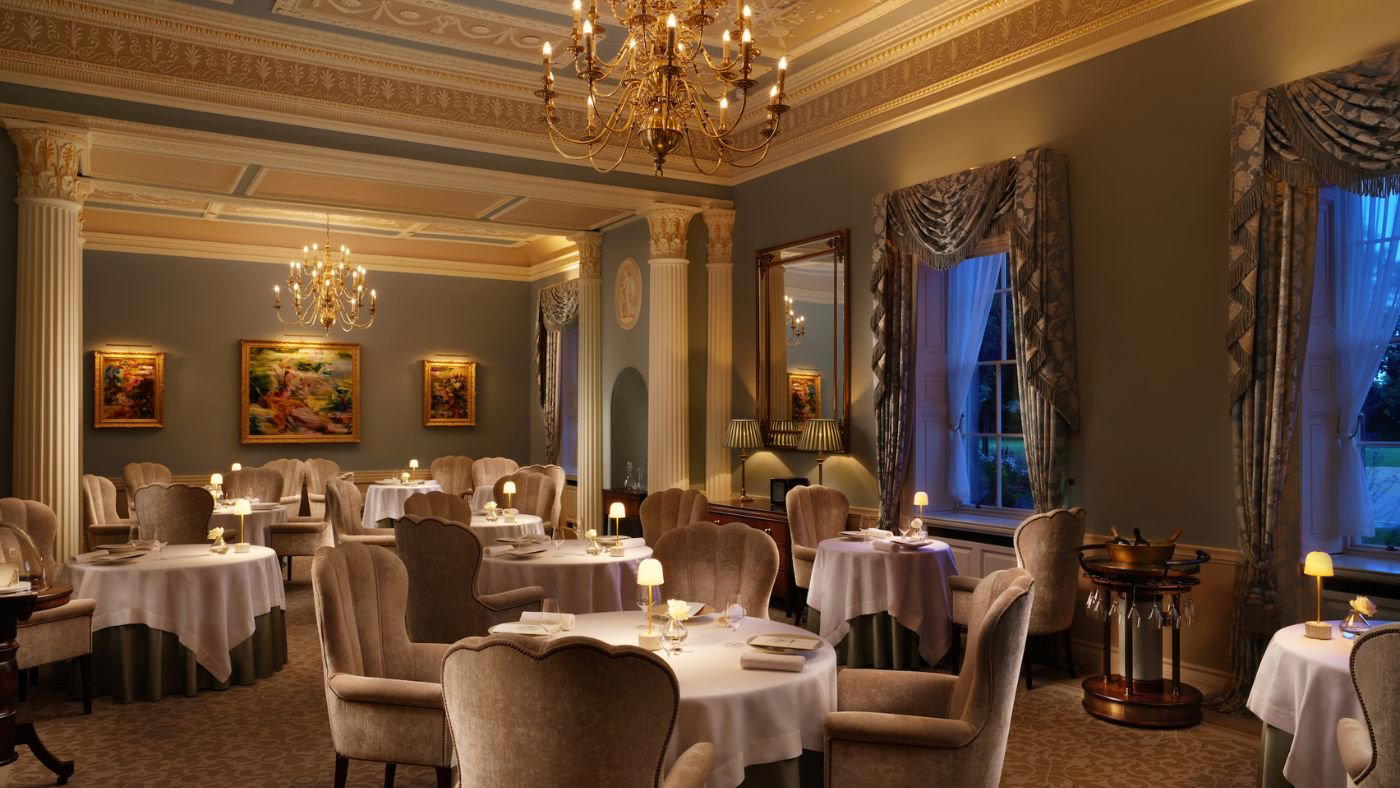
Approaching Box Tree along Church Street, the building reads as a domestic scale interruption in a row of Georgian and Victorian frontages, two conjoined cottages rather than a purpose-built restaurant premises. That domesticity is part of the point. Inside, the plush antique-furnished lounge functions as a holding space for pre-dinner cocktails, and the two dining rooms are set at a formality that most British restaurants outside London abandoned twenty years ago. Tableside saucing, a long-serving general manager who provides a genuinely warm welcome, and a room where dressing up remains the correct choice, these are signals that the format here is still built around occasion dining rather than the relaxed-but-expensive register that dominates much of the current premium British market.
That positioning places the restaurant in a specific and shrinking comparable set. Rooms at this level of decorative formality, outside London hotel dining rooms like The Ritz Restaurant, are rare. The question the kitchen has to answer is whether the food justifies the register, and for much of the current menu, it does.
What the Kitchen Is Doing Now
The no-choice tasting menu sits at about $115 per person, which in the context of West Yorkshire represents a significant ask. The format draws on a range of references that do not resolve neatly into a single culinary identity, which is itself a characteristic of contemporary British tasting menus, where the national larder is treated as a starting point rather than a constraint.
Among the dishes documented from the autumn menu: a chawanmushi made with 24-month aged Parmesan paired with onion consommé, agnolotti filled with Yorkshire ricotta and Amalfi lemon in a whey sauce, and Irish langoustine with Yorkshire chorizo, pepper purée, and Australian finger lime on black rice. A dessert course built around raw milk ice cream, Ilkley Moor heather honey, bee pollen, and clarified milk tea poured tableside showed where the kitchen's instincts are sharpest: local provenance framed through technical precision rather than regional rusticity. That combination, local ingredient, international technique, is the grammar of modern British tasting menus from CORE by Clare Smyth through to Midsummer House in Cambridge, and the restaurant is now writing in the same language.
Not every dish in the sequence lands with equal conviction. The langoustine course in its current form reads as overly dense in both composition and richness, and a cheese-on-focaccia snack among the opening bites sits below the ambition level of the room. These are calibration issues rather than structural failures, the kind that new kitchen regimes typically resolve across their first full year of service.
Wine, Drinks, and the Question of Value
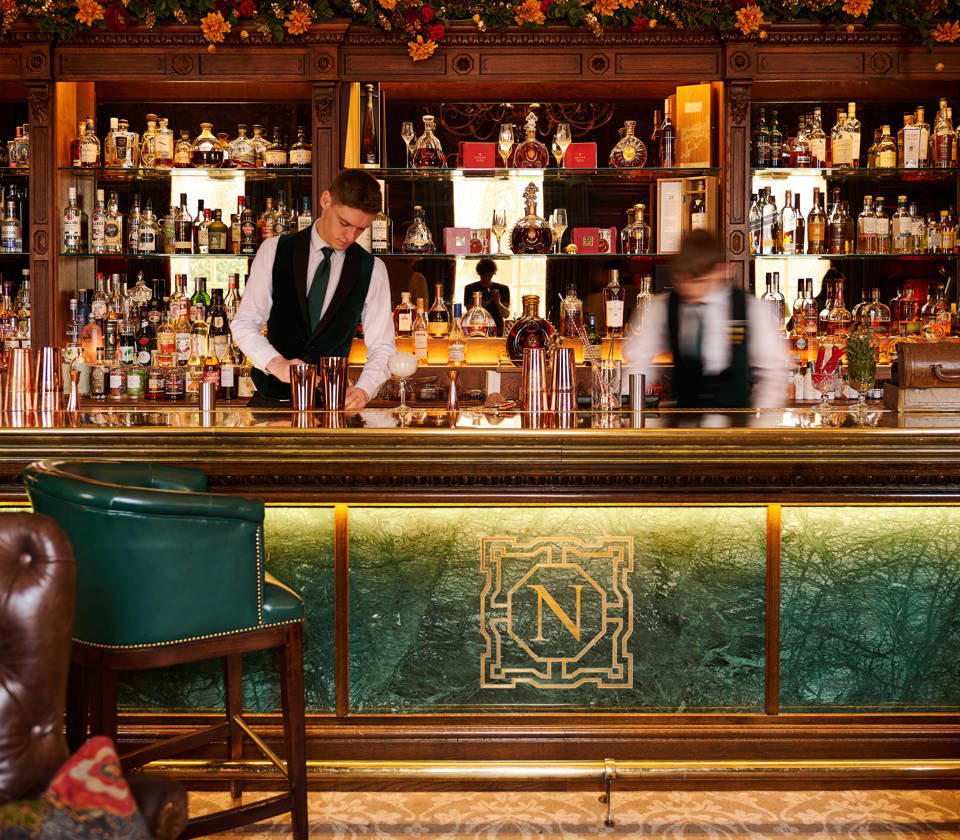
Two wine flight options are offered: a Sommelier's flight and a Premium flight, providing genuine tiering rather than the binary choice of pairing or nothing that many restaurants at this price point offer. The by-the-glass selection is narrower than the flights suggest it should be, which means the wine programme works better when committed to in full. Cocktails, by contrast, are among the stronger elements of the evening and worth treating as a genuine component of the meal rather than a preamble.
The Context: Rural Fine Dining After the Gastropub Era
The editorial angle that makes the restaurant worth understanding is not simply the individual restaurant, it is what the restaurant represents in the trajectory of high-end British dining outside London. The gastropub revolution of the early 2000s, exemplified by venues like Hand and Flowers in Marlow, democratised premium cooking by embedding it in accessible formats. What followed was a bifurcation: at one end, the casual-premium gastropub; at the other, a renewed confidence in formal occasion dining, exemplified by rooms like Gidleigh Park in Chagford and Restaurant Andrew Fairlie in Auchterarder. The restaurant's current reinvention places it in the latter category, a formal room with a modernised kitchen, repositioning itself against a national comparable set rather than against the Wharfedale dining scene alone.
The restaurant's history gives the current reinvention more weight than a direct new opening would have. The institutional memory is in the room: the fireplaces, the ornamental dogs, the long-serving front-of-house team. What has changed is the plate and the register of service, both now calibrated for 2024 rather than 1982. That gap between room and kitchen, being closed from the inside, is where the restaurant's current interest lies. Whether it consolidates into wider recognition will depend on how quickly the kitchen resolves the inconsistencies in the tasting menu sequence. The trajectory, as of early 2024, is upward.
Planning Your Visit
The restaurant sits at 35-37 Church Street in Ilkley, easily reached from Leeds by rail or road in under an hour. The ££££ price point and no-choice tasting menu format mean this is not a casual midweek decision, it is a reservation that warrants planning, and given the 2024 relaunch momentum, lead times are worth checking early. Two wine flight tiers give meaningful choice within the pairing format, and the cocktail programme makes arriving early worthwhile rather than purely functional.
A Quick Peer Check
Comparable venues nearby, for context on price, style, and recognition.
| Venue | Cuisine | Price | Awards | Notes |
|---|---|---|---|---|
| Box TreeThis venue — the venue you are viewing | Modern British Fine Dining | $$$$ | Michelin Plate | Not listed |
| Arras | Modern British Fine Dining | $$$ | Michelin Plate | Central York |
| Rebel | Modern British Fine Dining | $$$ | Michelin Plate | Heaton |
| Faru | Modern British Tasting Menu | $$$$ | Michelin Plate | Durham City Centre |
| Hearth at Heckfield Place | Open-Fire Farm-to-Table | $$$$ | Not listed | Heckfield |
| Old Vicarage | Modern British Fine Dining | $$$$ | Michelin Plate | Ridgeway |
Recognition history
Dated appearances from independent guides and award organizations, with the underlying list record or original source where available.
AA Rosettes 3 Rosettes
AA Rosettes
Michelin Plate
Michelin
Michelin Plate
Michelin
The Good Food Guide GFG Good
The Good Food Guide
At a Glance
- Elegant
- Classic
- Intimate
- Sophisticated
- Special Occasion
- Date Night
- Celebration
- Historic Building
- Extensive Wine List
- Sommelier Led
- Local Sourcing
Current opening hours
- Monday
- Closed
- Tuesday
- Closed
- Wednesday
- 6–7:30 PM
- Thursday
- 6–7:30 PM
- Friday
- 12–1:30 PM, 6–8 PM
- Saturday
- 12–1:30 PM, 6–8 PM
- Sunday
- 12–2:30 PM
Hours can change for holidays and private events. Last verified .
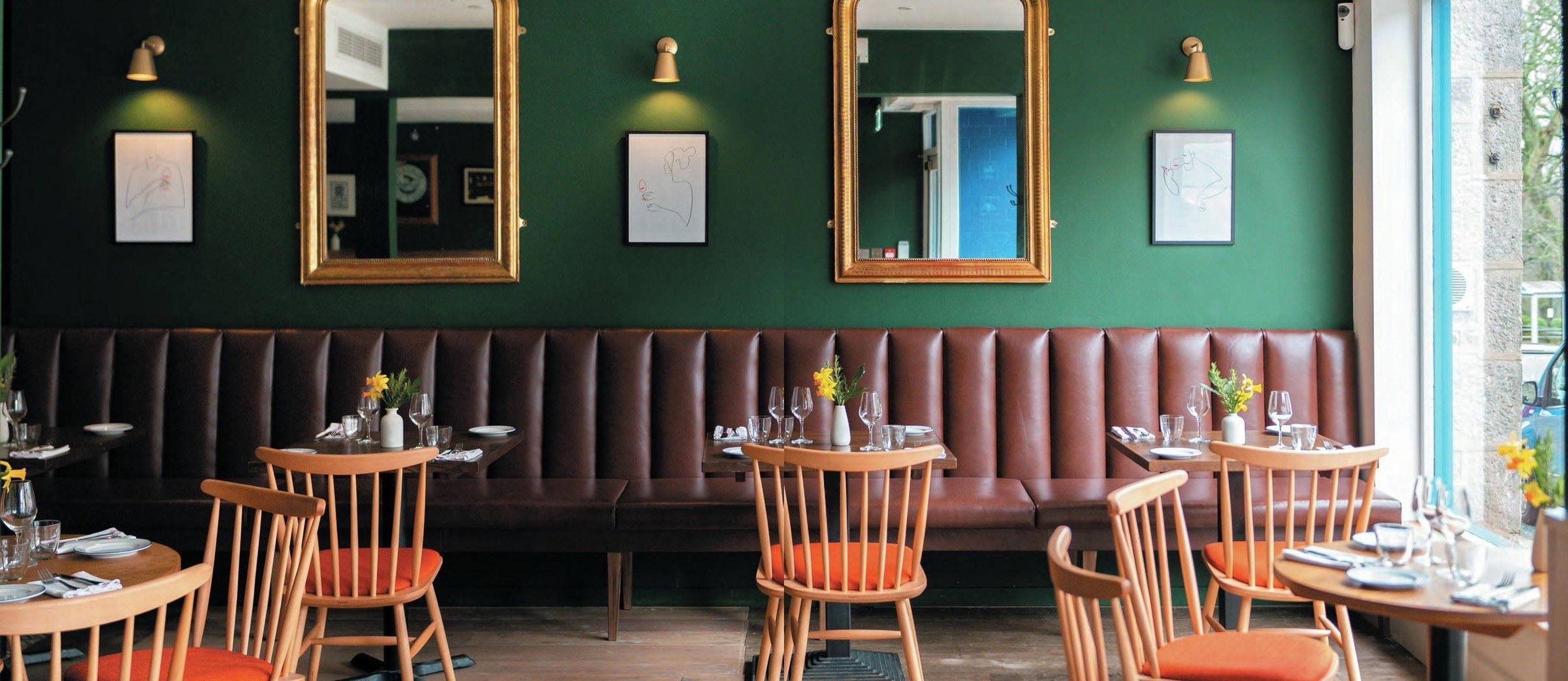
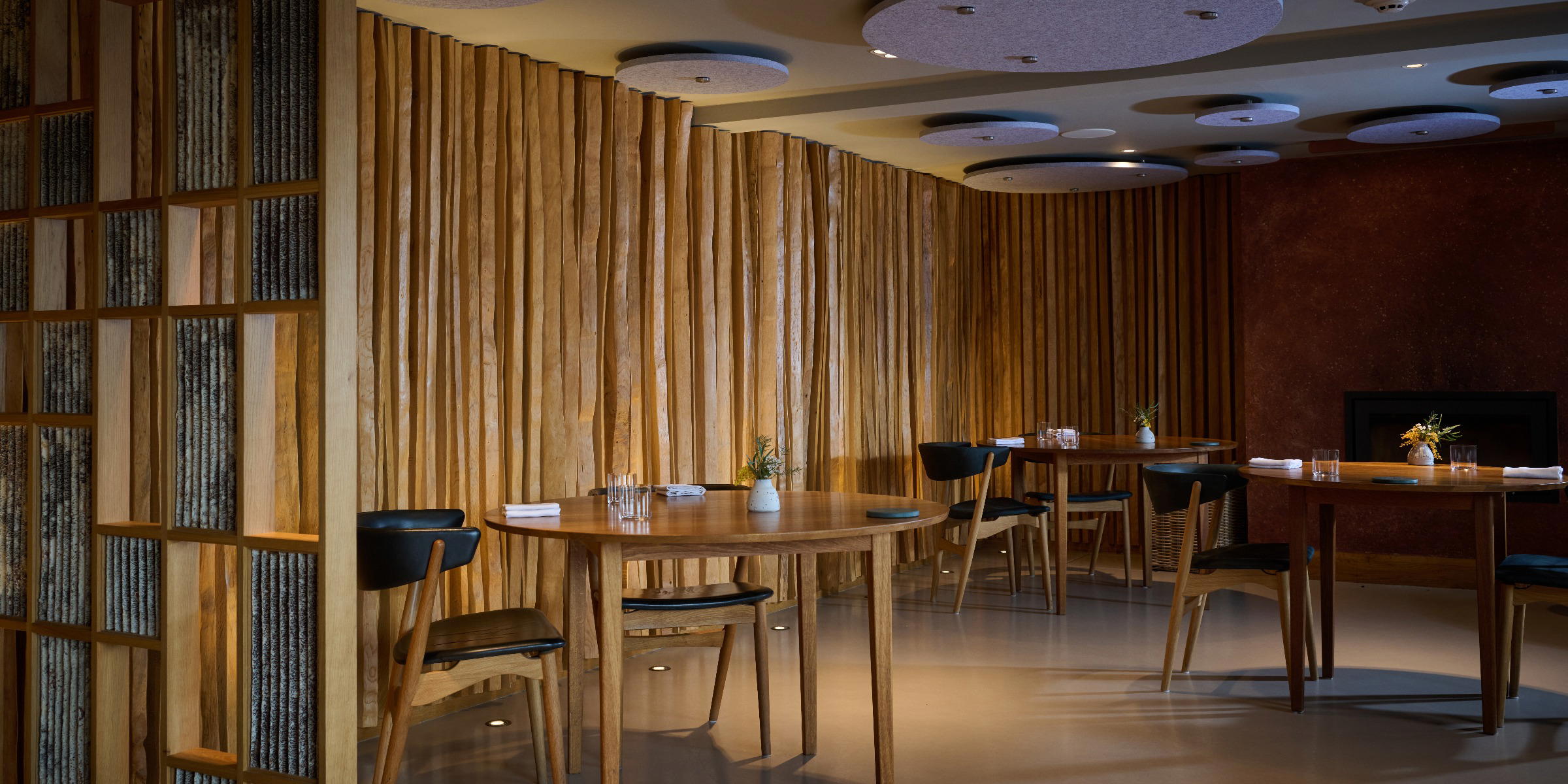
Plush antique-furnished lounge and luxurious dining rooms with a traditional, elegant atmosphere featuring art, antiques, thick carpets, and fireplaces.