Da Nang Quan
Da Nang Quan serves Central Vietnamese cooking in Oakland with Bun bo Hue and Mi Quang, set up for casual, conversational lunch or dinner.
Pearl is the En Primeur Club membership app — saves, bookings, and concierge access live there. Same editors, same standards.
- Address
- 615 E 12th St, Oakland, CA 94606
- Phone
- (510) 268-1368
- Website
- danangquan.net
- Directions
- Get directions
 Saves & bookings on Pearl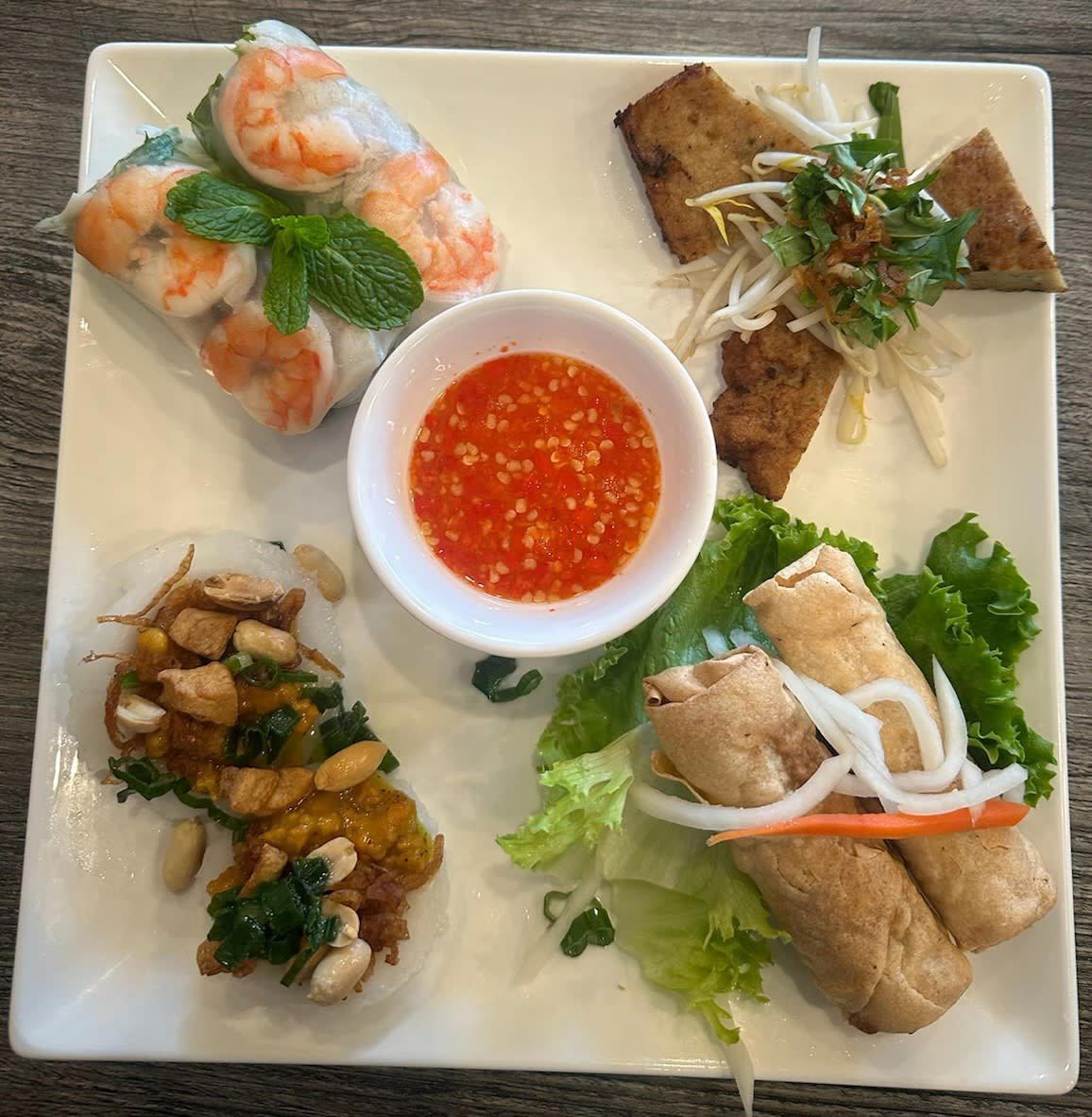
East 12th Street and the Shape of Oakland's Vietnamese Dining
East 12th Street through the Eastlake neighborhood carries a particular kind of accumulated character: storefronts that have traded hands across generations, kitchens that opened to serve specific immigrant communities before the food-media apparatus took notice. Da Nang Quan sits at 615 E 12th St inside this corridor, part of a loose cluster of Vietnamese and pan-Asian restaurants that have operated here well before the city's dining scene attracted wider editorial attention. The address alone situates it within a distinct east Oakland tradition, one where the dining room is built around the regulars rather than the occasion.
Vietnamese regional cooking in American cities often collapses into a single generic category, when in reality the cuisine carries sharp distinctions between north, central, and south. Da Nang, the central coastal city after which this Oakland restaurant takes its name, has its own culinary identity, distinct from the pho-and-banh-mi shorthand that most Americans associate with Vietnamese food. Central Vietnamese cooking tends toward more fermented, funkier flavor profiles and preparations that do not translate as smoothly into fast-casual formats. A restaurant foregrounding this regional specificity in a neighborhood like Eastlake is operating in a different register than the broadly accessible Vietnamese spots found closer to downtown.
A Dining Room Built on Collaboration
In many restaurants at this price point and neighborhood density, the dining experience reads as a one-person operation, whether that is a single cook managing everything from the wok to the register, or a small family team where roles blur. What distinguishes operations that sustain a loyal regular clientele over time is usually a different dynamic: a legible front-of-house rhythm that communicates kitchen timing without the guest having to ask, an awareness of who is returning versus who is discovering the place for the first time, and a floor presence that creates consistency across visits. These are collaboration signals, the kind that separate a functional neighborhood restaurant from one that earns repeat business through something beyond proximity and price.
Oakland's Vietnamese restaurant tier has examples at several levels of formality, from high-volume pho operations in the Fruitvale corridor to smaller, more menu-specific spots where the guest-to-kitchen relationship is closer. Da Nang Quan operates within the latter category on E 12th, where format discipline and kitchen focus tend to matter more than scale. Venues nearby such as 3 Bottled Fish and Agave Uptown illustrate how Oakland's independent restaurant operators have navigated format specificity as a competitive position, even without the marketing infrastructure available to larger groups.
Regional Specificity as an Editorial Argument
The name Da Nang Quan is a direct reference to the central Vietnamese port city, which positions the restaurant's identity around geography rather than a broadly appealing catchall. This is a less common framing choice in Oakland's Vietnamese dining segment, where most operators have leaned into accessibility and volume. Central Vietnamese cooking includes dishes like banh xeo (a turmeric rice flour crepe), bun bo Hue (a spiced beef and lemongrass noodle soup distinct from the Hanoi-origin pho), and mi Quang (a turmeric-tinted noodle dish associated specifically with the Quang Nam province).
That positioning places it in a different competitive conversation than broadly accessible Vietnamese restaurants, and closer to the logic of regional-specialist spots in other cuisines, the Sichuan-only Chinese kitchen, the Oaxacan-leaning Mexican restaurant, the Neapolitan-committed pizzeria. The question for any regional specialist is whether the execution sustains the argument the name makes. Oakland's dining public, shaped by access to San Francisco's more internationally scrutinized restaurant scene across the bay, is a relatively informed audience for this kind of regional claim.
For context on how this regional-specialist format plays out at different price and formality tiers elsewhere, operations like Atomix in New York City and Smyth in Chicago illustrate the extreme upper end of what regional specificity and kitchen-floor collaboration can produce when supported by significant resources. The restaurant operates far from that tier, but the underlying logic, that a focused regional claim creates a more coherent guest experience than generic breadth, applies across price points.
Where This Fits in Oakland's Eastlake Corridor
The Eastlake neighborhood has historically served as an arrival point for Southeast Asian communities in Oakland, and the dining infrastructure reflects that history. Several Vietnamese and pan-Asian restaurants occupy this stretch of E 12th, creating a density that allows for direct comparison and repeat visits. Nearby independent operators like 8th St Cafe and Alem's Coffee illustrate the range of immigrant-founded food businesses that anchor this part of the city, each operating within a specific community context rather than as a destination draw for cross-city traffic. alaMar Dominican Kitchen represents another vector of Oakland's independent dining scene, where specific cultural identity drives the menu logic.
Taken together, these operators form a dining corridor that rewards the visitor willing to move through it slowly rather than treating any single address as a destination. The restaurant is most legible in that context: a neighborhood-scale Vietnamese restaurant with a regional claim embedded in its name, operating in a part of Oakland where that claim has community resonance.
Diners who have tracked the evolution of Vietnamese cooking at higher formality levels elsewhere, through operations like Providence in Los Angeles or the farm-integration model at Single Thread Farm in Healdsburg, will find the restaurant operating in a categorically different register. The comparison is instructive not because these venues compete but because it clarifies what neighborhood-scale regional Vietnamese cooking is actually doing: serving a community with specific culinary memory rather than constructing an experience for an external audience.
Accolades, Compared
Comparable venues nearby, for context on price, style, and recognition.
| Venue | Cuisine | Price | Notes |
|---|---|---|---|
| Da Nang QuanThis venue — the venue you are viewing | Central Vietnamese | $$ | Not listed |
| Binh Minh Quan | Authentic Vietnamese | $$ | Downtown |
| Miss Saigon 2 | Authentic Vietnamese | $$ | Grand Lake |
| Thanh Ky Restaurant | Vietnamese-Chinese Noodle House | $$ | East Peralta |
| Phuong Nam | Vietnamese Noodles | $ | Not listed |
| Tay Ho Oakland Restaurant & Bar | Regional Vietnamese Street Food | $$ | Downtown |
Continue exploring
More in Oakland
Restaurants in Oakland
Browse all →
Bars in Oakland
Browse all →
Hotels in Oakland
Browse all →



At a Glance
- Casual Hangout
- Family
- Local Sourcing
Current opening hours
- Monday
- 8:30 AM–6:30 PM
- Tuesday
- 8:30 AM–6:30 PM
- Wednesday
- 8:30 AM–6:30 PM
- Thursday
- 8:30 AM–6:30 PM
- Friday
- 8:30 AM–6:30 PM
- Saturday
- 8:30 AM–6:30 PM
- Sunday
- 8:30 AM–6:30 PM
Hours can change for holidays and private events. Last verified .