Da Lino operates from a straightforward address on Vilvoordelaan in Zaventem, a municipality shaped more by proximity to Brussels Airport than by any established dining tradition. Zaventem's dining scene is compact, and Da Lino occupies a distinct position within it.
Pearl is the En Primeur Club membership app — saves, bookings, and concierge access live there. Same editors, same standards.
- Address
- Vilvoordelaan 9, 1930 Zaventem, Belgium
- Phone
- +3227200108
- Website
- dalino.be
- Directions
- Get directions
 Saves & bookings on Pearl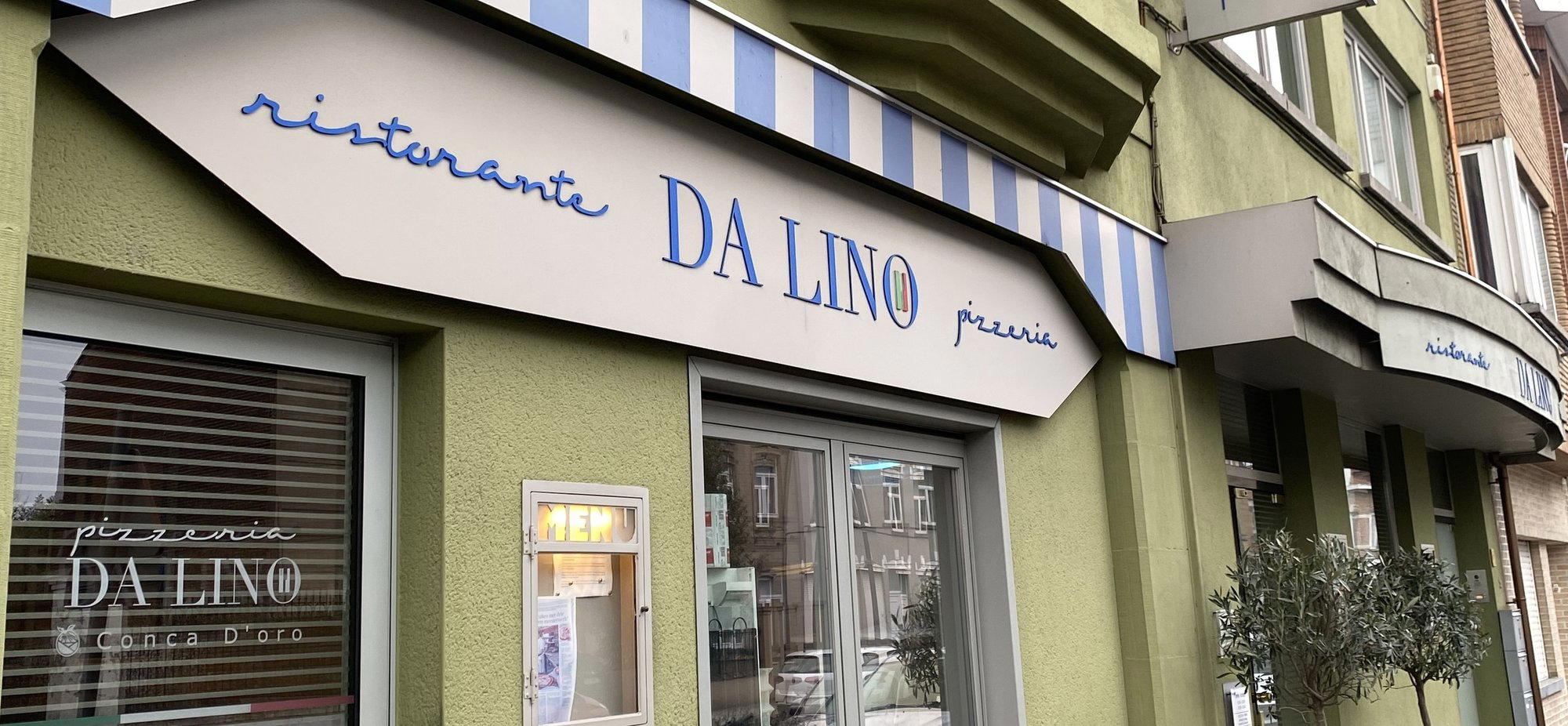
Zaventem's Quiet Dining Neighbourhood and Where Da Lino Sits
Most international visitors pass through Zaventem without pausing. The municipality anchors Belgium's primary aviation gateway, and its commercial arteries reflect that function: logistics centres, airport hotels, and the kind of roadside infrastructure that serves people in transit rather than people at table. Against that backdrop, Vilvoordelaan 9 represents something worth noting — an address that asks you to stop rather than move through. Da Lino operates in this context, and understanding that context is the first step toward understanding what kind of meal you are likely to have here.
Belgian dining outside the major cities has historically followed a pattern: grand brasseries in market squares, family-run Flemish kitchens serving waterzooi and stoofvlees, and the occasional fine-dining outlier that operates on reputation rather than footfall. Zaventem belongs to a smaller subcategory — the satellite town adjacent to a major European city that develops its own restaurant culture not in competition with the metropolis but in service of the people who live and work there. For comparison, consult our full Zaventem restaurants guide to see how the local scene has developed around a handful of distinct kitchen styles.
The Ritual of the Italian Table in a Flemish Setting
Italian restaurants in Belgium occupy an interesting competitive position. At one end sit the neighbourhood pizzerias that have been part of Flemish towns since the postwar Italian immigration wave; at the other sit the ambitious Italian fine-dining rooms that reference regional Italian cooking traditions with the same seriousness that Belgian kitchens bring to classical French technique. A name like Da Lino signals something about where on that spectrum the kitchen intends to operate. Italian dining customs, the pacing of antipasto into primo into secondo, the respect for ingredient quality over sauce complexity, the insistence on appropriate wine alongside each course, tend to assert themselves regardless of geography when a kitchen takes its reference point seriously.
That ritual pacing matters more than it might appear. Restaurants that adopt the Italian sequence make a structural argument about how a meal should unfold: time at table is not a cost to be minimised but the point of the exercise. In a municipality where many restaurants serve a transient business clientele with schedules to keep, a kitchen oriented around that kind of deliberate pace is choosing a specific guest and a specific relationship with the meal. Neighbouring venues like Bovis and Brasserie Mariadal each occupy different positions on that spectrum, the former leaning into contemporary Flemish cooking, the latter into the brasserie tradition, which means Da Lino's Italian framing gives it a distinct lane within a compact local market.
For readers whose frame of reference extends to Belgium's most decorated tables, the contrast sharpens further. The kind of patient, produce-led cooking associated with Michelin-recognised kitchens like Hof van Cleve in Kruishoutem or Boury in Roeselare represents one tradition. Da Lino's Italian orientation suggests a different lineage, one that draws from the peninsula's ingredient-first culture rather than from Flemish or Franco-Belgian classicism.
What to Expect When You Arrive
Vilvoordelaan is a functional road. Arriving at number 9, you are not entering a destination neighbourhood in the way that a Ghent canal district or an Antwerp fashion-quarter address implies. The setting is suburban and untheatrical, which means the interior and the food carry the full weight of the experience. This is a common dynamic at Italian-named restaurants operating outside city centres across Belgium and the Netherlands: the room and the kitchen must substitute for the ambient energy that a dense urban location provides automatically.
The practical dimension of visiting Da Lino requires some advance consideration. With no confirmed booking platform or phone number in the public record at the time of writing, the safest approach is to contact the restaurant directly through search or local directory listings before making the journey, particularly if you are combining a visit with other stops in the area. Passion Chocolat and Tapa Ti round out the short list of destination-minded addresses in Zaventem, which makes a multi-stop itinerary feasible for visitors spending more than a meal in the municipality.
Placing Da Lino in the Belgian Dining Picture
Belgium's restaurant culture has developed with unusual density relative to the country's size. The concentration of Michelin stars per capita remains among the highest in Europe, and that has created a sophisticated dining public that extends well beyond Brussels and Antwerp. Venues like Zilte in Antwerp, Vrijmoed in Gent, and Willem Hiele in Oudenburg represent the ambitious tier of Belgian cooking that has drawn international attention. At the other end of the spectrum, neighbourhood restaurants across Flanders and Wallonia maintain the kind of quiet competence that Belgian diners tend to reward with long-term loyalty rather than social-media amplification.
Da Lino sits somewhere in that broader picture, away from the formal recognition circuits but operating in a market where the local population has developed real expectations. Italian cooking in this context often succeeds not on novelty but on consistency: the pasta made with appropriate technique, the proteins sourced with care, the wine list calibrated to the kitchen rather than assembled for margin. Those are the metrics that matter at this tier, and they are the metrics that return guests tend to apply.
For those whose reference points extend further afield, Belgium's airport adjacency means that Zaventem is genuinely accessible from Brussels in under thirty minutes by train or car, which places Da Lino within reach of a broader Brussels-based dining circuit. Restaurants like Bozar Restaurant in Brussels and Le Chalet de la Forêt in Uccle define the upper end of the capital's dining offer. Da Lino operates at a different register and in a different municipality, but for readers building an itinerary around the broader Brussels region, it represents a neighbourhood option worth factoring in alongside the more obvious capital addresses.
The international comparison is also instructive. The Italian-named restaurant operating in a mid-size European town is a category with enormous range, from the perfunctory to the genuinely skilled. Kitchens at the ambitious end of that category internationally, like Le Bernardin in New York City or format-conscious operations like Lazy Bear in San Francisco, demonstrate what intentional meal structure can achieve. Da Lino operates at a different scale and in a different context, but the question of how seriously a kitchen takes its own culinary reference points applies at every level of the market.
Further Belgian addresses worth cross-referencing for readers building regional itineraries include d'Eugénie à Emilie in Baudour, La Durée in Izegem, Cuchara in Lommel, and Ralf Berendsen in Neerharen, each occupying its own position in the country's dispersed fine-dining geography.
Planning Your Visit
Da Lino is located at Vilvoordelaan 9, 1930 Zaventem, Belgium. Given the absence of a confirmed website or reservation system in the current public record, verifying current hours and booking availability through local directory listings or a direct approach before your visit is advisable. The address is accessible from central Brussels in approximately twenty to thirty minutes by road, making it a viable destination for Brussels-based visitors seeking to move beyond the capital's established dining circuit.
How Da Lino Zaventem compares with similar nearby venues.
| Venue | Cuisine | Price |
|---|---|---|
| Bistro R | Modern French | €€€ |
| Station 3 | Chinese | €€ |
At a Glance
- Classic
- Cozy
- Family
- Casual Hangout
- Standalone
Current opening hours
- Monday
- 11:45 AM–2 PM, 6:30–9:45 PM
- Tuesday
- 11:45 AM–2 PM, 6:30–9:45 PM
- Wednesday
- 11:45 AM–2 PM, 6:30–9:45 PM
- Thursday
- 11:45 AM–2 PM, 6:30–9:45 PM
- Friday
- 11:45 AM–2 PM, 6:30–9:45 PM
- Saturday
- Closed
- Sunday
- Closed
Hours can change for holidays and private events. Last verified .
Warm family atmosphere with traditional Italian hospitality, busy with airport travelers.
Know Before You Go
- Getting there
- Vilvoordelaan 9, 1930 Zaventem, Belgium