
Tabelog 100 #14
Our verdict
Matsudo’s curry scene is modest in scale but serious in local loyalty, and Curry House MUMBAI Matsudo ten sits in the city’s value-driven, station-adjacent dining rhythm. Its Tabelog Curry EAST 100 selection in 2023 and 2024 gives the address a clearer signal than most casual curry counters in Chiba.

Pearl is the En Primeur Club membership app, where members save venues, book tables and use the concierge.
The menu
What to order
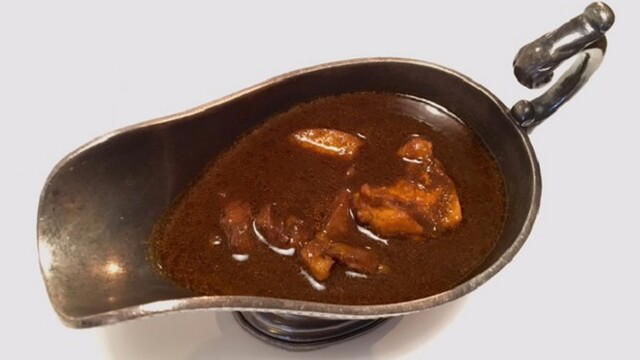
- Kashmiri curry
- Chicken curry
- Children’s curry
The approach is practical rather than theatrical: a curry room in Matsudo, with the directness that defines many everyday restaurants in commuter-city dining. Lunch has to be approachable, dinner has to be affordable, and reputation is built plate by plate rather than through ceremony. Curry House MUMBAI Matsudo ten belongs to that category of curry, Indian curry, and café restaurants where the format is straightforward, the mood is casual, and the value proposition is part of the cultural point.
Japanese curry culture is not a single lane. It runs from sweet, roux-based comfort plates to spice-forward curry rooms, from specialist intensity to café formats built for solo diners and families. Matsudo’s dining identity reflects that range: noodles, cutlets, casual set meals, and curry all sit within the city’s everyday food map. For a broader read on local dining, Our full Matsudo restaurants guide gives the useful context, while other Matsudo dining rooms show how broad the local casual-dining spectrum has become.
Curry in Matsudo works because the ingredient story is practical, not decorative
The useful way to read this venue is through category and format, not chef mythology. The listed categories are curry, Indian curry, and café, a combination that signals a kitchen built around spice, comfort, and everyday repeatability rather than luxury-course pacing. In Japan, curry restaurants can occupy different registers from yoshoku-style curry shops: spice structure and café service habits can sit beside local preferences for set meals, solo eating, and quick turnover. That hybrid identity is why this kind of room can make sense outside the most central dining districts.
The trust signal is clear: Curry House MUMBAI Matsudo ten appears in the 2024 Tabelog Hyakumeiten recognition for curry, with a listed Tabelog score of 3.67. In a category crowded with accessible neighborhood curry shops, that recognition places it in a more scrutinized bracket. It does not make the restaurant formal, rarefied, or chef-led in the luxury sense; it marks it as a casual curry room with enough consistency to register beyond routine neighborhood use.
That distinction matters for travelers. Matsudo is not usually approached like a city where visitors plan entire days around reservations. The smarter reading is comparative: Tonikaku Matsudo honten and Matsudo Chuka Soba Tomita Shokudo occupy a similar everyday-specialist lane, while Tonkatsu Tomita and Flying pig Matsudo Honten show other sides of the local dining field. Curry House MUMBAI Matsudo ten competes less on ceremony than on the dependable appeal of spice-led food at a Matsudo pace.
A casual room suits the way this kind of curry is eaten
The room should be understood as a casual restaurant rather than a grand dining room. That is part of its appeal: curry, Indian curry, and café service do not need elaborate staging to feel complete. In Japan’s casual dining culture, a quick meal can be a strength rather than a compromise. The format lowers the friction for a curry stop and keeps the experience closer to an everyday staple than a destination tasting format.
That everyday usability shifts the reading of the place. This is not only a spice-focused option for curry obsessives; it is also part of Matsudo’s daily food infrastructure, the sort of address that can make sense for a simple solo meal, a casual lunch, or an unfussy dinner without asking diners to behave like they are entering a special-occasion room. The listed budget reinforces that role: dinner is JPY 1,000 - JPY 1,999, while lunch is listed up to JPY 999.
Value adds another clue about the restaurant’s role in the city. Curry is one of the foods that can carry strong identity while remaining accessible, and in everyday Japanese dining that matters. A curry shop at this price point is not just performing for destination diners; it is serving the rhythms of local appetite. That is a different kind of authority from fine dining, but it can be just as revealing about how a city actually eats.
How to place it in a wider Japan itinerary
For visitors building a Matsudo or greater Tokyo-area dining plan, this is a focused curry stop rather than a full-evening anchor. The useful comparison is not with formal kaiseki or sushi counters; it is with other casual specialists that reward a detour because they express a local habit clearly. Matsudo’s everyday dining map makes that kind of eating plausible: ramen for one meal, curry for another, and other casual dining as the counterpoint.
Readers looking beyond Matsudo can use the broader EP Club map as a contrast study. Regional Japanese casual dining takes many forms, and the same question returns from city to city: how much personality can a modest, everyday format carry? Curry House MUMBAI Matsudo ten is best read within that frame, alongside other unnamed Japanese casual rooms where affordability, repeatability, and local recognition matter more than ceremony.
The final judgment is simple: this is a Matsudo curry room with credible 2024 recognition, a practical category identity, and a price-position that keeps it tied to daily life rather than occasion dining. It belongs on a Matsudo food itinerary for readers interested in how curry functions beyond the louder central dining circuits. For trip planning around the wider city, pair the restaurant guide with Our full Matsudo hotels guide, Our full Matsudo bars guide, Our full Matsudo wineries guide, and Our full Matsudo experiences guide.
Frequently asked questions
Would Curry House MUMBAI Matsudo ten be comfortable with kids?
Curry House MUMBAI Matsudo ten is a casual curry, Indian curry, and café venue in Matsudo, so it is best read as an everyday meal stop rather than a formal occasion restaurant.
How would you describe the vibe at Curry House MUMBAI Matsudo ten?
The setting is casual and practical, built around curry, Indian curry, and café dining. Its 2024 Tabelog Hyakumeiten recognition gives it credibility, but the appeal remains an approachable curry meal rather than a long formal sit-down.
How much does it cost to eat at Curry House MUMBAI Matsudo ten?
Pricing at Curry House MUMBAI Matsudo ten is listed as Dinner: JPY 1,000 - JPY 1,999; Lunch: - JPY 999.
What are the operating hours at Curry House MUMBAI Matsudo ten?
Specific operating hours are not provided here; check directly with Curry House MUMBAI Matsudo ten before visiting.
What's the address for Curry House MUMBAI Matsudo ten?
Matsudo.
Snapshot
Comparable venues by cuisine and price in the same metro.
| Venue | Cuisine | Price | Awards | Notes |
|---|---|---|---|---|
| Curry House MUMBAI Matsudo tenThis venue (the venue you are viewing) | Indian curry house | $10–20 | Tabelog 100 #14 | Not listed |
| Trattoria Il Regalo | Seasonal Italian Trattoria & Neapolitan Pizza | $30–50 | Tabelog 100 #90 | Matsudo |
| Tonikaku Matsudo honten | Ramen, tsukemen & abura soba | $10–20 | Tabelog 100 #42 | Matsudo |
| Matsudo Chuka Soba Tomita Shokudo | Ramen & tsukemen shop | $10–20 | Tabelog 100 #3 | Matsudo |
| KEUY CHIANGMAI | Dining | Not listed | Tabelog 100 #18 | Matsudo |
| Chuka Soba Maruki | Classic Japanese ramen (chuka soba & tsukemen) | $1–10 | Tabelog 100 #87 | Matsudo |
Recognition history
Dated appearances from independent guides and award organizations, with the underlying list record or original source where available.
Tabelog 100 #14 · No. 14
Tabelog · Tabelog 100 - Curry - EAST - 2024
Continue exploring
More in Matsudo
Restaurants in Matsudo
All restaurants in Matsudo →





Details
- Lively
- Cozy
- Solo
- Family
- Group Dining
- Casual Hangout
- After Work
- Standalone
- A La Carte
- Set Menu
- Vegetarian Friendly
Current opening hours
- Monday
- 11 AM–3 PM, 5–9:40 PM
- Tuesday
- 11 AM–3 PM, 5–9:40 PM
- Wednesday
- 11 AM–3 PM, 5–9:40 PM
- Thursday
- 11 AM–3 PM, 5–9:40 PM
- Friday
- 11 AM–3 PM, 5–9:40 PM
- Saturday
- 11 AM–9:40 PM
- Sunday
- 11 AM–9:40 PM
Hours can change for holidays and private events. Hours as of .
Casual, bustling curry house with sofa seating and a relaxed café-like feel, suited to solo diners, families, and small groups lingering over curries rather than a formal meal.