On Rue de Guérande in central Nantes, Crêperie de Brocéliande draws on the deep Breton crêperie tradition that predates the city's modern restaurant scene by generations. The address places it inside a neighbourhood where casual and serious eating converge, with buckwheat galettes and sweet crêpes anchoring a format that Nantes has long embraced as both everyday ritual and considered meal.
Pearl is the En Primeur Club membership app — saves, bookings, and concierge access live there. Same editors, same standards.
- Address
- 3 Rue de Guérande, 44000 Nantes, France
- Phone
- +33240890403
- Website
- facebook.com
- Directions
- Get directions
 Saves & bookings on Pearl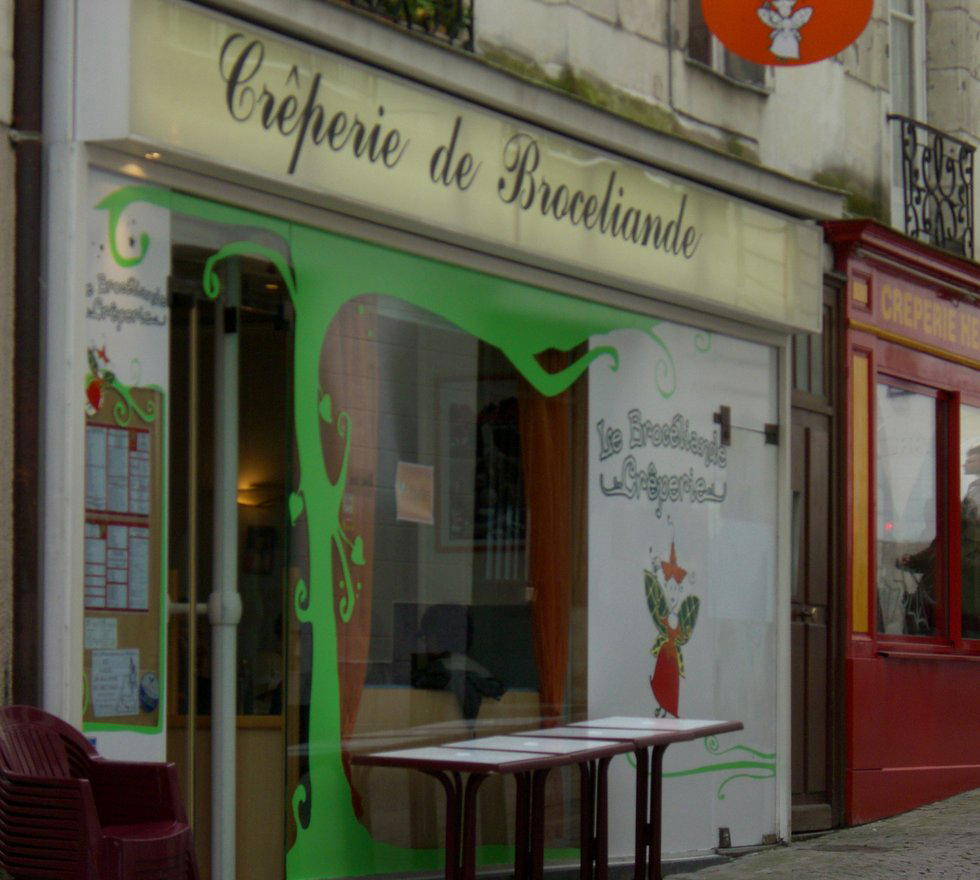
Where Brittany Meets the Loire: The Crêperie Tradition in Nantes
Step onto Rue de Guérande on a grey Atlantic afternoon and the sensory register shifts before you reach the door. The smell of buckwheat batter on a hot billig, the cast-iron crêpe griddle that defines the Breton kitchen, travels ahead of any signage. Inside a crêperie like this one, the cooking is immediate and visible: the spreader tool drawn across the surface, the edges crisping in real time, the rhythm of the kitchen exposed rather than hidden. It is a format built on transparency, and the room tends to feel warm in the literal sense, the griddle heat reaching the tables closest to the open station.
Nantes occupies an interesting position in the crêperie geography of western France. Administratively Loire-Atlantique rather than Brittany proper, the city has historically absorbed the culinary traditions of its western neighbours, particularly the galette-crêpe culture centred on Rennes and the Finistère coast. Crêperies here tend to occupy a middle register between the rough-and-ready roadside spots of rural Brittany and the more polished interpretations found in Paris's Montparnasse district, where Breton migrants concentrated in the early twentieth century. Crêperie de Brocéliande, with its address in central Nantes, sits within that local tradition rather than apart from it.
The Galette as Format: What the Breton Kitchen Actually Does
The distinction between a galette and a crêpe matters and is frequently misunderstood outside western France. Galettes are made from blé noir, sarrasin, buckwheat, a grain that contains no gluten and gives the finished pancake its characteristic grey-brown colour, earthy flavour, and slightly crisp edge when properly cooked. The crêpe sucrée, made from wheat flour, is the sweeter, softer counterpart served after. The two form a progression rather than alternatives, and a crêperie that handles both well is doing two distinct technical things.
Buckwheat cultivation has deep roots in the Armorica region; the grain thrives in the acidic soils of Brittany and historically functioned as a subsistence crop when wheat failed. That agricultural context shapes what the galette means culturally, it is not a refined import but a peasant staple that became a regional identity marker. Contemporary crêperies in cities like Nantes now serve galettes as a deliberate choice rather than a necessity, and strong examples among them treat the format with corresponding seriousness: sourcing buckwheat from named producers, controlling batter hydration and resting time, calibrating griddle temperature by feel as much as gauge.
The classic garnishes, ham, egg, emmental, mushrooms, remain the reference points against which more creative interpretations are measured. In a good crêperie, the complete or galette complète arrives folded into a square with the egg yolk still runny at centre, the edges darkened just past golden, the cheese melted but not leaking. That execution is harder to achieve consistently than it appears.
Brocéliande: The Name and Its Context
The name Brocéliande refers to the mythic forest of Arthurian legend, located in the Breton interior near Paimpont. It is a reference that appears across businesses in western France as a shorthand for Breton identity, a geographic and cultural signal rather than a literal description. For a crêperie in Nantes, it positions the address within a specifically Breton frame, distinguishing it from the city's broader French dining scene, which runs from neighbourhood bistros through to the kind of ambitious modern cooking found at places like L'Atlantide 1874 - Maison Guého, Freia, Les Cadets, and LuluRouget. The crêperie occupies a different register entirely, one built around craft repetition and regional specificity rather than tasting-menu ambition.
That distinction is worth holding onto when thinking about Nantes as a dining city. The restaurants drawing national attention, including the Michelin-recognised addresses that place Nantes alongside France's broader fine-dining geography, think Flocons de Sel in Megève, Mirazur in Menton, Alléno Paris au Pavillon Ledoyen, or the Loire Valley's own celebrated tables, operate at a different price point and with a different set of ambitions. A crêperie like this one belongs to a parallel tradition that France protects and values precisely because it is not trying to be those things. The galette is not a simplified version of haute cuisine; it is a different craft with its own standards.
Drinking Alongside: Cider and the Breton Table
The canonical pairing for galettes in Brittany is bolée de cidre, traditional Breton cider served in ceramic bowls rather than glasses, cloudy, low in alcohol, and dry enough to cut through buckwheat's earthiness. The tradition of ceramic service is practical as much as picturesque: the bowl shape retains temperature and the ceramic material keeps the cider cooler longer than glass. In crêperies that take the pairing seriously, the cider list distinguishes between producers from the Pays d'Auge in Normandy and those from Cornouaille or the Rance valley in Brittany, styles that differ perceptibly in sweetness, tannin, and carbonation level.
For those who prefer something longer, Breton cider at 2-4% ABV functions well across a full meal in a way that higher-alcohol wine does not always manage at lunch. The format also pairs with the unhurried pacing that a good crêperie encourages, the successive rounds of galette then crêpe sucrée suggest a meal that moves slowly, and light cider supports that rhythm.
Planning a Visit: Logistics and Local Context
Crêperie de Brocéliande sits at 3 Rue de Guérande in central Nantes, within walking distance of the city's core. Crêperies in France typically operate at lunch and dinner, with many closing between services and on Sundays or Mondays; verifying current hours before visiting is practical given that smaller addresses change schedules seasonally. Nantes is reachable from Paris in around two hours by TGV from Gare Montparnasse, and from London via Eurostar to Paris with onward connection.
Troisgros in Ouches, Bras in Laguiole, Auberge de l'Ill in Illhaeusern, Les Prés d'Eugénie in Eugénie-les-Bains, La Table du Castellet, Georges Blanc in Vonnas, and the institution that defined French restaurant identity for decades, Paul Bocuse's Auberge du Pont de Collonges. For those travelling transatlantically, the French dining tradition extends meaningfully to addresses like Le Bernardin in New York City and, in a different register entirely, Lazy Bear in San Francisco. And for anyone planning dinner in Nantes alongside a crêperie lunch, Le Manoir de la Régate offers a considered modern alternative on the city's outskirts.
Similar Picks
Comparable venues nearby, for context on price, style, and recognition.
| Venue | Cuisine | Price | Notes |
|---|---|---|---|
| Crêperie de BrocéliandeThis venue — the venue you are viewing | Breton Crêperie | $$ | Not listed |
| Félix | Classic French Brasserie | $$ | Madeleine - Champ de Mars |
| Bistrot de la Comédie | French Bistro | $$ | Mellinet |
| Simone | Creative French Bistro | $$ | Graslin |
| Le Reflet | Modern French Bistro | $$ | Decré |
| La Passagère | French Tea House & Bistro | $$ | Graslin |
Continue exploring
More in Nantes
Restaurants in Nantes
Browse all →
Bars in Nantes
Browse all →
Hotels in Nantes
Browse all →

At a Glance
- Rustic
- Cozy
- Classic
- Family
- Casual Hangout
- Terrace
- Local Sourcing
Current opening hours
- Monday
- Closed
- Tuesday
- 11:30 AM–2 PM, 6:30–9 PM
- Wednesday
- 11:30 AM–2 PM, 6:30–9 PM
- Thursday
- 11:30 AM–2 PM, 6:30–9 PM
- Friday
- 11:30 AM–2 PM, 6:30–9 PM
- Saturday
- 11:30 AM–2 PM, 6:30–9:30 PM
- Sunday
- Closed
Hours can change for holidays and private events. Last verified .
rustic and warm atmosphere in two rooms, always lively and welcoming for family or friends.