Corn Maiden
Our verdict
Corn Maiden sits along Tuyuna Trail in Bernalillo, New Mexico, operating within a regional dining tradition shaped by Pueblo agricultural heritage and the high-desert ingredient culture that defines this stretch of the Rio Grande valley. The address places it squarely in the orbit of Tamaya resort country, where sourcing from Native and regional producers carries real weight as both culinary practice and cultural statement.

Pearl is the En Primeur Club membership app — saves, bookings, and concierge access live there. Same editors, same standards.
- Address
- 1300 Tuyuna Trail, Bernalillo, NM 87004
- Phone
- (505) 867-1234
- Hours
- Mon–Tue ClosedWed–Sun 5:30–9 PM
- Website
- hyatt.com
- Directions
- Get directions
- Booking
- Book on OpenTable
The menu
What to order
- Coffee-charcoal ribeye
- Buffalo tenderloin
- Colorado Lamb Chop
Where the Rio Grande Valley Puts Ingredients First
Bernalillo sits fourteen miles north of Albuquerque on the western bank of the Rio Grande, and its dining character is shaped less by urban restaurant trends than by what grows, grazes, and is harvested within a short radius. The high desert here produces a specific pantry: Hatch and Pueblo chiles, blue corn from Santa Ana and other Tiwa-speaking communities, bison from the surrounding grasslands, and the cultivated and foraged plants that have sustained the region's communities for centuries. Restaurants that take this geography seriously operate within a very different set of reference points than their counterparts in Santa Fe's tourist corridor or Albuquerque's South Valley. Corn Maiden, addressed at 1300 Tuyuna Trail, is one of those places. The name itself signals an orientation: the Corn Maiden is a figure from Pueblo spiritual tradition, associated with the gift of maize and the reciprocal relationship between community and land. That framing is not decorative.
For context on how Bernalillo fits within the broader New Mexico dining picture, the EP Club Bernalillo restaurants guide maps the area's dining options across categories and price tiers.
The Sourcing Logic That Defines This Category
Across American fine dining, the last decade has seen a decisive split between kitchens that source locally as a marketing posture and those for which regional supply chains are genuinely load-bearing. The former category produces menus that mention farm names parenthetically; the latter builds dishes from the available harvest outward. Corn Maiden's address and naming context place it in a tradition that predates both tendencies. Native American agricultural systems, particularly the three-sisters planting method of corn, beans, and squash, represent one of the oldest and most coherent models of land-integrated cooking on the continent. A restaurant operating under this conceptual roof, whether it interprets that heritage literally or abstractly, is drawing on a culinary logic that kitchens like Blue Hill at Stone Barns in Tarrytown or Single Thread Farm in Healdsburg have pursued from entirely different agricultural traditions.
The comparison is instructive. Blue Hill's Dan Barber has spent two decades articulating a farm-to-table philosophy rooted in Hudson Valley soils; Single Thread's Kyle Connaughton works through the Japanese satoyama concept of village-edge ecosystems. Corn Maiden's operating context suggests a third model: indigenous agriculture as the source text, with New Mexican high-desert growing conditions as the practical constraint and creative engine. Whether the kitchen executes this through a tasting format, an a la carte menu, or something more informal, the ingredient logic carries the same weight. Analogous positions in other cities are held by restaurants like Oyster Oyster in Washington, D.C., which places plant provenance at the center of each dish, or Smyth in Chicago, where a working farm upstream of the kitchen drives seasonal menu decisions.
The Physical Setting and Approach
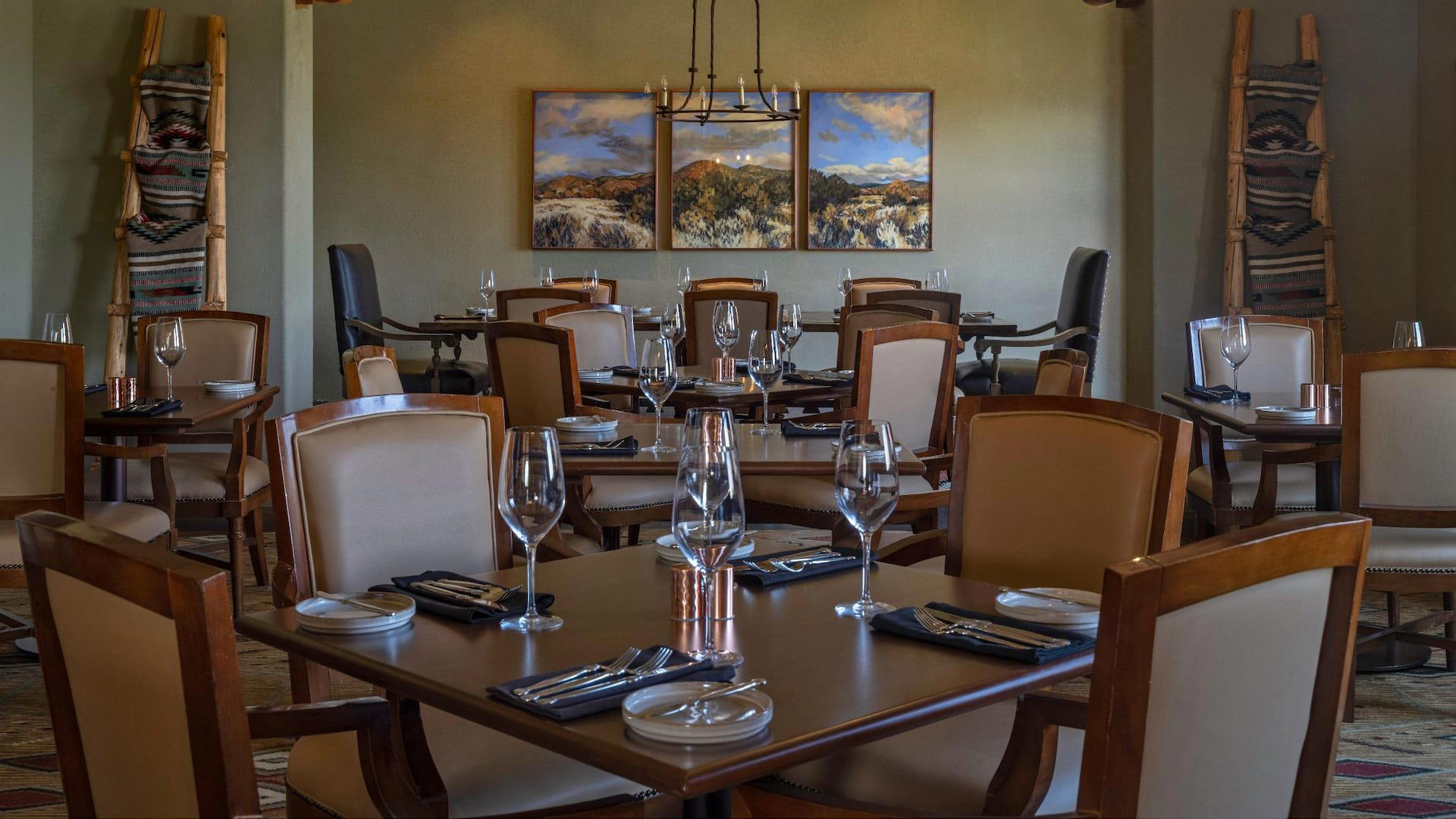
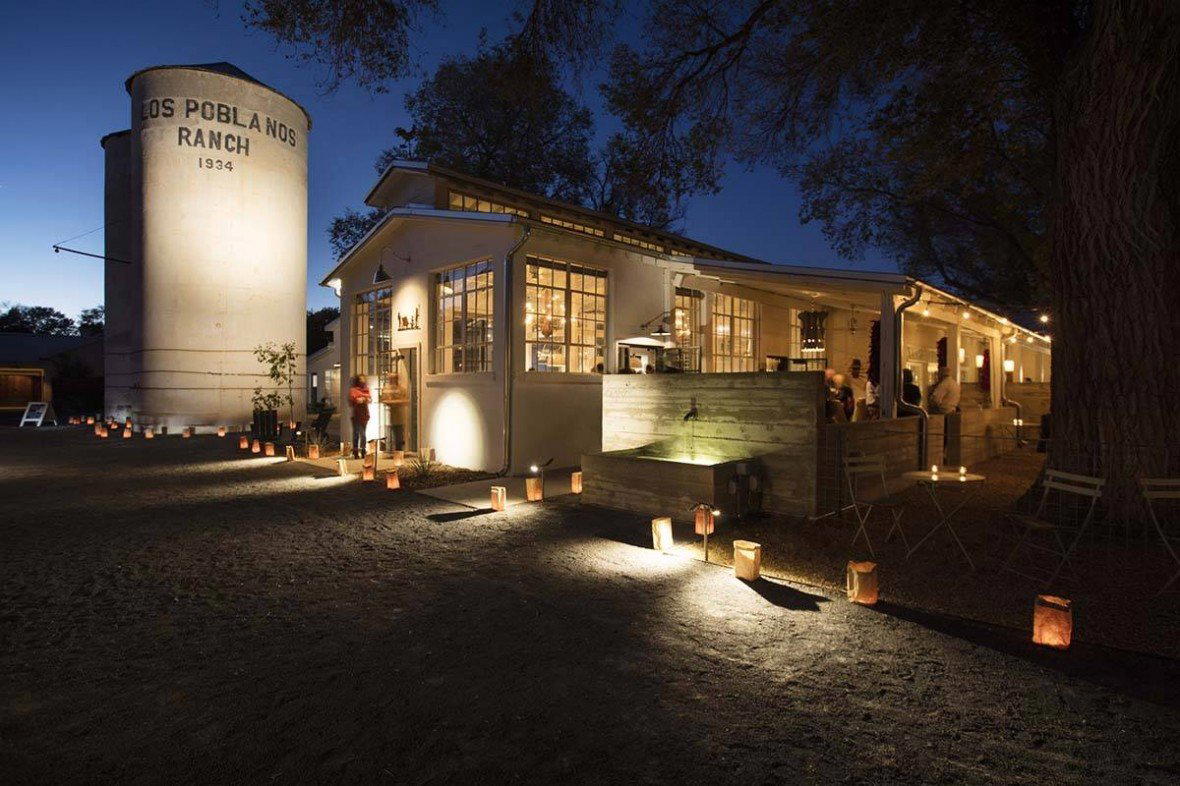
The address on Tuyuna Trail sits within the Santa Ana Pueblo land corridor, a range of cottonwood bosque, irrigation acequias, and wide-sky views toward the Sandia Mountains. Approaching from the south on US-550, the built environment thins quickly and the terrain reasserts itself. Restaurants in this geography tend toward the grounded rather than the theatrical: adobe construction, low-lit interior spaces, and a physical environment that reinforces rather than competes with the surrounding desert. That sensory framing matters for understanding what kind of meal this is designed to be. It is not the urbane progressivism of a Lazy Bear in San Francisco or the formal Franco-American authority of Le Bernardin in New York City. The register here is quieter, more embedded in place.
Regional fine dining in the Southwest has its own lineage. Emeril's in New Orleans and The French Laundry in Napa represent the coastal American fine dining poles; the Mountain West and Southwest occupy a less institutionally recognized but no less serious tier. Frasca Food & Wine in Boulder and The Wolf's Tailor in Denver are reference points for how ingredient-focused kitchens in this region operate without the structural support of established coastal culinary infrastructure. Corn Maiden operates in a more rurally embedded context than either, which narrows the competitive set but sharpens the sourcing imperative.
Planning a Visit
Bernalillo is accessible from Albuquerque in roughly twenty minutes northbound on I-25, making it a viable destination for travelers based in the city. The Santa Ana Pueblo corridor sees significant visitor traffic tied to the Hyatt Tamaya Resort, which shares the broader Tuyuna Trail address zone, so reservation planning during high season (spring and fall, when the desert climate is most hospitable) is advisable. Visitors extending into the broader Southwest fine dining circuit might also consider Addison in San Diego or Providence in Los Angeles for contrast along the regional continuum. For those mapping a longer American dining itinerary that takes regional sourcing seriously, ITAMAE in Miami and Atomix in New York City represent the same sourcing-forward commitment applied to entirely different culinary traditions. Internationally, Atelier Moessmer Norbert Niederkofler in Brunico has built one of Europe's most rigorous territory-first menus in the South Tyrolean Alps, a useful comparative frame for understanding what it means to cook exclusively from a defined landscape. The Inn at Little Washington stands as another point of comparison for destination dining embedded in a specific American rural context; see the EP Club profile of The Inn at Little Washington for that reference.
Frequently asked questions
Is Corn Maiden okay with children?
Corn Maiden sits on Tuyuna Trail within the Santa Ana Pueblo land corridor, a setting that skews toward an adult dining experience rather than casual family meals.
Is Corn Maiden formal or casual?
The Bernalillo location on Tuyuna Trail, set against cottonwood bosque and wide-sky Rio Grande views, suggests a tone shaped more by place than ceremony. The venue does not have a documented dress code on record, so reaching out ahead of your visit is the practical approach.
What makes Corn Maiden different from other restaurants near Albuquerque?
Corn Maiden occupies a specific geographic and cultural position that most Albuquerque-area restaurants do not: an address on Tuyuna Trail within the Santa Ana Pueblo land corridor, fourteen miles north of the city along the Rio Grande's western bank. That setting, framed by acequia irrigation systems and bosque terrain, places the restaurant inside a living agricultural and Indigenous heritage context rather than a conventional suburban or urban dining strip. Few venues within the Albuquerque day-trip radius share that combination of geography and cultural grounding.
Where exactly is Corn Maiden?
Corn Maiden is located at 1300 Tuyuna Trail, Bernalillo, NM 87004, Bernalillo.
In Context: Similar Options
| Venue | Cuisine | Price | Awards | Notes |
|---|---|---|---|---|
| Corn MaidenThis venue — the venue you are viewing | Southwestern Farm-to-Table Steakhouse | $50–100 | Not listed | Not listed |
| Le Bernardin | French Seafood Fine Dining | $300–500 | 3 Michelin Stars · World's 50 Best #13 | French, Seafood |
| Lazy Bear | Modern American Tasting Menu | Not listed | 2 Michelin Stars · World's 50 Best #25 | Progressive American, Contemporary |
| Atomix | Modern Korean Tasting Menu | $300–500 | 2 Michelin Stars · World's 50 Best #7 | Modern Korean, Korean |
| Per Se | French Fine Dining Tasting Menu | $300–500 | 3 Michelin Stars · World's 50 Best #40 | French, Contemporary |
| Masa | Traditional Japanese Omakase | $500+ | 2 Michelin Stars · World's 50 Best #27 | Sushi, Japanese |
Continue exploring
More in Bernalillo
Restaurants in Bernalillo
Browse all →
Bars in Bernalillo
Browse all →


Corn Maiden
The wine
- Wine program
- Curated wine list
- Craft cocktails
Details
- Rustic
- Elegant
- Cozy
- Special Occasion
- Celebration
- Date Night
- Open Kitchen
- Hotel Restaurant
- Craft Cocktails
- Farm To Table
- Local Sourcing
- Mountain
- A La Carte
- Small Plates
- Craft Cocktails
- Vegetarian Friendly
- Gluten Free Options
Current opening hours
- Monday
- Closed
- Tuesday
- Closed
- Wednesday
- 5:30–9 PM
- Thursday
- 5:30–9 PM
- Friday
- 5:30–9 PM
- Saturday
- 5:30–9 PM
- Sunday
- 5:30–9 PM
Hours can change for holidays and private events. Last verified .
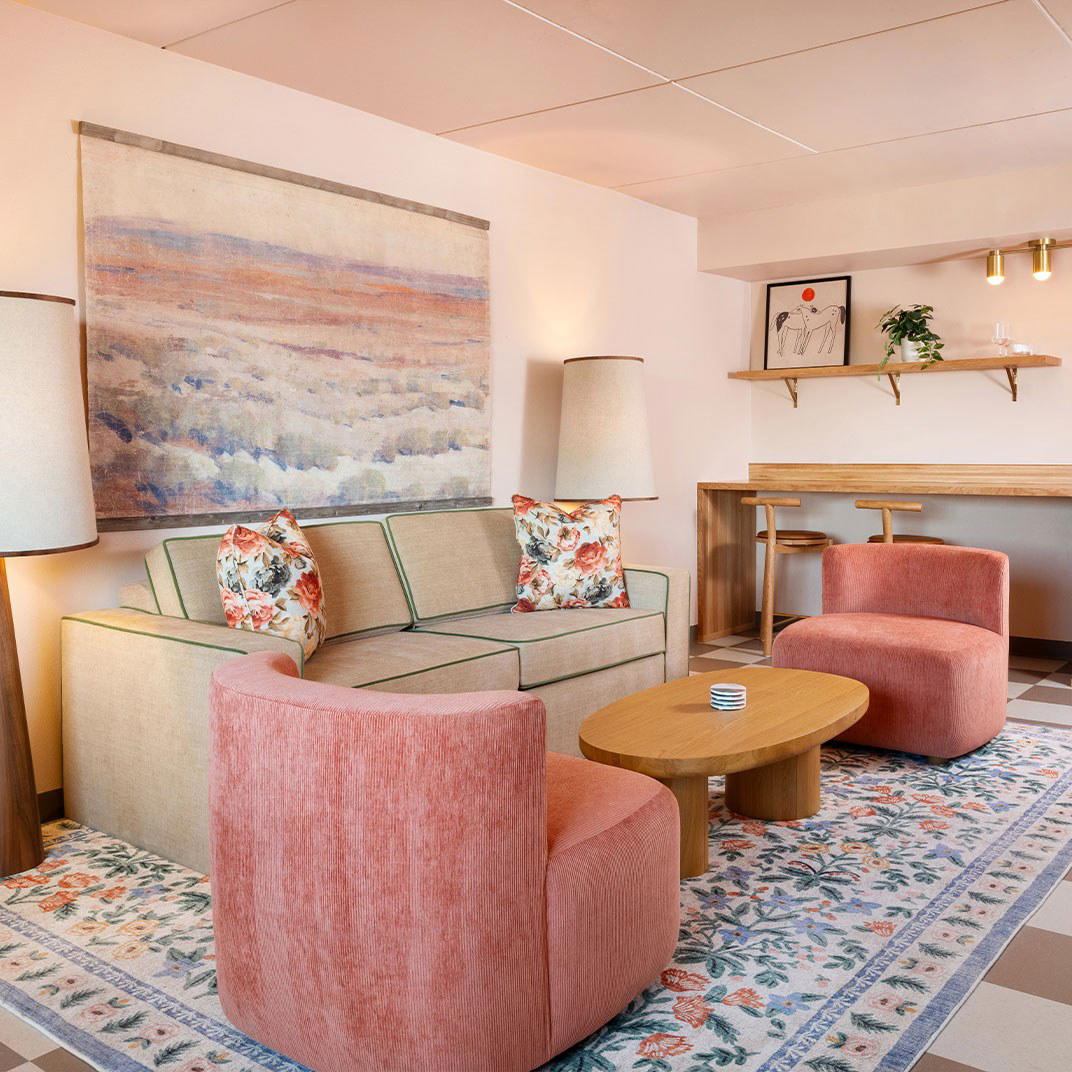
Tranquil and warm ambiance evoking a traditional New Mexican pueblo home amidst natural beauty.