


Convento Wijnbistro evolved from a wine shop into a Michelin Plate-recognised bistro on Mechelsestraat, consistently ranked among Leuven's leading wine addresses by Star Wine List. The kitchen leans farm-to-table with a pronounced vegetable focus, while the wine program anchors the experience. Within Leuven's €€€ restaurant tier, it occupies a specific niche: a place where the wine list and the food carry equal editorial weight.
Pearl is the En Primeur Club membership app — saves, bookings, and concierge access live there. Same editors, same standards.
- Address
- Mechelsestraat 87, 3000 Leuven, Belgium
- Phone
- +32 468 51 71 35
- Website
- convento.be
- Directions
- Get directions
 Saves & bookings on Pearl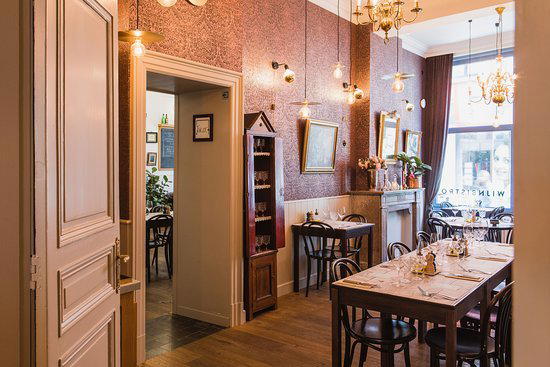
Wine-First Dining in Leuven's City Centre
Leuven's restaurant scene has, over the past decade, sharpened into distinct tiers and identities. At the higher end, addresses like EED and EssenCiel operate in the €€€€ bracket with formal tasting-menu structures and chef-driven narratives. Closer to street level, a smaller cohort of €€€ addresses has developed where the wine program, rather than a single kitchen personality, defines the evening. Convento Wijnbistro on Mechelsestraat 87 is the clearest example of that second model in the city.
The address began as a wine shop, a format that still informs how the room feels and how guests relate to the staff. That retail origin is not incidental: wine merchants tend to build service cultures around knowledgeable conversation rather than ceremony, and the bistro format that grew around the shop has kept that register. The atmosphere is described across multiple visitor accounts as quiet and homely, terms that place it apart from the louder, more theatrical end of Belgian bistro culture. For a city with a significant student population and a correspondingly energetic bar scene, that quietness is a deliberate positioning.
The Logic Behind a Wine Bistro Format
Wine bistros occupy a specific position in European dining geography. They are not wine bars, which typically prioritise the glass program over any serious food offer, and they are not restaurants that happen to have a wine list. The format demands that kitchen and cellar carry equal weight, which places considerable pressure on the team dynamic. At Convento, the evolutionary arc from shop to bar to bistro suggests a deliberate calibration of those two elements over time rather than a single founding vision.
That calibration has drawn consistent external recognition. Star Wine List, which ranks wine programs rather than kitchen output, placed Convento at number one in its category for 2024 and again for 2025. In 2023, the program appeared three times across Star Wine List rankings, including a first-place result. Against peers in the Leuven €€€ tier, including Bistro Tribunal and d'Artagnan, Convento's wine credentials form a genuinely distinct competitive advantage.
Michelin has noted the kitchen separately: a Plate designation in both 2024 and 2025 confirms that the food registers at a level above casual bistro cooking without positioning it in the starred tier where addresses like Cum Laude operate. The Plate is Michelin's signal for cooking that is executed with care and consistency, which suits a format where the wine program is the primary editorial draw.
A Kitchen Built Around Vegetables
Farm-to-table has become a widely claimed positioning across European bistro cooking, but the kitchen here applies it with a specific emphasis: vegetables are not a supporting category but a primary register. Preparations include oven-baked cauliflower with ras el hanout, quinoa, and hummus, a combination that draws on North African spicing and Middle Eastern pantry staples rather than defaulting to classical Belgian or French idioms. That cross-referencing of traditions is characteristic of a kitchen more interested in ingredient logic than in geographic orthodoxy.
The vegetable orientation is consistent rather than occasional, with what the venue's own framing describes as primarily thoughtful but generous vegetable use alongside pure vegetable preparations. The kitchen leans toward abundance rather than restraint, which suits the bistro register. Convento's approach appears to lean toward abundance rather than restraint, which aligns with the bistro register more than the fine-dining one.
This makes Convento a credible option for guests who want a serious kitchen without a meat-forward menu, a narrower category in Leuven than the vegetable-focused dining culture of a city like Ghent, but one that is growing as Belgian kitchens respond to shifting guest expectations.
Team Dynamic and the Floor-Cellar Relationship
In wine bistros, the relationship between floor staff and the cellar team tends to matter more than in conventional restaurants, because guests arrive with a genuine interest in wine guidance rather than simply ordering a bottle to accompany a meal. At Convento, the evolution from wine shop means that staff fluency with the list is likely embedded in the venue's culture rather than trained in as an add-on. Across European fine-dining, from Flemish flagships like Hof van Cleve and Boury to coastal addresses like Bartholomeus and Willem Hiele, the calibration between wine service and kitchen output is a consistent differentiator. Convento operates in a different tier but applies the same structural logic.
Venues where the floor staff are genuinely interested in the wine tend to generate a different conversational rhythm than those where service is choreographed but thin. Star Wine List rankings reward exactly this depth of program and service knowledge, which suggests that what guests experience as atmosphere is, in part, the product of a well-integrated front-of-house and cellar operation.
Where Convento Sits in the Broader Belgian Picture
Belgium's wine bistro format has parallels in Brussels, where venues like Bozar Restaurant operate at the intersection of culture and serious food and wine programming. In Antwerp, Zilte represents the starred end of the spectrum. Farm-to-table formats with strong wine programs also appear in Germany, at addresses like BOK Restaurant in Münster and Clostermanns Le Gourmet in Niederkassel. Convento's specific combination of wine-merchant heritage, vegetable-forward kitchen, and Michelin Plate recognition places it in a narrower comparable set than any of these, one defined by format discipline rather than ambition for starred status.
For Leuven specifically, that positioning fills a gap. The university city generates a visitor profile that ranges from academics and conference guests to the weekend leisure market drawn from Brussels and the wider Flemish corridor. Within that range, a venue that offers serious wine conversation, a kitchen with external recognition, and a register that is convivial rather than formal tends to hold appeal across a broader demographic than either a starred tasting-menu restaurant or a wine bar with limited food.
Planning a Visit
Convento Wijnbistro is located at Mechelsestraat 87 in central Leuven, within comfortable walking distance of the main market square and the city's principal hotel stock, details on which are covered in our full Leuven hotels guide. Pricing sits at €€. The Star Wine List rankings suggest the wine selection rewards exploration at multiple price points, though specific list details are best confirmed directly with the venue.
Compact Comparison
Comparable venues nearby, for context on price, style, and recognition.
| Venue | Cuisine | Price | Notes |
|---|---|---|---|
| Convento WijnbistroThis venue — the venue you are viewing | Centrum, Belgian Contemporary Bistro | $$ | Not listed |
| Cum Laude | Groot Begijnhof, Belgian Fine Dining | $$$$ | Not listed |
| Barba | City Center, Modern Belgian Bistro | $$ | Not listed |
| Allison | Not listed | $$ | centrum, Asian Fusion Bites & Creative Cocktails |
| bittersweet | Not listed | $$$ | Leuven Centre, Artisanal Belgian Chocolate |
| Mariette | Wilsele, Franco-Belgian Bistro | $$$ | Not listed |
Recognition history
Dated appearances from independent guides and award organizations, with the underlying list record or original source where available.
Michelin Plate
Michelin
Michelin Plate
Michelin
Star Wine List
Star Wine List
We're Smart World 3 Radishes
We're Smart World
Michelin Plate
Michelin
Continue exploring
More in Leuven
Restaurants in Leuven
Browse all →
Bars in Leuven
Browse all →
Hotels in Leuven
Browse all →

Wineries in Leuven
Browse all →
At a Glance
- Cozy
- Intimate
- Elegant
- Date Night
- Special Occasion
- Wine Cellar
- Extensive Wine List
- Sommelier Led
- Farm To Table
- Local Sourcing
Current opening hours
- Monday
- Closed
- Tuesday
- 2–6 PM
- Wednesday
- 12–6 PM
- Thursday
- 12–6 PM
- Friday
- 12–6 PM
- Saturday
- 10 AM–6 PM
- Sunday
- Closed
Hours can change for holidays and private events. Last verified .
Cozy homely living room atmosphere surrounded by wine bottles, pleasant bistro-lounge with friendly service.