Cipriani
On the Larvotto waterfront at 1 Avenue Princesse Grâce, Cipriani brings the Venetian dining institution's signature register to Monte Carlo's most competitive restaurant tier. The brand's lineage connects to a mid-century Italian hospitality tradition that prizes ritual and restraint in equal measure, making it a counterpoint to Monaco's more maximalist dining options.
Pearl is the En Primeur Club membership app — saves, bookings, and concierge access live there. Same editors, same standards.
- Address
- 1 Av. Princesse Grâce, 98000 Monaco
- Phone
- +37793254250
- Website
- ciprianimontecarlo.com
- Directions
- Get directions
 Saves & bookings on Pearl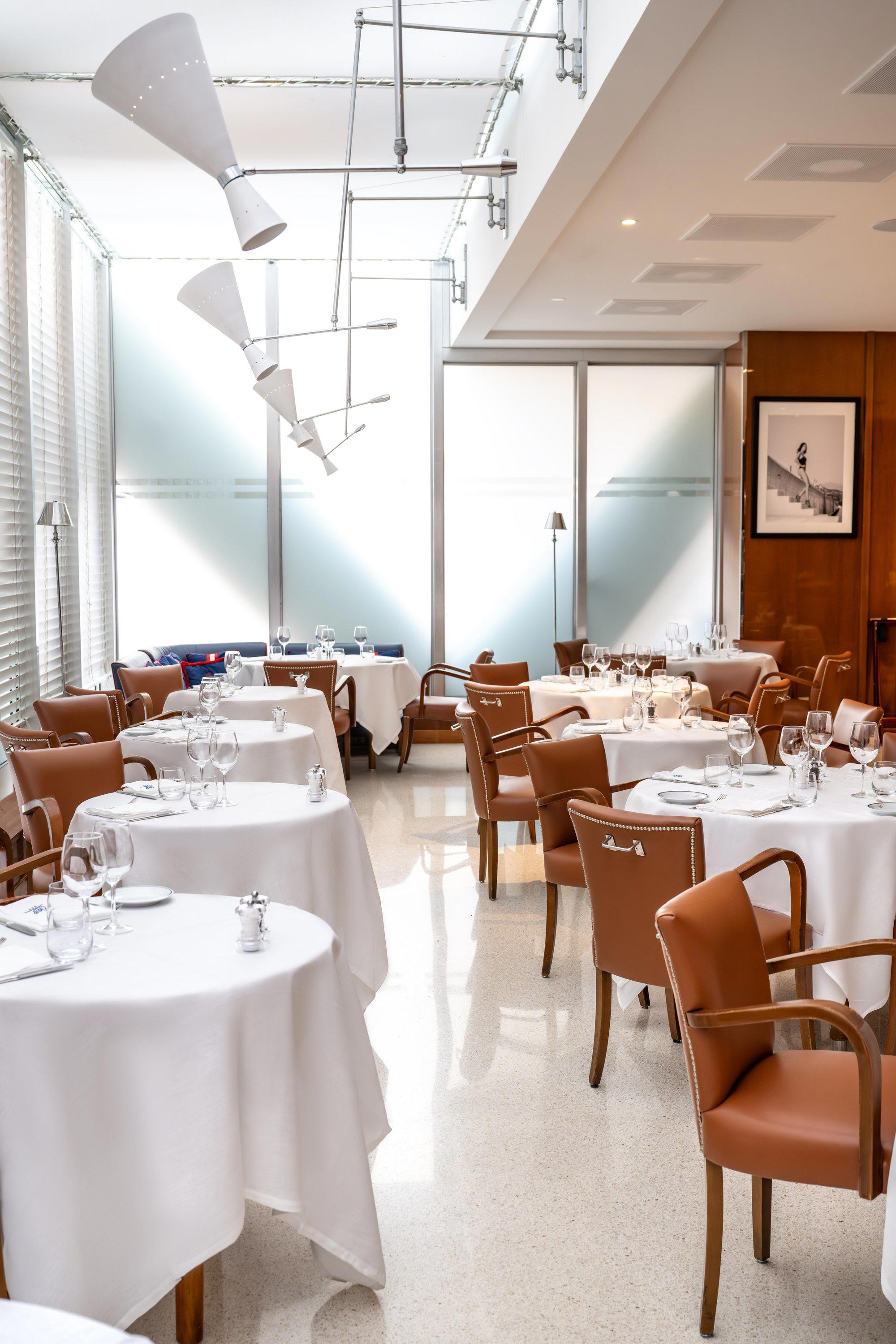
Where the Ritual Begins: Approaching the Table
Monaco's Larvotto strip is not short on restaurants positioning themselves as destination dining. What separates the addresses that endure from those that trade on postcode alone is rarely the view, it is the pacing, the sequencing, the unspoken contract between kitchen and guest. Cipriani, at 1 Avenue Princesse Grâce, belongs to a dining lineage that has been writing that grammar since the mid-twentieth century. The brand's roots in Venice's Hotel Cipriani and Harry's Bar carry a specific set of expectations into every room that bears the name, and Monte Carlo's version operates within those inherited codes.
The Cipriani name itself functions as a kind of shorthand among a particular tier of traveller. It signals a certain tempo: unhurried service, a menu anchored in Italian coastal and Venetian tradition, and a room that skews toward the formally social rather than the theatrically gastronomic. That positioning places it in an interesting relationship with the rest of Monaco's upper dining tier, where addresses like Alain Ducasse at Louis XV and Blue Bay Marcel Ravin compete on culinary ambition and Michelin credibility. Cipriani competes on something slightly different: institutional confidence.
The Dining Ritual at a Cipriani Table
Across its international locations, the Cipriani format has remained notably consistent. This is not a brand that reinvents itself with each new market. The meal tends to follow a recognisable arc: antipasti that lean on quality of ingredient rather than technical complexity, pasta courses executed with the kind of restraint that only comes from not needing to impress, and secondi that reflect the coastal Italian tradition of letting proteins speak without excessive intervention. In a city where L'Abysse Monte-Carlo is pushing omakase precision and Les Ambassadeurs by Christophe Cussac operates at the refined modern cuisine end of the spectrum, Cipriani's classicism reads as a deliberate editorial choice rather than a conservative default.
Italian dining rituals have their own internal logic, and the Cipriani format honours several of them explicitly. The meal is not designed to be rushed. There is no tasting-menu countdown, no amuse-bouche sequence signalling that the kitchen controls the clock. Guests are expected to arrive, settle, order in their own time, and treat the table as a social space that the food serves rather than dominates. This is, in fact, how most serious Italian eating still works, at Dal Pescatore in Runate, for instance, the same unhurried model has anchored three Michelin stars for decades. The difference is geography: Monaco compresses every dining experience into a small, wealthy, internationally mobile population, which means the Cipriani table is often occupied by people for whom the brand carries biographical weight, Venice holidays, New York lunches, previous lives in other cities where a Cipriani outpost was part of the social fabric.
Positioning Within Monaco's Italian Dining Register
Italian food in Monaco exists across a wide range of registers. At the neighbourhood end, Amici Miei in Fontvieille and Il Pacchero in Condamine serve a more local, less ceremony-driven version of the cuisine. At the formal end, La Table d'Antonio Salvatore au Rampoldi operates with chef-driven ambition and award recognition. Cipriani occupies a third position: the branded institution, where the experience is in part the experience of the brand itself. This is neither a criticism nor a commendation, it is simply the operating model, and for a specific type of guest it is exactly what is required.
That guest profile matters when thinking about when and how to use the restaurant. Cipriani Monte Carlo draws from the same international pool as comparable addresses in New York and beyond, guests who understand the Cipriani register and arrive with calibrated expectations rather than blank curiosity. This is a meaningful distinction from, say, Lazy Bear in San Francisco or Atomix in New York, where the format itself is the discovery. At Cipriani, the format is already known; the local iteration is what varies.
Monaco Context and the Larvotto Address
The Larvotto waterfront position at Avenue Princesse Grâce places Cipriani in one of Monaco's most legible dining corridors. Avenue 31 operates nearby in the same area, confirming the strip's status as a concentration of destination-level restaurants oriented toward the sea. The address is accessible from the central Monaco hotel cluster without requiring a car, and the surrounding neighbourhood context reinforces rather than undercuts the restaurant's positioning.
For those spending time across the wider Riviera, the dining geography extends further. Hostellerie Jerome in La Turbie sits above Monaco in the hills toward the French interior, offering a contrasting register of Provençal precision, while Beef Bar Monaco and Castelroc in Monaco City represent the principality's range at different price points and formality levels. Atelier Moessmer Norbert Niederkofler in Brunico and Emeril's in New Orleans offer different but instructive reference points for how institutional dining identities travel across contexts.
Planning Your Visit
Cipriani's address at 1 Avenue Princesse Grâce, Monaco, is the practical starting point. Reservations are essential, particularly during the Grand Prix period in May and across the summer months. The Larvotto location is walkable from the major hotels along the seafront corridor. Dress expectations at a Cipriani property across its global portfolio have historically leaned toward smart casual at minimum, with the Monte Carlo context pushing that toward the formal end of the range. Guests with specific dietary requirements should contact the restaurant directly before arrival rather than relying on assumptions about the menu's flexibility, as the kitchen's approach to the traditional Italian format varies by location.
Where It Fits
Comparable venues nearby, for context on price, style, and recognition.
| Venue | Cuisine | Price | Notes |
|---|---|---|---|
| CiprianiThis venue — the venue you are viewing | Classic Venetian Italian | $$$$ | Not listed |
| Rampoldi | Modern Monégasque Fine Dining | $$$$ | Place du Casino de l'Opéra |
| Nikki Beach Monte Carlo | Mediterranean Coastal Fusion | $$$$ | Monte Carlo |
| Kaiseki (Silver Nova) | Polished Japanese Kaiseki | $$$$ | Monte Carlo |
| Chez Pierre | Classic French Bistro | $$$$ | Carré d'Or |
| Izakaya Cozza | Japanese-Italian Izakaya Fusion | $$$$ | Larvotto |
Continue exploring
More in Monte Carlo
Restaurants in Monte Carlo
Browse all →
Bars in Monte Carlo
Browse all →
Hotels in Monte Carlo
Browse all →

At a Glance
- Elegant
- Sophisticated
- Classic
- Ornate
- Well Known
- Special Occasion
- Business Dinner
- Celebration
- Date Night
- Terrace
- Private Dining
- Historic Building
- Extensive Wine List
Current opening hours
- Monday
- 12–2:30 PM, 7–11:30 PM
- Tuesday
- 12–2:30 PM, 7–11:30 PM
- Wednesday
- 12–2:30 PM, 7–11:30 PM
- Thursday
- 12–2:30 PM, 7–11:30 PM
- Friday
- 12–2:30 PM, 7–11:30 PM
- Saturday
- 12–2:30 PM, 7–11:30 PM
- Sunday
- 12–2:30 PM, 7–11:30 PM
Hours can change for holidays and private events. Last verified .
Refined and warm interior resembling a luxury yacht, featuring mahogany walls, polished steel, large mirrors, marble floors, signature brown leather chairs, and nautical blue and white elements evoking 1920s elegance.