Cielito Lindo
Our verdict
On Olvera Street, the oldest commercial thoroughfare in Los Angeles, Cielito Lindo has been feeding the city its taquitos dorados since 1934. The stand occupies a central place in the street's open-air market atmosphere, where the smell of frying corn tortillas and the sound of the surrounding plaza define the experience as much as the food itself. It is one of the few food operations in Los Angeles where the queue is part of the ritual.

Pearl is the En Primeur Club membership app, where members save venues, book tables and use the concierge.
Olvera Street and the City It Fed
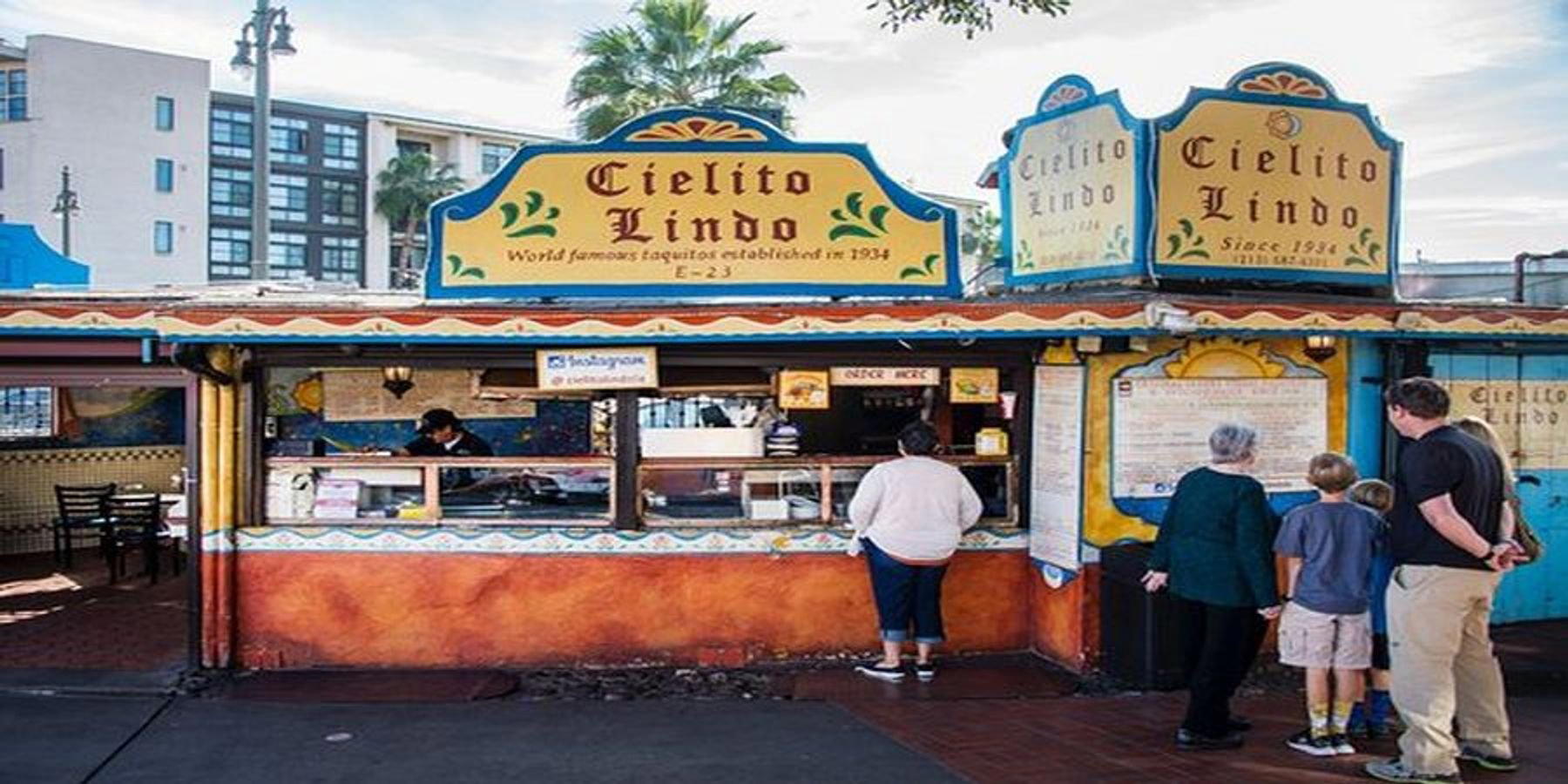
Before Los Angeles had a serious restaurant scene to speak of, before Michelin arrived in California and long before tasting menus became the city’s dominant conversation, Olvera Street was doing something that most of the city’s newer dining institutions still aspire to: feeding people food that meant something. The street itself, a pedestrian market corridor running through El Pueblo de Los Ángeles Historical Monument, is the oldest surviving commercial thoroughfare in the city. The scent of corn tortillas frying in hot oil drifts across the brick walkway, mingling with incense from nearby vendors and the low hum of weekend foot traffic. Cielito Lindo, which has occupied its counter at E 23 Olvera Street since 1934, sits at the centre of that atmosphere in every sense.
That opening figure, 1934, is worth pausing on. Los Angeles’s dining culture is frequently discussed as something that arrived recently, or that has only reached sophistication in the last two decades. Cielito Lindo predates most of the institutions that now frame the city’s culinary reputation. It was operating before the post-war restaurant boom, before California cuisine became a critical category, and before the city’s Mexican-American food traditions were taken seriously by national food media. For comparison, Le Bernardin in New York City opened in 1986. The French Laundry in Napa opened in its current form in 1994. Cielito Lindo was already sixty years old by then.
What the Counter Looks Like
The stand operates as an open counter facing the street, which means there is no interior to speak of, no ambient lighting selected by a designer, and no dress code implied by the architecture. The experience is immediate and public. You order at the window, you wait in line if there is one (and on weekends, there usually is), and you eat standing or at one of the nearby benches. That format is not a limitation; it is the entire point. The sights and sounds of Olvera Street, the market stalls, the murals, the families moving through the space, form the backdrop that a formal dining room cannot replicate. This is the kind of context that Somni or Hayato work carefully to construct inside four walls; here it exists naturally, built over nearly a century.
The item that draws most visitors is the taquito dorado: a tightly rolled corn tortilla filled with beef, fried until it crisps at the edges, and served with a green avocado-based sauce. The mechanics of the dish are simple. The execution, refined over decades and passed through generations of the founding family, produces a result that is difficult to replicate casually. The crunch of the shell against the cool weight of the sauce is the sensory encounter that has made the stand a reference point in discussions of Los Angeles’s foundational street food. Whether it belongs in a conversation alongside Kato or Providence is a question of category, not quality.
Where Cielito Lindo Sits in the Los Angeles Food Picture
Los Angeles’s Mexican and Mexican-American food culture occupies a wide and internally differentiated tier. At one end, you have operations like Osteria Mozza-adjacent fine dining with Mexican inspiration and tasting-menu prices. At the other, you have the taco trucks, market stalls, and family-run counters that form the daily infrastructure of what millions of Angelenos actually eat. Cielito Lindo sits firmly in the latter category, at the historic and sentimental apex of it. Its price point is accessible by design; the stand has never positioned itself as anything other than a working food counter. That accessibility is precisely what has allowed it to function as a civic institution rather than a destination for a particular income bracket.
For context on how Los Angeles’s high-end Mexican food scene has evolved separately, Holbox in Mercado La Paloma offers an instructive comparison: also a counter-style operation, also accessible, but oriented toward Mexican seafood with a regional specificity that has earned it national attention. Cielito Lindo’s authority comes from a different source entirely, not critical recognition or press cycles, but nine decades of continuous operation in the same physical location.
Visitors approaching from downtown Los Angeles will find Olvera Street reachable on foot from Union Station, which sits directly adjacent to El Pueblo. The Metro Gold and Red Lines stop at Union Station, making the stand one of the more transit-accessible food stops in a city not known for transit-friendly dining. Parking in the surrounding area is available in several city-operated lots, though weekend congestion around the historic district is a reliable feature of the experience rather than an anomaly. Plan for it.
The Seasonal Dimension
Olvera Street as a whole intensifies at certain times of year, and Cielito Lindo’s crowds follow that rhythm. Día de los Muertos celebrations in late October and early November draw some of the largest foot traffic in the area’s calendar, with ofrendas installed along the street and the market operating at fuller capacity. The Las Posadas processions in December similarly animate the corridor. Visiting during these periods adds cultural layers to the experience that are worth planning around, though they also mean longer waits at the counter. Summer weekends carry their own consistent volume. If shorter lines matter to you, a weekday morning is the structural answer; if the full ambient character of the street is what you are after, a weekend afternoon during a festival period delivers that at the cost of patience.
For readers building a broader Los Angeles itinerary, our full Los Angeles restaurants guide covers the city’s range from counters to tasting menus. Those comparing experiences across American cities may find relevant context in Emeril’s in New Orleans, another institution where longevity and local cultural identity do significant editorial work, or Lazy Bear in San Francisco for a very different expression of California dining character. Further afield, Blue Hill at Stone Barns in Tarrytown, Smyth in Chicago, Addison in San Diego, Single Thread Farm in Healdsburg, The Inn at Little Washington, Frasca Food & Wine in Boulder, Atomix in New York City, and Atelier Moessmer Norbert Niederkofler in Brunico round out a picture of how institutions at different price and format tiers earn their durability.
Frequently asked questions
Where is Cielito Lindo located?
Cielito Lindo is located at E 23 Olvera St, Los Angeles, CA 90012, Los Angeles.
How does Cielito Lindo fit into the history of Mexican food in Los Angeles?
Cielito Lindo has operated on Olvera Street in downtown Los Angeles since the 1930s, placing it among the city's earliest permanent Mexican-American food counters. Olvera Street itself was preserved as a historic Mexican marketplace in 1930, and the stand predates the broader restaurant infrastructure that now defines LA's Mexican food culture. For context on where that culture sits today, it spans operations from neighborhood taquerias to Michelin-recognized kitchens, Cielito Lindo sits at the foundation of that continuum.
What's the must-try dish at Cielito Lindo?
The taquito is the reason people queue at this Olvera Street counter, and it has been since the stand opened in the 1930s. Rolled, fried, and served with avocado salsa, it is the dish that defines the operation. Everything else on the menu supports it rather than competes.
Can I walk in to Cielito Lindo?
Yes. Cielito Lindo operates as an open counter at E 23 Olvera St, facing the street with no reservations and no interior seating. Walk-up ordering is the format. During Día de los Muertos celebrations and peak weekend afternoons, expect a line that moves quickly.
What's the signature at Cielito Lindo?
The rolled taquito with avocado salsa is the signature, and it has remained so across decades of operation on Olvera Street in downtown Los Angeles. The counter has no interior, no curated ambiance, and no tasting menu, the taquito carries the entire identity of the place.
Is Cielito Lindo good for vegetarians?
Olvera Street's oldest counter built its reputation on meat-filled rolled taquitos, so vegetarians should check current offerings directly at the stand before visiting. The format is fast and open-counter, so staff can answer questions on arrival at E 23 Olvera St, Los Angeles.
Nearby-ish Comparables
Comparable venues nearby, for context on price, style, and recognition.
| Venue | Cuisine | Price | Awards | Notes |
|---|---|---|---|---|
| Cielito LindoThis venue (the venue you are viewing) | Traditional Mexican Taqueria | $10–20 | Not listed | Not listed |
| Tacos Arabes de Puebla | Puebla-Style Tacos Arabes | $10–20 | LA Taco Best Tacos in LA #17 | Boyle Heights |
| Homegirl Café | Mexican Cafe with Farm-to-Table Focus | $10–20 | Not listed | Naud Junction |
| Razo’s Tacos | Mexican Lobster Tacos | $10–20 | LA Taco Best Tacos in LA #49 | North Hollywood |
| Taquería Juquilita | Authentic Oaxacan Taqueria | $10–20 | LA Taco Best Tacos in LA #58 | Wilshire Center |
| Tocaya Organica | Modern Organic Mexican | $20–30 | Not listed | Century City |
Continue exploring
More in Los Angeles
Restaurants in Los Angeles
All restaurants in Los Angeles →
Bars in Los Angeles
All bars in Los Angeles →

Hotels in Los Angeles
All hotels in Los Angeles →


Wineries in Los Angeles
All wineries in Los Angeles →

Details
- Well Known
- Historic
- Casual Hangout
- Historic Building
- Standalone
- Street Scene
- A La Carte
Current opening hours
- Monday
- 9 AM–8 PM
- Tuesday
- 9 AM–8 PM
- Wednesday
- 9 AM–8 PM
- Thursday
- 9 AM–8 PM
- Friday
- 9 AM–9 PM
- Saturday
- 9 AM–9 PM
- Sunday
- 9 AM–8 PM
Hours can change for holidays and private events. Hours as of .
Casual historic street stand atmosphere amid Mexican-American heritage site with focus on quick taquito service.