Fairmont Miramar Hotel & Bungalows



Occupying five acres at the corner of Wilshire Boulevard and Ocean Avenue since 1921, the Fairmont Miramar Hotel & Bungalows carries more than a century of Santa Monica social history — from Eleanor Roosevelt to Greta Garbo — across three distinct accommodation wings and a dining programme anchored by FIG restaurant and The Bungalow bar. The Star Wine List-recognised drinks programme signals the property's continued investment in its food and beverage credentials.
Pearl is the En Primeur Club membership app — saves, bookings, and concierge access live there. Same editors, same standards.
- Address
- 101 Wilshire Boulevard
- Phone
- 310-576-7777
- Website
- fairmont-miramar.com
- Directions
- Get directions
 Saves & bookings on Pearl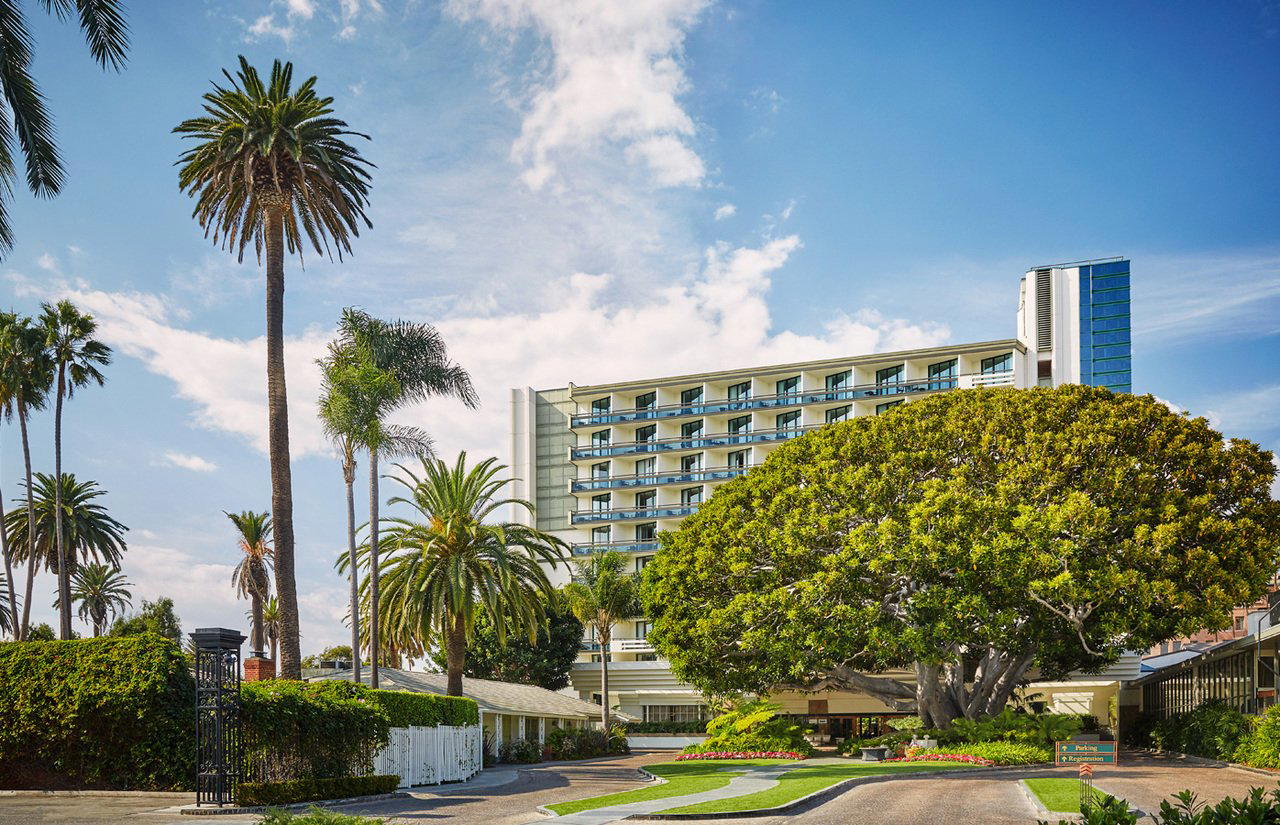
A Century of Santa Monica on Five Acres
The approach to 101 Wilshire Boulevard does most of the orientation work before you reach the front desk. A Moreton Bay fig tree — planted in the 1880s when British-born silver magnate John P. Jones built his family mansion on this site — now reaches nearly 100 feet in height, its canopy spreading roughly 130 feet across the driveway. That tree is not incidental scenery. It marks the physical continuity between a Victorian private estate, a hotel that opened in 1921, and the contemporary Fairmont property operating on the same ground today. In Santa Monica, where the development cycle has erased most landmarks older than a few decades, that kind of rooted provenance carries real weight.
Jones named the estate Miramar, Spanish for "ocean view", and the sightlines that justified that name in 1889 remain the property's structural advantage today. The Pacific is visible from most of the 10-story Ocean Tower's 176 rooms, from the upper-floor Palisades wing, and from the private balconies attached to the 31 garden bungalows. The elevation above Ocean Avenue is modest but sufficient; this stretch of Wilshire sits at the bluff edge where the city meets the coast, and the hotel sits at the most commanding position on it.
Three Buildings, Three Registers of Stay
The Fairmont Miramar packages three architecturally distinct buildings into a single resort footprint, which means the room selection decision is actually a stay-type decision. The Palisades wing, built in 1924 and listed as a historical building, carries the property's most direct connection to the celebrity-residence era, the wing where politicians and Hollywood figures once took extended rooms during shoots or political visits. Interior design here layers contemporary and classic motifs against hand-distressed hardwood floors and vintage detailing, a sensibility that sits closer to a period residential hotel than a modern resort.
The Ocean Tower, a 10-story midcentury-modern structure built in 1959, represents a different register entirely. The architecture is of its moment, clean lines, horizontal emphasis, panoramic glazing, and nearly all 176 rooms carry balconies oriented toward the Pacific, the Santa Monica Pier, and on clear days, the Malibu coastline. It is the building that reads most immediately as a hotel rather than a historic property with rooms attached.
31 bungalows, the third category, occupy the garden level between the two main structures. Los Angeles interior designer Michael Berman reimagined all 31 of the original 1930s cottages, retaining their beach-inspired character while updating them to a contemporary residential standard. They sit among palms and fountains on a property that feels, in that section, less like a hotel compound and more like a private garden estate. For guests who want the resort's location without the corridor-and-lift rhythm of a tower building, the bungalows operate as a functionally separate accommodation product, one that has earned the property a particular following among long-stay guests, according to the property's own positioning as the west side's only private bungalow offering of this type.
The Dining Programme: FIG and The Bungalow
Santa Monica's food-and-beverage scene has developed considerable depth along Main Street and the Bergamot corridor, but the Fairmont Miramar's in-house programme is designed to function as a destination rather than a fallback for guests who don't want to leave the property. The two anchors, FIG restaurant and The Bungalow bar, operate with distinct identities that position the hotel in the premium Santa Monica market rather than the generic resort-dining tier.
FIG operates on a field-to-fork sourcing framework, which in Southern California means access to a network of farms and producers whose output changes with the growing calendar. That approach has become a standard signal in premium Los Angeles dining, it appears at properties across the region, but FIG sits in a competitive position where the sourcing ethos is supported by a hotel kitchen's capacity and consistency rather than a standalone restaurant's more variable execution. The format positions it between a neighbourhood farm-to-table restaurant and a full-service hotel dining room, drawing both hotel guests and walk-in traffic from the surrounding Wilshire corridor.
The Bungalow is the bar product that has attracted the broader recognition. The programme received a Star Wine List award for 2026, placing it in a recognised tier of drinks programmes with credentialed cellar depth and wine list construction. The format takes its cues from Baja California's coastal bar culture, casual in register, serious in the glass, and operates as a social venue in its own right, distinct from the hotel's main lobby dynamic. For guests assessing the property's drinks offering against peers, the Star Wine List signal places The Bungalow above the standard hotel bar tier and aligns it with properties like Hotel Bel-Air in Los Angeles, where the beverage programme carries its own editorial identity rather than serving purely as a hotel amenity.
For comparison context across the wider US luxury hotel market, properties with similarly distinct beverage identities include Auberge du Soleil in Napa and SingleThread Farm Inn in Healdsburg, both of which have built food and drink programmes that operate as primary reasons to visit rather than supporting amenities. The Fairmont Miramar's dual-venue approach, farm-sourced restaurant plus a separately positioned bar with award recognition, follows the same structural logic.
Position in the Santa Monica Market
Santa Monica's premium hotel tier has expanded significantly over the past decade. Properties like Found Santa Monica and Huntley Santa Monica Beach compete for the design-led, independent-traveller segment, while the Fairmont Miramar occupies a different position: a large-format, full-service property with branded infrastructure, a pool, multiple dining outlets, and the kind of operational depth that handles both leisure guests and corporate events within the same footprint. For guests choosing between those two modes, the Miramar's scale is a differentiating feature rather than a compromise.
The historical depth adds a layer that newer properties cannot replicate. The list of past guests, John F. Kennedy, Eleanor Roosevelt, Cary Grant, Marilyn Monroe, and Greta Garbo, who reputedly stayed for four years, is documented rather than implied, and the 1924 Palisades wing that housed them remains operational. That provenance places the Miramar in a category closer to The Fifth Avenue Hotel in New York City or Chicago Athletic Association in Chicago, hotels where the building's social history is a genuine part of what guests are buying, than to purpose-built luxury resorts like Amangiri in Canyon Point or Four Seasons at The Surf Club in Surfside. For those interested in exploring the wider Santa Monica dining and hotel scene, our full Santa Monica restaurants guide covers the neighbourhood in depth.
Planning Your Stay
The Fairmont Miramar sits at 101 Wilshire Boulevard, at the intersection of Wilshire and Ocean Avenue, the bluff-leading position that gives the property its Pacific sightlines. Santa Monica is accessible from LAX in approximately 30 minutes outside peak traffic, though the 405 and PCH corridors can extend that significantly during commuter hours; guests arriving from the airport should factor in buffer time or consider a non-peak arrival. The property operates as a full resort, with pool access, spa, and the full dining programme available to hotel guests, meaning there is a functional logic to choosing the Miramar over smaller boutique properties for multi-day stays where on-site variety matters. Specific room pricing, booking windows, and current availability are best confirmed directly through the property, as rate structures across the three accommodation wings, Palisades, Ocean Tower, and Bungalows, vary considerably by season and room category.
Recognition history
Dated appearances from independent guides and award organizations, with the underlying list record or original source where available.
Star Wine List
Star Wine List
Virtuoso Luxury Hotel Partner
Virtuoso
Michelin 1 Key
Michelin
Michelin 1 Key
Michelin
Continue exploring
More in Santa Monica
Hotels in Santa Monica
Browse all →
Bars in Santa Monica
Browse all →
Restaurants in Santa Monica
Browse all →
Wineries in Santa Monica
Browse all →
At a Glance
- Elegant
- Scenic
- Sophisticated
- Romantic
- Honeymoon
- Romantic Getaway
- Family Vacation
- Wellness Retreat
- Anniversary
- Celebration
- Beachfront
- Infinity Pool
- Butler Service
- Destination Spa
- Garden
- Terrace
- Panoramic View
- Private Dining
- Wi Fi
- Pool
- Spa
- Fitness Center
- Room Service
- Concierge
- Business Center
- Valet Parking
- EV Charging
- Beach Access
- Restaurant
- Hot Tub
- Sauna
- Waterfront
- Garden
- Wi Fi
- Pool
- Spa
- Fitness Center
- Room Service
- Concierge
- Business Center
- Valet Parking
- EV Charging
- Beach Access
- Restaurant
- Hot Tub
- Sauna
Sophisticated coastal elegance with bright, airy spaces featuring ocean views, well-lit common areas, and a relaxed California resort atmosphere enhanced by professional, welcoming staff.
Know Before You Go
- Getting there
- 101 Wilshire Boulevard