
A counter-seating ramen shop in Higashiosaka’s Fuse area, Chotakasui Jun Teuchi Men Nishimura belongs to Osaka’s low-cost, high-scrutiny noodle tier rather than the city’s destination dining circuit. Its Tabelog Ramen OSAKA 100 selections in 2024 and 2025 give it a useful signal for travelers weighing a short rail detour against central Osaka options.
Pearl is the En Primeur Club membership app — saves, bookings, and concierge access live there. Same editors, same standards.
- Address
- 大阪府東大阪市長堂1-28-14
- Phone
- +819042739125
- Website
- tabelog.com
 Saves & bookings on Pearl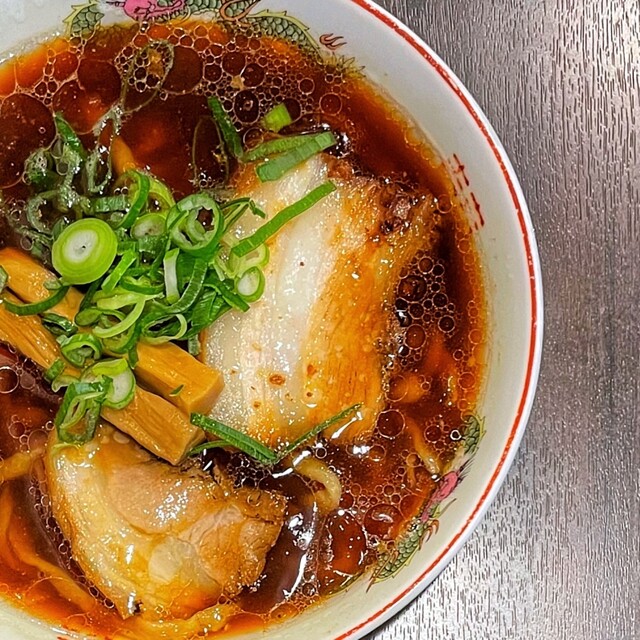
The approach to a serious ramen counter in Osaka is rarely ceremonial. The clues are practical: a queue that forms with little drama, the ticket machine dictating the rhythm, and the room’s attention fixed on bowls rather than conversation. In Higashiosaka’s Fuse area, that format matters. It places ramen closer to daily infrastructure than special-occasion dining, which is why value here is judged less by comfort and more by whether a short, inexpensive meal carries enough precision to justify the trip.
Chotakasui Jun Teuchi Men Nishimura sits in that category. The name points to a noodle identity, with “jun teuchi men” signalling handmade noodles, and its recognition on Tabelog’s Ramen OSAKA 100 list in both 2024 and 2025 puts it inside a narrow group of Osaka ramen rooms that have earned sustained attention from Japan’s review-driven dining culture. That matters because ramen in Osaka is not a single style race. The city absorbs shoyu, shio, paitan, tsukemen, local Chinese-influenced bowls and newer noodle-focused shops without forcing them into one orthodoxy.
Fuse ramen, judged by the bowl rather than the room
Osaka’s central ramen conversation often clusters around Namba, Umeda and the tourist corridors between them, but the stronger value plays frequently sit just beyond that loop. Fuse, served by Kintetsu lines, is more workaday than polished, and that changes the expectation. A ramen counter here is competing with everyday lunch economics as much as with destination dining. The prize is not luxury; it is compression: broth, noodles, service tempo and queue etiquette packed into a narrow spend.
That is where the comparison becomes useful. Fuse Hosomi Shoten and Junai Udon Nadeshiko operate in a similarly low-price bracket, while Taishu Chuuyuuka Shokudo Hakkai and Totomen En sit a notch higher on spend. Toriyaki Shogun Eiwa moves into a different dinner category altogether. Against that local spread, Chotakasui Jun Teuchi Men Nishimura reads as a specialist rather than a generalist: counter seating, ramen focus, and outside recognition rather than breadth of format.
The Tabelog score of 3.68 is also more meaningful in Japan than it may look to visitors used to inflated rating systems. On Tabelog, scores above the mid-threes can indicate serious local approval, especially in categories with heavy user scrutiny. The Ramen OSAKA 100 selection adds a second signal, separating the shop from casual noodle stops whose appeal is mostly convenience. It does not turn the experience into fine dining, and it should not be read that way. It says that within Osaka’s crowded ramen field, this is a counter serious enough to enter a competitive regional list.
The value proposition is discipline, not excess
Ramen value in Japan is often misunderstood by travelers. The bargain is not that the meal is cheap in an abstract sense; it is that a narrow craft can be purchased with little ceremony. A counter shop can spend its energy on noodle texture, soup balance and service turnover because the format strips away everything that would normally raise the bill. No private rooms, no elaborate beverage program, no long tasting sequence. The economics reward concentration.
Chotakasui Jun Teuchi Men Nishimura fits that logic. The shop’s practical rules, from ticketing order to queue conduct, are not quirks to be romanticised. They are the operating grammar of a small ramen counter handling demand without turning the room into theatre. The prohibition on representative waiting, the request that parties line up only when complete, and the limits around disruptive photography all point to the same idea: throughput depends on cooperation. For travelers, that is part of the value calculation. The meal is accessible, but the format expects diners to read the room quickly.
The absence of reservations also shifts the decision. This is not a place to build an evening around in the way a tasting-menu restaurant might anchor a trip. It is better understood as a targeted ramen stop, especially for diners already exploring Osaka beyond the central hotel belt. The useful question is not whether it has the grandeur of a destination restaurant, but whether its recognition, handmade-noodle identity and low-spend format outweigh the time required to reach Fuse. For ramen-focused travelers, the answer is often yes; for a first Osaka visit with limited meals, it competes with a deep field of central options.
How to place it inside an Osaka itinerary
The strongest Osaka food itineraries mix famous convenience with specialist counters. A visitor might read the restaurant alongside quick-service staples such as 551 Horai (551蓬莱), bakery stops like 52CHO-ME BAKERY, casual café addresses such as .cafe, or non-Japanese specialist rooms including 99 Pizza Napoletana Gourmet and a canto (Italian). The point is range: Osaka rewards diners who move between train-station food, neighborhood counters and reservation-led rooms rather than chasing one category all day.
For broader planning, use Our full Osaka restaurants guide to map meals by area, then pair the food route with Our full Osaka hotels guide, Our full Osaka bars guide, Our full Osaka wineries guide and Our full Osaka experiences guide. Readers building a wider Japan file may also want cross-city references such as -Grilled beef Sukiyaki- KAMAKURA TANUKIAN 鎌倉 たぬき庵 in Kamakura. 鮪と炭火焼き うお炭 秋葉原店 in Tokyo.know in Kumamoto, (Shoku) Vietnam in Kawasaki, [Curry Senmon Ten] Maruyama Kyoju. in Sapporo, [ki:] in Kyoto, Jōdo Saké Bar in Los Angeles and Onigiri Time in Pasadena.
The critical read is simple: this is a ramen counter whose appeal depends on precision, price discipline and the willingness to travel a little outside the standard Osaka dining path. The Tabelog Ramen OSAKA 100 recognition gives it credibility; the counter format keeps the experience grounded. That combination is exactly why serious ramen remains one of Japan’s great value propositions.
Credentials Lens
Nearby venues at a similar price tier for orientation.
| Venue | Cuisine | Price | Notes |
|---|---|---|---|
| Chotakasui Jun Teuchi Men Nishimura | Handmade Ramen & Tsukemen | $ | Higashi-Osaka (Fuse) |
| Matsushita kitchen | Japanese café with Western-style sweets and shaved ice | $ | Higashinari |
| Curry Daiya | Classic Japanese curry house | $ | Asahi |
| Tachinomi Sakaba Kakedashi | Japanese standing izakaya & sake bar | $ | Chūō |
| Buttah | Japanese Curry | $ | Chūō |
| Hokkyoku Nanba honten | Traditional Japanese ice candy shop | $ | Chūō |
Recognition history
Dated appearances from independent guides and award organizations, with the underlying list record or original source where available.
Tabelog 100 #34 · No. 34
Tabelog · Tabelog 100 - Ramen - OSAKA - 2025
Continue exploring
More in Osaka
Restaurants in Osaka
Browse all →




Bars in Osaka
Browse all →

Hotels in Osaka
Browse all →



Wineries in Osaka
Browse all →
At a Glance
- Lively
- Cozy
- Solo
- Family
- Casual Hangout
- After Work
- Late Night
- Standalone