Chicho's Flavors of the Dominican Republic
In a part of Utah where Dominican cooking is genuinely scarce, Chicho's Flavors of the Dominican Republic on Hooper's western fringe addresses a real gap in the region's dining map. The kitchen draws on Caribbean pantry staples — plantains, sofrito, slow-braised meats — that rarely appear this far inland. For anyone tracking ingredient-driven cooking outside the urban core, this address is worth the drive.
 Discover on Pearl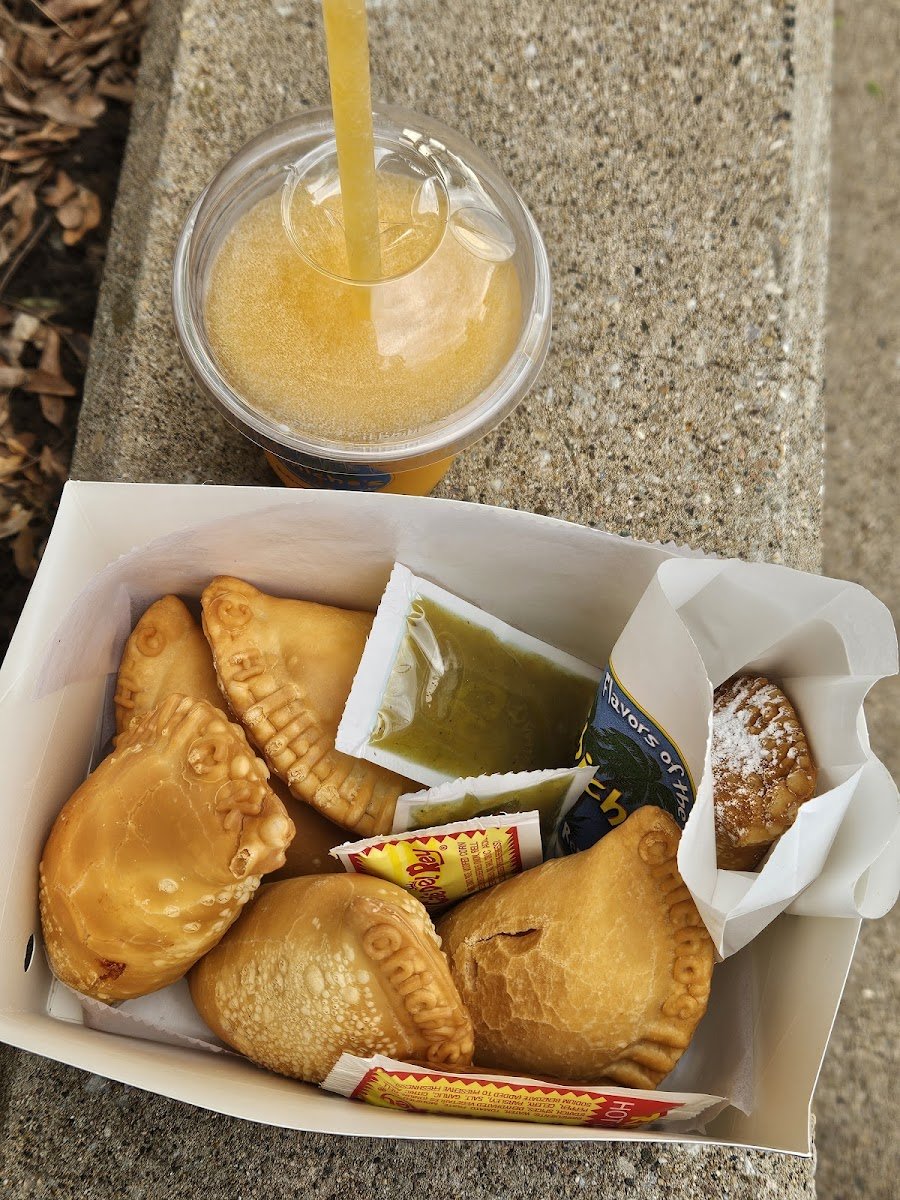
Where Dominican Pantry Logic Meets the Utah High Desert
The stretch of highway that leads out toward Hooper's western edge — flat, windswept, framed by the Great Salt Lake basin on one side and Weber County farmland on the other — is not where most food editors expect to find a Dominican kitchen. That contrast is precisely what makes Chicho's Flavors of the Dominican Republic worth examining, not as a curiosity, but as an example of a broader pattern: immigrant-rooted cooking that carries a fully-formed culinary tradition into geography that has historically offered very little of it. For context on how ingredient sourcing defines restaurants of this type, it helps to understand what Dominican cooking actually demands.
The Dominican pantry is disciplined and specific. Sofrito , the aromatic base of onion, garlic, ají caballero, cilantro, and tomato , underpins most savory preparations. Plantains appear across the ripeness spectrum, from the starchy tostones fried twice in their green state to the sweet, caramelized maduros that come from fully yellowed fruit. Long-braised pork, stewed kidney beans (habichuelas), and sancocho, a hearty multi-meat stew with root vegetables, represent the backbone of the tradition. Sourcing these ingredients credibly in landlocked northern Utah is a logistical challenge that restaurants of this type have to solve before the cooking can begin. That supply chain question is the real story at any diaspora kitchen operating this far from its origin geography.
The Sourcing Challenge That Defines Diaspora Cooking in the Interior West
Most Caribbean restaurants along the US coasts have access to wholesale distributors who stock green and ripe plantains year-round, fresh culantro, yuca, ají peppers, and the specific cuts of pork and goat that Dominican preparations require. Inland kitchens face a different calculation. When proximity to established Caribbean produce networks disappears, cooks either adapt their sourcing , building relationships with specialty importers, Latin grocery distributors, or regional farmers , or they compromise on the product. The difference shows on the plate in ways that are difficult to disguise: plantains sourced from a mainstream broadline distributor rarely achieve the texture of fruit that has been properly ripened and handled; dried herbs substitute poorly for fresh cilantro in a sofrito base.
This challenge is one reason the interior West's Dominican dining footprint remains thin compared to East Coast cities with large Dominican communities (New York's Washington Heights remains the benchmark, with dozens of Dominican restaurants within a few square miles). In Utah, and particularly in smaller communities like Hooper, a restaurant committed to the full register of this cuisine is occupying a near-empty niche. That scarcity makes the sourcing decisions more consequential, not less.
For readers comparing Chicho's to the EP Club roster of ingredient-obsessed American kitchens , operations like Blue Hill at Stone Barns in Tarrytown, where the sourcing chain is hyperlocal and heavily documented, or Single Thread Farm in Healdsburg, which operates its own farm , the comparison is instructive less about tier than about intent. Ingredient fidelity is the animating question regardless of price point or format. The same logic applies at Oyster Oyster in Washington, D.C., which frames its entire menu around sourcing discipline. At Chicho's, the equivalent question is whether the Dominican pantry is arriving in Hooper in a form that reflects the tradition honestly.
The Setting and What It Signals
The address , 5012 S 4300 W , places Chicho's in a low-density, largely residential corridor that sees little foot traffic by urban dining standards. This is not a destination cluster; there is no surrounding block of complementary restaurants, no neighborhood-driven evening pedestrian flow. The practical consequence is that arrivals here are intentional. Guests have made a decision to seek this specific cooking, which tends to produce a room dynamic different from the walk-in culture of a downtown strip. Community restaurants in semi-rural settings often develop a regulars-heavy clientele that gives the room a social texture distinct from metropolitan venues.
That geography also means the restaurant is not competing with a dense local peer set for Dominican cooking. It is, effectively, filling a category largely on its own terms in this part of Weber County , a position that creates both freedom and accountability. Restaurants in this position carry more of the educational and representational weight of a cuisine than they would in a city where the tradition has a critical mass of practitioners.
Dominican Cooking in the American Midwest and West: The Broader Pattern
The movement of Caribbean restaurant culture into non-coastal American markets has accelerated over the past decade, following population dispersal patterns driven by housing costs and employment. Dominican, Puerto Rican, and Cuban cooking , all rooted in pantry traditions that travel well when the sourcing is managed , have appeared in markets like Denver, Salt Lake City, and Boise in ways that would have been less common twenty years ago. The Wolf's Tailor in Denver represents one end of the interior West dining conversation; community-rooted immigrant kitchens in smaller Utah towns represent another. Both are evidence of a diversifying food geography that extends well beyond the coasts.
For a sense of how the broader American fine-dining conversation contextualizes different forms of ingredient-driven cooking, the EP Club's coverage of Smyth in Chicago, Addison in San Diego, Providence in Los Angeles, Bacchanalia in Atlanta, and Frasca Food and Wine in Boulder maps how sourcing philosophy plays out across formats and price tiers. The conversation about where ingredients come from and how they travel is not confined to tasting-menu kitchens. It runs through every category, including community-scale Caribbean restaurants in the Utah high desert. For additional context on the Hooper area's broader dining options, see our full Hooper restaurants guide.
Readers following ingredient-sourcing conversations at the highest tiers of American dining , Le Bernardin in New York City, The French Laundry in Napa, Emeril's in New Orleans, Lazy Bear in San Francisco, Atomix in New York City, ITAMAE in Miami, The Inn at Little Washington, or Atelier Moessmer Norbert Niederkofler in Brunico , will find the underlying question at Chicho's is the same, scaled to a different context: does the food on the plate reflect an honest relationship with its source ingredients?
Planning a Visit
Chicho's sits at 5012 S 4300 W in Hooper, Utah 84315, roughly within Weber County's western residential corridor. Current hours, pricing, and booking details are not confirmed in our database at time of publication; calling ahead or checking for a current web presence before making the drive from Salt Lake City or Ogden is advisable, given the limited walk-in dining infrastructure in this part of the county. The address is most efficiently reached by car. Visitors coming from Ogden should budget time for the drive across the valley rather than assuming a quick detour.
Frequently Asked Questions
- Is Chicho's Flavors of the Dominican Republic child-friendly?
- Dominican cuisine is generally family-oriented by tradition, built around communal dishes and shared plates that suit mixed-age tables. Hooper's dining scene operates at community scale rather than metropolitan fine-dining formality, which typically translates to a more relaxed room that accommodates families. Pricing information is not confirmed in our database, but community-rooted Caribbean restaurants in smaller US markets tend to occupy an accessible price tier that suits family dining rather than the $$$$ bracket of venues like Le Bernardin. Confirm current format directly with the restaurant before visiting with young children.
- Is Chicho's Flavors of the Dominican Republic better for a quiet night or a lively one?
- Hooper's low-density setting and the restaurant's position as a community-scale operation suggest a room that follows the rhythm of its regulars rather than a programmed energy level. In smaller Caribbean restaurants across the interior West, the atmosphere tends to shift with the day and the crowd rather than staying fixed , busier on weekend evenings, quieter mid-week. Without confirmed awards or a documented late-night program, Chicho's reads as a neighborhood anchor rather than a destination for a high-energy night out. Visit on a Friday or Saturday if you want a fuller room.
- What do regulars order at Chicho's Flavors of the Dominican Republic?
- Specific signature dishes are not confirmed in our database, so we cannot point to individual menu items with confidence. In Dominican restaurant tradition, the dishes that develop the most loyal repeat following tend to be the long-cooked preparations: sancocho, slow-braised pernil, stewed habichuelas alongside white rice, and fried plantains in both green and ripe form. These are the dishes that reveal how well a kitchen manages its sourcing and its timing, and they are the ones that regulars at Caribbean community restaurants across the US return for consistently. Ask what came in fresh when you arrive.
- Does Chicho's Flavors of the Dominican Republic represent the only Dominican restaurant option in the Hooper and greater Weber County area?
- Dominican cooking is sparsely represented across northern Utah as a whole, and Hooper's small population and semi-rural character make a dedicated Dominican kitchen genuinely uncommon in this corridor. While EP Club's database does not comprehensively catalog every small operation in Weber County, the absence of a documented peer set in this specific geography suggests Chicho's occupies its cuisine category largely without local competition. For readers interested in how Caribbean cuisine traditions are reaching new American markets, this address represents an instructive data point about the westward dispersal of East Coast immigrant food culture.
In Context: Similar Options
These are the closest comparables we have in our database for quick context.
| Venue | Cuisine | Price | Awards | Notes |
|---|---|---|---|---|
| Chicho's Flavors of the Dominican Republic | This venue | |||
| Le Bernardin | French, Seafood | $$$$ | Michelin 3 Star | French, Seafood, $$$$ |
| Lazy Bear | Progressive American, Contemporary | $$$$ | Michelin 2 Star | Progressive American, Contemporary, $$$$ |
| Atomix | Modern Korean, Korean | $$$$ | Michelin 2 Star | Modern Korean, Korean, $$$$ |
| Per Se | French, Contemporary | $$$$ | Michelin 3 Star | French, Contemporary, $$$$ |
| Masa | Sushi, Japanese | $$$$ | Michelin 3 Star | Sushi, Japanese, $$$$ |
Need a table?
Our members enjoy priority alerts and concierge-led booking support for the world's most difficult tables.
Get Exclusive Access