
Osaka’s Thai dining scene has a serious entry in Kitahorie, where CHEDI LUANG Kitahorie honten connects Northern Thai cooking, curry, and buffet formats without drifting into theme-restaurant shorthand. Its Tabelog 100 selection for Asian and ethnic cuisine in WEST 2024 gives it a measurable place in the region’s non-Japanese dining conversation, especially for diners comparing lunch variety with a more composed dinner format.
Pearl is the En Primeur Club membership app — saves, bookings, and concierge access live there. Same editors, same standards.
- Address
- 1 Chome-17-11 Kitahorie, Nishi Ward, Osaka, 550-0014, Japan
- Phone
- +81 6-6535-1515
- Website
- chedi.jp
 Saves & bookings on Pearl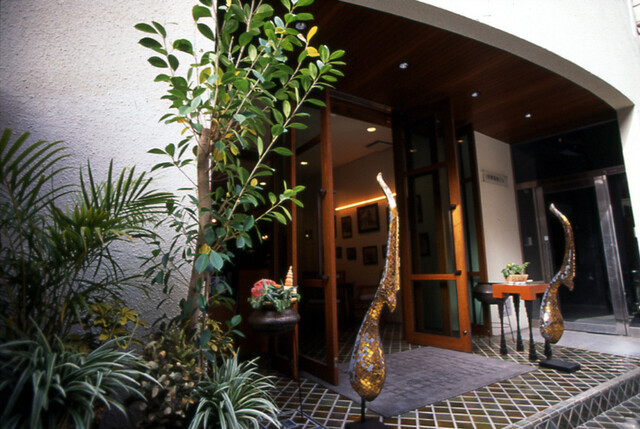
Kitahorie changes tempo a few blocks west of Shinsaibashi: less department-store glare, more small galleries, design shops, cafés, and restaurants built on repeat local use rather than tourist momentum. Here, Thai cooking reads differently from the quick, sweetened green-curry stereotype still attached to the cuisine in parts of Japan. Stronger Osaka examples treat heat, herbs, fish, rice, and acidity as structure, not decoration. CHEDI LUANG Kitahorie honten belongs in that conversation because its format supports two dining rhythms: daytime breadth and evening choice.
The restaurant’s public category tags are Thai, curry, and buffet, a combination that shows how Osaka absorbs Southeast Asian dining. Curry provides the familiar bridge; buffet service answers the city’s appetite for variety and value; Thai cooking supplies the sharper grammar of herbs, chile, fermented seasoning, and coconut-rich sauces. The point is not simply range. It is that a Thai restaurant in Osaka can now be judged by the same evidence-led framework diners apply to sushi counters, kaiseki rooms, bakeries, and curry specialists.
Northern Thai cooking in Osaka, viewed through variety rather than spectacle
Thai restaurants in Japan are often reduced to a short list of recognisable dishes. Northern Thai cooking complicates that shorthand. The region is less defined by coconut-heavy central Thai references and more by herbs, grilled and pounded preparations, soups, curries, rice culture, and a different balance of bitterness, smoke, salt, and heat. Without naming dishes beyond what is publicly listed, the key editorial signal is the restaurant’s positioning around Northern Thai cuisine rather than a generic pan-Thai menu.
The lunch buffet is central to that positioning. A daily spread of 15 to 20 dishes can become excess or a smart introduction to a cuisine built on contrast. The difference is how the kitchen handles replenishment, vegetables, sauces, rice, and protein across service. Buffet dining often makes waste visible, so the stronger version is not the largest spread but the one with enough range to show the cuisine without turning abundance into performance. That is the sustainability question diners should bring: variety has value only when disciplined.
Dinner shifts the reading. Course and à la carte service allow a slower look at Thai cooking’s structure, while private rooms support group dining without forcing one tasting-menu model. That flexibility matters in Osaka, where serious food culture is not confined to quiet counters. The same trip might move from pork buns at 551 Horai (551蓬莱) to coffee at .cafe, bread at 52CHO-ME BAKERY, or a more formal Italian meal at a canto (Italian). Thai dining has to hold its ground in that ecology, not sit in a separate category marked “ethnic.”
The award signal matters because this category is easy to underestimate
Tabelog selected CHEDI LUANG Kitahorie honten for its Asian cuisine and ethnic cuisine WEST Tabelog 100 list in 2024, with the same recognition in 2023 and 2022. That is a useful trust signal because non-Japanese regional cuisines in Japan can be unevenly assessed: some places draw attention through novelty, others through faithful specialist cooking, many through convenient lunch pricing. Repeated selection suggests the restaurant has stayed visible to Japanese diners in a competitive western Japan field rather than relying on one burst of attention.
The Osaka comparison set is broad. 99 Pizza Napoletana Gourmet and a canto (Italian) show the city’s comfort with imported food traditions when technique is clear. Curry specialists such as curry condor occupy another price-and-format lane, while milpa shows how Mexican cooking also has to define itself beyond category labels. CHEDI LUANG Kitahorie honten sits closer to restaurants that make an overseas cuisine legible through format, consistency, and repeatability rather than imported glamour.
There is also a practical sustainability reading in the menu architecture. A health-and-wellness menu tag and stated attention to fish do not prove ethical sourcing, and should not be treated as a supply-chain claim. They do show the restaurant is not framed only around meat-heavy celebration dining. For diners trying to reduce waste or moderate heavy meals while travelling, the relevant question is format: lunch gives breadth in controlled portions, while dinner lets the table order with more precision. In a city famous for snacking, drinking, and late-night appetite, that distinction has consequences.
How it fits into a wider Osaka itinerary
Kitahorie lets a meal breathe between Osaka’s denser dining zones. Nishi Ward has enough design-store polish to feel contemporary, but avoids the conveyor-belt pressure of the busiest tourist corridors. That makes the restaurant a stronger choice for diners who want Thai food within a day in the city, not as a detour. Pairing it with neighborhood cafés, bakeries, or bars makes more sense than treating it as a destination isolated from Osaka.
For broader planning, Our full Osaka restaurants guide frames the restaurant beside casual shops, specialist counters, and international kitchens. Sleep and timing matter too; Our full Osaka hotels guide helps locate the meal within the city, while Our full Osaka bars guide is the natural next step for a night around Nishi Ward or Shinsaibashi. Travellers building a wider cultural route can cross-reference Our full Osaka experiences guide and, for a category thinner in the city than in wine regions, Our full Osaka wineries guide.
Readers comparing Japanese dining beyond Osaka can use the same lens elsewhere: format first, then cuisine, then evidence. Beef sukiyaki at -Grilled beef Sukiyaki- KAMAKURA TANUKIAN 鎌倉 たぬき庵 in Kamakura, charcoal and tuna at. 鮪と炭火焼き うお炭 秋葉原店 in Tokyo, contemporary dining at.know in Kumamoto, Vietnamese cooking at (Shoku) Vietnam in Kawasaki, curry at [Curry Senmon Ten] Maruyama Kyoju. in Sapporo, and Kyoto’s [ki:] in Kyoto all reward that approach. The international links are instructive too: Jōdo Saké Bar in Los Angeles and Onigiri Time in Pasadena show how Japanese and Asian formats shift when they travel. In Osaka, the restaurant makes the reverse case: Northern Thai cooking can settle into everyday dining culture without losing its regional argument.
At-a-Glance Comparison
Comparable options at the same price tier.
| Venue | Cuisine | Price | Awards | Notes |
|---|---|---|---|---|
| CHEDI LUANG Kitahorie hontenThis venue — the venue you are viewing | Northern Thai Buffet | $$ | Not listed | Not listed |
| CHEDI LUANG Yodoyabashi | Authentic Isaan Thai with buffet lunch | $$ | Not listed | Chūō |
| PITAK GOHAN | Authentic Thai Cuisine | $$ | Michelin Plate | Kita |
| Ult Coffee Roasters | Specialty Coffee Roasters | $$ | Not listed | Kyomachibori |
| Juutei | Classic Osaka yoshoku (Japanese-style Western) | $$ | Not listed | Chūō |
| Yakiniku Horumon Mansen | Yakiniku & Horumon Japanese BBQ | $$ | Not listed | Chūō |
Recognition history
Dated appearances from independent guides and award organizations, with the underlying list record or original source where available.
Tabelog 100 #85 · No. 85
Tabelog · Tabelog 100 - Asian cuisine / Ethnic cuisine - WEST - 2024
Continue exploring
More in Osaka
Restaurants in Osaka
Browse all →




Bars in Osaka
Browse all →


Hotels in Osaka
Browse all →



Wineries in Osaka
Browse all →
At a Glance
- Cozy
- Trendy
- Sophisticated
- Family
- Group Dining
- Casual Hangout
- Standalone
- Beer Program
Current opening hours
- Monday
- Closed
- Tuesday
- 11:30 AM–2:30 PM, 6–9:15 PM
- Wednesday
- 11:30 AM–2:30 PM, 6–9:15 PM
- Thursday
- 11:30 AM–2:30 PM, 6–9:15 PM
- Friday
- 11:30 AM–2:30 PM, 6–9:45 PM
- Saturday
- 11:30 AM–3 PM, 5–9:45 PM
- Sunday
- 11:30 AM–3 PM, 5:30–9:15 PM
Hours can change for holidays and private events. Last verified .
A casual, lively Thai dining room with a hideout-like house-restaurant feel and a design-forward setting that emphasizes an authentic, immersive atmosphere.