Centro Basco
Our verdict
Centro Basco sits on Central Avenue in Chino, California, representing the Basque dining tradition that took root in California's Inland Empire through ranching and agricultural communities. The format follows the long-table, family-style service that defines Basque-American restaurants across the American West, where dishes come in sequence and portions are built for the table rather than the individual.

Pearl is the En Primeur Club membership app, where members save venues, book tables and use the concierge.
The Basque Table in California's Inland Empire
California's Basque-American dining tradition did not originate in San Francisco or Los Angeles. It grew from the ranching belts of the Central Valley and Inland Empire, where Basque immigrants arrived in the nineteenth century to work as shepherds and agricultural laborers. They brought with them a communal eating culture built around long tables, sequential courses, and protein-forward cooking, and that culture calcified into a recognizable American restaurant format that persists today. Centro Basco at 13432 Central Ave in Chino sits inside that tradition, operating in a corridor where Basque family-style dining has served working communities for generations.
In the broader American dining conversation, this format rarely earns the attention that tasting-menu restaurants in coastal cities attract. Venues like Lazy Bear in San Francisco or Atomix in New York City operate at the opposite end of the production spectrum: small-format, chef-driven, and intensely focused on provenance and technique as theater. The Basque-American house operates differently. The sourcing is practical and agricultural, the format is communal rather than individual, and the value proposition is built on abundance rather than refinement. That is not a lesser ambition, it is a different one, rooted in a specific immigrant community's relationship to land and livestock.
Ingredient Logic: What Basque-American Cooking Actually Draws From
The ingredient sourcing logic of California's Basque-American restaurants reflects the communities that built them. Basque shepherds worked the rangeland of Kern, San Bernardino, and Riverside counties, and the cooking that emerged from those households was built around what that land produced: lamb, beef, pork, beans, and seasonal vegetables from agricultural flatlands nearby. The Inland Empire, where Chino sits, was historically one of California's most productive agricultural zones before suburban development compressed its farm acreage. That agricultural inheritance still shapes what ends up on Basque-American tables in the region.
This stands in deliberate contrast to the farm-to-table sourcing narratives that define destination restaurants elsewhere. At Single Thread Farm in Healdsburg or Blue Hill at Stone Barns in Tarrytown, provenance is front-of-house storytelling, the sourcing is visible in the menu language and becomes part of the dining experience itself. At a Basque-American house, sourcing is structural rather than performative. The lamb on the table connects to a ranching supply chain that predates the modern farm-to-fork movement by a century. The beans cooked low and slow in a pot reflect agricultural staples rather than curated seasonal produce. Neither approach is inherently superior, they represent different culinary philosophies with different community origins.
For California dining as a whole, the Chino area carries agricultural significance that goes beyond Basque cooking. The Chino Agricultural Preserve, one of the few remaining protected farmland zones in Southern California, has historically supplied dairy and produce to restaurants across the Los Angeles basin. Chefs at venues like Providence in Los Angeles and Addison in San Diego operate within sourcing ecosystems that depend partly on Inland Empire agriculture. Centro Basco's location places it inside that agricultural zone rather than at the end of a supply chain.
Format and Atmosphere: The Long-Table Tradition
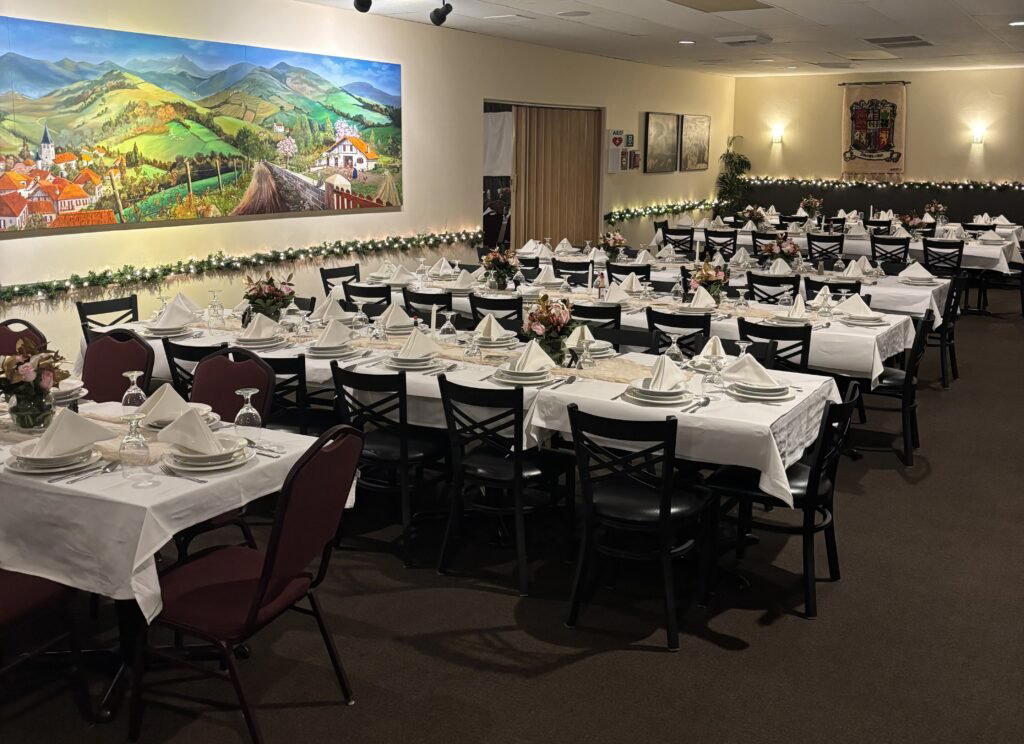
The defining architectural feature of a Basque-American restaurant is the communal table. Where a contemporary American fine-dining room, think The Inn at Little Washington or Smyth in Chicago, is designed around privacy and the individual dining experience, the Basque format is built around shared space and collective eating. Strangers sit together. Dishes arrive without individual plating. Wine is poured from carafes rather than by the glass with tasting notes attached. The room functions less as a stage for a chef's vision and more as a replication of the boarding-house dining halls that fed Basque ranch workers in the American West through the early twentieth century.
That format produces an atmosphere that has no real equivalent in contemporary restaurant design. It is not rustic in the curated sense that, say, The Wolf's Tailor in Denver uses raw materials to signal intentional simplicity. It is functional in a way that precedes the aestheticization of restaurant interiors altogether. Walking into a Basque dining room in the Inland Empire, you encounter a space organized around the logistics of feeding people efficiently and generously, not around the choreography of a dining experience as an artistic event.
Where Centro Basco Sits in the Regional Dining Picture
Chino's dining scene is not built around destination restaurants in the way that coastal California cities are. The full Chino restaurants guide reflects a community dining culture shaped by working-class and immigrant communities, where value, portion, and familiarity carry more weight than novelty or prestige. Centro Basco operates within that context, alongside other independent restaurants in the city including オーベルジュ・エスポワール and カエンネ, which represent the range of independent dining that defines the area.
In the wider California context, the Basque-American format occupies a specific and increasingly rare niche. As restaurant economics push independent operators toward either fast-casual efficiency or premium experiential dining, the mid-tier communal table house faces structural pressure. The format requires kitchen labor, significant protein sourcing, and a dining room size that supports table-wide service, none of which scales easily against rising food and labor costs. The Basque restaurants that have survived in California tend to operate in communities where the format has enough generational loyalty to sustain it without relying on food-media attention or tourism.
That is a different sustainability model than what drives recognition at venues like Le Bernardin in New York City, The French Laundry in Napa, or Frasca Food and Wine in Boulder, where critical recognition and destination dining demand generate the revenue that supports their operations. The Basque-American house sustains itself through repeat local custom and a format that has resisted reinvention because its community has not asked for reinvention. That is its own form of culinary durability, and one that deserves recognition on its own terms rather than measured against the standards of a different kind of restaurant entirely.
For context on how ingredient-forward cooking operates at the opposite end of the price and production spectrum, Atelier Moessmer Norbert Niederkofler in Brunico and ITAMAE in Miami both represent sourcing-driven fine dining in which the origin of each ingredient is central to the dish's construction and the restaurant's identity. Centro Basco's relationship to sourcing is older and less articulated in menu language, but no less present in the cooking.
Planning Your Visit
Centro Basco is located at 13432 Central Ave, Chino, CA 91710, positioned on a commercial corridor accessible by car from the greater Los Angeles basin and the Inland Empire. Given the format's communal nature, the experience is better suited to groups than solo dining. For families with children, the shared-table, abundance-oriented format is generally more accommodating than the structured tasting-menu environments at destination restaurants, though specific policies on children should be confirmed directly with the venue before arrival. The Basque-American format typically operates on a set-price or limited-choice basis, meaning the planning decision is more about timing and group size than menu selection.
Frequently asked questions
Is Centro Basco okay with children?
The communal Basque-American format, with shared plates arriving in sequence for the whole table, works naturally for family groups. Chino's casual dining segment routinely sees mixed-age parties, and nothing about the set-menu structure at a traditional Basque house requires formal dining behavior. It is a practical choice for families who want a sit-down meal with some substance to it.
What's the overall feel of Centro Basco?
Centro Basco operates in the working register of California's Basque-American tradition: communal, protein-forward, and organized around a set sequence of courses rather than individual ordering. The address on Central Ave in Chino places it on a commercial corridor, not a destination dining strip, which sets the tone accurately. Expect a room built for function and group eating, not for atmosphere-first hospitality.
Does Centro Basco follow the traditional Basque set-menu format, or does it operate à la carte?
California's Basque-American restaurants historically run on a set-menu or prix-fixe model, where courses arrive in sequence for the full table rather than as individual selections. This format descends directly from the boarding-house tradition that Basque shepherds brought to the Central Valley and ranching belt communities, of which Chino's Inland Empire location is a geographic extension.
What do people recommend at Centro Basco?
Across California's Basque-American houses, the consistent strengths are meat cookery and bean dishes, with lamb appearing centrally in most versions of the tradition. The set-menu format means the kitchen decides the sequence, so the question is less about ordering and more about showing up ready for the full progression.
Where is Centro Basco located?
Centro Basco is located at 13432 Central Ave, Chino, CA 91710, Chino.
How far ahead should I plan for Centro Basco?
Centro Basco sits in Chino's mid-tier dining segment, without the awards-driven reservation pressure that compresses booking windows at destination venues in coastal California cities. Walk-in or short-notice visits are a reasonable expectation, though weekend evenings at any communal-format Basque house can fill the long tables quickly. Calling ahead on the day or a day prior is a practical step, particularly for larger groups.
| Venue | Cuisine | Price | Awards | Notes |
|---|---|---|---|---|
| Centro BascoThis venue (the venue you are viewing) | Traditional Basque | $20–30 | Not listed | Not listed |
| Le Bernardin | French Seafood Fine Dining | $300–500 | 3 Michelin Stars · World's 50 Best #13 | French, Seafood |
| Lazy Bear | Modern American Tasting Menu | Not listed | 2 Michelin Stars · World's 50 Best #25 | Progressive American, Contemporary |
| Atomix | Modern Korean Tasting Menu | $300–500 | 2 Michelin Stars · World's 50 Best #7 | Modern Korean, Korean |
| Per Se | French Fine Dining Tasting Menu | $300–500 | 3 Michelin Stars · World's 50 Best #40 | French, Contemporary |
| Masa | Traditional Japanese Omakase | $500+ | 2 Michelin Stars · World's 50 Best #27 | Sushi, Japanese |
Continue exploring
More in Chino
Restaurants in Chino
All restaurants in Chino →
Bars in Chino
Browse all →
Hotels in Chino
Browse all →
Wineries in Chino
Browse all →
Details
- Classic
- Rustic
- Cozy
- Group Dining
- Family
- Celebration
- Historic Building
- Family Style
- A La Carte
- Vegetarian Friendly
Current opening hours
- Monday
- Closed
- Tuesday
- Closed
- Wednesday
- 11:30 AM–2 PM, 4–11:30 PM
- Thursday
- 11:30 AM–2 PM, 4–11:30 PM
- Friday
- 11:30 AM–2 PM, 4–11:30 PM
- Saturday
- 4–11 PM
- Sunday
- 12–8 PM
Hours can change for holidays and private events. Hours as of .
Warm, family-oriented atmosphere evoking Basque Country friendliness with communal wooden tables and a sense of tradition.