Cargo Culte
Cargo Culte occupies a narrow address on Rue Broussais, a street that runs close to Saint-Malo's intra-muros ramparts where the city's eating culture tilts toward the sea and the everyday rather than the ceremonial. Among the tighter, more personal venues in this part of Brittany, it represents the kind of address that rewards a walk through the old walled city rather than a reservation made months in advance.
Pearl is the En Primeur Club membership app — saves, bookings, and concierge access live there. Same editors, same standards.
- Address
- 1 Rue Broussais, 35400 Saint-Malo, France
- Phone
- +33299880868
- Website
- m.facebook.com
- Directions
- Get directions
 Saves & bookings on Pearl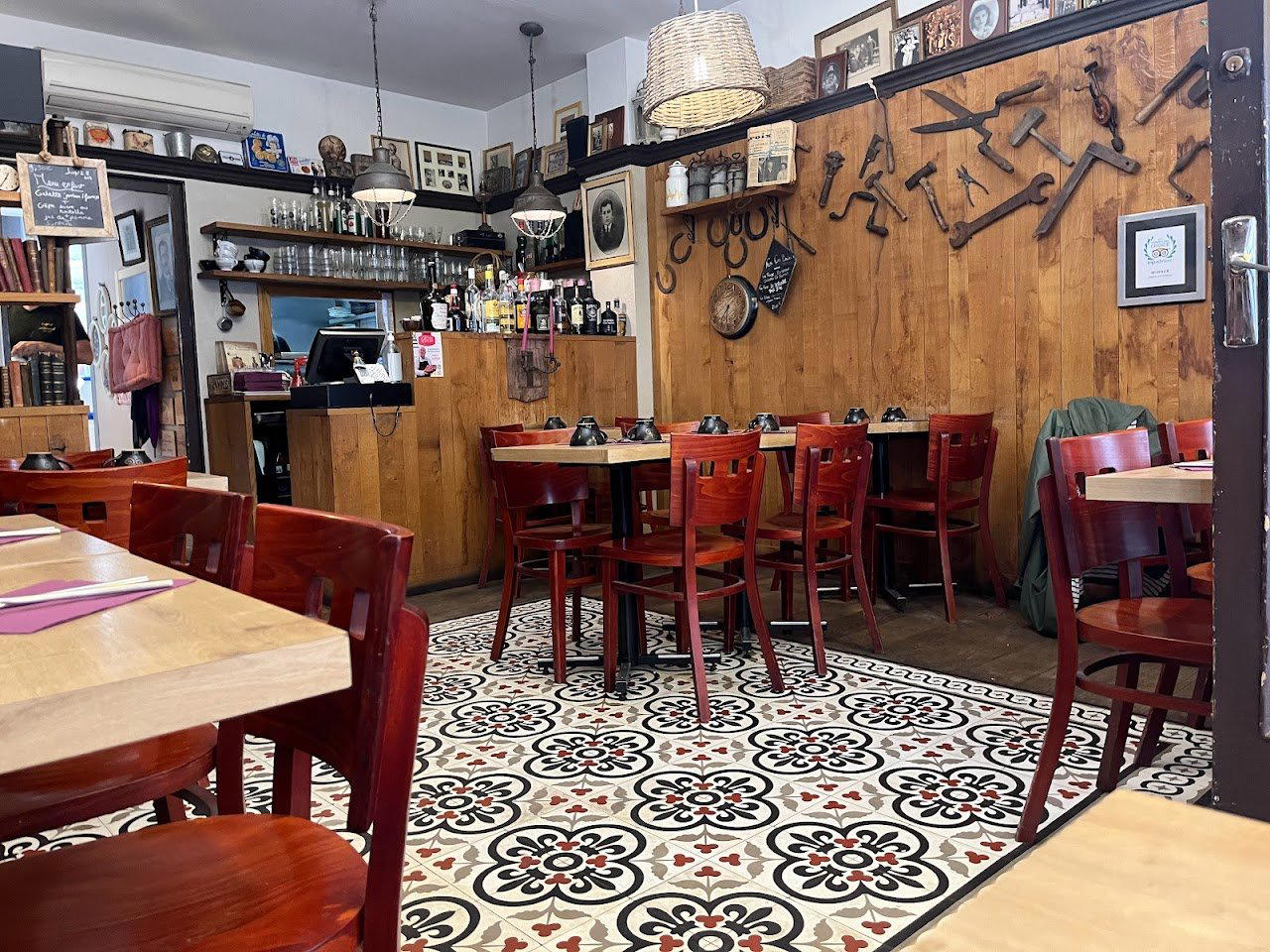
Inside the Walled City: How Saint-Malo Shapes What You Eat
Saint-Malo's intra-muros is not a large place. The walled city covers roughly 45 hectares and on a summer afternoon its granite lanes compress the crowd between crêperies, fishmongers, and the occasional cellar-bar. That density has a sorting effect on its restaurants: the ones that last tend to be the ones with a clear sense of what they are. Rue Broussais, where Cargo Culte sits at number 1, runs close enough to the ramparts that the sea air arrives before the menu does. The address puts it at the edge of the old town's commercial core, slightly removed from the most tourist-facing stretch near the cathedral square, which in practice means a slightly more local crowd.
That positioning matters in a city where the dining options split fairly cleanly between crêperies built for volume and a smaller cluster of more considered restaurants drawing on the Atlantic larder. Brittany's coastline gives its cooks access to some of the most consistently sourced seafood in France: langoustines from the bay, mussels, sea bass, and the butter that the region has exported to tables from Paris to Lyon. The question, in any given Saint-Malo address, is what a kitchen does with that inheritance. Venues like Annadata and Caraque occupy distinct positions in this local hierarchy; Deshi and Histoire de Crêpes point toward the city's appetite for formats that fall outside formal dining. Cargo Culte, at the western edge of this cluster, has its own position to hold.
The Name and the Place
Cargo Culte as a name carries a specific cultural reference: the cargo cult phenomenon, documented most extensively in Melanesia, where communities performed rituals modelled on the behaviour of those who received Western goods by air and sea, believing the imitation would summon the cargo itself. Whether the name is intended as anthropological wit, a nod to the port city's own long relationship with maritime trade, or simply a striking phrase borrowed for branding is not a matter of record. But in Saint-Malo, a city whose wealth was built on corsairs, cod fishermen, and the traffic of the Atlantic, a name rooted in the meaning of arrival by sea has a certain aptness. The city itself ran on a version of this logic for centuries: goods arrived, fortunes were made, the port defined everything.
Rue Broussais itself is a short, functional street. It is not the most photographed address in the old town, which gives it a quality that the lanes around the Grande Porte sometimes lack: the sense that not every square metre is performing for an audience. Saint-Malo draws large numbers in July and August, when the population of the intra-muros can multiply several times over, and the restaurants that know their purpose tend to navigate that pressure more steadily than those that shift character with the season.
The bar and restaurant scene within the walled city is small enough that peer comparisons are immediate. Autour du Beurre has built a specific identity around Breton butter culture, a format that plays directly to the region's most exportable credential. Histoire de Crêpes operates in the galette-and-crêpe tradition that is, in many respects, the default dining grammar of Brittany. Cargo Culte sits in a different register: its name and address suggest something less anchored to the canonical regional format, more willing to operate at the margins of the obvious Saint-Malo offer.
This is not uncommon in French port cities. The same maritime energy that shaped institutions like Le Bernardin in New York City, whose origins lie in Brittany, also generates smaller, less formalised venues that carry the sea into the glass or the plate without the ceremony of a grand dining room. Saint-Malo's intra-muros has a compressed version of this dynamic. The haute end of the French restaurant tradition, represented elsewhere by addresses like Mirazur in Menton, Alléno Paris au Pavillon Ledoyen, Flocons de Sel in Megève, or the deep-rooted regional houses like Troisgros in Ouches, Bras in Laguiole, Auberge de l'Ill in Illhaeusern, Les Prés d'Eugénie in Eugénie-les-Bains, Georges Blanc in Vonnas, La Table du Castellet, and Paul Bocuse in Collonges-au-Mont-d'Or, does not have a direct equivalent inside the Saint-Malo walls. The more relevant frame is the local one: a city where the sea is the constant and the format is the variable. A venue like Lazy Bear in San Francisco shows what happens when an unconventional format commits fully to a specific experience; the principle is applicable at any scale and any latitude.
Planning a Visit: What to Know Before You Go
The intra-muros is walkable from the Saint-Malo rail station in around fifteen minutes, or a short taxi ride if you are arriving with luggage. Rue Broussais is close to the western wall, which means the light in the afternoon falls differently here than on the eastern lanes near the cathedral. High season in Saint-Malo runs from late June through August; weekends in July in particular bring significant foot traffic through the old city, and the smaller restaurants fill quickly. Visiting on a weekday, or arriving at an opening hour rather than mid-service, tends to produce a more relaxed experience. Given the volume of visitors the city receives in summer, any venue operating in the intra-muros that has developed a local following is worth contacting ahead, even if formal advance booking is not always required. For a broader orientation to what the city offers, the EP Club Saint-Malo restaurants guide maps the full picture across neighbourhoods and price points.
Continue exploring
More in Saint Malo
Restaurants in Saint Malo
Browse all →
Bars in Saint Malo
Browse all →
At a Glance
- Cozy
- Rustic
- Intimate
- Brunch
- Casual Hangout
- Terrace
- Local Sourcing
Current opening hours
- Monday
- Closed
- Tuesday
- 12–4 PM
- Wednesday
- 12–4 PM
- Thursday
- 12–4 PM
- Friday
- 12–4 PM
- Saturday
- 11 AM–3 PM
- Sunday
- Closed
Hours can change for holidays and private events. Last verified .
Cozy and vintage with chinée decoration, old maps, vinyls, and thrifted furniture creating a relaxed, nostalgic retreat.
Know Before You Go
- Getting there
- 1 Rue Broussais, 35400 Saint-Malo, France