Our verdict
Capri Pitsakohvik sits in Kuusalu, a small municipality on the edge of Lahemaa National Park where Estonia's forested interior meets the Baltic coast. The name signals pizza, and the setting places it squarely in the tradition of Estonian small-town casual dining, where sourcing from the surrounding region defines the offer as much as any formal menu. For visitors moving between Tallinn and the national park, it reads as a practical, locally-rooted stop.

Pearl is the En Primeur Club membership app, where members save venues, book tables and use the concierge.
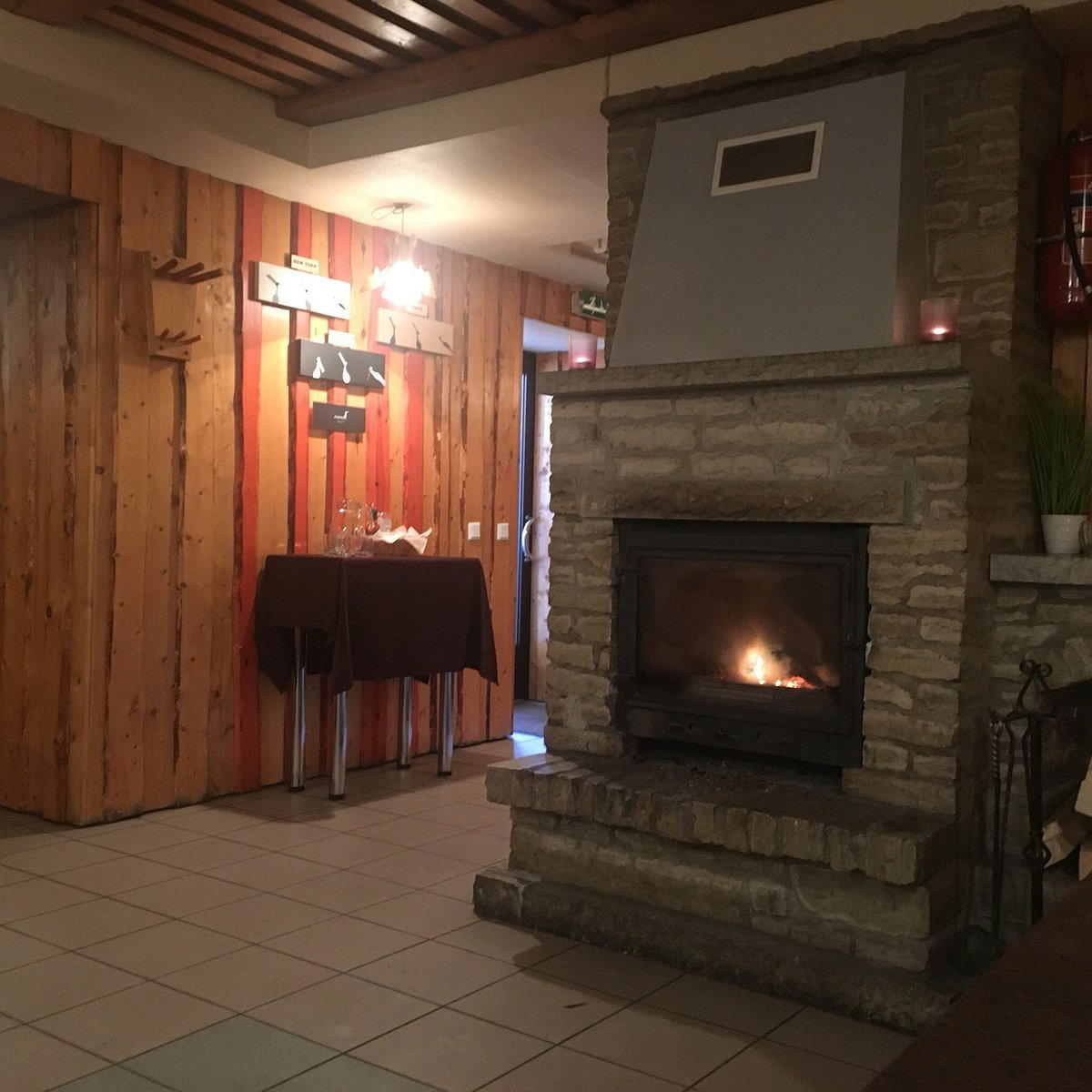
Where Small-Town Estonia Meets the Pizza Counter
Kuusalu sits roughly 40 kilometres east of Tallinn along the Lahemaa corridor, a stretch of Harju County where pine forest, coastal bog, and scattered village settlements define the character of daily life more than any urban food scene. Dining here operates on a different register than the capital's Modern European counters or the destination restaurants of the Estonian archipelago. The reference point is the community, not the critic, and the pizza format at Capri Pitsakohvik fits that register precisely: approachable, consistent, and rooted in a place where the nearest fine-dining alternative requires a significant drive.
That geographical context is not a limitation so much as a framing device. In a country where the conversation about regional sourcing has grown considerably over the past decade, small operators in rural municipalities often maintain supply relationships with local producers by necessity rather than by marketing strategy. The distance from centralised distribution networks pushes kitchens like this toward what is available nearby, and in Harju County that means proximity to dairy operations, market gardens, and smallholders supplying the kinds of ingredients that larger urban venues now pay a premium to source deliberately.
The Ingredient Logic of the Lahemaa Corridor
Estonia's push toward regional food identity has been most visible at the upper end of the market. Venues like 180° by Matthias Diether in Tallinn and Alexander in Pädaste have built internationally recognised programs around Estonian produce, from cold-water fish to foraged forest ingredients. But the sourcing logic that earns those venues their critical attention begins at the production level, in the same rural counties where places like Capri Pitsakohvik operate daily. The ingredient chain is the same; the translation into the plate differs by ambition and format.
Rural pizzerias in northern Estonia occupy a position that is easy to underestimate. Pizza as a format arrived in Estonia through the post-Soviet opening of the 1990s and has since settled into a genuinely local idiom in many smaller towns, adapted to local dairy, local pork products, and the kinds of seasonal vegetables that Baltic smallholders produce through the summer and early autumn.
For comparison, Hiis in Manniva and SOO in Maidla represent the more explicitly sourcing-forward end of rural Estonian dining, where provenance is named and foregrounded. Capri Pitsakohvik sits in a different tier of that spectrum, where the sourcing is structural rather than promotional. Both approaches are legitimate responses to the same regional food environment.
Kuusalu as a Dining Destination
The municipality of Kuusalu is not a dining destination in the way that Pädaste or Võsu draw deliberate culinary tourism. It functions more as a service point for the communities between Tallinn and Lahemaa, and for the growing number of visitors who use the national park as a seasonal escape from the capital. That visitor profile, families from Tallinn on weekend trips, hikers working the Lahemaa trails, cyclists on the coastal routes, shapes what the town's food offer needs to do. It needs to be reliable and accessible, open when visitors arrive, and reasonably priced against the alternatives in a county where the cost of living runs below the capital.
Against that backdrop, Capri Pitsakohvik addresses a real gap. The formal restaurant options along this corridor are sparse, and the choice for many visitors comes down to packing food from Tallinn or finding what is available in the villages en route. A pizza counter with a fixed address and a defined format is a meaningful offer in that context, particularly for groups with children or for travellers without the flexibility to seek out destination dining.
For those looking to understand how the Estonian dining scene distributes across its geography, our full Kuusalu restaurants guide maps the local options in more detail. The contrast with Tallinn venues like Wicca in Laulasmaa and Lahepere Villa in Kloogaranna, both of which sit along the same western coastal corridor but with more developed hospitality offers, illustrates how micro-geography shapes what kind of dining takes hold in each settlement.
Placing Capri in the Wider Estonian Casual Tier
Estonia's casual dining tier has diversified considerably since the early 2010s. In smaller cities like Rakvere, operators such as Burger Bros have built recognisable local brands around direct formats executed with consistency. In Viimsi, closer to Tallinn's orbit, Burger Kitchen reflects how suburban demand generates its own food identity. Capri Pitsakohvik belongs to a related category: the single-format local restaurant that fills a community function without aspiring to critical recognition.
That positioning is worth taking seriously on its own terms. The Estonian food conversation tends to concentrate on the award-tier venues, the kind of program that earns international comparison to places like Le Bernardin in New York City or the format experimentation visible at Lazy Bear in San Francisco. But the daily dining infrastructure of rural Estonia, the places that feed residents and passing travellers without fanfare, is equally part of the country's food identity. Capri Pitsakohvik is part of that infrastructure in Kuusalu.
Planning Your Visit
Capri Pitsakohvik is located at Kuusalu tee 39 in Kuusalu, Harju County, with a postal address of 74601. For those already moving along the Tallinn-Lahemaa route, the address places it conveniently on the main road through the village. The format, a pizza counter by name, suggests counter or casual table service rather than a booking-dependent experience. Groups with children are likely well-served by the format, though specific family facilities are unconfirmed. Travellers with a fixed itinerary in the region should treat confirmation of hours as a prerequisite, given the limited public information currently available.
Frequently asked questions
Is Capri Pitsakohvik good for families?
A pizza counter format in a small municipality like Kuusalu typically suits families well, the format is informal and the setting is low-pressure. Capri Pitsakohvik sits at Kuusalu tee 39, which is a road-facing address rather than a destination restaurant courtyard, suggesting practical, drop-in dining rather than a formal sit-down experience.
Is Capri Pitsakohvik better for a quiet night or a lively one?
Kuusalu is a service-town municipality rather than a nightlife hub, so the ambient register at Capri Pitsakohvik skews toward the quieter end by default. A pitsakohvik, the Estonian term for a pizza café, functions closer to a neighbourhood diner than a bar-adjacent venue. Expect a low-key atmosphere consistent with small-town Harju County rather than a Tallinn city-centre crowd.
Is Capri Pitsakohvik worth a stop when driving through the Lahemaa corridor?
For travellers on the route between Tallinn and Lahemaa National Park, Kuusalu tee 39 is a serviceable break point roughly 40 kilometres from the capital. Capri Pitsakohvik operates as a pitsakohvik, a casual pizza café format common in Estonian small towns, rather than a destination restaurant. It fills a practical gap in a stretch of Harju County where sit-down dining options are limited, making it a functional rather than purely culinary stop.
What's the best thing to order at Capri Pitsakohvik?
The name pitsakohvik points clearly to pizza as the operative category here, and that is the reasonable starting point for any order at Capri Pitsakohvik in Kuusalu. The regional Lahemaa corridor gives local operators access to Estonian produce worth watching for.
How do I find Capri Pitsakohvik?
Capri Pitsakohvik is located at Kuusalu tee 39, Kuusalu, 74601 Harju maakond, Estonia, Kuusalu.
What's the best way to book Capri Pitsakohvik?
For a pitsakohvik-format venue at Kuusalu tee 39, walk-in is the most practical approach. Calling ahead via a current local directory listing is advisable if you are travelling specifically from Tallinn, roughly 40 kilometres west along the Lahemaa corridor.
What's the defining dish or idea at Capri Pitsakohvik?
The defining idea is geographic pragmatism: a pizza counter planted in a working Estonian municipality rather than a tourist-facing coastal village or Tallinn neighbourhood. Capri Pitsakohvik addresses everyday demand in Kuusalu, Harju County, in a format, the pitsakohvik, that positions pizza as a weekly staple rather than an event. No specific signature dish is documented, but the counter format itself is the clearest statement of intent.
At-a-Glance Comparison
Comparable venues nearby, for context on price, style, and recognition.
| Venue | Cuisine | Price | Awards | Notes |
|---|---|---|---|---|
| Capri PitsakohvikThis venue (the venue you are viewing) | Pizza | Not listed | Not listed | Not listed |
| Kajakas | Neapolitan Pizza | $20–30 | Not listed | Kadriorg |
| Ihamaru Pizza | Neapolitan Pizza & Brewery Taproom | $20–30 | Not listed | Tartu center |
| Steffani | Italian Pizza Restaurant | $10–20 | Not listed | Kesklinn |
| Supelsaksad | European Café | Not listed | White Guide Baltic Restaurants - Fine Level | Old Town |
| Kaja Pizza Köök | Authentic Neapolitan Pizza | $10–20 | White Guide Baltic Restaurants - Recommended | Pelgulinn |
Continue exploring
More in Kuusalu
Details
- Cozy
- Casual Hangout
- Family
- Street Scene
- A La Carte
- Vegetarian Friendly
Current opening hours
- Monday
- 11 AM–8 PM
- Tuesday
- 11 AM–8 PM
- Wednesday
- 11 AM–8 PM
- Thursday
- 11 AM–8 PM
- Friday
- 11 AM–10 PM
- Saturday
- 12–10 PM
- Sunday
- 12–8 PM
Hours can change for holidays and private events. Hours as of .
comfortable atmosphere nice for small villages.