Where Ballard Meets the Levant
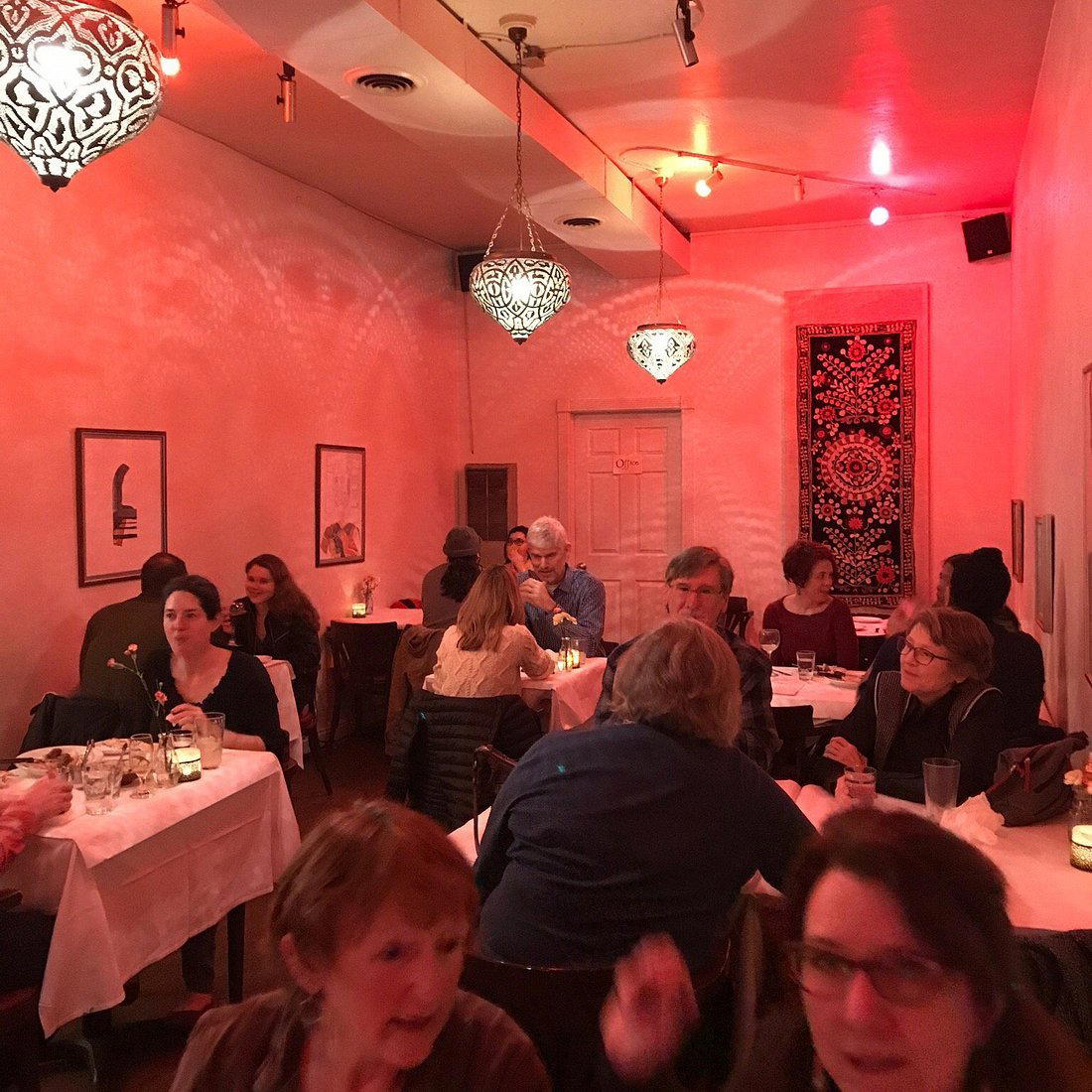
Seattle's Ballard neighborhood built its identity on Scandinavian fishing culture, and the commercial strips along NW 80th Street still reflect that working-neighborhood grain. It is not where you expect to find a kitchen anchored in Levantine tradition, which is precisely what makes Cafe Munir's position in the area worth noting. In a city where Middle Eastern cooking is underrepresented relative to its Japanese, Vietnamese, and New American dining scenes, a neighborhood restaurant working in that register occupies a distinct niche by default.
The restaurant sits at 2408 NW 80th St, away from the denser restaurant corridor along Ballard Avenue and closer to the residential stretch that defines upper Ballard. That placement says something about the venue's orientation: it functions as a neighborhood anchor rather than a destination pull for the downtown dining crowd. Seattle's most-discussed restaurants, places like Canlis (New American) or Joule (New Asian), operate with the visibility of their locations baked into their identity. Cafe Munir works at the opposite end of that spectrum.
The Intersection of Technique and Levantine Tradition
The culinary tradition Cafe Munir draws from is one of the more technically demanding in the Middle Eastern canon. Lebanese and broader Levantine cooking requires precision in spice ratios, an understanding of how acid interacts with legumes and grains, and a patience with slow-cooked proteins that separates the considered from the rushed. When kitchens in the Pacific Northwest engage with this tradition seriously, they are working with a framework that has as much internal structure as the classical European cooking that shaped restaurants like Le Bernardin in New York City or The French Laundry in Napa, even if it operates in a completely different register of formality and price.
Editorial angle that defines this kitchen is the intersection of imported technique and local product. The Pacific Northwest offers an exceptional pantry: Pacific seafood, Yakima Valley produce, Oregon and Washington lamb, wild mushrooms from the Cascades. A Levantine kitchen that works with those raw materials, applying the spice logic and preparation methods of the eastern Mediterranean to ingredients shaped by the Pacific climate, is doing something that most American cities cannot replicate. For comparable models of this kind of ingredient-technique integration, though in very different idioms, see how Blue Hill at Stone Barns in Tarrytown or Single Thread Farm in Healdsburg handle the relationship between regional sourcing and disciplined kitchen method.
Seattle's Middle Eastern Dining Gap
To understand why Cafe Munir occupies the position it does, it helps to map the broader context of Middle Eastern dining in Seattle. The city's dining identity skews heavily toward the Pacific Rim and its own New American tradition. Japanese restaurants from 1744 NW Market St to the soba specialists at Kamonegi and the historic Japanese-American dining of Maneki represent a deep, layered scene. By comparison, Lebanese, Syrian, and broader Levantine cooking has not accumulated the same critical mass of venues or the same institutional recognition in the city.
In Seattle, a kitchen at this address on NW 80th Street is working in a space where the competition is thin and the audience is correspondingly loyal. Neighborhood restaurants that hold a culinary category effectively often develop a regulars-driven business model that differs substantially from the reservation-pressure dynamics seen at higher-profile venues. For a sense of how those dynamics play out differently at the other end of the formality scale, the experiences at Addison in San Diego or Smyth in Chicago illustrate how category scarcity and critical recognition interact in different markets.
What the Address Tells You
Restaurant addresses in Seattle carry information. The distinction between a venue on Capitol Hill, in South Lake Union, or in Ballard maps to different clienteles, different price expectations, and different relationships to the city's dining press. Addresses along 1415 1st Ave or 2963 4th Ave S speak to different neighborhood identities entirely. NW 80th Street in Ballard places Cafe Munir in a residential-commercial hybrid strip where foot traffic is local rather than visitor-driven, and where longevity depends on a different kind of consistency than downtown venues require.
That context matters for the reader deciding whether to make the trip. Ballard is accessible from central Seattle by bus along 15th Ave NW or by car, and parking availability in the NW 80th St area is generally easier than in the denser neighborhoods to the south and east. The trade-off for the lower-key address is a dining room that operates at a pace set by its neighborhood rather than by the churn of the city's hospitality industry. Whether that suits a given visit depends entirely on what the reader is looking for.
For those building a wider Seattle itinerary, our full Seattle restaurants guide maps the city's dining scenes by neighborhood and category, which helps situate Cafe Munir within the broader picture alongside venues ranging from Joule in the Capitol Hill orbit to the waterfront-adjacent dining that defines central Seattle's New American tradition.
Know Before You Go
Planning Details
- Address: 2408 NW 80th St, Seattle, WA 98117
- Neighborhood: Ballard, upper residential-commercial strip
- Getting There: Accessible by car with easier parking than central Seattle; bus routes along 15th Ave NW connect to the area from downtown
- Cuisine: Levantine, drawing on Lebanese and broader eastern Mediterranean tradition
- Hours: Confirm directly before visiting; hours not publicly confirmed in current data
- Reservations: Advisable for weekend visits; call or check online for current booking availability