Cafe Luxembourg
Our verdict
Cafe Luxembourg has anchored the Upper West Side's dining scene for decades, offering a European brasserie format that sits comfortably outside the tasting-menu circuit dominating Manhattan's fine-dining conversation. At 200 W 70th St, it occupies a specific neighbourhood role: the kind of place that serves the Lincoln Center crowd and the local regular with equal comfort, in a room that earns its reputation through consistency rather than spectacle.

Pearl is the En Primeur Club membership app, where members save venues, book tables and use the concierge.

The menu
What to order
- Luxemburger
- Steak Frites
- Moules Frites
- French Onion Soup
The Upper West Side and the Case for the Neighbourhood Brasserie
Manhattan's fine-dining conversation is largely conducted below 59th Street, or in the rarefied corridors of Midtown where Le Bernardin, Per Se, and Masa compete on the most formal terms. The Upper West Side operates on a different logic. Here, the dining room earns its place not through Michelin accumulation or tasting-menu ambition, but through the kind of sustained neighbourhood trust that is, in its own way, harder to build. Cafe Luxembourg, at 200 West 70th Street, belongs to that category: the European-inflected brasserie that has become genuinely local, in a zip code where genuinely local is not easy to sustain.
The block sits close enough to Lincoln Center that pre-curtain timing shapes a meaningful portion of the room on any given evening. That proximity structures the experience in ways that distinguish it from destination restaurants across the city. At venues like Atomix or Jungsik New York, the reservation is the event. At a neighbourhood brasserie of this type, the room accommodates both the occasion dinner and the Tuesday-evening regular, and those two populations share the same tables without friction. That is a more complex hospitality proposition than it appears.
What the Room Signals Before You Order
The brasserie format, as it functions in New York, carries specific architectural and atmospheric codes that most diners absorb without articulating. Zinc bar leading or its approximation, tiled floors that carry the noise of a full room rather than suppressing it, banquettes that make lingering feel appropriate rather than. Cafe Luxembourg operates within that register. The room on West 70th reads as a particular kind of New York institution: one where the physical environment has not been aggressively updated in the manner of venues chasing design-press coverage, but where the accumulated wear of a busy, long-running restaurant functions as its own credential.
This matters because the brasserie format in New York exists in increasingly direct competition with two opposing forces: the ultra-formal tasting-menu counter at one end, and the casual all-day cafe at the other. The middle ground, where a proper brasserie sits, requires maintaining service and kitchen standards that justify a full-price dinner ticket without the theatre of a prix-fixe progression. Very few New York rooms in this category have held that position across decades. The ones that have, tend to do so through kitchen consistency and a room culture that regulars visibly defend.
Lincoln Center, the Pre-Theatre Rhythm, and Why Location Is Argument
The Upper West Side's dining character is partly defined by its relationship to Lincoln Center, which sits four blocks south of Cafe Luxembourg. Pre-theatre dining in proximity to a major performance venue creates a specific set of pressures: tables need to turn on schedule, kitchens need to execute without the meandering pace that a long tasting menu allows, and the room needs to absorb the particular anxiety of diners watching the clock. Restaurants that manage this well develop a service efficiency that is not always visible to the diner but is felt in the difference between a meal that ends cleanly and one that leaves you sprinting down Columbus Avenue.
This is a different operational mode from the downtown counter formats that have defined New York's highest-profile dining additions in recent years. It also places Cafe Luxembourg in a different competitive conversation than venues like Blue Hill at Stone Barns, where the evening is entirely self-contained, or the destination formats of The French Laundry or Alinea, where the meal is the destination in full. Cafe Luxembourg operates within the city's fabric in a more literal sense, shaped by what happens around it on any given night.
The Brasserie Tradition and Where New York Fits It
The European brasserie as a format has a specific meaning in the American context. It arrived in New York not as an import but as an aspiration, the idea of a room where serious cooking sits alongside unselfconscious ease, where steak frites can share a menu with a well-sourced fish preparation and neither feels out of place. That format has been attempted repeatedly across the city with varying degrees of commitment. The ones that survive longest tend to be the ones that resist the temptation to drift toward the trendier poles, maintaining the core brasserie proposition even when the broader dining market moves around them.
For context on how the format plays in other American cities, the durability question looks similar at venues like Bacchanalia in Atlanta or Emeril's in New Orleans, where long-established rooms have had to negotiate their identity against shifting dining cultures. In New York, the Upper West Side brasserie occupies a position that is specifically tied to its neighbourhood in ways that Midtown or downtown equivalents are not. The regulars here are not coming because the restaurant appears in a ranking; they are coming because the room has become part of how they live in that part of the city.
That dynamic has a European parallel too. The staying power of format-driven rooms, where the cooking is consistent rather than ambitious in the headline sense, is something that operators like Alain Ducasse at Louis XV in Monte Carlo demonstrate at the luxury end of the scale: reputation built across decades rather than through seasonal reinvention. Cafe Luxembourg operates at a different price point and with different ambitions, but the underlying principle of durability through consistency applies in both cases.
Planning a Visit: What to Know
Cafe Luxembourg is at 200 West 70th Street, between Amsterdam and West End Avenues, four blocks north of Lincoln Center. The 1 train stops at 72nd Street, making it walkable from the subway without significant detour. For those arriving from the south end of Central Park or Midtown, the crosstown logic from the 72nd Street station on the 2/3 lines also works cleanly.
Given the Lincoln Center proximity, timing matters. Early-evening tables on performance nights, particularly at the Metropolitan Opera or New York City Ballet, will turn quickly. If the goal is a longer, unhurried meal, later sittings or non-performance evenings give the room more breathing room. For the full picture of where Cafe Luxembourg fits within the city's broader dining options across all neighbourhoods, the EP Club New York City restaurants guide provides a wider map of the scene, including tasting-menu formats, contemporary Korean rooms, and destination venues across price tiers.
Comparable longer-form dining formats elsewhere in the country, for those building a wider itinerary, include Lazy Bear in San Francisco, Single Thread Farm in Healdsburg, Providence in Los Angeles, Addison in San Diego, and The Inn at Little Washington, each operating with a different format logic than the neighbourhood brasserie model.
Quick reference: 200 W 70th St, Upper West Side, Manhattan. Nearest subway: 1 train to 72nd St. Lincoln Center is four blocks south.
Frequently asked questions
Where do I go for Cafe Luxembourg?
Cafe Luxembourg is located at 200 W 70th St, New York, NY 10023, New York City.
Is Cafe Luxembourg a good option for a casual dinner on the Upper West Side, or is it more of a special-occasion room?
Cafe Luxembourg at 200 West 70th Street functions across both registers, which is part of what the brasserie format does well in New York City, it holds neighbourhood regulars and occasion diners in the same room without tilting entirely toward either. The Upper West Side context reinforces this: the area draws both long-term residents eating close to home and visitors timing a meal around Lincoln Center. Whether the visit is routine or marked, the room doesn't require a special reason to walk in.
What's the must-try dish at Cafe Luxembourg?
What the brasserie format at 200 West 70th Street does reliably is anchor a menu in French-leaning classics, the kind of cooking that holds across decades rather than chasing seasonal reinvention. check the venue's official channels for current dish information before visiting.
What's the best way to book Cafe Luxembourg?
Given Cafe Luxembourg's position four blocks from Lincoln Center and its standing as one of the Upper West Side's longer-running rooms, reservations ahead of evening performances at Lincoln Center fill quickly. Reaching out directly to the restaurant at 200 West 70th Street is the most reliable approach.
What's the standout thing about Cafe Luxembourg?
Among Upper West Side rooms with comparable longevity, Cafe Luxembourg holds a specific position: the European brasserie format sustained across decades in a neighbourhood where dining turnover runs high. Its address at 200 West 70th Street, four blocks from Lincoln Center, has made it a structural part of the pre-theatre rhythm in that part of Manhattan. That combination of format discipline and neighbourhood continuity is harder to find in New York City than most diners assume.
What if I have allergies at Cafe Luxembourg?
Contact the restaurant at 200 West 70th Street directly before your visit to confirm what the kitchen can accommodate, particularly if your visit falls on a pre-performance evening when the room runs at full pace.
A Minimal comparable set
Comparable venues nearby, for context on price, style, and recognition.
| Venue | Cuisine | Price | Awards | Notes |
|---|---|---|---|---|
| Cafe LuxembourgThis venue (the venue you are viewing) | French-American Brasserie | $50–100 | Not listed | Not listed |
| Jacques | Classic French Brasserie | $50–100 | Not listed | Upper East Side-Carnegie Hill, Classic French Brasserie |
| L'Accolade | French-Inspired Neo-Bistro and Natural Wine Bar | Not listed | Not listed | West Village, French Neo-Bistro |
| Le Tout Va Bien | Classic French Bistro | $50–100 | Not listed | Hell's Kitchen, Classic French Bistro |
| Lafayette Grand Café & Bakery | French Grand Café & Bakery | $50–100 | Not listed | Greenwich Village, French Grand Café & Bakery |
| Third Falcon | Northern French Bistro | $100–150 | New York Times Best Restaurants in New York City | Fort Greene, Northern French Bistro |
Continue exploring
More in New York City
Restaurants in New York City
All restaurants in New York City →
Bars in New York City
All bars in New York City →





Details
- Classic
- Lively
- Intimate
- Elegant
- Well Known
- Date Night
- Brunch
- Casual Hangout
- Standalone
- Craft Cocktails
- A La Carte
- Vegetarian Friendly
- Vegan Options
- Gluten Free Options
Current opening hours
- Monday
- 8:30 AM–10:30 PM
- Tuesday
- 8:30 AM–10:30 PM
- Wednesday
- 8:30 AM–10:30 PM
- Thursday
- 8:30 AM–10:30 PM
- Friday
- 8:30 AM–10:30 PM
- Saturday
- 10 AM–10:30 PM
- Sunday
- 10 AM–10 PM
Hours can change for holidays and private events. Hours as of .
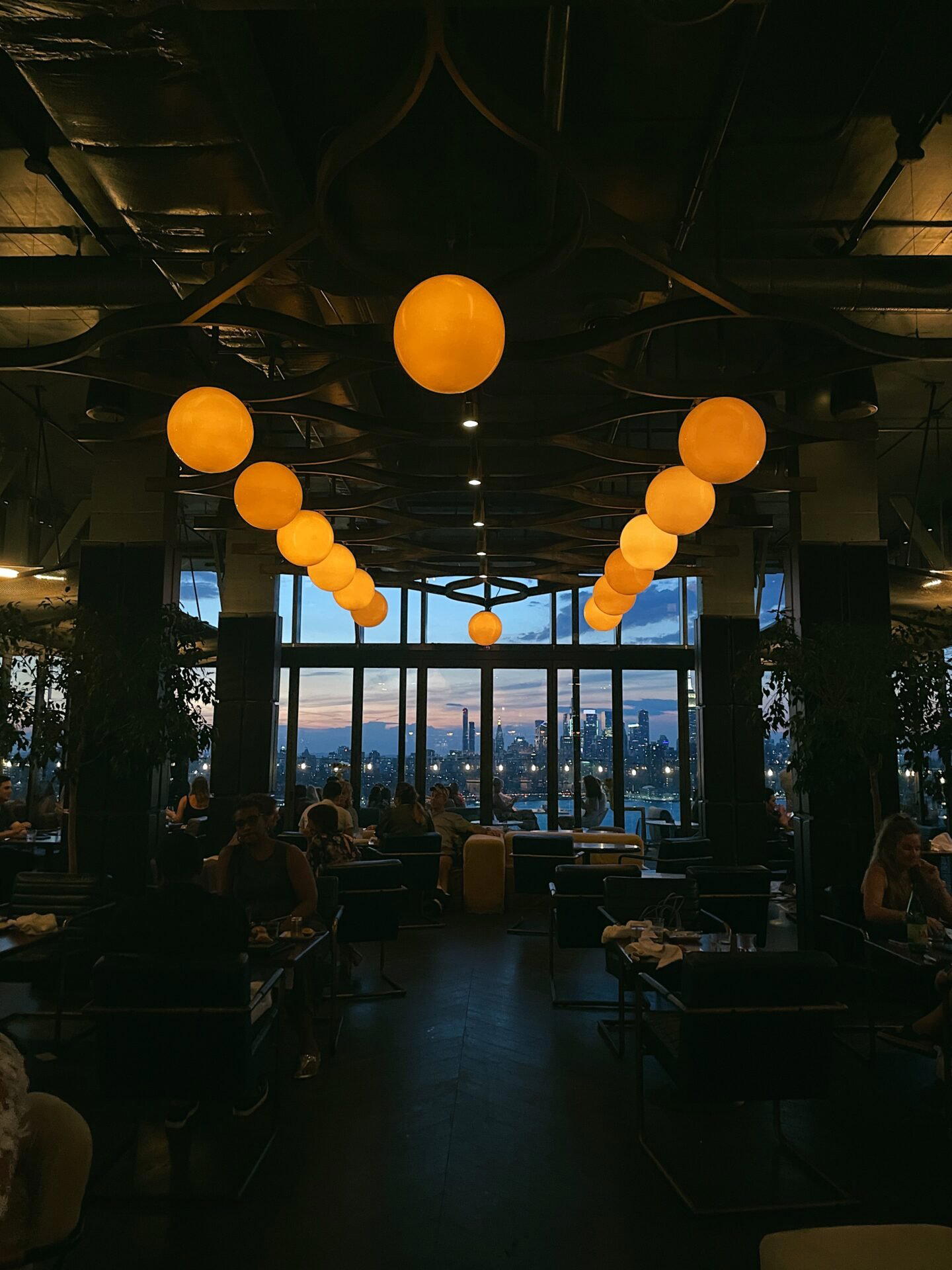
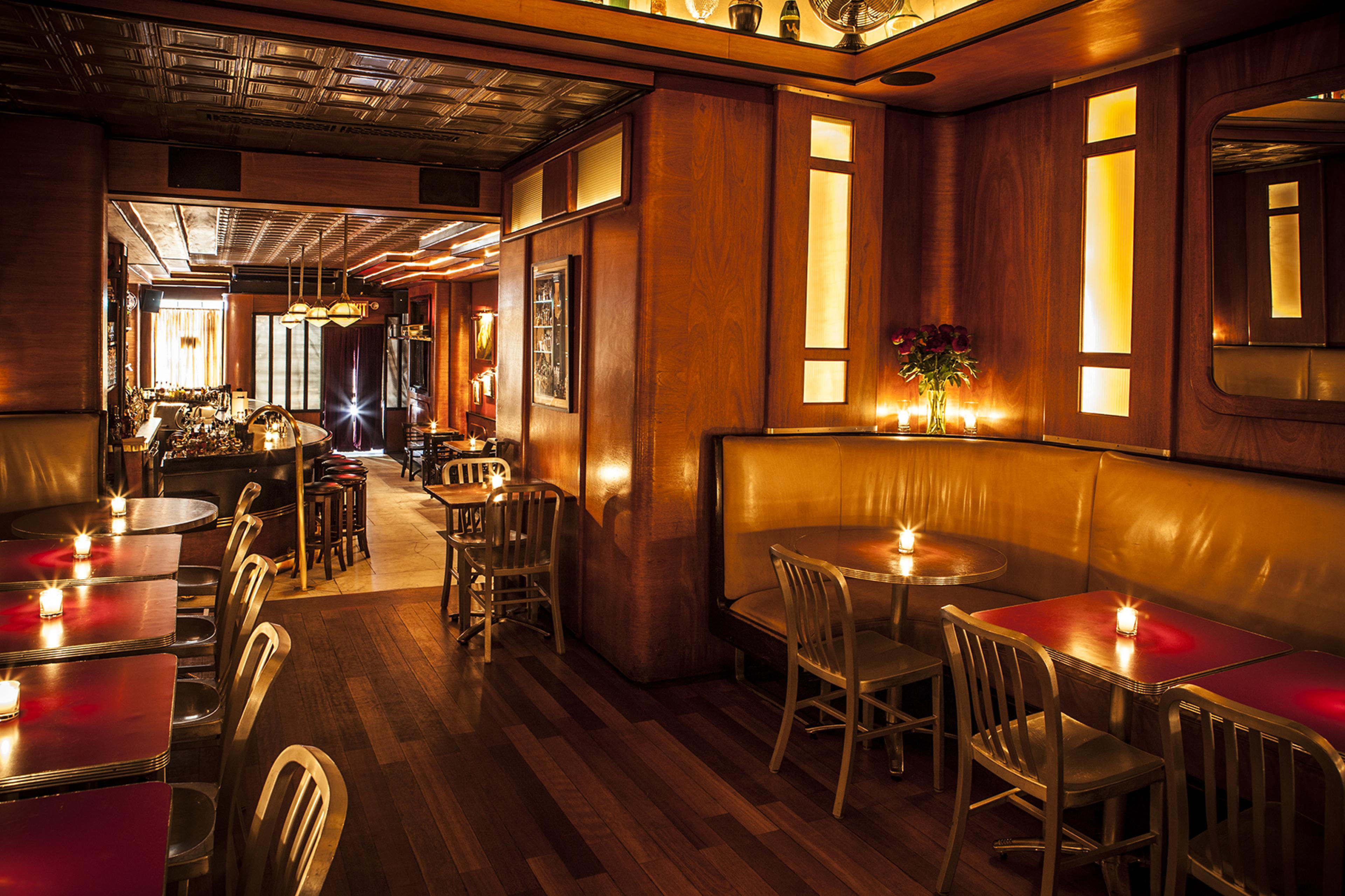
Dim-lit with red-leather booths providing an intimate yet lively neighborhood institution atmosphere.