Burma Love
Burma Love on Valencia Street brings Burmese cuisine into the Mission District's most competitive dining corridor, serving a tradition that remains genuinely underrepresented in American restaurants. The kitchen draws on the layered spice logic of a country that borders India, China, Thailand, and Bangladesh, producing a cuisine that fits no clean category. It sits in a different register from the $$$$ tasting-menu houses that dominate San Francisco's fine-dining conversation.
Pearl is the En Primeur Club membership app — saves, bookings, and concierge access live there. Same editors, same standards.
- Address
- 211 Valencia St, San Francisco, CA 94103
- Phone
- +1 415 861 2100
- Website
- burmalove.co
- Directions
- Get directions
 Saves & bookings on Pearl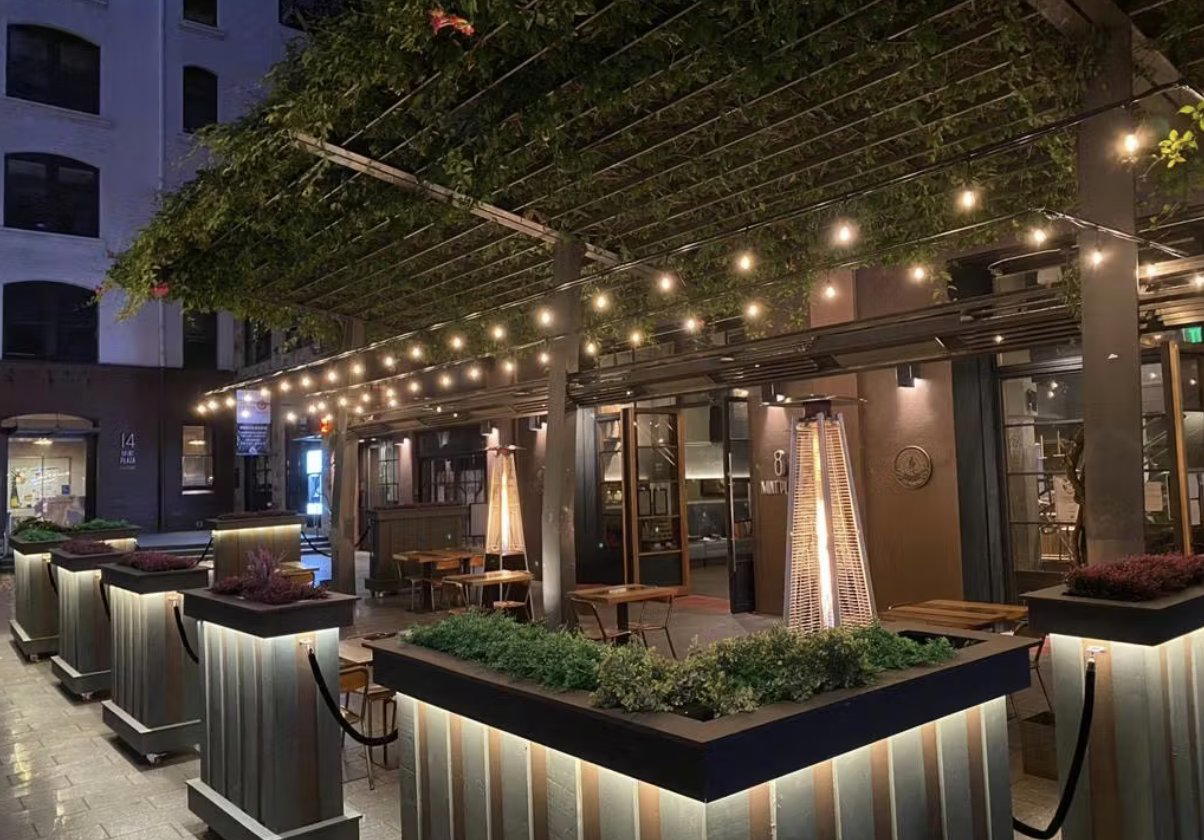
Valencia Street and the Case for Burmese Cooking in San Francisco
The Mission District's Valencia Street corridor has become one of the more competitive casual-to-mid dining strips in the country, where neighbourhood restaurants survive not on novelty alone but on repeat business built over years. Burma Love, at 211 Valencia St, occupies a stretch of that corridor where the competition is real and the dining public is attentive. That context matters, because Burmese cuisine in the United States is still finding its footing as a category, and a restaurant that has maintained a presence on this particular street is doing something right at the level of fundamentals.
San Francisco's broader dining scene tilts heavily toward the $$$$ tasting-menu tier when critical attention is focused. Venues like Lazy Bear, Atelier Crenn, Benu, Quince, and Saison define the city's fine-dining identity and draw international comparison. Burma Love operates in a different register entirely, where the measure of quality is not tasting-menu architecture but whether a cuisine with genuine cultural depth is rendered with accuracy and care. These are separate competitions, and conflating them misreads the city's actual dining range.
The Cultural Logic of Burmese Cuisine
Myanmar sits at a crossroads that most diners underestimate. The country shares borders with India, China, Thailand, Bangladesh, and Laos, and its cuisine reflects each of those proximities without being reducible to any of them. The result is a cooking tradition that uses fermented tea leaves as a salad ingredient, builds curry bases with a different fat and aromatics logic than Thai or Indian counterparts, and leans on textures, including toasted chickpea flour and crispy shallots, as structural elements rather than garnishes.
That textural complexity is one reason Burmese food translates well to the American palate once diners encounter it, yet it remains genuinely underrepresented in the restaurant landscape relative to its Thai or Vietnamese counterparts. The reasons are partly historical: Myanmar's relative isolation through the latter twentieth century limited diaspora restaurant culture in the West. Cities like San Francisco, with substantial Southeast Asian communities, have more exposure than most American markets, but even here, dedicated Burmese restaurants occupy a niche that has not yet reached the mainstream penetration of, say, Vietnamese pho or Thai curries.
That underrepresentation is part of what gives a venue like Burma Love its position in the city's dining map. It is not competing against dozens of peer restaurants on the same block; it is, in a real sense, representing an entire culinary tradition to diners who may be encountering it for the first time or returning because nothing else in the city scratches the same itch.
What the Menu Is Actually Doing
Burmese menus in American restaurants tend to cluster around a handful of reference dishes that have proven accessible enough to build a following. Lahpet thoke, the fermented tea leaf salad, functions almost as a litmus test: it is the dish with no close equivalent elsewhere, built from fermented tea leaves combined with crunchy legumes, sesame seeds, fried garlic, tomatoes, and dried shrimp, assembled at the table or in the kitchen depending on format. If a restaurant gets that dish right, delivering the sourness of the fermented leaf against the fat and crunch of the other components, it signals that the kitchen is working from the logic of the cuisine rather than approximating it for a cautious audience.
Beyond that, Burmese restaurant menus typically offer mohinga, the rice noodle soup with fish-based broth that functions as Myanmar's national breakfast, alongside a range of curries, fried snacks, and salads that draw on the country's regional variation. The northern Shan State traditions differ meaningfully from the coastal Rakhine cooking, which leans harder on seafood and fermented fish paste. How much of that regional range appears on any given menu is a reasonable measure of ambition. Internationally, restaurants that handle comparable levels of culinary complexity, from Atomix in New York with its Korean framework to Atelier Moessmer Norbert Niederkofler in Brunico with its Alpine specificity, demonstrate that regional precision within a national cuisine is what separates serious practitioners from generalist approximations.
Where Burma Love Sits in the Wider American Picture
Across the country, Burmese restaurants remain sparse enough that diners in most cities have no access point at all. The handful of dedicated spots in New York, Los Angeles, and the Bay Area carry outsized representational weight as a result. When critics at publications like The New York Times or Eater have turned attention to Burmese cooking in recent years, the consistent observation is that the cuisine rewards diners who approach it with some prior knowledge, but that the learning curve is shorter than most assume once the logic of fermentation and textural contrast is understood.
San Francisco's position as a port city with deep ties to Southeast Asian immigration gives it a natural advantage as a home for this cuisine. The Mission District specifically has long functioned as a neighbourhood where culinary traditions outside the European canon have found viable audiences. The restaurant's address on Valencia puts it among restaurants that collectively argue for the neighbourhood's seriousness as a place where cuisines are practiced rather than performed.
For diners who spend time at the city's marquee tables, from The French Laundry in Napa to Single Thread Farm in Healdsburg, the restaurant represents a different mode of eating that is no less considered in its own terms. The comparison set is not Le Bernardin in New York or Providence in Los Angeles; it is the small group of American restaurants doing serious work on cuisines that have not yet received systematic critical infrastructure in this country. In that company, Emeril's in New Orleans, Smyth in Chicago, Addison in San Diego, Blue Hill at Stone Barns in Tarrytown, The Inn at Little Washington, and Frasca Food and Wine in Boulder each occupy defined niches, but none of them are doing what a dedicated Burmese kitchen does.
Planning a Visit
The restaurant is located at 211 Valencia St in the Mission District, accessible by BART to the 16th Street Mission station, a short walk north on Valencia. The Mission is dense with dining options, so the practical move is to treat the restaurant as a destination rather than an afterthought, arriving with the tea leaf salad and at least one curry on the agenda.
Price and Positioning
Comparable venues nearby, for context on price, style, and recognition.
| Venue | Cuisine | Price | Notes |
|---|---|---|---|
| Burma LoveThis venue — the venue you are viewing | Mission, Modern Burmese | $$ | Not listed |
| Gada | Castro, Tunisian raclette sandwich shop | $$ | Not listed |
| Pica Pica Arepa Kitchen | Mission, Venezuelan Arepas | $$ | Not listed |
| Lunette | Not listed | $$ | Financial District/South Beach, Cambodian Noodles & Rice |
| Tselogs | Tenderloin, Filipino Silogs | $$ | Not listed |
| Bi-Rite Creamery | Not listed | $$ | Mission, Artisanal Ice Cream & Baked Goods |
Continue exploring
More in San Francisco
Restaurants in San Francisco
Browse all →
Bars in San Francisco
Browse all →
Hotels in San Francisco
Browse all →
At a Glance
- Trendy
- Lively
- Modern
- Date Night
- Group Dining
- Casual Hangout
- Open Kitchen
- Craft Cocktails
Current opening hours
- Monday
- 11:30 AM–3 PM, 4:30–10 PM
- Tuesday
- 11:30 AM–3 PM, 4:30–10 PM
- Wednesday
- 11:30 AM–3 PM, 4:30–10 PM
- Thursday
- 11:30 AM–3 PM, 4:30–10 PM
- Friday
- 11:30 AM–3 PM, 4:30–10:30 PM
- Saturday
- 11:30 AM–10:30 PM
- Sunday
- 11:30 AM–10 PM
Hours can change for holidays and private events. Last verified .
Bustling dining room with gorgeous tiled walls and a semi-private bar area creating a fun, trendy atmosphere.