Buon Appetito
Our verdict
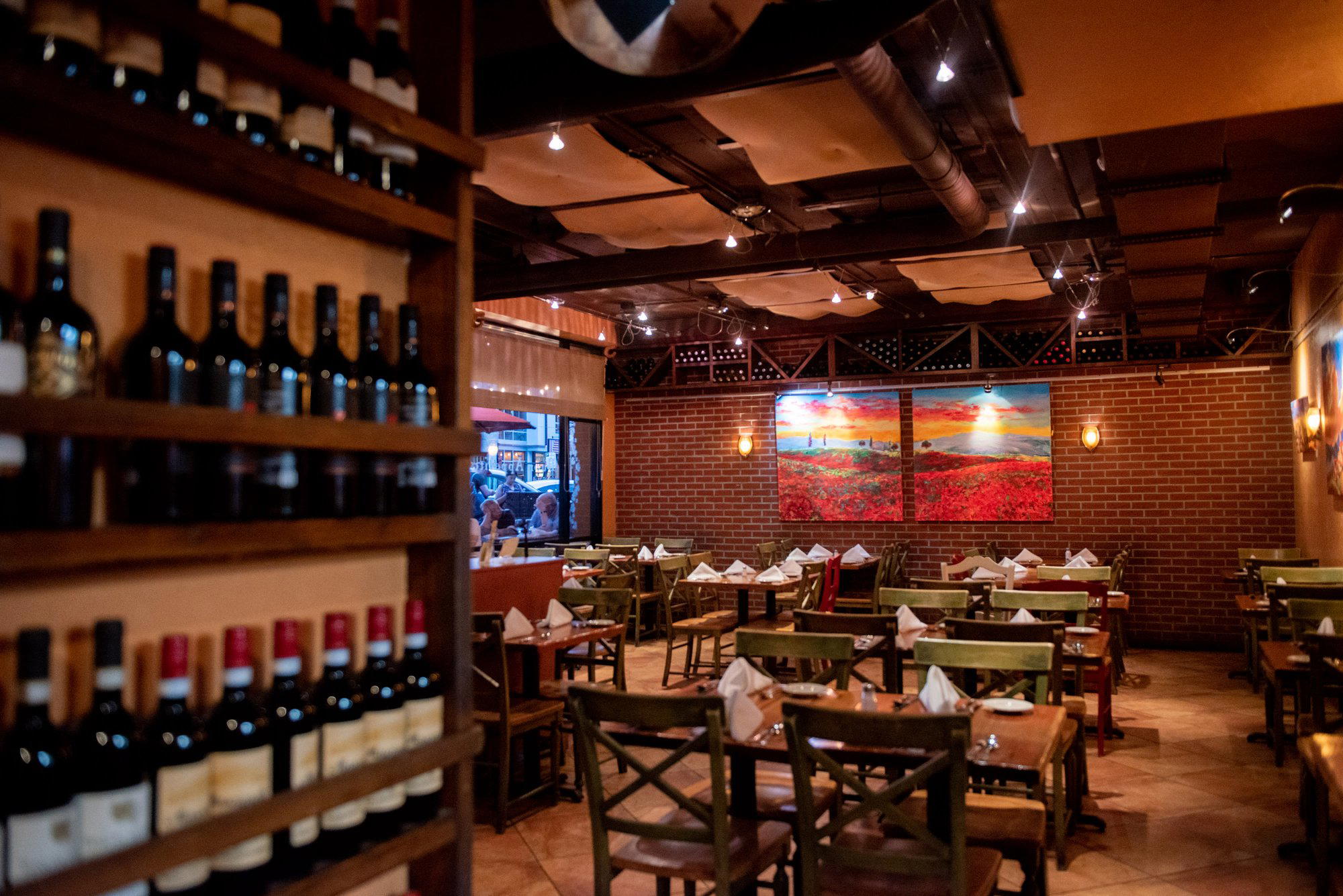
On India Street in Little Italy, Buon Appetito anchors the neighbourhood's Italian dining tradition with the kind of unpretentious, ritually paced meal that San Diego's more formal dining rooms rarely attempt. The room rewards those who treat dinner as a sequence rather than a transaction, and the address places it squarely within walking distance of the district's most concentrated stretch of European-influenced cooking.

Pearl is the En Primeur Club membership app, where members save venues, book tables and use the concierge.
The menu
What to order
- Linguine Boscomare
- Cioppino
- Capellini alla Checca
India Street and the Ritual of the Italian Table
Little Italy's India Street corridor functions as San Diego's clearest approximation of a European dining street, where the meal is understood as an event with a beginning, a middle, and an end rather than a caloric transaction to be completed efficiently. That context matters when you arrive at Buon Appetito, because the restaurant operates within that tradition rather than against it. The pacing here is deliberate. Courses arrive with enough space between them to allow conversation to fill the gaps, which is how the Italian table has always worked: antipasto sets expectations, primo establishes register, secondo delivers the argument, and the meal closes on something sweet and without apology.
San Diego's dining scene has pulled in multiple directions over the past decade. The upper tier, anchored by places like Addison, has moved toward tasting-menu formalism and French-inflected technique. A parallel Japanese tradition, represented by restaurants like Soichi, has built its own serious audience. Italian cooking, by contrast, has largely resisted that formalisation in San Diego, staying closer to the trattoria model: shared plates, regional wine lists, and a room where returning guests recognise the staff. Buon Appetito at 1609 India Street operates in that register.
The Structure of the Meal
The ritual of an Italian dinner depends on acceptance of its logic. You do not arrive expecting to eat quickly. The antipasto course is not optional in the sense that skipping it collapses the architecture of what follows; it sets salt, acid, and fat in proportions that make the heavier courses feel earned. Primo, typically pasta or risotto, occupies the course that American dining culture often treats as the main event, but in classical Italian sequencing it functions as a transition. The secondo, whether meat or fish, arrives when appetite is already engaged but not exhausted.
This structure distinguishes Italian dining from the more compressed formats at, say, 1450 El Prado or the bar-led energy of 777 G St. It also differs sharply from the aviation-themed theatrics of 94th Aero Squadron, where the setting does substantial narrative work. At a properly run Italian table, the room recedes and the food sequence becomes the experience. Buon Appetito's location in Little Italy reinforces this: the neighbourhood has enough ambient character that the restaurant does not need to manufacture atmosphere from the inside out.
Little Italy as Dining Context
San Diego's Little Italy has undergone significant commercial evolution since the 1990s, when it functioned primarily as a residential district for Italian-American families displaced from the original fishing industry. The neighbourhood now holds one of the city's higher concentrations of independent restaurants, and India Street in particular supports a walkable stretch of European-influenced dining that rewards evening strolling between courses or before a late glass of amaro. This physical context is part of what the meal includes at any restaurant on this corridor: the street itself is part of the pacing.
For readers building a broader San Diego itinerary, our full San Diego restaurants guide maps the city's dining districts in more detail, including the East Village, Gaslamp, and North Park corridors that serve different moods and price points. Little Italy's advantage is concentration and walkability; its limitation is that the neighbourhood's popularity has pushed rents, which tends to standardise menus toward the commercially reliable.
Where Buon Appetito Sits in a Wider Italian Dining Conversation
Italian cooking in American cities occupies a complex position. At the serious end of the spectrum, restaurants like Frasca Food and Wine in Boulder have built reputations on regional specificity and deep wine programs rooted in Friuli-Venezia Giulia. In New York, Atomix demonstrates how rigorously a non-Italian kitchen can apply sequenced, course-by-course discipline to build a meal with genuine architecture. The question for any neighbourhood Italian restaurant is whether it understands its own tradition well enough to execute within it honestly, or whether it defaults to red-sauce familiarity as a commercial hedge.
The broader fine-dining conversation in America has moved toward formats that prioritise the chef's narrative: the farmer-sourced tasting menus at Blue Hill at Stone Barns, the hyper-seasonal precision of Single Thread Farm in Healdsburg, or the long-established institutional authority of The French Laundry in Napa. Italian trattoria dining sits in a different register entirely: it is not chef-forward in that contemporary sense. The cook's identity recedes, and the cuisine's own vocabulary, built over centuries of regional variation, carries the meal. That is a different kind of confidence, and it is harder to maintain than it looks.
Comparable dynamics apply elsewhere in American Italian dining. Emeril's in New Orleans has navigated the tension between chef-brand recognition and cuisine fidelity over decades. In Los Angeles, Providence demonstrates what happens when a kitchen applies similar sequencing discipline to California seafood rather than European tradition. The commitment to course structure and pacing is shared even when the cuisine is entirely different. At the highest technical level, kitchens like Le Bernardin in New York City and Atelier Moessmer Norbert Niederkofler in Brunico show how seriously European dining culture takes the architecture of a sequenced meal. Smyth in Chicago and Lazy Bear in San Francisco extend that discipline into American contemporary formats. The Inn at Little Washington represents the American country-house interpretation of the same logic. Buon Appetito operates at a different scale and price point than all of these, but the underlying argument is the same: the meal has a shape, and respecting that shape is the point.
Know Before You Go
| Address | 1609 India St, San Diego, CA 92101 |
|---|---|
| Neighbourhood | Little Italy |
| Cuisine | Italian |
| Price | |
| Reservations | Recommended, particularly on weekends in Little Italy |
| Hours |
Frequently asked questions
Is Buon Appetito suitable for children?
Italian trattoria dining is among the more family-tolerant restaurant formats in any American city, with familiar flavours and a relaxed pace that does not demand adult-level attention spans. San Diego's Little Italy has a neighbourhood character that extends beyond pure fine dining, meaning families are not an unusual sight on India Street. The structure of a multi-course Italian meal does require patience, so it suits children who are comfortable sitting for extended dinners rather than those who need rapid service.
Is Buon Appetito better for a quiet night or a lively one?
The trattoria format that Buon Appetito occupies tends toward longer, more conversational meals rather than high-energy, fast-turnover evenings. Little Italy's India Street does get animated on weekends, so the surrounding street context will carry some noise, but the format itself rewards guests who want time at the table rather than a quick rotation. It is the kind of setting better suited to a dinner that runs two hours than one that ends in forty-five minutes.
What makes dining at Buon Appetito different from other Italian restaurants in San Diego's Little Italy?
Little Italy holds several Italian restaurants within close proximity along and around India Street, giving guests genuine choice at most price points. Buon Appetito's address at 1609 India Street places it at the core of that concentration, and its trattoria format distinguishes it from the more contemporary Italian-American spots that have opened in the neighbourhood since the early 2000s. Where newer entrants often compress the meal into fewer courses or tilt toward a bar-forward model, the trattoria approach at Buon Appetito is built around the full Italian dining sequence.
What's the best thing to order at Buon Appetito?
In a properly run Italian trattoria on India Street, the sound approach is to move through the meal in sequence: let the antipasto course do its work before committing to a pasta or secondo. Skipping courses to save time defeats the logic of the format.
Where is Buon Appetito in San Diego?
Buon Appetito is located at 1609 India St, San Diego, CA 92101, San Diego.
Do I need a reservation for Buon Appetito?
India Street in San Diego's Little Italy is one of the city's consistently busy dining corridors, with Friday and Saturday evenings drawing heavy foot traffic from both locals and visitors. Arriving without a reservation on a weekend is a reasonable gamble only if you are flexible about timing. Calling ahead or booking in advance is the more reliable approach for a table at a predictable hour.
What has Buon Appetito built its reputation on?
Buon Appetito's position at 1609 India Street places it inside San Diego's Little Italy, a neighbourhood with Italian-American dining roots stretching back several generations. The restaurant operates within a trattoria format where the meal is structured around the Italian dining sequence rather than speed of service. That commitment to pacing and format is what distinguishes it from the more casual, high-turnover options elsewhere on the same corridor.
Accolades, Compared
Comparable venues nearby, for context on price, style, and recognition.
| Venue | Cuisine | Price | Notes |
|---|---|---|---|
| Buon AppetitoThis venue (the venue you are viewing) | Classic Italian | $20–30 | Not listed |
| Mama Cella's | Traditional Italian Pizza & Pasta | $20–30 | Rancho Bernardo |
| La Pizzeria Arrivederci | Authentic Italian Pizza & Pasta | $30–50 | Uptown |
| Farmer's Bottega | Farm-to-Table Italian | $30–50 | Uptown |
| Amalfi Cucina Italiana - Carmel Valley | Modern Neapolitan Italian | Not listed | Pacific Highlands Ranch |
| Sorrento Ristorante | Authentic Italian Trattoria & Pizzeria | $30–50 | Downtown |