Bronwyn
Bronwyn occupies a considered space in Somerville's Washington Street corridor, where German-influenced cooking and a serious approach to sourced ingredients put it in a different register from the neighborhood's broader dining scene. The room rewards repeat visits, and the kitchen's commitment to provenance gives each dish a grounding that separates it from more casual Union Square competition.
Pearl is the En Primeur Club membership app — saves, bookings, and concierge access live there. Same editors, same standards.
- Address
- 255 Washington St, Somerville, MA 02143
- Phone
- +16177769900
- Website
- bronwynrestaurant.com
- Directions
- Get directions
 Saves & bookings on Pearl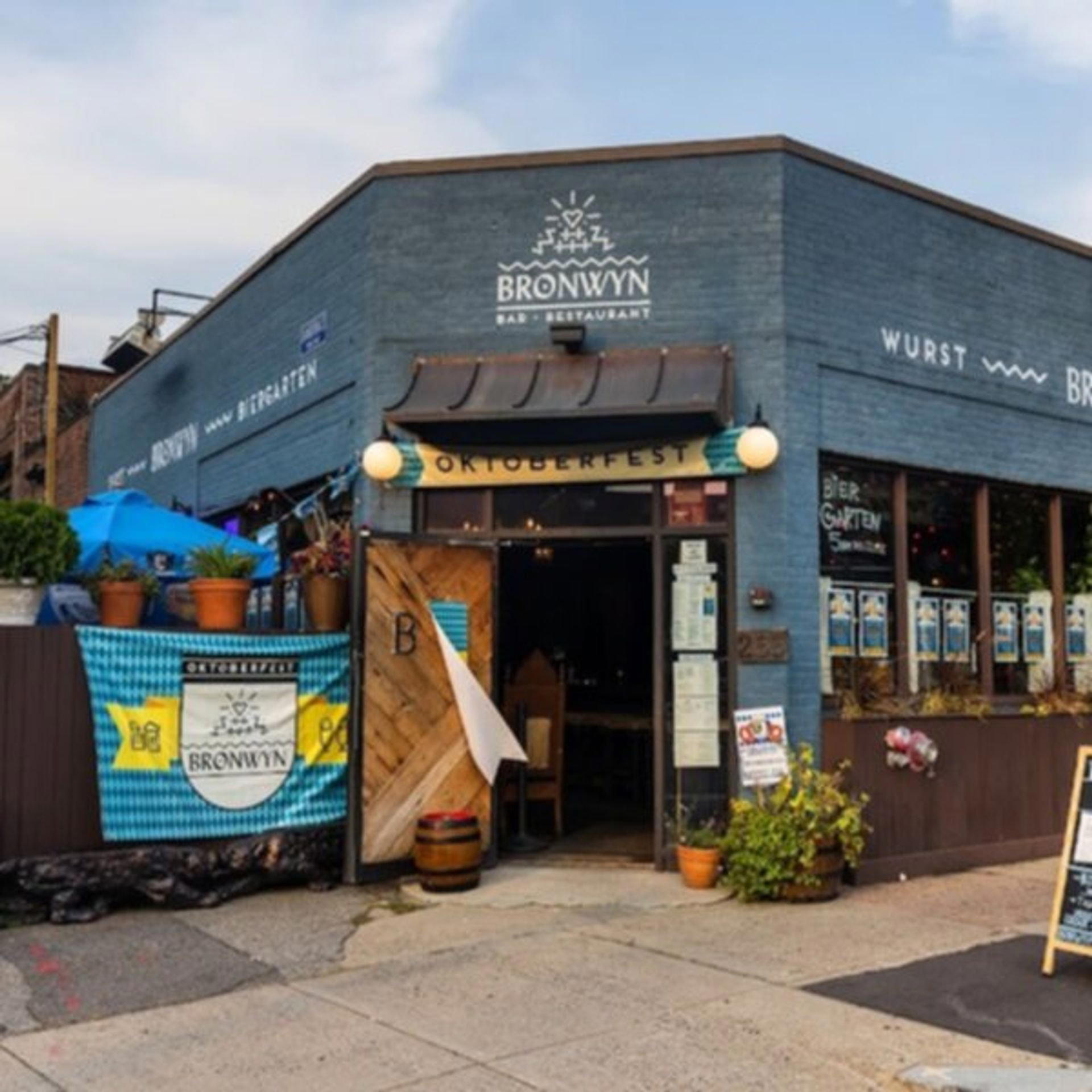
Washington Street, Where the Sourcing Does the Talking
Bronwyn is a restaurant in Somerville serving German and Central European cooking. What was once a neighborhood operating in Boston's shadow now runs its own independent dining circuit, with Union Square and the Washington Street corridor drawing guests who are coming specifically, not settling. Within that circuit, restaurants that anchor their cooking in ingredient provenance occupy a particular tier: they ask more of the kitchen in terms of supplier relationships and seasonal discipline, and they tend to attract a guest who reads menus rather than just orders from them. Bronwyn, at 255 Washington St, sits in that tier.
The physical approach matters here. Washington Street in Somerville carries the architectural texture of a working-class commercial strip that has evolved rather than been redeveloped: brick facades, modest storefronts, the kind of street that accumulates character rather than having it designed in. Bronwyn's room fits that register without performing it. The interior communicates a European sensibility, specifically Central European, with the kind of warm materiality that references beer hall tradition without replicating it wholesale. It is a space that reads as deliberate rather than decorated.
The Central European Kitchen and What It Demands of Its Ingredients
German and Central European cooking traditions are among the more ingredient-specific in Europe. Sausage culture alone, with its regional distinctions between Thuringian, Bavarian, and Franconian styles, demands precision at the sourcing level before a single casing is filled. Fermentation, charcuterie, and roasted meats all share the same dependency: the quality of what goes in determines almost everything about what comes out, because the cooking methods are largely about transformation rather than concealment. There is no sauce-heavy French technique to lean on when the primary ingredient is ordinary.
This is the structural argument for why a kitchen working in this tradition has to take sourcing seriously. At Bronwyn, that argument plays out practically. The menu leans into Central European forms, pretzels, schnitzel, sausages, spätzle, but the kitchen's approach to those forms is informed by where the components come from. The pretzel is not a prop; the charcuterie is not decorative. In a genre where the dish vocabulary is fixed and well-known, the only meaningful differentiation happens at the ingredient level and in the execution discipline that ingredient quality enables.
This puts Bronwyn in an interesting comparative position relative to Somerville's broader scene. Neighbors like Celeste, Cocolee, and Dali each occupy distinct culinary registers, Neapolitan-influenced, Asian-accented, and Spanish tapas respectively, but none of them operate within a tradition as formally codified as Central European cooking. Bronwyn's closest competitive pressure comes not from within Somerville but from the small set of American restaurants working seriously in German and Austrian idioms, a category that remains underpopulated relative to French, Italian, and Japanese cooking at the premium end.
Provenance as Editorial Argument, Not Marketing Language
Across American restaurant culture, farm-to-table language became so ubiquitous in the 2010s that it ceased to carry information. Menus listed farm names the way wine lists listed châteaux, as signals of intention rather than evidence of practice. The more meaningful signal is what the kitchen does differently because of the sourcing relationship, and whether that difference is detectable in the eating.
In the Central European tradition, it is detectable. Pork raised on pasture or with a considered feed program produces fat with a different texture and flavor than commodity pork, and that difference matters enormously in sausage, in schnitzel, and in any preparation where pork fat is a primary flavor element. The same principle applies to the grain character in bread and pretzel doughs. Restaurants working at this level, like Blue Hill at Stone Barns in Tarrytown and Single Thread Farm in Healdsburg, though in entirely different price tiers and formats, have demonstrated that sourcing specificity produces outcomes that are perceptible rather than just principled.
Bronwyn operates in the mid-range of that spectrum: not a tasting-menu showcase like Smyth in Chicago or The French Laundry in Napa, but a restaurant where the sourcing discipline is load-bearing for the food's quality rather than incidental to it. That positioning is harder to sustain than the extremes: fine dining can absorb the cost of premium sourcing in prix-fixe pricing; casual dining does not claim to need premium ingredients. A serious mid-market restaurant has to be efficient and principled simultaneously.
The Beer Program as a Structural Complement
Central European cooking and German beer are not merely traditional companions, they are engineered for each other in a way that few cuisine-and-drink pairings can claim. The bitterness and carbonation of a well-made lager or Märzen does specific work against rich pork fat and fermented vegetables, cleansing and resetting the palate in a way that wine does not replicate for these dishes. A restaurant working seriously in this tradition therefore needs a beer program with the same discipline as its kitchen sourcing, selecting for regional authenticity and brewing quality rather than just category breadth.
Bronwyn's beer list, consistent with its broader approach, treats the program as a culinary element rather than a beverage menu. This is the correct structural choice for the cuisine, and it places Bronwyn alongside a small group of American restaurants, including a few in the Northeast, that take German beer seriously as part of the dining proposition rather than as a crowd-pleaser alongside American craft options.
Somerville in Context, and How to Plan a Visit
Somerville is accessible from Boston via the MBTA Green Line extension, with Union Square station placing guests within walking distance of Washington Street's dining corridor. For visitors building a broader Somerville itinerary, Fat Hen and Diesel Cafe represent the neighborhood's daytime and casual registers, while Bronwyn occupies the evening dining tier.
For guests whose reference point for ingredient-driven American restaurant cooking runs through places like Providence in Los Angeles, Addison in San Diego, Le Bernardin in New York City, or Atomix in New York City, Bronwyn operates in a different register: the cuisine is more convivial and the format less formal, but the underlying discipline around what goes into the kitchen is the same category of commitment. Guests looking for the refined tasting-menu end of ingredient-driven cooking should consider Lazy Bear in San Francisco, The Inn at Little Washington, Emeril's in New Orleans, or Atelier Moessmer Norbert Niederkofler in Brunico for comparison. Bronwyn's argument is that the same sourcing seriousness can apply to a Bavarian pretzel as to a twelve-course tasting menu, and that the neighborhood setting is part of the proposition, not a concession to it.
Comparable Spots, Quickly
Comparable venues nearby, for context on price, style, and recognition.
| Venue | Cuisine | Price | Notes |
|---|---|---|---|
| BronwynThis venue — the venue you are viewing | German and Central European | $$$ | Not listed |
| Posto | Neapolitan Pizza & Handmade Pasta | $$ | Assembly Row |
| Fuji at Assembly | Modern Japanese Sushi with Sichuan Fusion | $$$ | Assembly Row |
| Diesel Cafe | American Bakery Cafe | $$ | Davis Square |
| Cocolee | Modern Pan-Asian Tiki Bar | $$ | Assembly Row |
| Olivia’s Kitchen | Modern Italian Fine Dining | $$$ | Ball Square |
Continue exploring
More in Somerville
Restaurants in Somerville
Browse all →
Bars in Somerville
Browse all →
Hotels in Somerville
Browse all →


Wineries in Somerville
Browse all →
At a Glance
- Rustic
- Cozy
- Intimate
- Date Night
- Special Occasion
- Brunch
- Open Kitchen
- Beer Program
Current opening hours
- Monday
- 5–10 PM
- Tuesday
- 5–10 PM
- Wednesday
- 5–10 PM
- Thursday
- 5–10 PM
- Friday
- 5–10 PM
- Saturday
- 12–10 PM
- Sunday
- 11 AM–9 PM
Hours can change for holidays and private events. Last verified .
Cozy interior with woodwork, antique chairs, rustic German family heirlooms, evoking a European tavern atmosphere.