Brauhaus
Our verdict
A German-style brauhaus in Al Zahiyah, Brauhaus sits within Abu Dhabi's mid-market dining belt where European casual formats have found a consistent foothold. The venue occupies a neighbourhood known more for everyday eating than destination dining, making it a practical counterpoint to the capital's high-end European rooms. Details on menu, pricing, and booking are best confirmed directly with the venue.

Pearl is the En Primeur Club membership app — saves, bookings, and concierge access live there. Same editors, same standards.
- Address
- 10th St - Al Zahiyah - E16 01 - Abu Dhabi - United Arab Emirates
- Phone
- +97126979000
- Hours
- Mon–Thu 4 PM–1 AMFri–Sun 1 PM–1 AM
- Website
- rotana.com
- Directions
- Get directions
- Booking
- Book on the venue's website
The menu
What to order
- Wiener Schnitzel
- Schweinshaxe
- Nürnberger Rostbratwürstchen
- Cordon Blue
European Casual Dining in Abu Dhabi's Al Zahiyah Quarter
Al Zahiyah sits on the eastern edge of Abu Dhabi island, a district shaped more by working professionals, long-term residents, and neighbourhood commerce than by the luxury hotel dining that dominates the capital's Corniche strip. In that context, the European casual format has quietly established itself here as a reliable category, one that trades destination spectacle for consistency and repeatability. Brauhaus, positioned on 10th Street in this district, belongs to that category: a brauhaus-format venue in a city where German beer-hall traditions have found an audience among both expatriate communities and local diners drawn to the format's informal register.
The brauhaus model is worth understanding on its own terms before considering any specific example of it. Originating in German-speaking Central Europe, the format pairs a brewery-linked identity with communal-style eating, a deliberate counter to the tasting-menu formality that defines venues like Talea by Antonio Guida or the polished Cantonese register of Hakkasan. Where those rooms price at the top of Abu Dhabi's dining market, the brauhaus tradition operates at a different register entirely, closer to the middle ground occupied by Mediterranean and Lebanese casual rooms around the city.
Where Brauhaus Sits in Abu Dhabi's Dining Map
Abu Dhabi's restaurant scene has bifurcated sharply over the past decade. On one side sit the flagship hotel rooms and a growing number of chef-driven independents, including Erth and LPM Abu Dhabi, which carry editorial recognition and draw visitors specifically for the dining experience. On the other side sits a broad tier of neighbourhood and district restaurants serving the city's large residential population: consistent, accessible, and largely invisible to the destination-dining conversation. Brauhaus falls into this second tier, which is not a criticism but a placement. The Al Zahiyah address puts it near similar mid-market casual venues, making it part of a daily dining circuit rather than an occasion destination.
That positioning has its own logic. In a city where high-end European dining, from French brasserie formats at Bord Eau to Italian fine dining, commands top-tier pricing, the casual European room serves a different function. It offers a known format, a predictable evening, and the kind of repeatability that destination restaurants cannot provide. The brauhaus tradition specifically, with its emphasis on shared tables, beer culture, and meat-forward cooking, fits that function particularly well for the capital's substantial German, Austrian, and Central European expatriate community.
The Sustainability Dimension in a Gulf Casual Dining Context
The Gulf's restaurant industry operates under specific supply-chain pressures that European casual formats must reckon with honestly. Almost all Central European-style ingredients, from specific grain varieties for brewing to cured meats following particular regional traditions, arrive by import in Abu Dhabi. The carbon calculus of maintaining an authentically sourced brauhaus menu in this geography is not trivial, and it is a pressure shared across the casual European dining segment, whether German, Italian, or French in orientation.
Globally, the dining venues taking sustainability most seriously in analogous positions are rethinking supply chains at a structural level. Atelier Moessmer Norbert Niederkofler in Brunico has made hyperlocal sourcing the governing principle of a three-Michelin-star kitchen, while Uliassi in Senigallia has built its seafood identity around proximity and seasonality. The contrast with a Gulf-based casual European room is instructive: those European kitchens draw from agricultural regions within short supply chains, while an Abu Dhabi brauhaus must import much of its pantry by definition. What sustainable practice looks like in this context is more likely to involve waste reduction, energy use, and packaging than sourcing proximity. Diners interested in how Brauhaus approaches those questions should confirm specifics directly with the venue, as no public data is currently available on its sourcing or environmental commitments.
The broader Abu Dhabi restaurant market is beginning to engage more explicitly with sustainability as a public-facing concern, driven partly by Expo 2020's legacy programming and partly by the UAE's own food security agenda. Venues across the mid-market, from neighbourhood bakeries like Marmellata Bakery to established casual rooms, are increasingly asked to account for where ingredients originate. For a German-format venue in particular, where provenance traditions are culturally significant, that question carries additional weight.
Comparative Context: European Casual Formats Globally
The brauhaus or beer-hall format has shown considerable durability as an export dining concept. In cities where it has worked, from Singapore to Dubai to North American capitals with large European expatriate populations, success has depended less on culinary ambition than on format fidelity: the right glass sizes, the right communal energy, and a menu that does not overcomplicate. The best-performing examples globally tend to keep food simple and execution consistent rather than attempting a fine-dining register. Venues like Lazy Bear in San Francisco or Atomix in New York represent the opposite end of the spectrum, where format innovation and sourcing precision drive the editorial conversation. The brauhaus model is philosophically distinct from both, and that distinction is its strength in casual dining segments.
Across the wider region, the casual European dining tier competes with strong local and regional alternatives. Emirati and Lebanese casual formats, from neighbourhood Emirati spots in Sharjah like AL NAWAB RESTAURANT LLC to the established Lebanese mid-market across Abu Dhabi, offer compelling value and shorter supply chains by definition. For diners choosing between those options and a Central European format, the decision is largely about what occasion they are constructing: a familiar European evening or a regionally grounded one.
Planning a Visit
Brauhaus is located at 10th Street in Al Zahiyah, Abu Dhabi, a district accessible by taxi or rideshare from the Corniche and central hotel areas in under fifteen minutes depending on traffic. The neighbourhood is a working district rather than a tourist zone, so the atmosphere around the venue reflects local residential patterns rather than visitor footfall. Phone and website details are not currently listed in public databases, so confirming hours, current menu format, and reservation requirements before visiting is advisable. For a broader picture of where Brauhaus sits within the capital's dining options, the full Abu Dhabi restaurants guide provides comparative context across price tiers and cuisines.
Frequently asked questions
Where do I go for Brauhaus?
Brauhaus is located at 10th St - Al Zahiyah - E16 01 - Abu Dhabi - United Arab Emirates, Abu Dhabi.
Is Brauhaus in Abu Dhabi a good option for groups looking for a casual European dinner away from the hotel dining circuit?
Brauhaus is located on 10th Street in Al Zahiyah, a residential and professional district on the eastern edge of Abu Dhabi island that sits outside the main hotel corridor. The beer-hall format is structurally well-suited to groups — communal seating and shared-plate conventions are built into the concept's European origins. For parties planning to visit, direct confirmation of group capacity and reservation policy from the venue is recommended, as no booking data is formally published.
What dish is Brauhaus famous for?
Al Zahiyah's long-term resident crowd tends to reward formats that deliver consistent, filling portions over elaborate plating. Specific signature dishes would require direct confirmation from the venue.
How far ahead should I plan for Brauhaus?
Brauhaus sits in Al Zahiyah, a district driven by working professionals and long-term residents rather than tourist foot traffic, which generally means less acute booking pressure than venues in the Corniche hotel corridor. That said, beer-hall formats with a loyal local following can fill quickly on weekend evenings. Contacting the venue directly before your visit is advisable, particularly for groups.
What do critics highlight about Brauhaus?
No Michelin recognition, 50 Best listing, or named press citations are on record for Brauhaus. Its positioning in Al Zahiyah — away from Abu Dhabi's hotel-driven dining belt — places it outside the circuits that most international critics travel. The venue's reputation appears to rest on neighbourhood standing rather than award-season attention.
Is Brauhaus good for vegetarians?
The brauhaus format is historically meat-forward, built around sausage, schnitzel, and roasted proteins, so vegetarians should check the current menu directly with the venue.
Does Brauhaus justify its prices?
In Abu Dhabi's Al Zahiyah district, European casual formats generally price below the Corniche hotel venues while still reflecting Gulf supply-chain costs on imported ingredients. Assessing value requires checking current menu pricing directly with the venue at 10th Street, Al Zahiyah.
Compact Comparison
Comparable venues nearby, for context on price, style, and recognition.
| Venue | Cuisine | Price | Notes |
|---|---|---|---|
| BrauhausThis venue — the venue you are viewing | Authentic German Bavarian | $30–50 | Not listed |
| Cafe Arabia كافيه أربيا | Middle Eastern Fusion Cafe | $20–30 | Al Karamah, Middle Eastern Fusion Cafe |
| 88 Seoul | Korean Street Food & Fried Chicken | Not listed | Al Seef, Korean Street Food & Fried Chicken |
| Abd El Wahab | Authentic Lebanese | $30–50 | Al Saadiyat Island, Authentic Lebanese |
| Belgian Café | Belgian Bistro & Gastropub | $30–50 | Al Bateen, Belgian Bistro & Gastropub |
| Antonia Chic | Italian Pizza & Pasta | $30–50 | Al Maryah Island, Italian Pizza & Pasta |
Continue exploring
More in Abu Dhabi
Restaurants in Abu Dhabi
Browse all →
Bars in Abu Dhabi
Browse all →
Details
- Rustic
- Lively
- Cozy
- Classic
- Casual Hangout
- Group Dining
- After Work
- Business Dinner
- Terrace
- Garden
- Beer Garden
- Hotel Restaurant
- Beer Program
- Garden
- Waterfront
- A La Carte
- Family Style
- German Draft Beer
- Warsteiner
- Krombacher
- Beck's
- Vegetarian Friendly
- Gluten Free Options
Current opening hours
- Monday
- 4 PM–1 AM
- Tuesday
- 4 PM–1 AM
- Wednesday
- 4 PM–1 AM
- Thursday
- 4 PM–1 AM
- Friday
- 1 PM–1 AM
- Saturday
- 1 PM–1 AM
- Sunday
- 1 PM–1 AM
Hours can change for holidays and private events. Last verified .
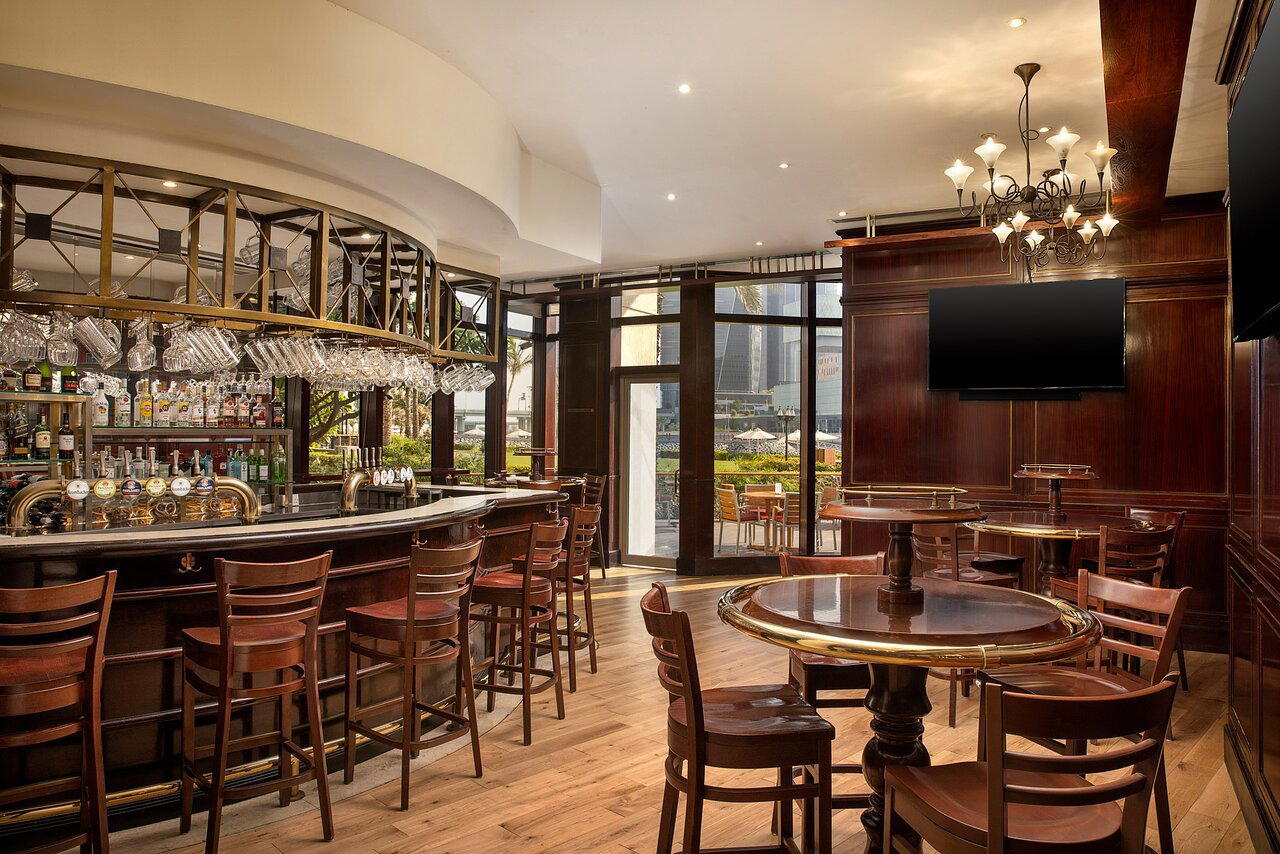
Dark wooden interior with traditional beer garden aesthetic, trickling stream, and lively background music creating a Bavarian village atmosphere.