Kinkally

Kinkally on Charlotte Street takes its name from the Georgian dumpling khinkali, building a menu around the filled dough parcels alongside broader Caucasian small plates and large-format dishes. Recognised with a Michelin Plate in 2025, it operates at the accessible end of London dining (££) and extends into a basement bar, Kinky, running a techno soundtrack late into the evening.
Pearl is the En Primeur Club membership app — saves, bookings, and concierge access live there. Same editors, same standards.
- Address
- 43 Charlotte St., London W1T 1RS, United Kingdom
- Phone
- +44 7934 609152
- Website
- kinkally.co.uk
- Directions
- Get directions
 Saves & bookings on Pearl
Georgian Dumplings Find a Foothold in Fitzrovia
Charlotte Street has long operated as one of London's more eclectic restaurant corridors, running from Greek tavernas to French bistros within a few hundred metres. The arrival of Eastern European and Caucasian cooking on that stretch is a more recent development, and Kinkally, a London restaurant serving Modern Georgian Fusion at 43 Charlotte Street, represents one of the sharper expressions of that shift. The restaurant takes its name directly from the dish: hand-folded dumplings with a twisted dough handle, served in the Georgian tradition where the handle is held to drink the broth inside before eating the rest.
The Michelin Guide awarded Kinkally a Plate recognition in 2025, a signal that the inspectors consider the cooking technically consistent and worth the detour. At the ££ price point on Charlotte Street, it occupies a different competitive tier than the heavily awarded rooms nearby, places like Sketch, The Lecture Room and Library or Restaurant Gordon Ramsay, both carrying three Michelin stars and ££££ pricing. Kinkally is not competing in that register. Its Michelin Plate places it in a growing cohort of recognisable, accessible London addresses where the cooking earns critical attention without the tasting-menu price structure.
What the Khinkali Tradition Brings to a London Menu
Georgian cuisine occupies an interesting position in London's Eastern European dining scene: it is still being discovered by a broad audience, even as food-aware diners have tracked it for years. Khinkali, the soup dumpling at the centre of the Kinkally menu, differs from Chinese xiao long bao in structure and seasoning, the dough is thicker, the pleating more dramatic, and the fillings traditionally meat-based, though contemporary kitchens have expanded well beyond that. At Kinkally, the filling range includes langoustines, pumpkin, and beef, a selection that threads classical reference points with seasonal and premium ingredient choices.
The broader menu extends into Georgian-influenced small and large plates: chkmeruli, the garlicky butter-braised chicken dish common in Tbilisi restaurants, and pkhali, the compressed walnut-and-herb vegetable preparations that function as both appetiser and palate marker. These are dishes that carry enough internal logic to reward a diner with some Georgian food knowledge, while remaining accessible enough that a table with no prior exposure can work through them without a lengthy briefing.
The Eastern European restaurant category in London has generally split between nostalgic neighbourhood rooms serving diaspora communities and newer venues that treat the cuisine as source material for contemporary technique. Kinkally sits closer to the latter, with a room described as trendy and a delivery that takes the khinkali seriously as a centrepiece rather than a curiosity. For comparison, Anelya in Chicago applies a similar approach to Eastern European cooking in a North American market, treating the cuisine as a platform for considered, contemporary dining rather than folk-museum recreation.
Critical Reception and What the Michelin Plate Signals
Michelin Plate designation, introduced formally as a category separate from stars, indicates that a restaurant has passed inspector review and is considered to serve good cooking. It is a meaningful threshold: the majority of London restaurants do not appear in the Michelin Guide at all. For a ££ Georgian dumpling restaurant on Charlotte Street, earning that recognition in 2025 marks Kinkally as part of a specific and growing cohort, the kind of address that critics notice before mass audiences catch up.
Ratings in that range, sustained across several hundred data points, tend to reflect repeatability: the kitchen delivers on a second and third visit, not just a first impression.
London's more formally recognised dining addresses, CORE by Clare Smyth, The Ledbury, Dinner by Heston Blumenthal, operate with booking windows of weeks or months and price structures that position them as occasion dining. Kinkally functions differently: it is the kind of place where the Michelin recognition matters as a quality signal, but the experience is built around a convivial, shareable format at a price that allows for more frequent visits.
Kinky: The Basement Bar Below the Restaurant
Below the restaurant, the basement bar Kinky operates as a continuation of the evening rather than a separate venue. The format, creative cocktails, a techno soundtrack, the same atmosphere as the dining room above, positions it as the logical next chapter rather than an afterthought. Basement bars attached to restaurants in London vary widely in how seriously the drinks program is taken; Kinky appears to treat cocktails as a genuine second act, not a waiting room.
For those building a full evening, the sequence is direct: Georgian small plates and khinkali upstairs, then cocktails downstairs with the music turned up. It is a format that has worked well for Charlotte Street, which draws a mix of after-work Fitzrovia crowds and diners coming specifically for the food. For a broader look at London's bar scene,
Where Kinkally Sits in the London Dining Picture
London's dining scene at the ££ level is where most of the interesting critical action happens, this is the tier where new cuisines get serious treatment, where Michelin starts paying attention, and where a returning visitor can track how the city's food culture is evolving. The heavily awarded rooms, The Fat Duck in Bray, L'Enclume in Cartmel, Moor Hall in Aughton, represent the formal apex of British fine dining. Kinkally operates in a different register entirely: it is part of the argument that London's most interesting eating is happening at the mid-price tier, where cuisines like Georgian are getting the kind of serious platform they have not historically had in the UK.
For readers building a wider London itinerary, For accommodation planning, Other UK dining references worth considering: Gidleigh Park in Chagford, Hand and Flowers in Marlow, and hide and fox in Saltwood offer points of comparison for considered, regionally-rooted cooking outside London. And for Eastern European dining in a transatlantic context, Boulder Dushanbe Tea House in Boulder charts a different expression of the tradition.
Planning Your Visit
Kinkally is at 43 Charlotte Street, London W1T 1RS, in the Fitzrovia neighbourhood, walkable from Goodge Street and Tottenham Court Road stations. Budget: ££, placing it at the accessible end of Charlotte Street dining with room to order across multiple rounds of khinkali and small plates without significant outlay. Reservations: booking ahead is advisable given the combination of Michelin Plate recognition, demand at this price-to-quality ratio is consistent. Format: shareable small and large plates built around the khinkali as centrepiece, with the basement bar Kinky available for drinks after dinner. For experiences and cultural programming in the area,
A Pricing-First Comparison
Comparable venues nearby, for context on price, style, and recognition.
| Venue | Cuisine | Price | Awards | Notes |
|---|---|---|---|---|
| KinkallyThis venue — the venue you are viewing | Fitzrovia, Modern Georgian Fusion | $$$ | Michelin Plate | Not listed |
| Sucre | Soho, Modern South American Parrilla | $$$ | Michelin Plate | Not listed |
| Rambutan | Borough, Modern Sri Lankan | $$$ | Michelin Plate | Not listed |
| Lima | Fitzrovia, Modern Peruvian Cevicheria | $$$ | Michelin Plate | Not listed |
| Wild Corner | Not listed | $$$ | Not listed | Chelsea, Mediterranean Small Plates & Wine Bar |
| Samaia Georgian Restaurant | Castelnau, Authentic Georgian | $$$ | Not listed | Not listed |
Recognition history
Dated appearances from independent guides and award organizations, with the underlying list record or original source where available.
Michelin Plate
Michelin
Michelin Plate
Michelin
Continue exploring
More in London
Restaurants in London
Browse all →
Bars in London
Browse all →
Hotels in London
Browse all →



At a Glance
- Modern
- Minimalist
- Cozy
- Trendy
- Intimate
- Date Night
- Special Occasion
- Open Kitchen
- Chefs Counter
- Craft Cocktails
Current opening hours
- Monday
- 5–10:30 PM
- Tuesday
- 5–11:30 PM
- Wednesday
- 5–11:30 PM
- Thursday
- 5–11:30 PM
- Friday
- 5–11:30 PM
- Saturday
- 10:30 AM–3:30 PM, 5–11:30 PM
- Sunday
- 10:30 AM–3:30 PM, 5–10:30 PM
Hours can change for holidays and private events. Last verified .
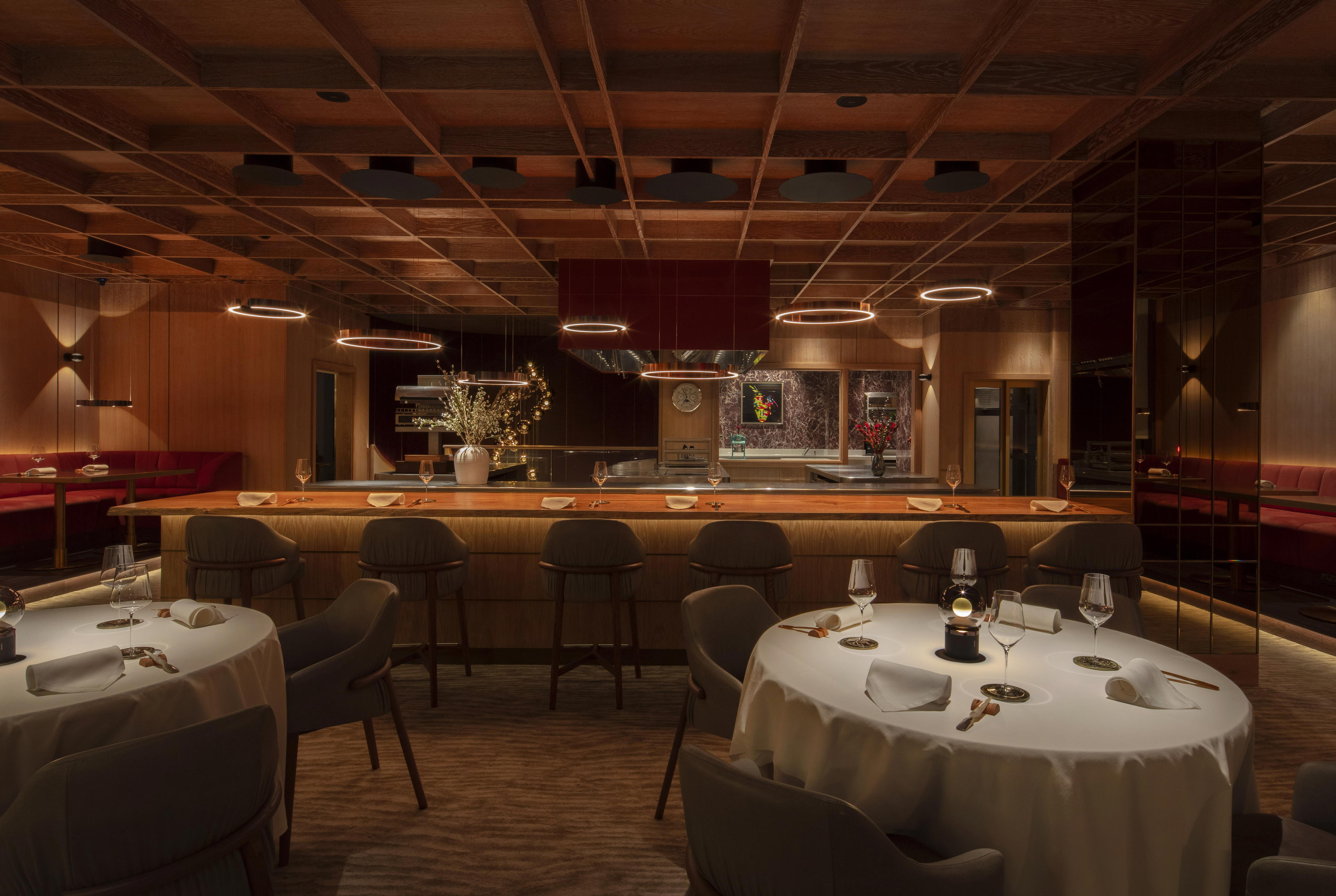
Cozy yet stylish with dimmed lighting, modern minimal interior, bar seating for watching chefs, and subtle techhouse music.