Bouchot
Bouchot gives Eindhoven a Classic French reference point in a city better known for design culture, technology, and informal Brabant hospitality than for old-school French dining. The appeal is not novelty; it is the survival of a cuisine built on provenance, sauce work, and disciplined pacing within a fast-changing Dutch city.

Pearl is the En Primeur Club membership app — saves, bookings, and concierge access live there. Same editors, same standards.
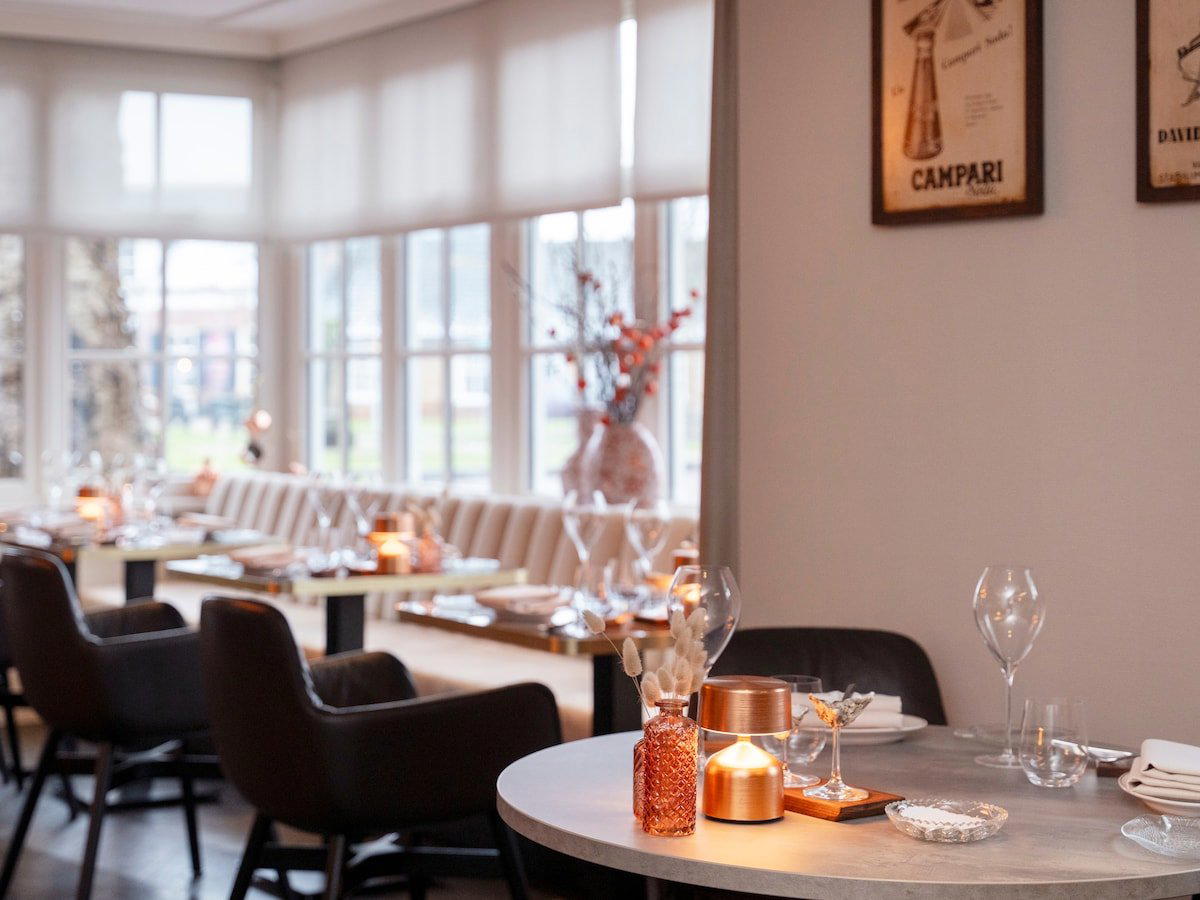
Approach French dining in Eindhoven and the first frame is not Parisian theatre. The city reads as Brabant first: pragmatic, design-minded, shaped by industry, students, and the after-hours rhythm of a compact centre. Against that setting, Bouchot matters as a Classic French address because the genre asks for something Eindhoven does not always foreground: patience, hierarchy, sourcing, and the quiet authority of a kitchen built around technique rather than trend.
Classic French cooking has always been a conversation between land and plate. Butter, shellfish, poultry, veal stocks, root vegetables, herbs, wine reductions and careful seasoning are not decorative ideas; they are the grammar. In the Netherlands, that grammar takes on a different accent. Dutch produce culture favours seasonality, dairy, North Sea fish, market vegetables and restraint at the table. A French restaurant in Eindhoven has to translate that heritage without turning it into costume drama.
Classic French cooking in a Brabant city
Bouchot sits in a dining scene where French technique remains useful precisely because it is not fashionable shorthand. Eindhoven has plenty of casual formats, modern bistros, international counters and design-led rooms; Classic French is a narrower lane. Its value is measured less by spectacle than by fundamentals: whether sauces carry depth, whether fish and meat are treated with discipline, whether the meal has cadence, and whether the kitchen understands that provenance is only persuasive when it changes what lands on the plate.
That matters in a city whose restaurant culture is often read through convenience and energy rather than ceremony. Eindhoven’s growth has brought a more varied audience, from business travellers tied to the technology sector to weekend visitors using the city as a base for Dutch design, museums and Brabant towns. Within that mix, a French table performs a specific role. It gives structure to an evening. It slows the pace without requiring the formality associated with grand dining rooms in larger European capitals.
The name also points toward the sea. “Bouchot” refers to the wooden stakes used in traditional mussel cultivation in France, a word tied to coastal farming rather than luxury signalling. That reference is useful editorially because it places the restaurant inside a tradition where provenance is physical: tides, beds, seasons, labour. Even when a menu is not publicly fixed dish by dish, the French framework implies an interest in ingredient origin and treatment rather than pure visual composition.
Provenance over performance
The stronger reading of Bouchot is not as a novelty address, but as part of a Dutch-French continuum. French cooking in the Netherlands has long adapted to local appetites: less ceremony than Paris, more directness than palace dining, and a preference for comfort when the setting is outside Amsterdam or The Hague. Eindhoven sharpens that contrast. The city’s cultural identity is forward-looking, yet this kind of restaurant depends on inherited craft.
That tension can be productive. A Classic French kitchen has to justify itself now by being clear rather than nostalgic. The modern diner has less tolerance for heavy-handed formality and more interest in where ingredients come from, how portions are paced, and whether the wine and food speak the same language. In that context, Bouchot’s category tells the reader more than a list of adjectives would: expect a French structure, not a free-form international menu; expect technique to matter; expect the meal to be judged by execution rather than by novelty.
For travellers building an Eindhoven itinerary, the restaurant belongs in the same mental map as the city’s broader food culture rather than outside it. Use our full Eindhoven restaurants guide for the wider spread, from contemporary kitchens to casual rooms. Nearby editorial context can also be useful: 1910 Restaurant, Bij Albrecht, Bistro Sophie (€€ · Modern Cuisine), Brasserie Bellevue, and De Cuijt (Creative French) show how the city moves between bistro ease, modern cooking and French reference points without needing one dominant dining identity.
How to place it in a wider Dutch-French itinerary
Eindhoven is not a classic grand-tour dining capital, which makes its French restaurants more revealing. They are not insulated by the mythology that surrounds longer-established culinary cities. They have to work for local regulars, visiting engineers, design-week travellers and diners who may be choosing between a relaxed brasserie and a more technique-led evening. That makes the category practical: Classic French here is less about ceremony for its own sake and more about whether the kitchen can deliver clarity, comfort and provenance in a city that usually prizes directness.
Travellers looking beyond Eindhoven can trace how French cooking shifts across Dutch towns. 't Amsterdammertje in Loenen aan de Vecht, 't Arsenaal in Deventer, 't Fnidsen in Alkmaar, 't Ganzenest in Rijswijk, 't Golfje in Midsland, 't Havenmantsje in Harlingen, and 't Spiehuis, Classic French in Soest each point to a different provincial expression of the same culinary inheritance. Across the border, Abt- und Schäferstube, Classic French in Amorbach shows how the same French vocabulary changes again in a German setting.
The practical decision is simple: choose Bouchot when the evening calls for French discipline in Eindhoven rather than a concept-led room or a quick city-centre meal. For the rest of the trip, our full Eindhoven hotels guide, our full Eindhoven bars guide, our full Eindhoven wineries guide, and our full Eindhoven experiences guide help place dinner inside the city’s wider rhythm: design by day, compact-bar evenings, and a food scene that is more varied than its industrial reputation suggests.
In Context
Comparable venues nearby, for context on price, style, and recognition.
| Venue | Cuisine | Price | Notes |
|---|---|---|---|
| BouchotThis venue — the venue you are viewing | Nuenen, Classic French Seafood | $$$ | Not listed |
| Kazerne | city center, Modern Italian | $$$ | Not listed |
| World kitchen by Shiran | Not listed | $$$ | Binnenstad, French-Based World Fusion Tasting Menu |
| Bij Albrecht | Centrum, Plant-based Fine Dining | $$$ | Not listed |
| 1910 Restaurant | Bergen, Modern European Fine Dining | $$$ | Not listed |
| Tesoro de Lucie | Not listed | $$$ | Kleine Berg, Refined Spanish with Italian Flair |
Continue exploring
More in Eindhoven
Restaurants in Eindhoven
Browse all →
Bars in Eindhoven
Browse all →
At a Glance
- Elegant
- Sophisticated
- Classic
- Intimate
- Date Night
- Special Occasion
- Business Dinner
- Standalone
- Extensive Wine List
- Sommelier Led
- Local Sourcing
Ingestogen and stylish, with a refined, balanced atmosphere that emphasizes simplicity, elegance, and attentive service.