Boma - Open Air Terrace

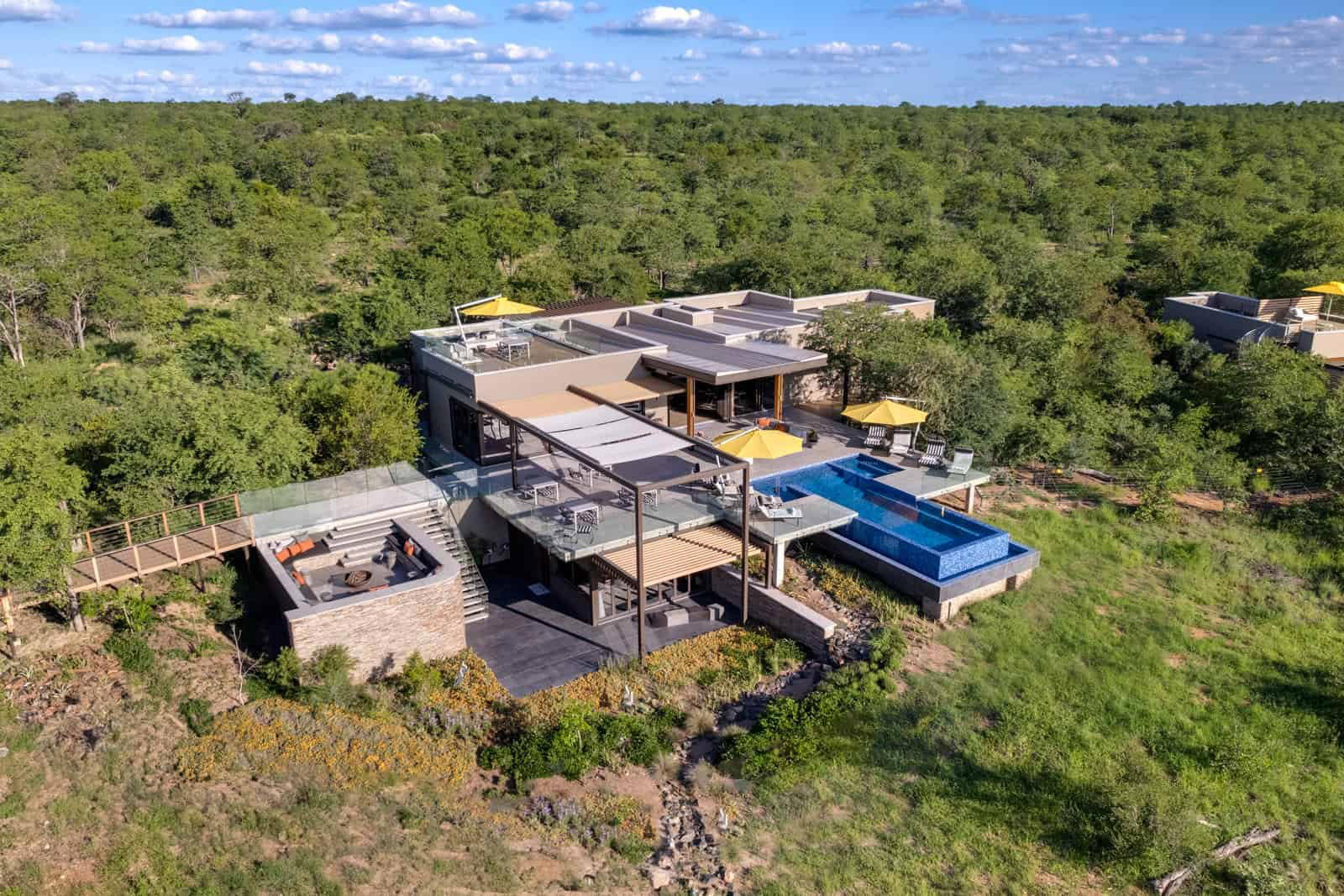
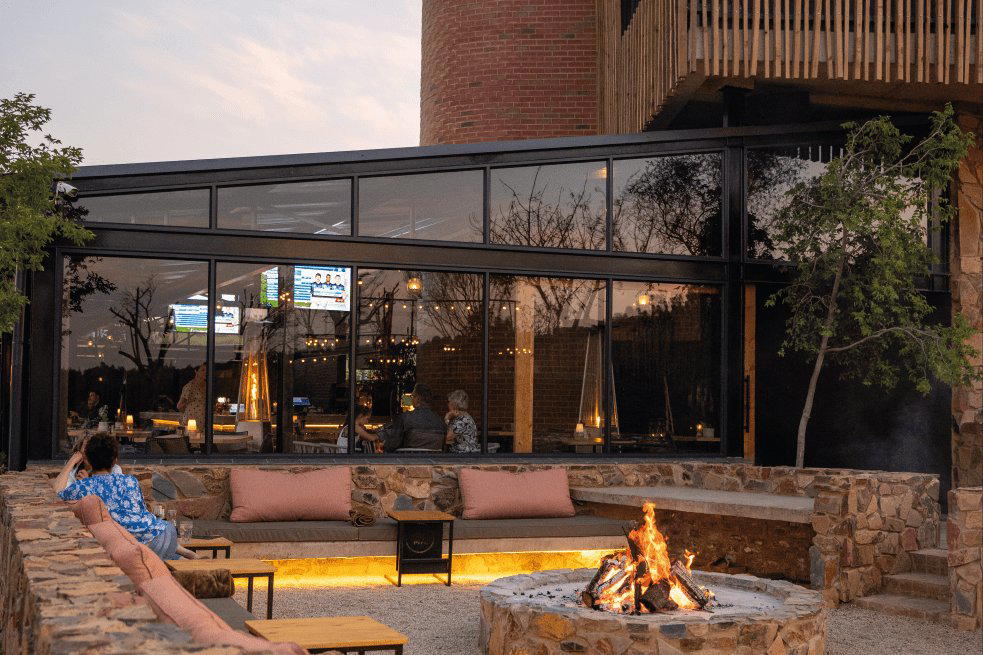
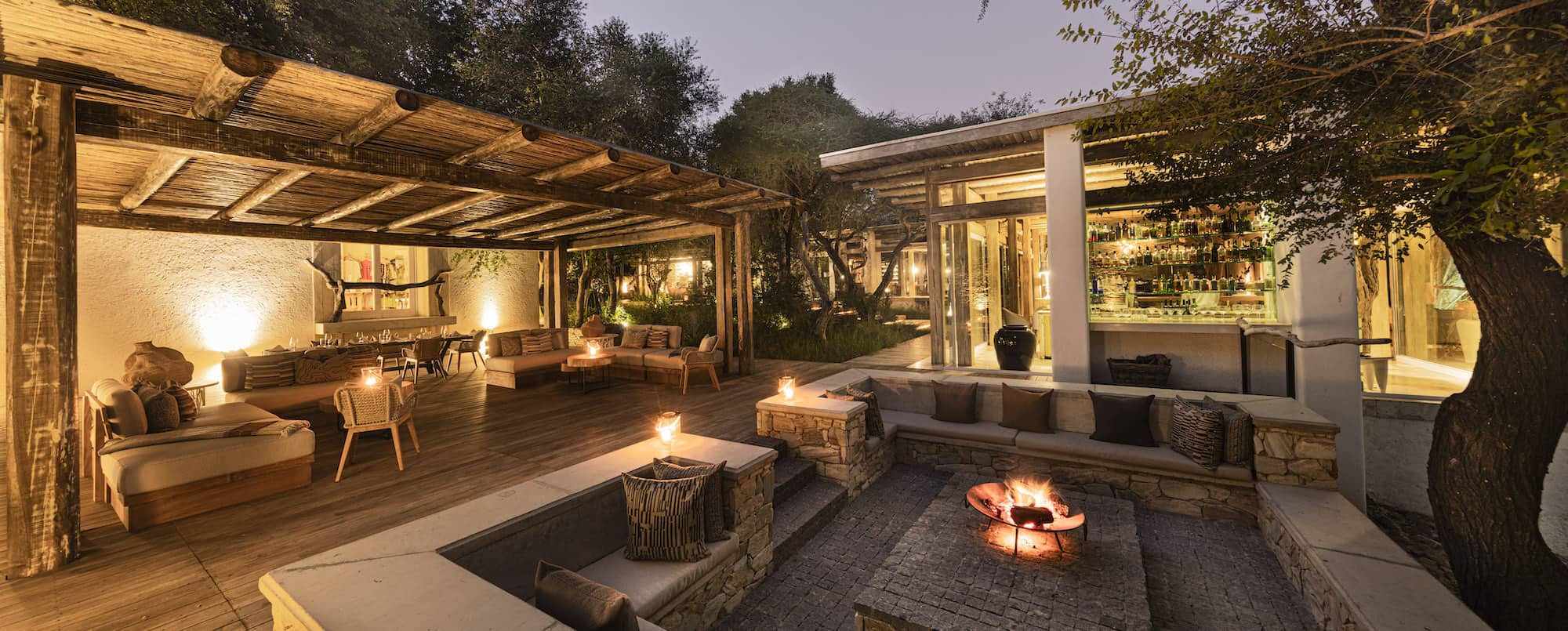
Boma - Open Air Terrace frames safari dining around fire, local setting, and a daily changing South African menu rather than a fixed fine-dining script. In Hoedspruit’s game-reserve context, its value is the format: outdoor evening meals, open-flame cooking, and enough flexibility to adapt dishes around guest preferences and dietary requirements.
Pearl is the En Primeur Club membership app — saves, bookings, and concierge access live there. Same editors, same standards.
- Address
- Kapama Game Reserve, R40 between Hoedspruit and Klaserie
- Phone
- +27 (0)12 460 5605
- Directions
- Get directions
 Saves & bookings on Pearl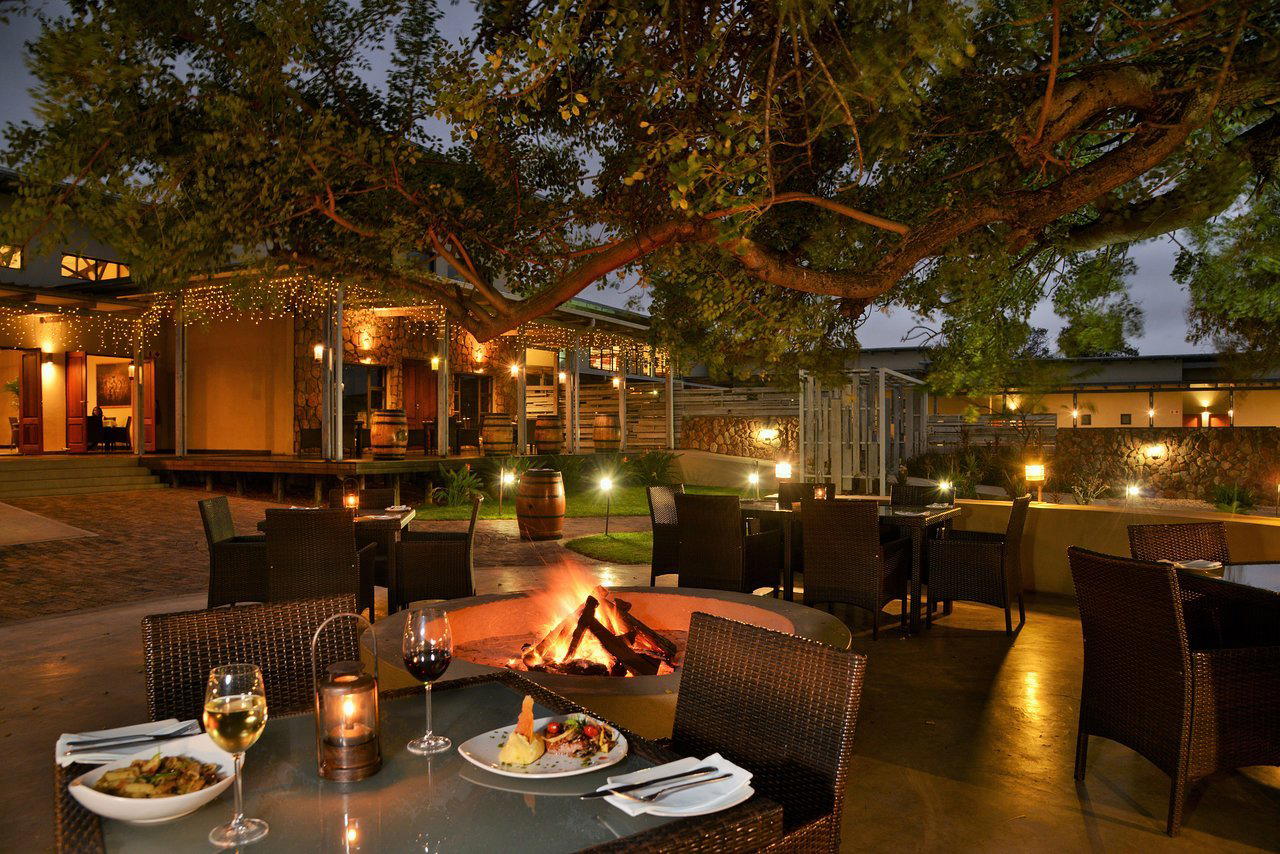
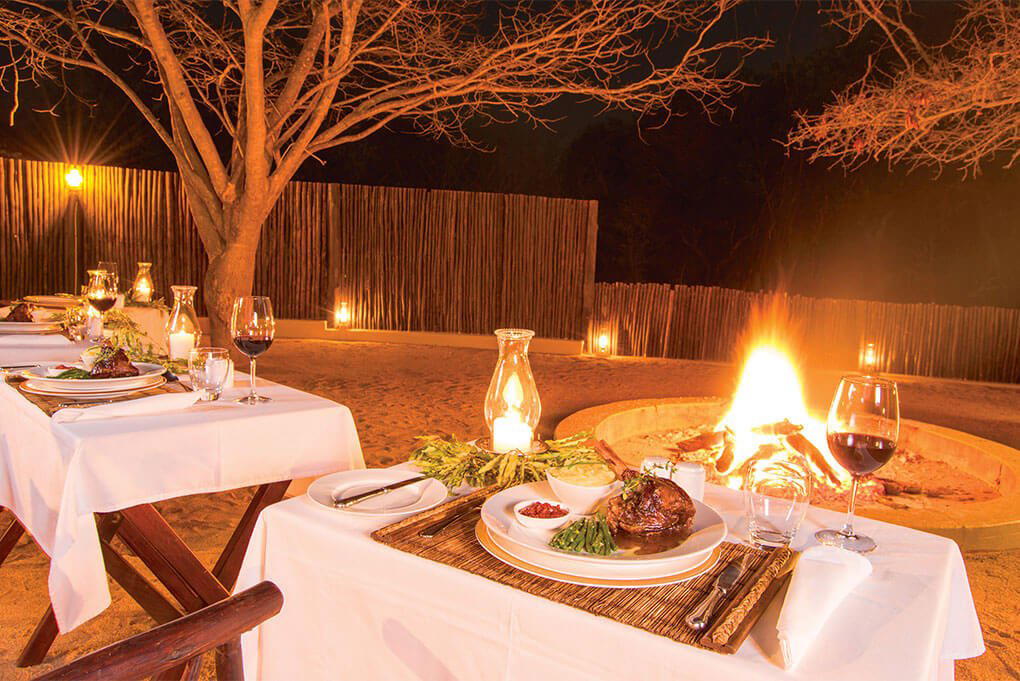
Evening dining in the Lowveld has its own grammar: dark sky, wood smoke, open flame, and conversation that moves more easily outdoors than across a formal dining room. Boma - Open Air Terrace uses the boma format not as décor but as the meal’s operating logic. The aim is not theatrical safari nostalgia, but cooking and eating suited to Hoedspruit’s reserve setting, where dinner feels grounded in place without becoming performance.
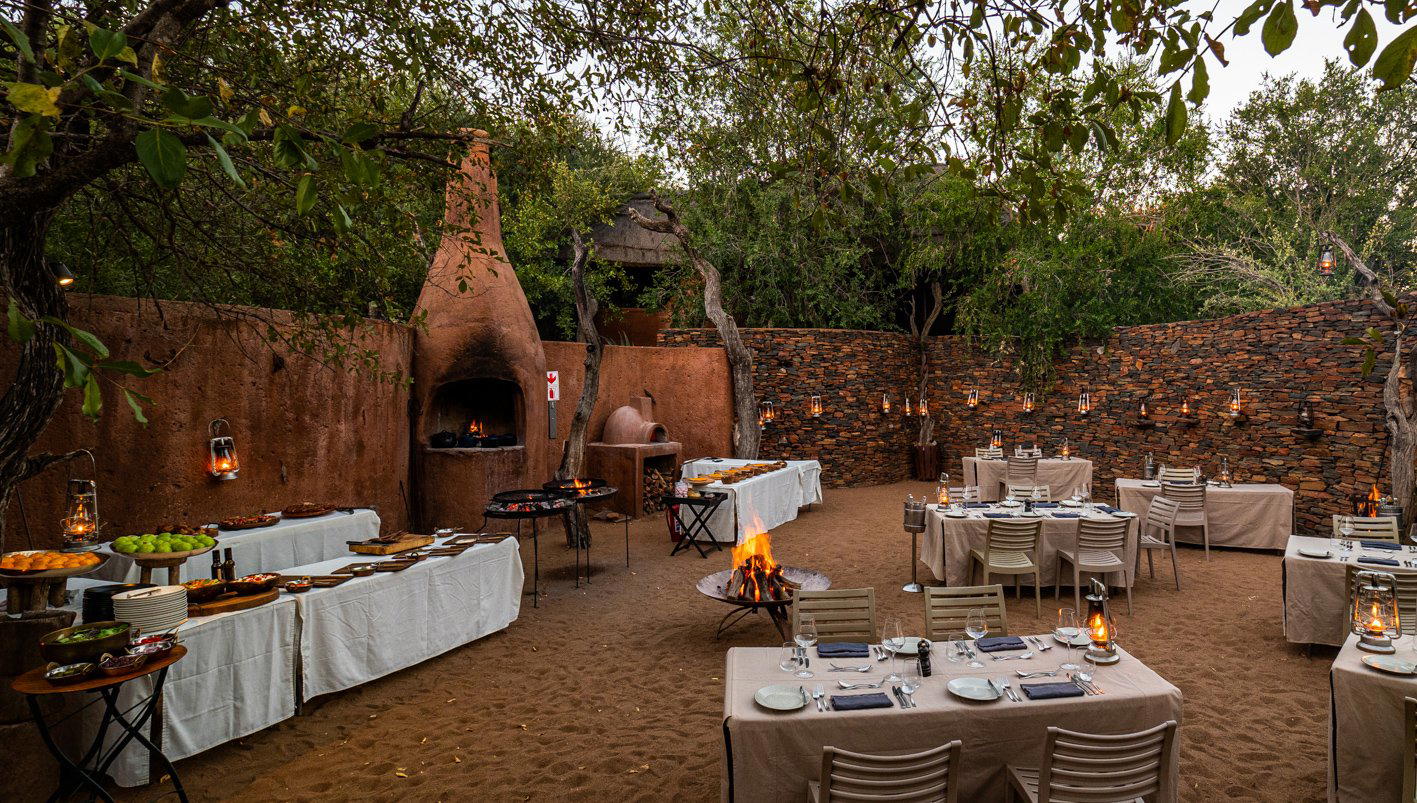
In South African lodge dining, open fire carries more weight than a grill station in an urban restaurant. It sets pace, temperature, and mood, pushing the kitchen toward direct, legible flavours. Here, classic South African cooking is prepared over flames, with a daily menu adjusted for preferences or dietary requirements. In a remote reserve, ingredient planning follows supply, season, and guest profile, so flexibility is not a luxury add-on but part of the format.
Fire-led South African cooking in a reserve setting
The stronger safari-lodge kitchens in South Africa avoid two traps: over-formal European plating and generic buffet cooking. The boma format offers a third lane, keeping the meal social and relaxed while connecting it to the region’s appetite for smoke, flame, braai technique, and generous shared eating. Boma - Open Air Terrace is most coherent here: its identity comes from cooking method and outdoor setting, not a named-chef narrative or imported tasting-menu template.
“Expression of the terroir” works because Hoedspruit is not a city dining market with foot traffic, late tables, and competitive counter formats. It is a safari gateway shaped by bushveld. The food has to answer to that environment, and open-fire cooking does so more convincingly than polish for its own sake. Flame is not just visual; it changes the meal’s structure, favouring dishes that handle heat, smoke, and timing without losing directness.
For broader South African trips, the contrast is instructive. Cape Town and the Winelands often frame terroir through vineyards, tasting menus, and farm produce; the Lowveld frames it through game-reserve hospitality and fire. A city table such as 1800 in Cape Town belongs to a different dining economy; 96 Winery Road Restaurant in Raithby and Babel Restaurant in Paarl sit closer to wine-country produce culture. Hoedspruit’s open-air lodge dining prioritises weather, fire, group rhythm, and making dinner feel tied to the reserve rather than detached from it.
Daily menus matter more than signature-dish chasing
The daily-changing menu is the key operational detail. In a city restaurant, it can signal market buying or chef restlessness. In a reserve, it also solves practical problems: guests may stay multiple nights, dietary needs vary, and the kitchen must avoid repetition without pretending to be a metropolitan tasting-menu room. Adaptability becomes craft. A kitchen that adjusts for preferences while staying within classic South African cooking suits lodge dining better than one locked into a rigid sequence.
This is the wrong place to hunt for a fixed signature dish. The better question is whether the format supports the trip. Hoedspruit dining often sits around safari schedules, early mornings, and long stretches outside in heat or dust. Dinner benefits from clarity: flame-cooked food, open air, and a relaxed social register. The atmosphere is friendly and relaxed, suited to intimate exchanges over dinner, closer to a lodge gathering than a formal restaurant ceremony.
South Africa’s broader restaurant map explains why this matters. Johannesburg dining, including addresses such as Aduna Bistro in Johannesburg, often reflects urban pace and design-led rooms. Coastal hotel dining, such as Amelia's at The Plettenberg in Plettenberg Bay, draws on sea-facing hospitality. Mountain and alpine terroir expressions elsewhere, including 4 Sajons, Expression of the terroir in Ortisei Val Gardena and ALMA Restaurant, Expression of the terroir in Tr Na, show how place-led cooking changes with geography. Hoedspruit’s version is less about altitude or cellar culture than fire’s immediacy in an outdoor reserve environment.
How to read Hoedspruit's lodge-dining scene
Hoedspruit is not a conventional restaurant city. Many serious meals happen inside lodges and reserves, so access, timing, and house style shape the experience as much as cuisine. The area’s dining culture is tied to safari logistics: guests return from drives, meals cluster around set evening rhythms, and outdoor formats carry social value because the environment is part of the meal. A boma dinner is not a novelty; it is one of the region’s native hospitality forms.
Within Hoedspruit, think in formats rather than rankings. Boma and Fireside signal the region’s appetite for flame and open-air dining. Jabulani Restaurant (Cooking classics), Jabulani Safari (South African), and Misava point to the lodge-led local scene, where meals are often attached to stays, reserves, and private itineraries rather than street-level restaurant hopping. For the wider region, Our full Hoedspruit restaurants guide is the cleanest way to read the spread.
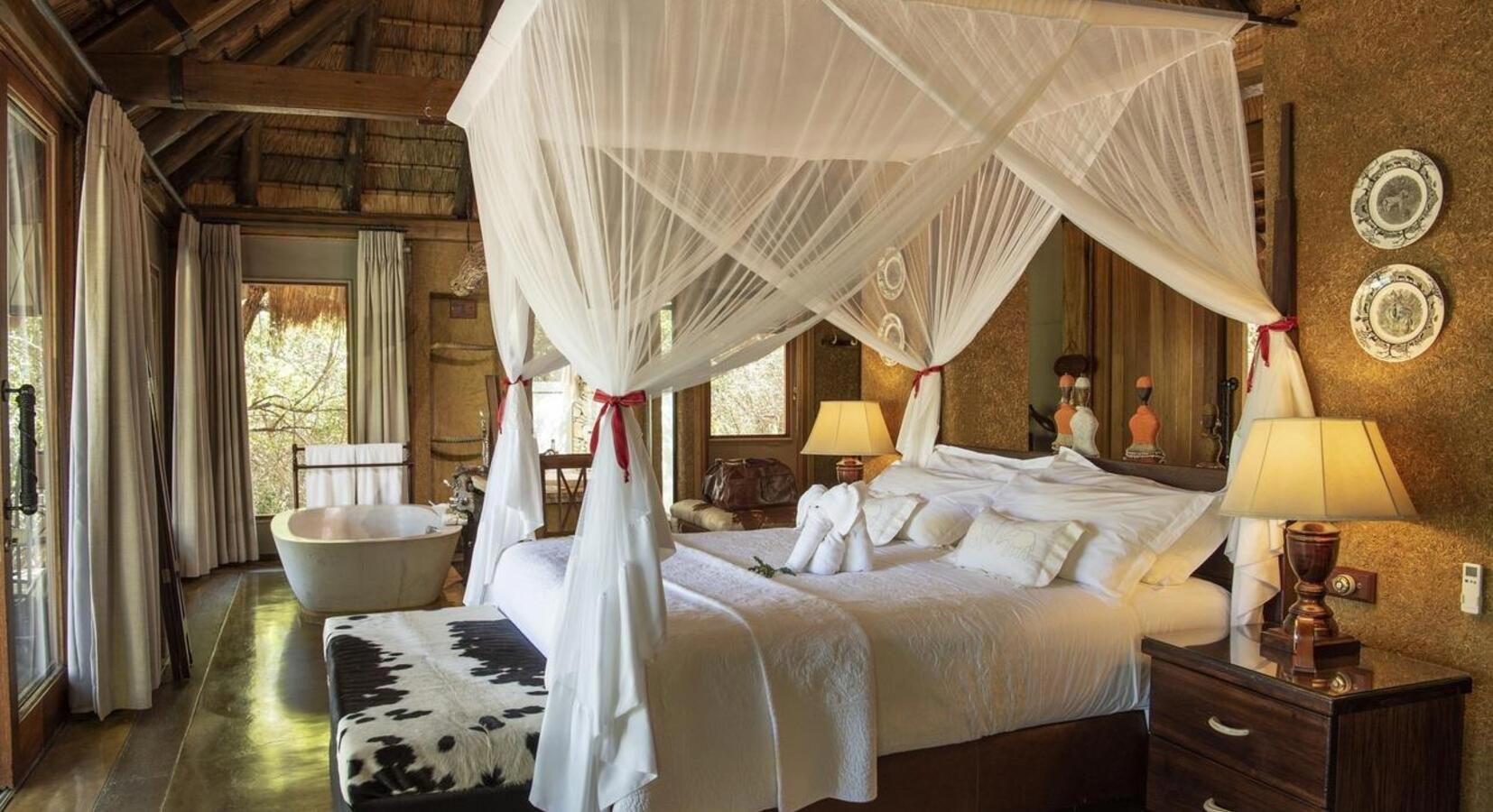
The practical takeaway: choose this dinner when the setting matters as much as the plate, and open-fire South African cooking fits better than a formal room. The address places it inside Kapama Game Reserve on the R40 between Hoedspruit and Klaserie, so it belongs to the reserve-dining circuit rather than a town-centre crawl. Travellers should pair restaurant decisions with lodging and activity structure; Our full Hoedspruit hotels guide, Our full Hoedspruit bars guide, Our full Hoedspruit wineries guide, and Our full Hoedspruit experiences guide are more useful than treating dinner as a standalone booking.
There is also a regional comparison beyond Hoedspruit. African Boma in Thornybush Game Reserve reflects the same broader South African lodge tradition: open-air hospitality built around fire, group rhythm, and the bushveld night. Boma - Open Air Terrace sits squarely in that lineage. Its strongest argument is not a trophy list or chef mythology, but the fit between place, cooking method, and pace: classic South African food cooked over flames, outdoors, with a daily menu that can bend around the people at the table.
Comparable Venues Nearby
Comparable venues nearby, for context on price, style, and recognition.
| Venue | Cuisine | Price | Notes |
|---|---|---|---|
| Boma - Open Air Terrace | Open-air bush boma dining | $$$ | Hoedspruit |
| Jabulani Restaurant | Fine dining with contemporary South African influence in a private game reserve | $$$$ | Kapama Private Game Reserve |
| Silvan Safari Lodge | Modern South African Fine Dining | $$$$ | Sabi Sand Game Reserve |
| Curate | Modern South African Fine Dining | $$$$ | Bantry Bay |
| Burrata | Modern Neapolitan Italian | $$$ | Woodstock |
Recognition history
Dated appearances from independent guides and award organizations, with the underlying list record or original source where available.
Relais Chateaux Award
Relais Chateaux
Continue exploring
More in Hoedspruit
Restaurants in Hoedspruit
Browse all →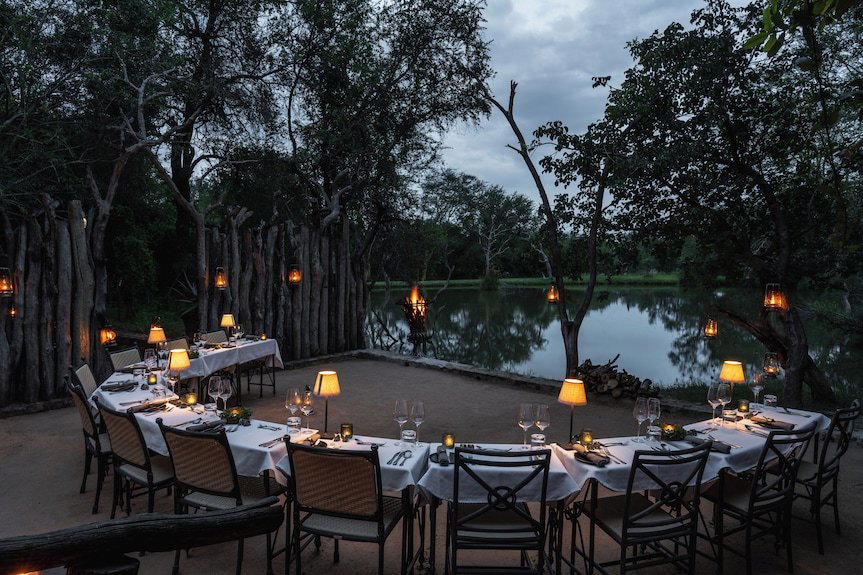
Bars in Hoedspruit
Browse all →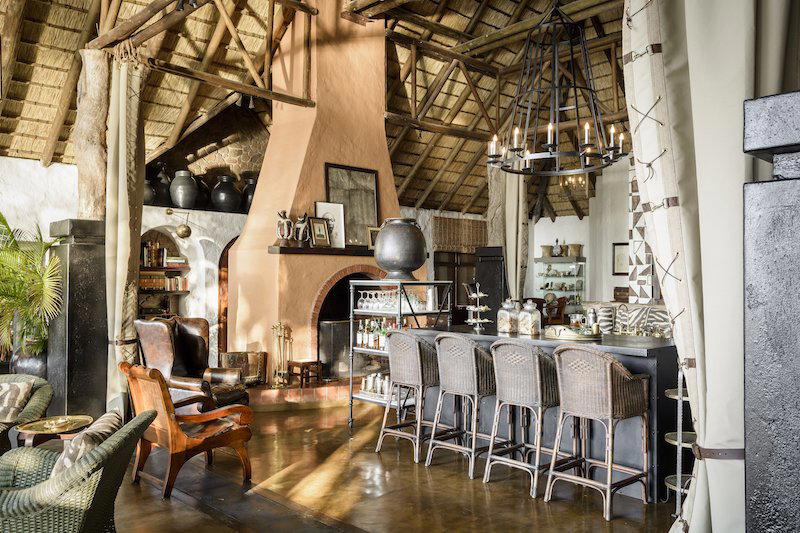
At a Glance
- Scenic
- Romantic
- Rustic
- Intimate
- Date Night
- Group Dining
- Celebration
- Special Occasion
- Terrace
- Garden
- Standalone
- Garden
Atmosphere is tranquil and intimate, with an open-air terrace, firelight, and surrounding bush sounds creating a romantic, close-to-nature feel rather than a busy town-restaurant vibe.