Bo Tree Plant-Based Cuisine
Bo Tree Plant-Based Cuisine occupies a strip-mall unit on Highway 7 in Unionville, Ontario, bringing a focused plant-based menu to a suburban dining corridor more accustomed to Italian trattorias and neighbourhood pizza. For a town that runs on comfort-food familiarity, its presence signals a meaningful shift in what local diners are now asking kitchens to do.
Pearl is the En Primeur Club membership app — saves, bookings, and concierge access live there. Same editors, same standards.
- Address
- 4568 Hwy 7 Unit 3, Unionville, ON L3R 1M5, Canada
- Phone
- +19059409288
- Website
- botreecuisine.com
- Directions
- Get directions
 Saves & bookings on Pearl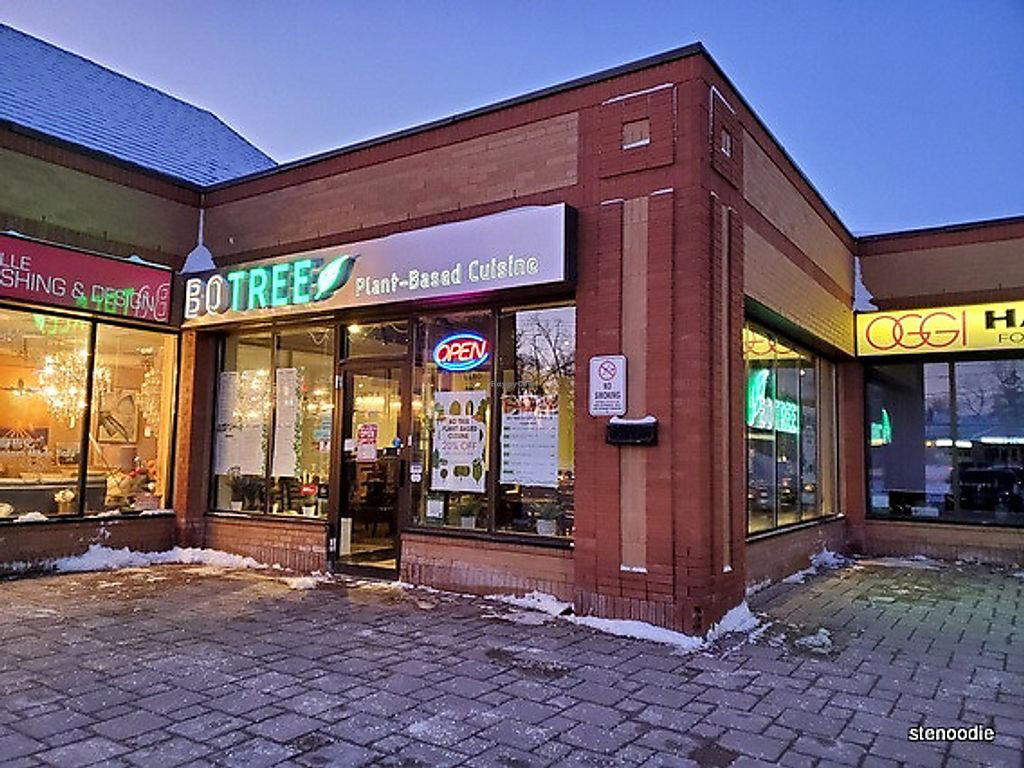
Plant-Based Cooking in a Suburban Ontario Context
Unionville's dining corridor along Highway 7 has long been defined by the kind of restaurants that reward regulars: red-sauce Italian, neighbourhood pizza, and bistros where the room matters as much as the plate. George's Pizza & Restaurant, Il Postino, and La Grotta On Main represent the dominant grammar of eating here. Bo Tree Plant-Based Cuisine is a plant-based vegetarian fusion restaurant in Unionville, Ontario. Its address, 4568 Highway 7 Unit 3, places it in a strip-mall format typical of the suburban GTA, but the cooking it represents belongs to a broader movement that has reshaped how Canadian kitchens think about the relationship between ingredients, sourcing, and the plate.
Across Canada, plant-forward dining has moved steadily from a niche dietary category into a culinary conversation that serious kitchens now take on its own terms. Restaurants like Tanière³ in Quebec City and Restaurant Pearl Morissette in Lincoln have demonstrated that produce-centred menus can carry the full weight of a premium dining experience when the sourcing is disciplined and the technique is precise. Bo Tree enters this conversation at a community level, in a town where that conversation is still relatively new.
What Ingredient-Driven Cooking Requires
The case for plant-based cuisine rests almost entirely on sourcing. When animal protein is removed from the equation, the ingredient itself carries all the narrative weight that a well-marbled cut or a day-boat fish might otherwise provide. This is the demanding arithmetic of vegetable-forward kitchens: there is nowhere to hide. A kitchen working exclusively with plant ingredients must source with the same rigour that protein-focused restaurants apply to their supply chains, because the quality differential is just as visible on the plate.
This principle has become the organising logic of particularly credible plant-based restaurants in Canada. Eigensinn Farm in Singhampton built its entire identity around a closed-loop farm-to-table model where sourcing and cooking are effectively the same act. Fogo Island Inn Dining Room in Joe Batt's Arm anchors its menu in hyper-local Newfoundland produce and foraged ingredients, making provenance the editorial centre of every course. Bo Tree operates in a suburban Ontario context rather than a remote or farm-adjacent one, which means the sourcing challenge is different but no less real: finding quality produce within a regional supply chain that services a large, densely populated metropolitan area.
Bo Tree in Unionville's Dining Mix
The comparison that most usefully frames Bo Tree is not against other plant-based specialists nationally, but against the dining options that share its immediate neighbourhood. NextDoor Restaurant and Watercolour represent the more conventional end of Unionville dining, where menus skew broadly accessible and proteins anchor most plates. Bo Tree's positioning is therefore meaningful by contrast: it asks Unionville diners to think about a meal differently, to consider what a kitchen can do when the entire sourcing and preparation logic is reoriented around plants.
This is not a niche that other Unionville restaurants are competing in. That scarcity gives Bo Tree a clear identity in the local market, even without formal awards or external critical recognition to benchmark against. For a reference point on what rigorous plant-based cooking looks like at the fine-dining tier, Alo in Toronto and AnnaLena in Vancouver both demonstrate how produce-led menus perform inside Canada's most demanding urban dining markets. Bo Tree operates at a different scale and in a different context, but the culinary logic connecting those kitchens is the same: ingredients first, technique in service of the ingredient, not the other way around.
The Wider Canadian Plant-Based Conversation
Canada's plant-based dining scene has developed unevenly. Major urban centres, particularly Toronto, Montreal, and Vancouver, have seen the sustained growth, with restaurants that treat vegetable-forward cooking as a technical discipline rather than a lifestyle accommodation. Jérôme Ferrer - Europea in Montreal and Narval in Rimouski both reflect how regional Canadian kitchens are engaging with produce in more considered ways. In suburban Ontario, that conversation arrives later and in a different form, shaped by the demographics and dining habits of communities like Unionville.
For international reference, the approach that serious plant-based kitchens take shares a sensibility with how the leading protein-focused restaurants handle premium sourcing. Le Bernardin in New York City built its reputation on treating fish with the kind of precision and restraint that lets the ingredient speak clearly. Lazy Bear in San Francisco applies a similar discipline to its seasonal, sourcing-led format. The underlying principle, that the quality of what enters the kitchen determines the ceiling of what leaves it, applies equally to plant-based cooking. It is the standard by which Bo Tree and restaurants in its category should be assessed.
Planning a Visit
Bo Tree Plant-Based Cuisine is located at 4568 Highway 7 Unit 3 in Unionville, Ontario, accessible by car from central Markham and the broader York Region. As a strip-plaza restaurant on a major arterial road, parking is available on-site, which is a practical advantage in a suburban dining context. Current hours are Monday through Thursday 11:30 AM to 3:30 PM and 5 to 9 PM, Friday 11:30 AM to 3:30 PM and 5 to 9:30 PM, Saturday 11:30 AM to 9:30 PM, and Sunday 11:30 AM to 9 PM. The restaurant is walk-in friendly and averages about $20 per person. For a fuller picture of what the Unionville dining scene offers across different cuisines and formats, see our full Unionville restaurants guide. Readers planning a broader Ontario itinerary may also find it useful to cross-reference with The Pine in Creemore and Busters Barbeque in Kenora for a sense of how plant-forward and produce-driven cooking varies by region across the province.
Comparison Snapshot
Comparable venues nearby, for context on price, style, and recognition.
| Venue | Cuisine | Price | Notes |
|---|---|---|---|
| Bo Tree Plant-Based CuisineThis venue — the venue you are viewing | Plant-Based Vegetarian Fusion | $$ | Not listed |
| NextDoor Restaurant | Modern Canadian Fusion | $$ | Unionville |
| Watercolour | Contemporary Mediterranean | $$$ | Unionville |
| Il Postino | Italian Trattoria | $$ | Unionville |
| La Grotta On Main | Authentic Italian & Mediterranean | $$ | Unionville |
| Fresh on Eglinton | Modern Vegan | $$ | Mount Pleasant West |
Continue exploring
More in Unionville
Restaurants in Unionville
Browse all →
Bars in Unionville
Browse all →
Hotels in Unionville
Browse all →
Wineries in Unionville
Browse all →
At a Glance
- Modern
- Cozy
- Casual Hangout
Current opening hours
- Monday
- 11:30 AM–3:30 PM, 5–9 PM
- Tuesday
- 11:30 AM–3:30 PM, 5–9 PM
- Wednesday
- 11:30 AM–3:30 PM, 5–9 PM
- Thursday
- 11:30 AM–3:30 PM, 5–9 PM
- Friday
- 11:30 AM–3:30 PM, 5–9:30 PM
- Saturday
- 11:30 AM–9:30 PM
- Sunday
- 11:30 AM–9 PM
Hours can change for holidays and private events. Last verified .