Bloesem


1 Michelin Star
Our verdict
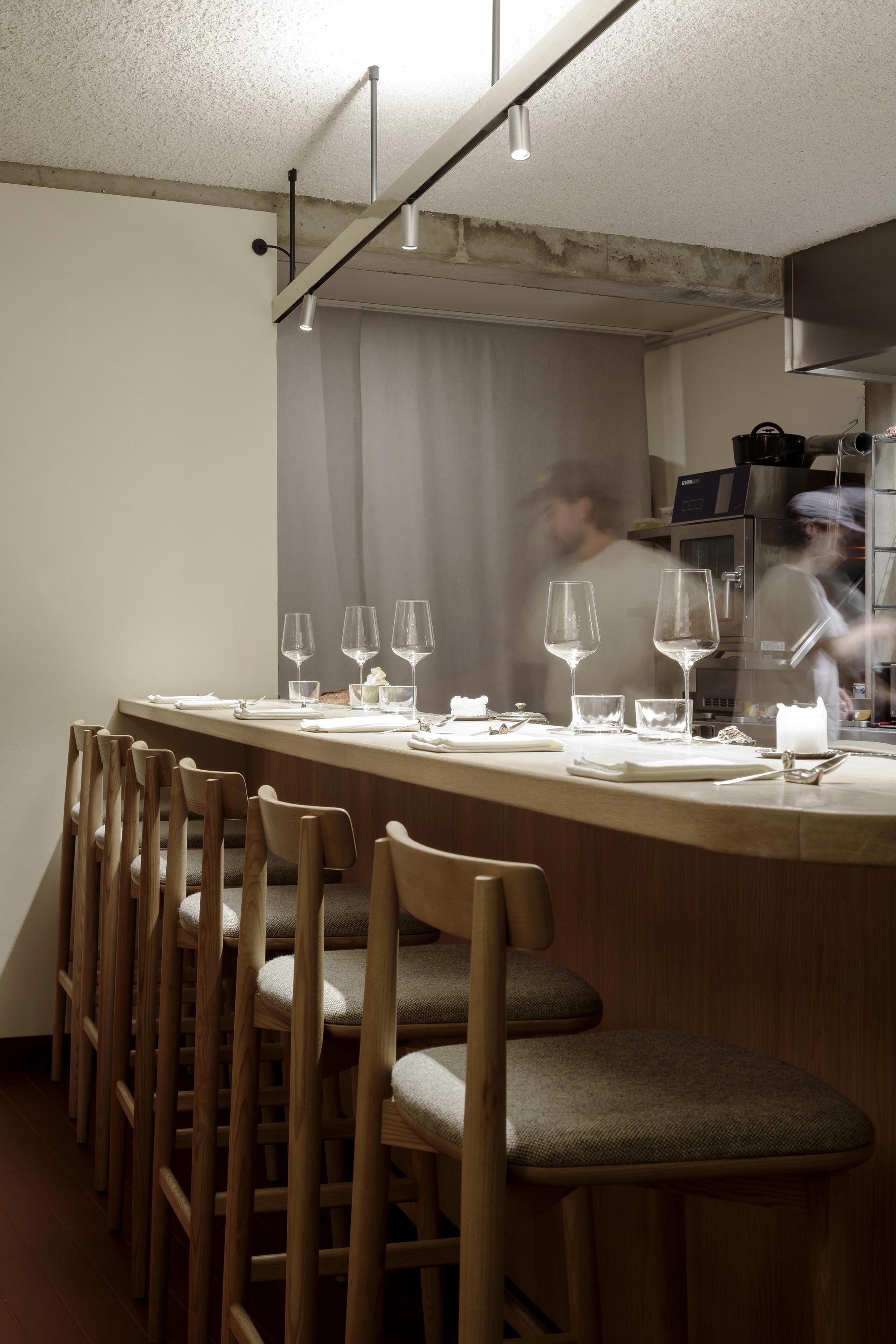
A low-key residential address in Borgerhout that opens into a tightly run counter-and-table operation built around a fifteen-course seasonal set menu. The kitchen leans into texture play and ingredient-led cooking, while a knowledgeable host manages a pairing list that runs both alcoholic and non-alcoholic. For the neighbourhood's emerging small-format dining scene, Bloesem is a serious reference point.

Pearl is the En Primeur Club membership app, where members save venues, book tables and use the concierge.
The menu
What to order
- King trumpet mushrooms in chicken breadcrumbs
- Bimi KFC
- Grilled gurnard with Bordelaise
- Pheasant with Champagne sauce
A House Facade, a Counter, and Fifteen Reasons to Pay Attention
Borgerhout sits on Antwerp's eastern edge, administratively a municipality, functionally an extension of the city's inner ring. For most of its recent history, the neighbourhood read as residential and overlooked by the kind of food press that orbited the Michelin-starred rooms near the Schelde or the cathedral quarter. That positioning has been shifting. Small, owner-operated formats have appeared on residential streets, and Bloesem on De Leescorfstraat sits squarely in this pattern: a house that reads as nothing from the outside, and something quite considered on the inside.
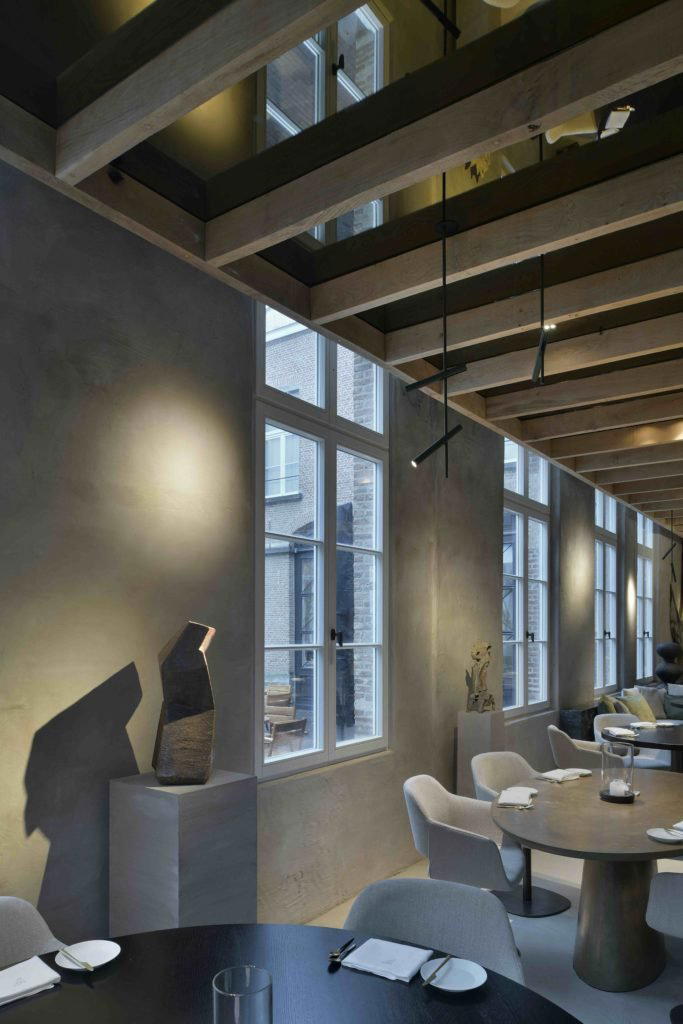
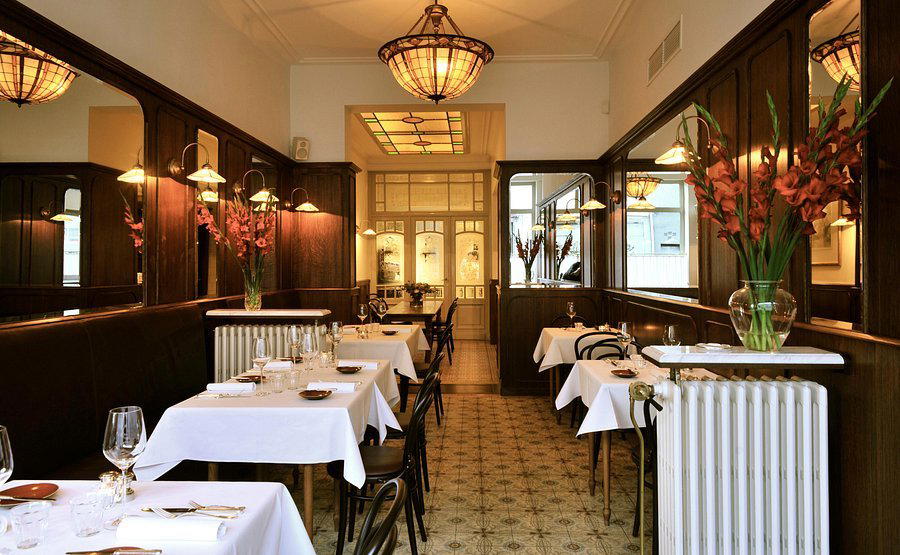
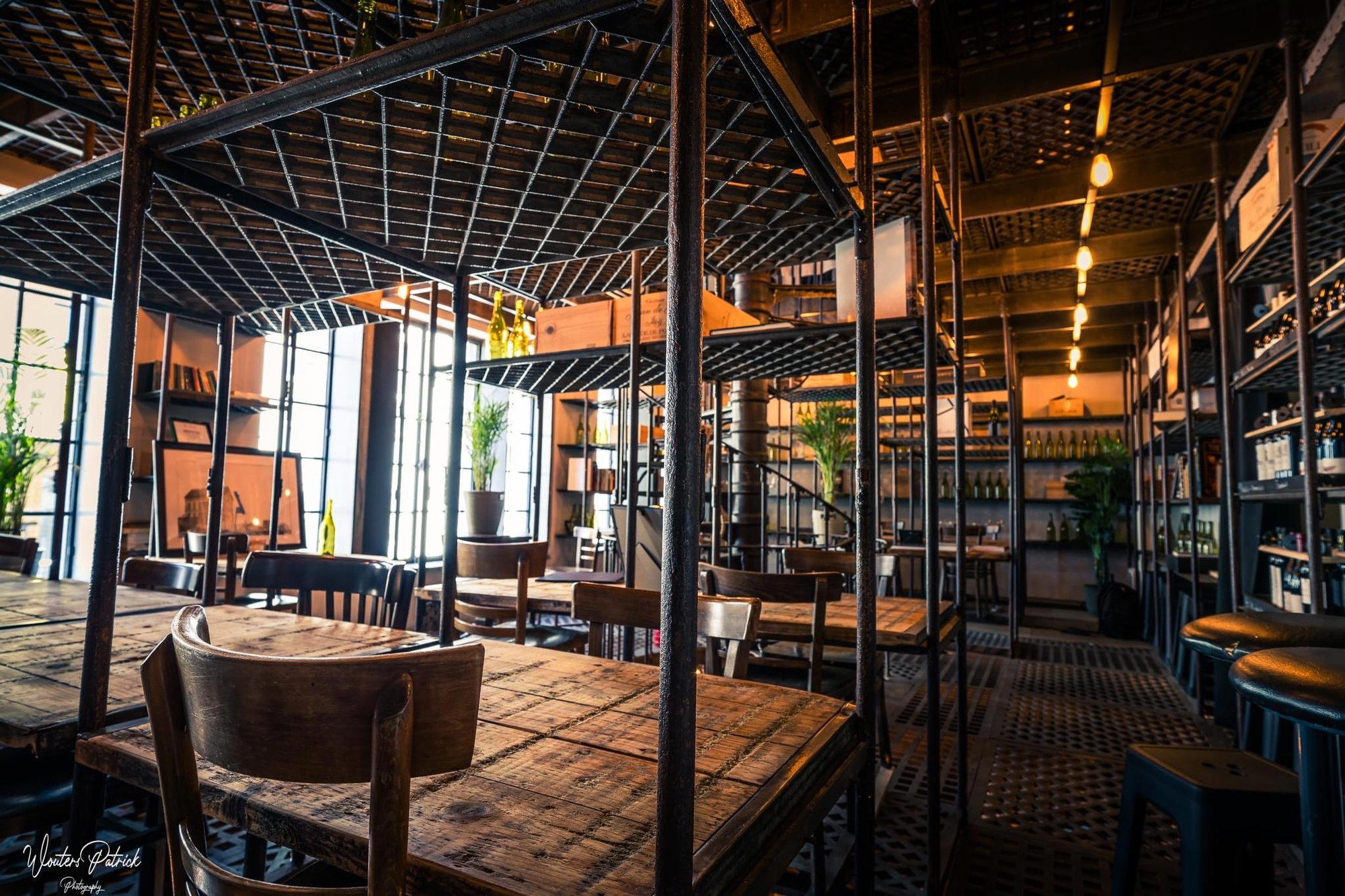
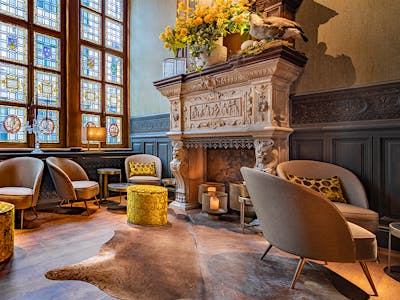
The room itself is compact. A few counter seats face the kitchen; a single table serves the rest. This is not a constraint the kitchen apologises for. Formats of this scale, seen across Belgium's more adventurous smaller cities and now appearing with regularity in Borgerhout alongside spots like Glou Glou (Creative French) and Atelier Maple (Creative), place a specific demand on the kitchen: every seat is close enough that technique is visible, pacing is exposed, and there is nowhere to hide. The counter format self-selects for a certain kind of dinner, one where attention is part of the agreement.
Where the Food Starts: Seasonal Logic and Ingredient Selection
Belgium's ingredient culture has always punched above the country's size. The proximity of coastal suppliers, the Flemish agricultural interior, and a culinary tradition that treats vegetables with as much seriousness as protein gives kitchens in this corridor genuine sourcing depth. Bloesem's kitchen works a fifteen-dish set menu that rotates with the seasons, which is less a marketing claim than a structural commitment: a menu built to this length, without à la carte flexibility, only functions if the sourcing changes with what is actually available and at its finest.
The specific details that have entered the public record illustrate the approach clearly. King trumpet mushrooms, rolled in chicken breadcrumbs and deep-fried, served with a sabayon of fresh garden herbs, represents a dish that starts from an ingredient decision rather than a protein-centred framework. The king trumpet, a cultivated mushroom with a firm, meaty texture that holds up to high-heat cooking, becomes the main event. The breadcrumb technique borrows from meat cookery and applies it to something that is, by ingredient category, far more delicate. This kind of textural transfer is a recurring kitchen interest here: the team is described as playing with textures deliberately, which in practice means taking the expected properties of one ingredient and applying the cooking logic of another to it.
This is not fusion thinking in the broad or vague sense. It is closer to the ingredient-first approach that has defined some of Belgium's more thoughtful cooking over the past decade, visible at different scales in rooms like Hof van Cleve in Kruishoutem, Boury in Roeselare, and Willem Hiele in Oudenburg. The scale and price point at Bloesem are different, but the underlying logic, that the menu should emerge from what is available and worth eating rather than from a fixed concept imposed on the season, connects to the same tradition.
The Pairing Program and the Role of the Host
Belgium's drinking culture is well-documented in the context of beer, but the country's natural wine uptake and low-intervention producer relationships have developed considerably over the past decade. In small-format rooms with a single menu, the pairing program often carries as much editorial weight as the food itself. At Bloesem, a hostess manages this layer directly, offering pairing suggestions across both alcoholic and non-alcoholic options.
The non-alcoholic pairing track matters here more than it might at a conventional à la carte room. Across fifteen courses, the textural and seasonal complexity of the menu creates a range of pairing problems that a single beverage category cannot solve as well as a curated sequence. Fermented and pressed juices, herbal preparations, and tea-based drinks have become genuinely interesting pairing vehicles for vegetable-forward tasting menus across Europe, and the Bloesem format is well suited to deploying them with precision. The hostess's described role is active rather than passive: insightful suggestions, attentive reading of the table, engagement with what the kitchen is doing course by course. In a room this small, that function elevates the overall experience in ways that would not register at a larger table count.
For comparative context on what Belgium's broader hospitality scene looks like at various scales, Zilte in Antwerp and Bozar Restaurant in Brussels both represent the higher-profile end of the Belgian fine dining register. Bloesem operates at a different register entirely, in terms of scale and neighbourhood positioning, but the quality of intention in the kitchen and at the host station places it in a serious conversation.
Borgerhout's Emerging Small-Format Scene
The neighbourhood context matters for understanding why Bloesem works where and how it does. Borgerhout's dining scene has historically been characterised by immigrant food culture, particularly North African and Turkish, which produced some of the most direct and ingredient-honest cooking in greater Antwerp. The newer wave of small creative operations now appearing alongside that foundation, including Briquet and the restaurants already mentioned, represents a different approach to neighbourhood dining: considered, low-capacity, and reliant on word of mouth rather than footfall.
This model has precedents elsewhere in Belgium. Castor in Beveren, Bartholomeus in Heist, and Cuchara in Lommel all demonstrate that serious cooking in Belgium does not require a city-centre address or a hotel backing. The country's density and transport infrastructure allow destination dining to function in residential and secondary neighbourhoods in ways that would be harder to sustain in less well-connected markets. Internationally, tasting-menu-only counters in residential settings have demonstrated their viability in cities from Tokyo to New York, where rooms like Le Bernardin established that serious culinary ambition does not require theatrical address. Borgerhout is following a version of that logic.
Planning a Visit
Bloesem sits at De Leescorfstraat 8 in Borgerhout, accessible from central Antwerp by tram or a short taxi ride. The format, a fixed set menu served across fifteen courses, means that booking with enough lead time to secure a seat is the first practical step. Given the low seat count, availability is tight relative to what the neighbourhood might suggest, and planning several weeks ahead is advisable. Guests with dietary requirements or allergies should communicate these at the point of booking, since the single-menu format leaves limited flexibility for adjustments made on the night. The pairing program runs alongside the menu by default; the non-alcoholic track is available as a full alternative. For more on the neighbourhood, including hotels, bars, and other restaurants, see our full Borgerhout restaurants guide, hotels guide, bars guide, wineries guide, and experiences guide.
Frequently asked questions
Where is Bloesem in Borgerhout?
Bloesem is located at De Leescorfstraat 8, Borgerhout.
Has Bloesem won any awards?
Bloesem has received recognition including: Venture over the threshold of this seemingly nondescript house and you will find yourself in a cheerful eatery with a few counter seats and a table that will embark on a fascinating culinary adventure. The chefs roll out a single set menu o….
What do regulars order at Bloesem?
There is no à la carte option at Bloesem. The kitchen runs a single set menu of around fifteen dishes, so every guest follows the same sequence. The menu shifts with the season, and dishes like king trumpet mushrooms rolled in chicken breadcrumbs and deep-fried with a sabayon of fresh garden herbs give a reliable read on the kitchen's playful, texture-led approach.
How far ahead should I plan for Bloesem?
Bloesem operates a counter-and-one-table format, which puts its total covers well below most Antwerp restaurants. That limited capacity means reservations move quickly, particularly at weekends. Booking at least two to three weeks ahead is a reasonable baseline, though the restaurant's phone and online booking details are not publicly listed, so checking current channels directly is the practical first step.
What do critics highlight about Bloesem?
Published recognition singles out the seasonal discipline of the kitchen, the exuberant, playful recipes, and the role of the host, whose pairing suggestions span both alcoholic and non-alcoholic options and add a genuinely informative layer to the meal. The open-minded approach to textures and the fifteen-dish format are consistently noted as the defining characteristics of the Bloesem experience.
What if I have allergies at Bloesem?
A fixed fifteen-dish menu with strong seasonal variation leaves limited room for spontaneous substitution, so communicating allergies or intolerances at the point of booking is the safest approach. The kitchen's documented willingness to experiment with ingredients and technique suggests they engage with the cooking closely enough to accommodate serious dietary requirements when given advance notice.
Fast Comparison
Comparable venues nearby, for context on price, style, and recognition.
| Venue | Cuisine | Price | Awards | Notes |
|---|---|---|---|---|
| BloesemThis venue (the venue you are viewing) | Modern Seasonal Tasting Menu | $100–150 | 1 Michelin Star | Not listed |
| Briquet | Modern Belgian-French Bistro | $30–50 | We're Smart World 1 Radish | Borgerhout |
| Glou Glou | Modern Bistro and Natural Wine Bar | Not listed | Michelin Bib Gourmand | Borgerhout |
| Atelier Maple | Contemporary French-Belgian Fine Dining | $50–100 | Michelin Plate | Borgerhout |
| August Wijnbar | Modern Belgian Wine Bar | Not listed | Michelin Plate | Lennik |
| Atelier Noun | Modern Farm-to-Table Fine Dining | Not listed | Michelin Plate · We're Smart World 1 Radish | Leefdaal |
Recognition history
Dated appearances from independent guides and award organizations, with the underlying list record or original source where available.
Michelin 1 Star
Michelin
Opinionated About Dining Newly Added European Restaurants
Opinionated About Dining
Full recognition history (4 entries)
Opinionated About Dining Top New Restaurants in Europe Ranked #9
Opinionated About Dining
Opinionated About Dining Top Restaurants in Europe Recommended
Opinionated About Dining
Continue exploring
More in Borgerhout
Restaurants in Borgerhout
All restaurants in Borgerhout →
Details
- Cozy
- Intimate
- Modern
- Special Occasion
- Chefs Counter
- Open Kitchen
- Extensive Wine List
- Tasting Menu
- Vegetarian Friendly
Current opening hours
- Monday
- Closed
- Tuesday
- 7–11 PM
- Wednesday
- 7–11 PM
- Thursday
- 12–2 PM, 7–11 PM
- Friday
- 7–11 PM
- Saturday
- 12–2 PM
- Sunday
- Closed
Hours can change for holidays and private events. Hours as of .
Cheerful and cosy atmosphere in a nondescript house with stainless steel, natural oak, linen curtains, and warm hospitality.