Bistrot Vivienne sits at 4 Rue des Petits Champs in Paris's 2nd arrondissement, steps from the Galerie Vivienne and at the quieter end of the Right Bank bistrot tradition. The room rewards unhurried meals built around classic French sequencing, making it a reference point for visitors seeking the kind of neighborhood table that Parisian regulars treat as a standing appointment.
Pearl is the En Primeur Club membership app — saves, bookings, and concierge access live there. Same editors, same standards.
- Address
- 4 Rue des Petits Champs, 75002 Paris, France
- Phone
- +33149270050
- Website
- bistrotvivienne.com
- Directions
- Get directions
 Saves & bookings on Pearl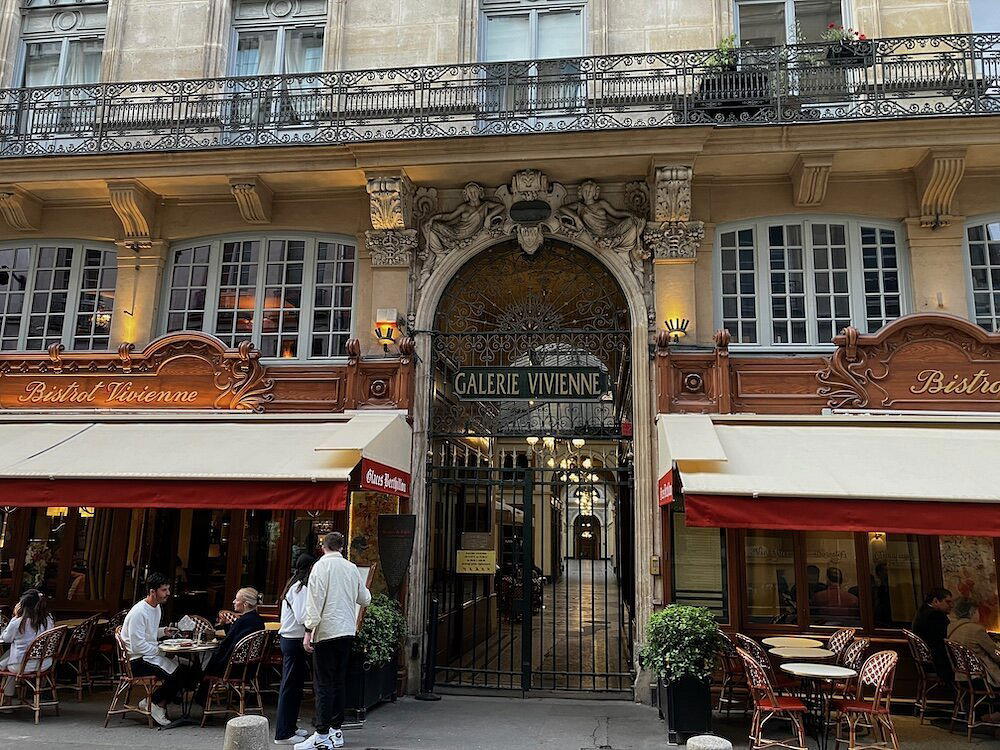
A Room That Sets Its Own Pace
The stretch of Rue des Petits Champs that runs toward the Palais-Royal carries this quality distinctly. At number four, Bistrot Vivienne reads as part of that fabric: a neighborhood address whose name borrows from the covered arcade nearby, the Galerie Vivienne, among the stronger-preserved passage couverts of the nineteenth century. That adjacency is not incidental. The arcade draws a specific kind of visitor, one who came looking for something quiet rather than something loud.
The atmosphere here belongs to a category of Parisian dining room that has become harder to find without effort: medium-scale, unhurried, and organized around the rhythm of a full meal rather than the rapid turnover economics of the contemporary brasserie. In the broader context of Paris's Right Bank, where addresses like Alléno Paris au Pavillon Ledoyen and Le Cinq at the Four Seasons Hôtel George V operate at the extreme formal end, Bistrot Vivienne sits in a different register entirely, one that prizes familiarity over ceremony.
The Sequencing Logic of a French Bistrot Meal
French bistrot tradition is not simply a price-point category. It is a sequencing discipline: entrée, plat, dessert, with bread present throughout and wine selected to run alongside rather than to perform. Meals at this tier of Parisian dining typically unfold over ninety minutes to two hours when the kitchen is confident enough not to rush them. The pacing itself signals something about the kitchen's confidence in its own offer.
That sequencing logic distinguishes the mid-register Parisian bistrot from its counterparts in cities where French technique has been transplanted. Le Bernardin in New York operates within French discipline but at a formal register defined by its seafood specialization and three Michelin stars, a different conversation entirely. The bistrot format is specifically Parisian in its economy of means: the same classical technique applied with fewer resources and without the ceremony, producing cooking that is judged by repetition rather than by occasion.
At addresses like Bistrot Vivienne, the opening course typically functions as a calibration, something seasonal, simply dressed, signaling whether the kitchen is sourcing carefully or defaulting to routine. The plat carries the meal's structural weight. In the classic bistrot mode, this means meat-forward cooking: braised, roasted, or pan-sauced preparations where the sauce quality is the real measure of the kitchen. Dessert at this format tends toward the traditional: tarte, mousse, crème, chosen for craft over novelty. The wine list, in well-run examples of the type, offers something from the Loire or the Rhône at a price point that encourages a second glass rather than restraint.
This sequencing tradition connects the restaurant to a longer lineage of French regional cooking. The discipline of course structure can be traced through institutions like Troisgros in Ouches and Paul Bocuse's Auberge du Pont de Collonges, where the argument for classical French sequencing was made with the highest possible technical resources. The bistrot distills that same argument to its essential form.
The 2nd Arrondissement's Dining Position
Paris's 2nd arrondissement is not a dining destination in the way that the 6th or the 1st are. It lacks the density of marquee addresses that defines those quarters. What it has instead is a functional restaurant culture, places where the neighborhood's working population and the adjacent financial district eat on rotation. This produces a specific type of hospitality: practiced rather than performative, with service calibrated to the regular rather than the first-timer.
For comparison, the 1st arrondissement's dining identity is anchored partly by addresses like Kei, which operates at the formal end of contemporary French cooking with Michelin recognition, and L'Ambroisie on the Place des Vosges, which holds three stars and occupies a category of classical French formality that requires serious advance planning. The restaurant does not compete with those addresses. It occupies the tier below: the essential neighborhood table that every Parisian arrondissement once had in multiples, and that the economics of the past two decades have thinned considerably.
Further afield, France's regional restaurant tradition demonstrates the range of the country's cooking at various formality levels. Mirazur in Menton and Bras in Laguiole represent the kind of destination-restaurant model built around landscape and regional identity. Flocons de Sel in Megève, Auberge de l'Ill in Illhaeusern, Les Prés d'Eugénie in Eugénie-les-Bains, Georges Blanc in Vonnas, Auberge du Vieux Puits in Fontjoncouse, and La Table du Castellet all anchor their identity in place in ways that a Paris bistrot does not need to.
The creative end of Paris dining, represented by Arpège with its vegetable-forward haute cuisine, sits in a different conversation from the bistrot register. A more experimental international comparison might include Lazy Bear in San Francisco, which uses a communal tasting format to reframe the relationship between diner and kitchen, a structural contrast that clarifies how conservative, in the leading sense, the Parisian bistrot form remains.
Planning a Visit
Address: 4 Rue des Petits Champs, 75002 Paris.
Comparable Venues
Comparable venues nearby, for context on price, style, and recognition.
| Venue | Cuisine | Price | Notes |
|---|---|---|---|
| Bistrot VivienneThis venue — the venue you are viewing | Classic French Bistro | $$$ | Not listed |
| Restaurant Bachaumont | Modern French Brasserie | $$$ | |
| La Société | French Brasserie | $$$ | Saint-Germain-des-Prés |
| L'Evasion | Classic French Bistro | $$$ | 8e arrondissement (L'Europe) |
| Truffes Folies | Truffle-Focused French Bistro | $$$ | 75008 |
| Attabler | Authentic Parisian Bistro | $$$ | 16th arrondissement |
Continue exploring
More in Paris
Restaurants in Paris
Browse all →
Bars in Paris
Browse all →
Hotels in Paris
Browse all →



At a Glance
- Classic
- Elegant
- Cozy
- Intimate
- Date Night
- Brunch
- Late Night
- Terrace
- Historic Building
- Street Scene
Current opening hours
- Monday
- 8:30 AM–12 AM
- Tuesday
- 8:30 AM–12 AM
- Wednesday
- 8:30 AM–12 AM
- Thursday
- 8:30 AM–12 AM
- Friday
- 8:30 AM–12 AM
- Saturday
- 8:30 AM–12 AM
- Sunday
- 8:30 AM–12 AM
Hours can change for holidays and private events. Last verified .
Elegant and inviting classic bistro atmosphere with mirrors, wooden tables, plush decor, deep burgundy drapes, large windows, and leafy plants in a 19th-century shopping arcade.