Bistrot à Paris
Our verdict
On Asylstrasse in Zurich's Zürichberg quarter, Bistrot à Paris occupies the kind of address that signals deliberate neighbourhood rooting rather than city-centre visibility. The format follows the French bistrot template closely: a physical environment built for proximity and ease, where the architecture of the room does a significant share of the hospitality work. For Zurich diners looking beyond the hotel dining circuit, it represents a particular kind of Franco-Swiss proposition.

Pearl is the En Primeur Club membership app, where members save venues, book tables and use the concierge.
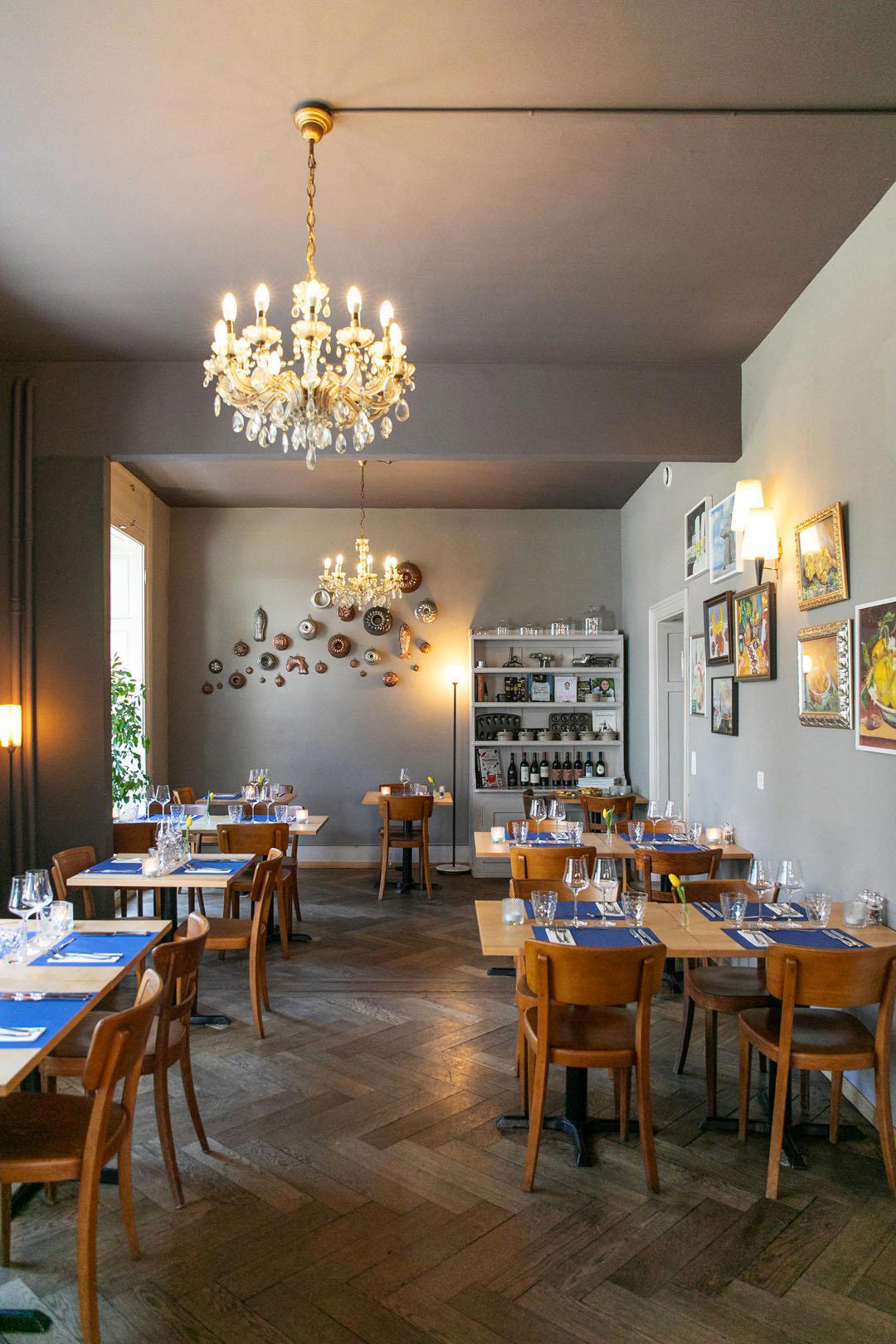
A Room That Leads with Intention
The French bistrot format has survived two centuries of dining fashion not because it reinvents itself, but because it refuses to. The logic is spatial first: close tables, warm materials, a bar that anchors the room, lighting calibrated for conversation rather than spectacle. When that format travels outside France, what distinguishes the serious attempts from the decorative ones is how faithfully the room commits to that physical grammar. Bistrot à Paris, at Asylstrasse 70 in Zurich's Zürichberg district, positions itself within that tradition by address alone. The Zürichberg quarter, east of the city centre and historically associated with residential calm rather than restaurant density, is precisely the kind of neighbourhood where a bistrot format can function as a local institution rather than a dining destination competing for tourist attention.
In Zurich, where the dominant fine-dining conversation runs through hotel-anchored rooms like The Restaurant and technically ambitious counters like The Counter, the bistrot register occupies a distinct and arguably underserved tier. It asks less of the diner in terms of ceremony, and more in terms of engagement with the room itself.
The Architecture of Proximity
The bistrot interior, at its most functional, is a machine for sociability. Tables placed close enough that conversations bleed at the edges; a service choreography built on accessibility rather than distance; surfaces that accumulate the patina of use. This is the design language that Bistrot à Paris works within, and it is a language that Zurich's broader restaurant scene deploys less frequently than the city's appetite for it might suggest.
France's bistrot tradition produced this format partly out of necessity, small rooms, high turnover, the need for every centimetre to earn its keep, and partly out of a specific social philosophy about what a restaurant is for. The room is not a backdrop to the food; the room is co-equal with it. Zinc bar surfaces, banquette seating along the walls, mirrors that expand the apparent volume of a narrow space: these are functional choices that also happen to produce atmosphere. When they appear in a city like Zurich, where restaurant design frequently leans toward the spare and architectural, they read as deliberate counter-programming.
Zurich's relationship with French dining has historically been mediated through the formal end of that tradition. Switzerland's own Michelin-recognised French-influenced houses, from Hotel de Ville Crissier in Crissier to Cheval Blanc by Peter Knogl in Basel, operate at the haute cuisine register. The bistrot sits structurally below that tier and serves a different function: it is the everyday expression of French culinary culture, and arguably the harder format to execute with conviction because it has no technical complexity to hide behind.
Neighbourhood Positioning and What It Signals
Asylstrasse 70 is not a destination address in the way that a Bahnhofstrasse or Langstrasse location would be. The Zürichberg placement suggests a clientele that comes back rather than one that arrives once. This is the operating logic of neighbourhood dining in any serious food city: the room must earn repeat visits, which means it cannot rely on novelty or occasion-dining energy. The test is whether the physical space and the food register sustain comfort across multiple encounters.
Zurich's neighbourhood dining tier has developed considerable range in recent years. Venues like IGNIV Zürich by Andreas Caminada, which operates the sharing format at the upper price tier, and Eden Kitchen & Bar in the Italian register, map out the spread of what the city's non-hotel dining circuit now covers. Bistrot à Paris sits in that spread as the French-register entry, distinguished from the Swiss-traditional position held by venues like Widder.
For context beyond the city, Switzerland's premium dining spectrum extends to rooms like Schloss Schauenstein in Fürstenau, Memories in Bad Ragaz, and Mammertsberg in Freidorf, all operating at the upper end of the country's recognition infrastructure. Maison Wenger in Le Noirmont, Einstein Gourmet in Sankt Gallen, Da Vittorio in St. Moritz, focus ATELIER in Vitznau, and La Table du Valrose in Rougemont round out a national scene that is, by European standards, unusually Michelin-dense relative to population. The bistrot format operates independently of that recognition infrastructure; its authority derives from neighbourhood trust rather than critical distinction.
The French bistrot format has also attracted serious attention internationally. Rooms like Le Bernardin in New York City and concept-driven formats such as Lazy Bear in San Francisco illustrate how French culinary influence manifests differently across markets, from the technique-forward to the communal. The bistrot sits at a different point on that axis: it is French dining at its most accessible without being casual in the dismissive sense.
What to Expect
The bistrot format, when executed with discipline, delivers a specific kind of satisfaction: dishes that are classically grounded, a wine list oriented toward France's regional producers, and a room that does not require the diner to perform occasion-dining behaviour. The physical environment carries the weight of hospitality that other formats assign to ceremony. For Zurich visitors and residents whose dining range covers the full spectrum, Bistrot à Paris addresses a gap that the city's more technically ambitious rooms do not fill. Our full Zurich restaurants guide maps the broader context for planning a multi-meal visit.
Know Before You Go
- Address: Asylstrasse 70, 8032 Zürich, Switzerland
- District: Zürichberg, east of the city centre
- Format: French bistrot register; neighbourhood dining
- Peer context: Positioned below Zurich's hotel fine-dining tier; comparable to mid-market neighbourhood French rooms in Paris's 9th or 11th arrondissements
- Booking: Contact at time of publication; walk-in policy unverified, check directly before visiting
- Price range: Not confirmed at time of publication
Frequently asked questions
Where is Bistrot à Paris located?
Bistrot à Paris is located at Asylstrasse 70, 8032 Zürich, Switzerland, Zurich.
How does Bistrot à Paris in Zürich compare to French bistrot dining in France?
The French bistrot format travels well when the core spatial and culinary logic is preserved: close-set tables, a service style built on proximity, and a menu that prioritises French classical technique over contemporary detours. In Zurich, where the broader dining scene skews toward European eclecticism, a venue holding to the bistrot archetype at a neighbourhood address like Asylstrasse 70 occupies a relatively specific niche. The measure of fidelity is whether the room and the plate feel continuous with the tradition rather than referencing it from a distance.
What's the best thing to order at Bistrot à Paris?
The bistrot format at Asylstrasse 70 is built around classically grounded French cooking, which means the most defensible orders are the dishes that anchor the tradition: proteins with sauce, seasonal vegetable preparations, and whatever the kitchen is running as a daily special. In a format this disciplined, the menu's shorter, more focused items tend to outperform ambitious additions. Avoid overcomplicating a format that rewards restraint.
Can I walk in to Bistrot à Paris?
Zürichberg restaurants in this register tend to draw a loyal local clientele, which means tables at peak service fill quickly. Walk-in availability is likelier at lunch or on weekday evenings than on Friday or Saturday nights. Calling ahead is the more reliable approach; no online booking channel is currently documented for this address.
What do critics highlight about Bistrot à Paris?
What the format itself invites commentary on is consistency: the French bistrot tradition is judged not by innovation but by execution, and critics working in that register tend to measure proximity to the archetype rather than departure from it. The Asylstrasse 70 address, away from Zurich's more trafficked restaurant corridors, positions the venue as a neighbourhood fixture rather than a destination draw.
Fast Comparison
A compact comparison to help you place this venue among nearby peers.
| Venue | Cuisine | Price | Awards | Notes |
|---|---|---|---|---|
| Bistrot à ParisThis venue (the venue you are viewing) | Organic French Bistro | Not listed | Not listed | Not listed |
| IGNIV Zürich by Andreas Caminada | Modern Swiss Fusion Sharing | $150–200 | 2 Michelin Stars · La Liste Top Restaurants | Sharing |
| KLE | Modern Vegan Fine Dining | $100–150 | 1 Michelin Star · We're Smart World Top 100 #87 | Vegan |
| Kronenhalle | Classic Swiss Fine Dining | $100–150 | Michelin Plate · World's 50 Best #32 | Swiss, Traditional Cuisine |
| The Counter | Modern Cosmopolitan Omakase with East Asian Influences | $300–500 | 2 Michelin Stars · La Liste Top Restaurants | Creative |
| Eden Kitchen & Bar | Mediterranean-Italian | $100–150 | 1 Michelin Star · Falstaff Bar - 94 Falstaff Points | Italian |
Continue exploring
More in Zürich
Restaurants in Zürich
All restaurants in Zürich →
Bars in Zürich
All bars in Zürich →

Details
- Cozy
- Classic
- Date Night
- Casual Hangout
- Natural Wine
- Organic
- A La Carte
- Vegetarian Friendly
Current opening hours
- Monday
- Closed
- Tuesday
- Closed
- Wednesday
- 11:30 AM–2:30 PM, 5:30–11 PM
- Thursday
- 11:30 AM–2:30 PM, 5:30–11 PM
- Friday
- 11:30 AM–2:30 PM, 5:30–11 PM
- Saturday
- 4–11 PM
- Sunday
- 10 AM–3 PM
Hours can change for holidays and private events. Hours as of .
Chaleureuse bistro ambiance with attentive service.