Our verdict
Bistro O-point sits on Stationsstraat in Zedelgem, a small Flemish municipality that punches above its size in serious dining. For context on Zedelgem's wider restaurant offer, see EP Club's full city coverage.

Pearl is the En Primeur Club membership app, where members save venues, book tables and use the concierge.
A Flemish Market Town and Its Bistro Tradition
Zedelgem is not a city that announces itself. Set in the West Flemish interior between Bruges and the coast, it is the kind of municipality where the serious eating happens in converted storefronts and modest street-level addresses rather than in destination hotel dining rooms. Bistro O-point, at Stationsstraat 30, fits that mould precisely: a bistro-format address in a railway-adjacent street, in a town where the dining culture is shaped more by what arrives from local farms and the North Sea coast than by what gets plated for a Michelin inspector's notebook.
That geography matters. West Flanders has one of Belgium's most coherent ingredient stories. The coastal proximity means shellfish and flatfish arrive quickly and in condition. The polders supply herbs and vegetables that reflect flat, mineral-rich soil. Inland farms contribute pork, duck, and dairy that have defined Flemish cooking for centuries. A bistro operating in this corridor is working with a supply chain that its Bruges or Ghent counterparts would envy, and the leading addresses in the region have always structured their menus around what that supply chain produces rather than what imported prestige ingredients might signal.
Where O-point Sits in the Regional Scene
Belgian dining at the serious end has bifurcated over the past decade. On one side: destination kitchens with formal tasting menus and the Michelin recognition to match. Boury in Roeselare and Vrijmoed in Gent sit in that tier, as do West Flanders addresses like De Jonkman in Sint-Kruis and the coastal-focused Willem Hiele in Oudenburg, where ingredient provenance is the stated editorial argument of every menu. On the other: neighbourhood bistros and brasseries that operate without the awards apparatus but often with more kitchen honesty and less performance pressure.
Bistro O-point, by name and by address, signals the second camp. The bistro format in Flanders carries specific expectations: shorter menus, market-led rotation, Franco-Flemish technique applied without fuss, and pricing that reflects a local clientele rather than a tourist or expense-account one. That format has produced some of Belgium's most satisfying meals, and it is a format that rewards knowing where to look. Bar Bulot Zedelgem, the other notable address in the same municipality, operates with a classic cuisine positioning that gives a sense of the town's general register: technically grounded, ingredient-led, without theatrical ambition.
For a broader map of what serious Flemish and Belgian cooking looks like at its most ambitious, addresses like Hof van Cleve in Kruishoutem, Zilte in Antwerp, and Bozar Restaurant in Brussels represent the destination-tier benchmark against which smaller regional addresses are measured. Bistro O-point does not compete in that bracket, nor is it trying to.
The Sourcing Logic Behind Flemish Bistro Cooking
The ingredient sourcing story in this part of Belgium is not a marketing posture; it is a structural reality. West Flemish bistros that build menus around the local supply chain are working with produce that moves quickly from field or harbour to kitchen. The polders around Zedelgem and the broader Bruges hinterland produce chicory, leeks, endive, and potato varieties that appear on serious menus across the region. Coastal access, within reasonable distance from Zedelgem toward Oostende and Blankenberge, means that a bistro sourcing well can put North Sea sole, grey shrimp, or mussels on the table in a way that restaurants in landlocked European cities cannot replicate regardless of budget.
This sourcing discipline is what distinguishes the better Flemish bistros from their French counterparts operating in similar price brackets. France has the Loire Valley or Brittany as coastal and agricultural supply corridors, but West Flanders compresses those two supply sources into a single, densely farmed coastal strip. A kitchen that reads that geography correctly does not need to engineer complexity; the ingredient quality carries the argument. Comparable sourcing-first positions can be seen at La Durée in Izegem and, at a more formal register, at Ralf Berendsen in Neerharen.
For international reference points on what sourcing discipline looks like at the highest level, Le Bernardin in New York City and Lazy Bear in San Francisco each represent versions of the same editorial argument: that ingredient provenance, handled with technique, produces more coherent cooking than ambition alone. The scale and price points differ enormously, but the underlying logic is shared.
Planning a Visit
Bistro O-point is at Stationsstraat 30, 8210 Zedelgem. The address is accessible by train from Bruges, a short journey on the coastal railway corridor, which makes it a realistic lunch or dinner option for visitors based in Bruges who want to eat well outside the city's increasingly tourist-pressured restaurant scene. The bistro format typically means limited seats and a market-dependent menu, so arriving without a reservation on a weekend evening carries risk. For a fuller picture of what Zedelgem's dining scene offers, our full Zedelgem restaurants guide covers the town's key addresses with comparative context.
Readers planning a wider West Flemish or Belgian itinerary should also consider the creative French-Belgian registers at d'Eugénie à Emilie in Baudour, Castor in Beveren, Cuchara in Lommel, and La Table de Maxime in Our as reference points for how the Belgian bistro-to-destination spectrum is currently mapped. Le Chalet de la Forêt in Uccle remains the Brussels-area benchmark for what Franco-Belgian technique at a serious level looks like outside the capital's formal restaurant tier.
Frequently asked questions
Would Bistro O-point be comfortable with kids?
Bistro O-point is in Zedelgem, a quiet West Flemish municipality with a low-key, community-facing character, the kind of setting that tends to suit families better than formal destination restaurants do. Nothing in the available information signals a policy against children. That said, it is worth contacting the bistro directly before visiting with young children to confirm seating arrangements.
What's the overall feel of Bistro O-point?
The address, Stationsstraat 30, a station-side street in Zedelgem, places it squarely in the functional, unpretentious register of Flemish neighbourhood dining rather than the formal tasting-menu circuit. West Flemish bistros at this level tend toward relaxed service, seasonal menus, and a clientele that is largely local. It reads as the kind of room where regulars book the same table on the same night each week.
Is Bistro O-point a good option for dining near Bruges without the tourist crowds?
Zedelgem sits on the coastal railway corridor a short train ride from Bruges, making Bistro O-point at Stationsstraat 30 accessible without a car and well outside the tourist concentration of the city centre. The municipality has no significant visitor draw of its own, so the dining room skews toward local regulars rather than passing trade. For anyone wanting serious Flemish bistro cooking without Bruges pricing or foot traffic, the geography alone makes it worth considering.
What should I eat at Bistro O-point?
In this part of West Flanders, bistro menus typically follow local market supply, expect preparations built around regional produce and, depending on the season, North Sea fish from the nearby coast. Checking directly with the bistro for current dishes is the most reliable approach before visiting.
What's Bistro O-point's location?
Bistro O-point is located at Stationsstraat 30, 8210 Zedelgem, Belgium, Zedelgem.
Do they take walk-ins at Bistro O-point?
No booking policy is publicly confirmed for Bistro O-point. Smaller Flemish bistros at Stationsstraat 30 in a municipality like Zedelgem often have limited covers, which means walk-in availability can vary sharply by day and season. Contacting the venue ahead of a visit is advisable, particularly on weekend evenings.
Quick Comparison
| Venue | Cuisine | Price | Awards | Notes |
|---|---|---|---|---|
| Bistro O-pointThis venue (the venue you are viewing) | Belgian Bistro | Not listed | Not listed | Not listed |
| Boury | Creative French Fine Dining | $300–500 | 3 Michelin Stars · La Liste Top Restaurants | Modern Frlemish, Creative French |
| Comme chez Soi | Classic French Fine Dining | $200–300 | 1 Michelin Star · World's 50 Best #49 | French - Belgian, Classic Cuisine |
| Vrijmoed | Creative Modern Fine Dining | Not listed | 2 Michelin Stars · La Liste Top Restaurants | Modern Flemish, Creative |
| La Durée | Modern French Fine Dining | $150–200 | 2 Michelin Stars · La Liste Top Restaurants | French-Belgian, Creative |
| Cuchara | Modern Creative Cuisine with Asian Influences | $200–300 | 2 Michelin Stars · La Liste Top Restaurants | Modern European, Creative |
Continue exploring
More in Zedelgem
Restaurants in Zedelgem
All restaurants in Zedelgem →
Bars in Zedelgem
Browse all →
Hotels in Zedelgem
Browse all →
Wineries in Zedelgem
Browse all →
Details
- Classic
- Cozy
- Date Night
- Casual Hangout
- Standalone
- A La Carte
Current opening hours
- Monday
- 12–2 PM
- Tuesday
- Closed
- Wednesday
- Closed
- Thursday
- 12–2 PM, 6:30–9 PM
- Friday
- 12–2 PM, 6:30–9 PM
- Saturday
- 6:30–9 PM
- Sunday
- 12–2 PM, 6:30–9 PM
Hours can change for holidays and private events. Hours as of .
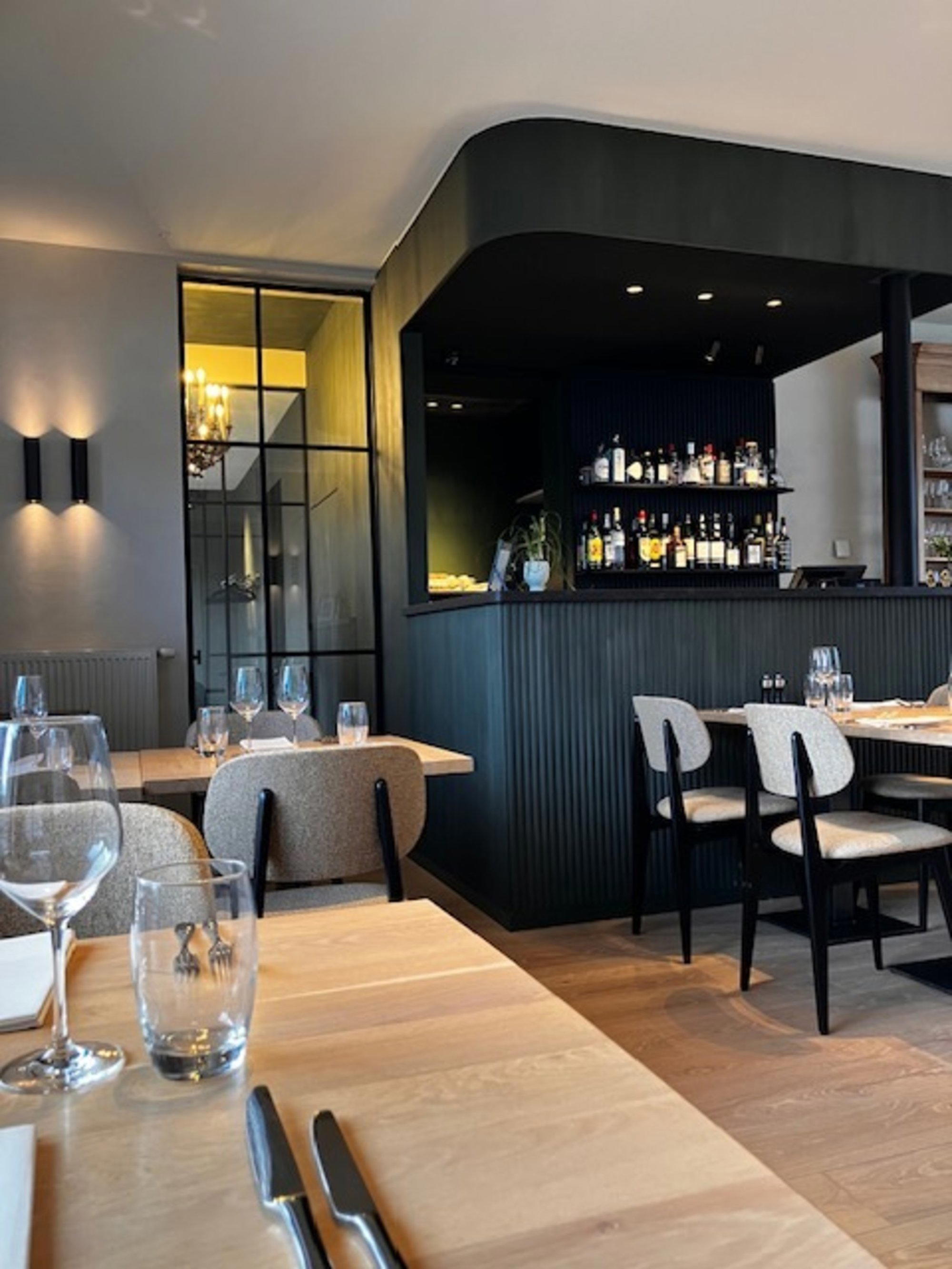
Classic bistro atmosphere with cozy, elegant lighting and welcoming warmth.