
1 Michelin Star
Our verdict
Mémoire earned its first Michelin star in 2025, making it one of Bruges's most closely watched modern French addresses. Positioned on the Dijver canal, the restaurant works within a structured menu architecture that rewards careful reading.

Pearl is the En Primeur Club membership app, where members save venues, book tables and use the concierge.
The menu
What to order
- Mémoire du goût tasting menu
- Signature chef's dish
Canal Address, Controlled Ambition
Bruges runs on water and stone. The Dijver canal cuts through the medieval core with a deliberateness that shapes everything along its banks, and Mémoire, at number 7, sits within that geography as something newer and more considered than the tourist-facing brasseries that dominate the nearby squares. Approaching from the Rozenhoedkaai, the shift from souvenir-window light to something quieter and more interior happens quickly. The address signals intent before you reach the door.
Belgium's fine dining scene has historically concentrated its serious ambitions in Ghent, Antwerp, and the West Flemish countryside. Bruges, despite its profile as one of the most visited cities in northern Europe, has taken longer to build a durable upper tier. That context matters when placing Mémoire: its 2025 Michelin star, upgraded from a Michelin Plate in 2024, arrives in a city that is still consolidating its position as a destination for cooking rather than just heritage tourism. The star puts Mémoire into a peer group that includes Sans Cravate and Zet'Joe by Geert Van Hecke at the upper end of the city's modern French and creative European registers.
What the Menu Architecture Tells You
Modern French cooking in Belgium tends to resolve in one of two directions: the classical inheritance, built on sauce work, precision, and ingredient hierarchy, or the contemporary Franco-Belgian hybrid, which absorbs North Sea produce, local game, and Flemish vegetable traditions into a French structural frame. The menu at a starred house in this register is rarely a neutral document. It is an argument about which direction the kitchen believes in.
The framing through modern French at Mémoire, under Chef Hans Neuner, suggests a European classical orientation rather than a hyperlocal produce-led approach. That distinction shapes expectations around the meal's rhythm. Modern French menus at this tier typically move through a defined tasting sequence: cold preparations that establish acidity and finesse in the opening rounds, a mid-section built around protein and sauce complexity, and a closing sequence where pastry work either consolidates the kitchen's technical range or reveals its limits. The progression is architectural in the literal sense: each course is load-bearing, carrying flavour memory forward rather than standing alone.
At one Michelin star, the expectation in the Belgian context is a kitchen operating with precision and consistency but not yet at the multi-course maximalism of the two- and three-star houses. Hof van Cleve in Kruishoutem and Boury in Roeselare represent the upper tier of that regional ambition. Mémoire sits below that bracket by star count, which also means its format likely runs tighter in length and more focused in scope, a virtue in a city where the dining room is often the second or third stop on a longer evening rather than its entirety.
Hans Neuner and the French Classical Line
In the Belgian and broader European context, Modern French credentials at a starred level carry a recognisable pedigree. The cuisine type is not a marketing category but a training lineage, one that implies familiarity with classical French technique, the brigade system, and the discipline of sauce-led cooking. Neuner's presence in this Bruges address adds a layer of European cross-reference: his background places Mémoire in dialogue with a wider tradition of French-trained chefs operating in smaller markets outside France itself.
That pattern is well-established across northern Europe. The one-star tier in cities like Bruges, Ghent, or Düsseldorf often features chefs who trained in larger competitive markets and brought that formation to a city where the competition is thinner and the dining room more intimate. The tradeoff is access over peer pressure: the cooking can be more personal, the pace more measured, the relationship between kitchen and table less crowded. It is a trade a certain kind of diner actively prefers.
For comparison beyond Belgium, the modern French idiom at this level runs through houses like Schanz in Piesport and the more elaborate format of Sketch's Lecture Room and Library in London, very different in scale and ambition, but sharing the same structural commitment to French cooking as a formal discipline rather than a loose inspiration.
Bruges Fine Dining: Where Mémoire Sits
The city's upper dining tier is genuinely competitive at the one-star level, and the differentiation between houses matters for how a visitor plans across multiple nights. Assiette Blanche and Le Mystique occupy neighbouring territory on the modern European and French registers, and the canal-adjacent addresses of several of these houses mean that the physical geography of a Bruges dinner often feels consistent even when the kitchens are doing meaningfully different work.
What separates Mémoire in this set is timing. The 2025 star is recent, which means the kitchen is operating with the particular focus that newly starred restaurants tend to sustain: the crew is proving something, the standards are high, and the menu has not yet settled into the repetition that longer-running starred houses sometimes develop.
Below the starred tier, Bruges has a functional and interesting mid-range. Franco Belge handles the Franco-Belgian register at a more accessible price point, and the broader Bruges restaurant scene runs from canal-side Belgian classics to contemporary farm-to-table formats. The €€€€ pricing at Mémoire places it at the top of that range, consistent with its starred status and the format expectations of a modern French tasting menu.
West Flanders in a Wider Belgian Frame
West Flanders punches above its size in serious Belgian cooking. The coastal corridor from Bruges through Heist and Oudenburg includes Bartholomeus in Heist and Willem Hiele in Oudenburg, two houses with strong regional identities built around the North Sea and Flemish landscape. Mémoire's modern French framing sits in contrast to that produce-led coastal register, which is part of what makes it a distinct proposition within the region rather than a variation on an existing theme.
Further east, Zilte in Antwerp and Bozar in Brussels represent the urban starred tier of Belgian cooking. Both operate at a different scale and with a different civic context than Bruges allows. Mémoire's position on the Dijver is inherently different from those metropolitan addresses: the audience is partly local, partly Belgian weekend visitor, and partly international tourist with a serious dining orientation. That mixed demographic shapes what a tasting menu in this location needs to do, communicate clearly to a range of reference points without flattening into the lowest common denominator.
Planning a Visit
Mémoire's address at Dijver 7 places it within walking distance of Bruges's central canal network, easily reached from the main hotel cluster around the Markt and the quieter accommodation along the ring canals. The €€€€ price tier is consistent with a multi-course tasting menu format, and at a freshly awarded one-star house, the booking window for weekend seats will be tighter than the address's relative newness might suggest. Those visiting Bruges for two or more nights would find Mémoire a reasonable anchor for a first or second evening, with the broader Bruges hotel options, the city's bar scene, and a selection of experiences filling the surrounding hours. For those extending into the wider region, the wine options around Bruges and the West Flemish corridor offer further context for the kind of trip that takes food seriously without treating every meal as a formal occasion.
Frequently asked questions
What's the price range at Mémoire?
Pricing at Mémoire is listed as €€€€.
What part of town is Mémoire in?
Mémoire is located at Dijver 7, 8000 Brugge, Belgium, Bruges.
Where the Accolades Land
| Venue | Cuisine | Price | Awards | Notes |
|---|---|---|---|---|
| MémoireThis venue (the venue you are viewing) | Contemporary French-Belgian Fine Dining | $100–150 | 1 Michelin Star | Not listed |
| Zet'Joe by Geert Van Hecke | Creative French Fine Dining | $150–200 | 1 Michelin Star | Modern European, Creative French |
| Bruut | Modern French Fine Dining | $50–100 | Michelin Plate · We're Smart World 2 Radishes | Neo-bistro, Modern Cuisine |
| Sans Cravate | Creative French | $100–150 | 1 Michelin Star · Star Wine List | Not listed |
| Bar Bulot | Modern Franco-Belgian Brasserie | $50–100 | Michelin Plate | Flemish |
| Cantine Copine | Modern Belgian Bistro | $50–100 | Michelin Plate | Farm to table |
Recognition history
Dated appearances from independent guides and award organizations, with the underlying list record or original source where available.
Michelin 1 Star
Michelin
Full recognition history (2 entries)
Michelin Plate
Michelin
Continue exploring
More in Bruges
Restaurants in Bruges
All restaurants in Bruges →
Bars in Bruges
All bars in Bruges →

Hotels in Bruges
All hotels in Bruges →
Wineries in Bruges
Browse all →
Details
- Elegant
- Intimate
- Sophisticated
- Date Night
- Special Occasion
- Hotel Restaurant
- Extensive Wine List
- Waterfront
- Tasting Menu
- A La Carte
- Wine Pairing
- Allergy Accommodating
Current opening hours
- Monday
- 6–10 PM
- Tuesday
- 6–8 PM
- Wednesday
- 6–8 PM
- Thursday
- 6–8 PM
- Friday
- 6–8 PM
- Saturday
- 6–8 PM
- Sunday
- 6–8 PM
Hours can change for holidays and private events. Hours as of .
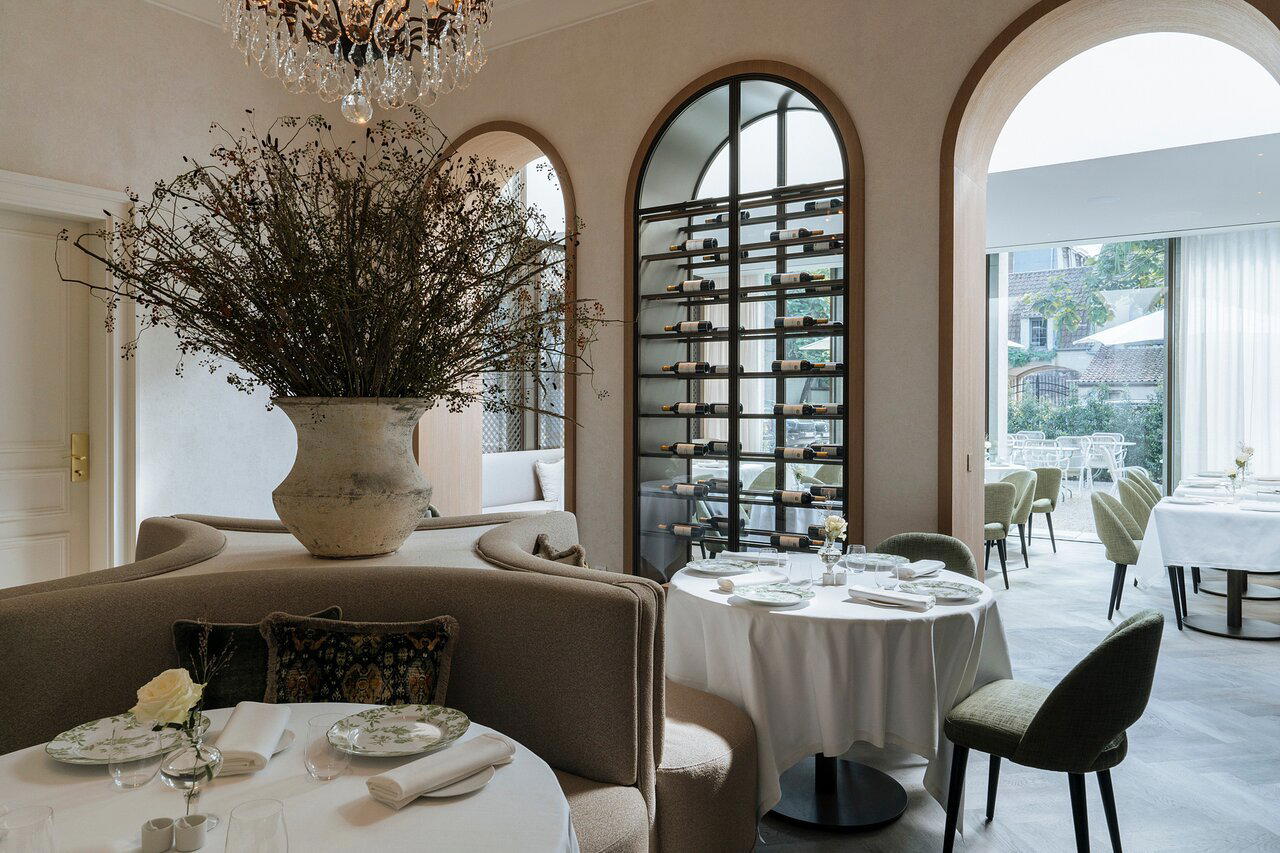
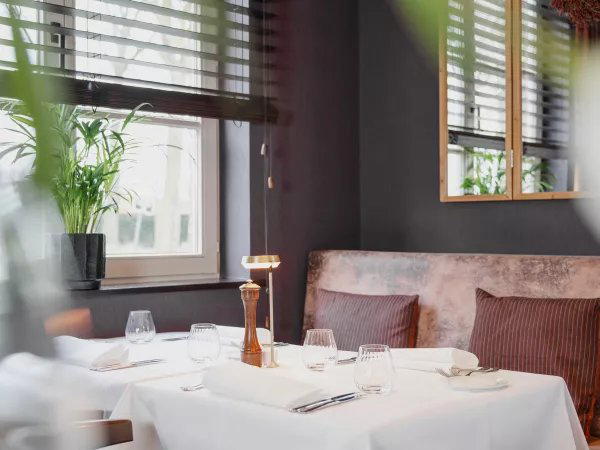
Elegant yet relaxed atmosphere in two intimate rooms with an épuré decor, offering views into a private park and along a scenic canal.