Bin 707 Foodbar


James Beard Award Nominee · New York Times America's Best Restaurants
Our verdict
Open since February 2009 on Grand Junction's Main Street, Bin 707 Foodbar is the Western Slope's most confident statement in seasonal Colorado cooking. Chef Josh Niernberg threads Southwestern and Mexican references through locally sourced ingredients, producing combinations that read as risky on paper and land with precision on the plate. The dining room holds its own against restaurants in cities three times the size.

Pearl is the En Primeur Club membership app, where members save venues, book tables and use the concierge.
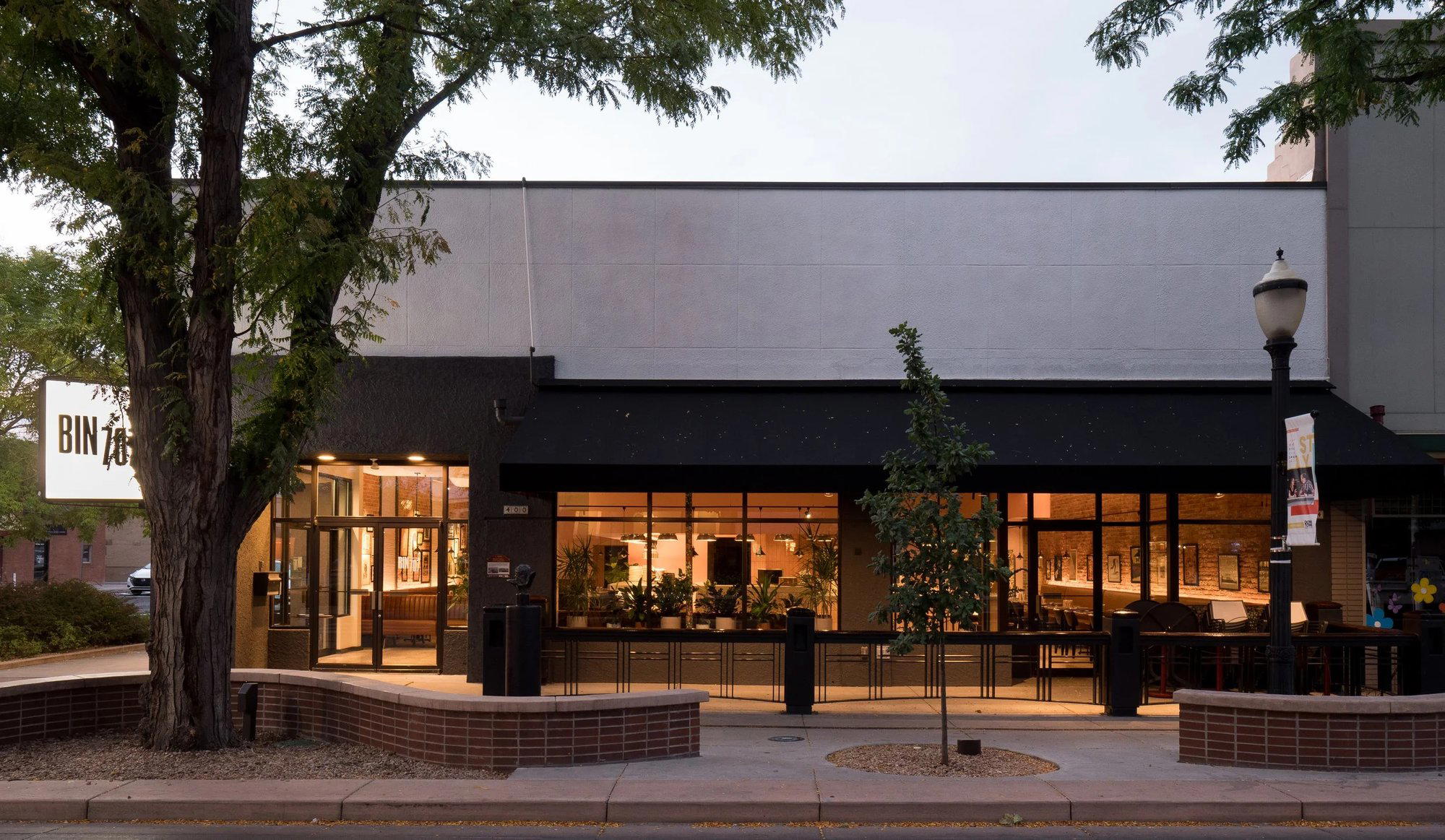
Where the Western Slope Eats Seriously
Grand Junction sits at the confluence of the Colorado and Gunnison rivers, surrounded by high-desert terrain and a wine country that most coastal visitors still haven't registered. The city's dining scene reflects that geography: direct ranching-era traditions updated slowly, with occasional sharp exceptions. Bin 707 Foodbar, open since February 2009 at 400 Main St, is the sharpest of those exceptions. The dining room has a composure that reads as metropolitan without performing it, earning comparisons to restaurants in far larger markets. As one review put it, this is "the most stylish dining room this side of the Rockies, or at least on the Western Slope."
That kind of claim lands differently when the food can support it. Here, it does. The kitchen works in a register that the Farm-to-table movement often promises but frequently underdelivers: genuine sourcing specificity, not just seasonal framing, combined with flavor combinations that take actual risks.
Colorado as a
The sourcing approach at Bin 707 is where the kitchen makes its clearest argument. Chef Josh Niernberg describes his cooking as "seasonal Colorado cuisine," and the menu treats Colorado producers as primary collaborators rather than supporting credits. Nixtamalized corn sourced from within the state anchors the sunchoke hush puppies, a dish that combines two regional traditions, Indigenous corn preparation and Southern fryer culture, into something that belongs specifically to this geography. The use of nixtamalization signals kitchen literacy: it's a labor-intensive process that affects both flavor and texture in ways that commodity cornmeal simply cannot replicate.
This sourcing philosophy connects to a wider shift in serious American cooking. Restaurants like Lazy Bear in San Francisco and Providence in Los Angeles have built their identities partly around supply chain transparency, though in those cases the surrounding culinary infrastructure makes sourcing somewhat easier. Pulling similar specificity from Colorado's Western Slope, a region with a smaller producer network and a shorter growing season than the California coast, requires more work and more commitment from the kitchen.
Flavor Combinations That Earn Their Risk
The menu reads as a series of proposals, each pairing two or three elements that seem unlikely until they arrive on the plate. The sunchoke hush puppies come with whipped Cotija cheese and guajillo orange honey: the mild bitterness of the sunchoke grounded by the salt of the Cotija, the guajillo's dried-chile warmth sharpened by citrus. A maitake mushroom pizza carries ricotta, which is predictable, and epazote, which is not. Epazote is a Mexican herb with a sharp, almost medicinal quality that most American diners encounter only in bean preparations; its placement on a pizza is the kind of decision that requires confidence in both the ingredient and the audience.
The Angus rib cap roulade, listed on the menu as a "filet," is the dish that draws the most attention in reviews. It arrives over a shallow reduction that carries the character of queso, built from Jasper Hill cheese, a Vermont creamery with a national reputation for aged and washed-rind production. Acid comes from a miso chimichurri, bringing fermentation from two directions at once. The combination sounds constructed to the point of instability. It works. This is the kind of cooking that draws comparison to ambitious American kitchens like Alinea in Chicago or Addison in San Diego, not in scale or format, but in the willingness to hold an idea under pressure until it either collapses or proves itself.
Southwestern Thread, Not Southwestern Theme
Distinction worth noting is that the Southwestern and Mexican references throughout the menu function as vocabulary, not as concept. This is not a restaurant selling the idea of the Southwest; it's a kitchen that treats the flavors of the region as a natural part of its pantry. Guajillo, epazote, nixtamal, Cotija: these are ingredients with deep roots in the cuisine of the Colorado plateau and its cross-border histories, used here without the quotation marks that come with "theme" cooking.
That specificity separates Bin 707 from the broader category of regional American restaurants that invoke place without engaging it. Restaurants drawing on specific regional ingredient traditions, from the fermentation-forward kitchens of the Korean diaspora documented at places like Atomix in New York City to the Gulf Coast sourcing programs behind Emeril's in New Orleans, succeed when the sourcing argument is genuine rather than decorative. The menu at Bin 707 reads as genuine.
Context in Grand Junction's Scene
For visitors arriving in Grand Junction for the wine country, the canyon country around Colorado National Monument, or the mountain bike trails of the Grand Valley, the dining infrastructure can feel thin relative to the landscape's ambition. The city is not a culinary destination in the way that Napa or Healdsburg commands attention. Bin 707 is the restaurant that changes that calculus slightly, not by pretending to be somewhere else, but by operating with the seriousness that the ingredients and the region deserve.
For anyone building a Grand Junction itinerary around food and drink, the logical frame is to treat the restaurant as the anchor and the surrounding scene as context. Our full Grand Junction restaurants guide maps the broader options; the Grand Junction wineries guide covers the Palisade wine country that sits twenty minutes east and produces Syrah and Bordeaux varieties that pair well with the kitchen's red meat preparations. The bars guide and hotels guide round out the logistics, and the experiences guide covers the outdoor programming that draws most visitors here in the first place.
Bin 707 sits on Main Street in downtown Grand Junction, accessible on foot from most of the city's central accommodation. Reservations are advisable given the restaurant's profile relative to the market size; a kitchen operating at this level in a city of this scale tends to run at higher occupancy than comparable urban spots. Plan around it rather than dropping in speculatively, particularly on weekends during the warmer months when Grand Junction draws more visitor traffic.
The Broader Case
There is a category of American restaurant that exists outside the major culinary cities and does serious work without the infrastructure, the press attention, or the peer comparison group that urban markets provide. These kitchens matter partly because they demonstrate that sourcing discipline and flavor ambition are not functions of geography or market size. Bin 707 has been making that case since 2009 from a corner of Colorado that most food editors have not visited. The case holds. The comparison set that matters here isn't limited to the Western Slope: it includes the ingredient-forward American kitchens tracked by serious food publications regardless of zip code, from The French Laundry in Napa to The Inn at Little Washington to Le Bernardin in New York City and Albi in Washington, D.C. The ambition is comparable even where the format and scale are not. That's the appropriate frame for what's happening at 400 Main St.
Planning Your Visit
- Can I bring kids to Bin 707 Foodbar?
- The restaurant's food is adventurous and the dining room is designed for a serious meal rather than an informal family outing. Grand Junction is not a high-price market overall, and the atmosphere leans adult without being formally exclusive. Older children with genuine curiosity about food are likely fine; very young children would make more sense at a different setting. Consider the flavor complexity of the menu, dishes built around guajillo, miso, epazote, and aged cheese, when deciding whether the table is right for younger guests.
- Is Bin 707 Foodbar formal or casual?
- The dining room has been described as the most stylish in the region, which sets a certain expectation, but Grand Junction does not operate on the dress codes of a major urban market. The tone is serious without being rigid. Think of it the way you'd approach a well-regarded independent restaurant in a mid-sized American city: smart-casual is appropriate, and the kitchen's ambition signals that the meal deserves some attention even if the room doesn't require a jacket.
- What's the signature dish at Bin 707 Foodbar?
- The Angus rib cap roulade draws the most consistent attention from reviewers. Chef Josh Niernberg presents it as a "filet," but the preparation, a roulade over a Jasper Hill cheese reduction with miso chimichurri, reflects the kitchen's approach to Colorado ingredients and cross-cultural technique. The sunchoke hush puppies with nixtamalized Colorado corn are the dish that most clearly frames the sourcing argument; if you want to understand what "seasonal Colorado cuisine" means in practice, that's the starting point.
Comparison Snapshot
| Venue | Cuisine | Price | Awards | Notes |
|---|---|---|---|---|
| Bin 707 FoodbarThis venue (the venue you are viewing) | Seasonal American Farm-to-Table | $50–100 | James Beard Award Nominee · New York Times America's Best Restaurants | Not listed |
| Le Bernardin | French Seafood Fine Dining | $300–500 | 3 Michelin Stars · World's 50 Best #13 | French, Seafood |
| Atomix | Modern Korean Tasting Menu | $300–500 | 2 Michelin Stars · World's 50 Best #7 | Modern Korean, Korean |
| Lazy Bear | Modern American Tasting Menu | Not listed | 2 Michelin Stars · World's 50 Best #25 | Progressive American, Contemporary |
| Alinea | Avant-Garde Molecular Gastronomy | $300–500 | 2 Michelin Stars · World's 50 Best #37 | Progressive American, Creative |
| Masa | Seasonal Hokkaido Tempura Omakase | $150–200 | Tabelog 100 #34 | Sushi, Japanese |
Recognition history
Dated appearances from independent guides and award organizations, with the underlying list record or original source where available.
James Beard Award Nominee
James Beard Award
New York Times America's Best Restaurants
New York Times
Full recognition history (4 entries)
James Beard Award Semi Finalist
James Beard Award
James Beard Award Semi Finalist
James Beard Award
Continue exploring
More in Grand Junction

Details
- Modern
- Sophisticated
- Cozy
- Trendy
- Date Night
- Special Occasion
- Business Dinner
- Open Kitchen
- Extensive Wine List
- Craft Cocktails
- Farm To Table
- Local Sourcing
- A La Carte
- Small Plates
- Wine
- Cocktails
- Gluten Free Options
- Vegetarian Friendly
Current opening hours
- Monday
- 4:30–9:30 PM
- Tuesday
- 4:30–9:30 PM
- Wednesday
- 4:30–9:30 PM
- Thursday
- 4:30–9:30 PM
- Friday
- 4:30–10 PM
- Saturday
- 4:30–10 PM
- Sunday
- 5–9 PM
Hours can change for holidays and private events. Hours as of .
Sophisticated yet welcoming with comfortable seating, efficient service, and an energetic atmosphere that can get loud.