
Bien Sur places Osaka’s bread culture in a practical Abeno rhythm: takeaway below, a small cafe above, and a format built for everyday use rather than ceremony. Its Tabelog Bread WEST 100 selection in 2022 gives it a clear quality signal, while the categories of bread, sandwich, and cafe keep the experience closer to a local routine than a destination tasting counter.
Pearl is the En Primeur Club membership app — saves, bookings, and concierge access live there. Same editors, same standards.
- Address
- 2 Chome-4-44 Abenosuji, Abeno Ward, Osaka, 545-0052, Japan
- Phone
- +81 6-6624-2294
- Website
- tabelog.com
 Saves & bookings on Pearl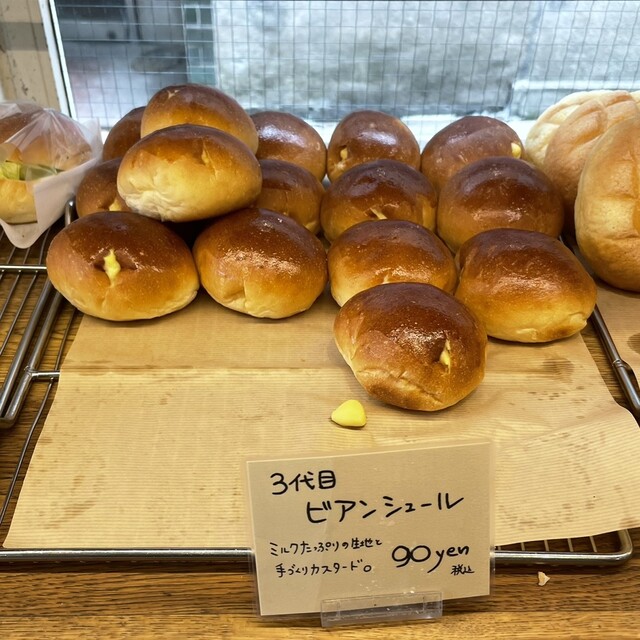
Approaching Abeno from the Tennoji side, Osaka shifts from terminal energy to neighbourhood errands: commuters, families, shopping bags, and quick food decisions made between trains. Bread shops occupy a particular place in that rhythm. They are not usually treated like formal restaurants, yet the better ones become part of a city’s daily grammar, somewhere between breakfast, snack counter, and low-pressure cafe. Bien Sur belongs to that Osaka category: a bakery-cafe format where the ritual is selection first, lingering second.
The useful context is not French technique in isolation, but how Japan absorbed and localized the bakery. In Osaka, bread competes with takoyaki, okonomiyaki, department-store food halls, station sweets, and convenience-store precision. A shop has to justify itself through repetition: morning reliability, takeaway ease, and enough seating to turn a purchase into a pause. Bien Sur’s inclusion in Tabelog’s Bread WEST 100 in 2022 gives the address a public quality marker in a category where recognition often goes to places that locals use regularly rather than rooms designed for occasion dining.
Abeno bread culture favors the quick decision, not the long performance
The dining ritual here is compact. Osaka’s bakery-cafe model asks the guest to read the counter, choose quickly, and decide whether the visit is takeaway or a short sit-down. Bien Sur’s ground-floor sales area and second-floor cafe arrangement make that sequence explicit. It is a two-part experience: buy with the pace of a station-adjacent bakery, then move upstairs if the day allows more time. That matters in Abeno, where Tennoji’s transport pull keeps meals practical and compressed.
Within Osaka, that format sits apart from heavier sit-down traditions. A place such as 551 Horai (551蓬莱) speaks to the city’s queue-friendly comfort-food economy, while a canto (Italian) and 99 Pizza Napoletana Gourmet sit in a more deliberate restaurant lane. The restaurant is more useful as a daytime interlude, closer in spirit to small-format bakery stops such as 52CHO-ME BAKERY or cafe-led addresses like .cafe, though its Abeno setting gives it a different tempo.
The absence of private rooms and the modest seating count reinforce the point: this is not a place to stage a long meal. It is better read as an everyday Osaka food habit with enough structure for a pause. The non-smoking setting and children-welcome note also position it for mixed-age daytime use, which is a meaningful distinction in a city where some small counters are designed around speed, alcohol, or late hours.
The signal is recognition in a narrow category, not fine-dining theatre
Tabelog’s Bread WEST 100 selection is the clearest trust signal attached to the restaurant. It places the bakery inside a regional category rather than a broad restaurant ranking, which is the right lens. Bread in Japan is intensely competitive because the category spans specialist bakeries, sandwich shops, kissaten-adjacent cafes, and department-store counters. Recognition in that field says more about consistency and local pull than about spectacle.
That distinction matters for travelers. Osaka dining coverage often leans toward night markets, grill counters, and celebratory meals, but the city’s daytime food culture is just as revealing. Abeno is especially good for this because it blends commuters, residents, shopping, and family traffic. The better move is to treat a bakery stop here as part of a larger day in south-central Osaka rather than as a standalone reservation event.
Compared with Shima Ya Honten, another low-spend Osaka option, the restaurant offers the cafe-bakery structure rather than a single-purpose quick bite. Against Okonomiyaki Hayashi, where the meal centers on a cooked regional dish and a fuller lunch or dinner spend, the bakery format is lighter and more flexible. Chinese dining at Az belongs to a different decision tree entirely: table, cuisine commitment, and a more conventional restaurant frame. The comparison clarifies what the restaurant is for. It is a small daytime address for bread, sandwiches, and cafe use, not a substitute for Osaka’s bigger evening meals.
How to use it in an Osaka day
The smart itinerary is geographic. Abeno and Tennoji reward clustering: morning bread, shopping or museum time, then a more substantial lunch or dinner elsewhere in the city. For broader planning, Our full Osaka restaurants guide gives the restaurant map more range, while Our full Osaka hotels guide helps decide whether Abeno works as a base or as a daytime detour. Drinking plans belong in Our full Osaka bars guide; regional wine context is gathered in Our full Osaka wineries guide; and cultural scheduling sits in Our full Osaka experiences guide.
For readers building a wider Japan food route, the contrast is useful. A bakery-cafe in Osaka reads differently from beef-focused dining such as -Grilled beef Sukiyaki- KAMAKURA TANUKIAN 鎌倉 たぬき庵 in Kamakura, Tokyo charcoal-and-tuna formats like. 鮪と炭火焼き うお炭 秋葉原店 in Tokyo, or regional specialty addresses such as.know in Kumamoto, (Shoku) Vietnam in Kawasaki, [Curry Senmon Ten] Maruyama Kyoju. in Sapporo, and [ki:] in Kyoto. Even outside Japan, small-format food culture has parallels in places like Jōdo Saké Bar in Los Angeles and Onigiri Time in Pasadena, where the value lies in format clarity rather than ceremony.
The editorial read is simple: the restaurant is strongest when treated as a bread stop woven into Abeno’s daily movement. The 2022 Bread WEST 100 recognition supplies the quality signal; the two-level sales-and-cafe setup supplies the rhythm. Go expecting a practical Osaka bakery-cafe ritual, not a staged meal, and the address makes sense.
Cuisine and Credentials
Comparable venues at similar price and category levels.
| Venue | Cuisine | Price | Notes |
|---|---|---|---|
| Bien SurThis venue — the venue you are viewing | Bakery-Cafe | $ | Not listed |
| Wareya Minamisemba Goyakura | Japanese-style Spice Curry (Ware Curry) | $ | Chūō |
| Boulangerie goût | French-style bakery & cafe | $ | Chūō |
| Victory | Sandwich shop / café | $ | Nishi |
| Resolve Coffee Ten | Japanese kissaten-style coffee shop | $ | Takatsuki |
| aglio olio | Seasonal Yakuzen Vegetable Curry | $ | Chūō |
Recognition history
Dated appearances from independent guides and award organizations, with the underlying list record or original source where available.
Tabelog 100 #37 · No. 37
Tabelog · Tabelog 100 - Bread - WEST - 2022
Continue exploring
More in Osaka
Restaurants in Osaka
Browse all →




Bars in Osaka
Browse all →




Hotels in Osaka
Browse all →



Wineries in Osaka
Browse all →
At a Glance
- Cozy
- Casual
- Family
- Casual Hangout
- Solo
- Brunch
- Standalone
Current opening hours
- Monday
- 8 AM–8 PM
- Tuesday
- 8 AM–8 PM
- Wednesday
- 8 AM–8 PM
- Thursday
- 8 AM–8 PM
- Friday
- 8 AM–8 PM
- Saturday
- 8 AM–8 PM
- Sunday
- 8 AM–8 PM
Hours can change for holidays and private events. Last verified .
A small, casual bakery-cafe atmosphere with limited seating and a neighborhood feel rather than a formal dining room.