Our verdict
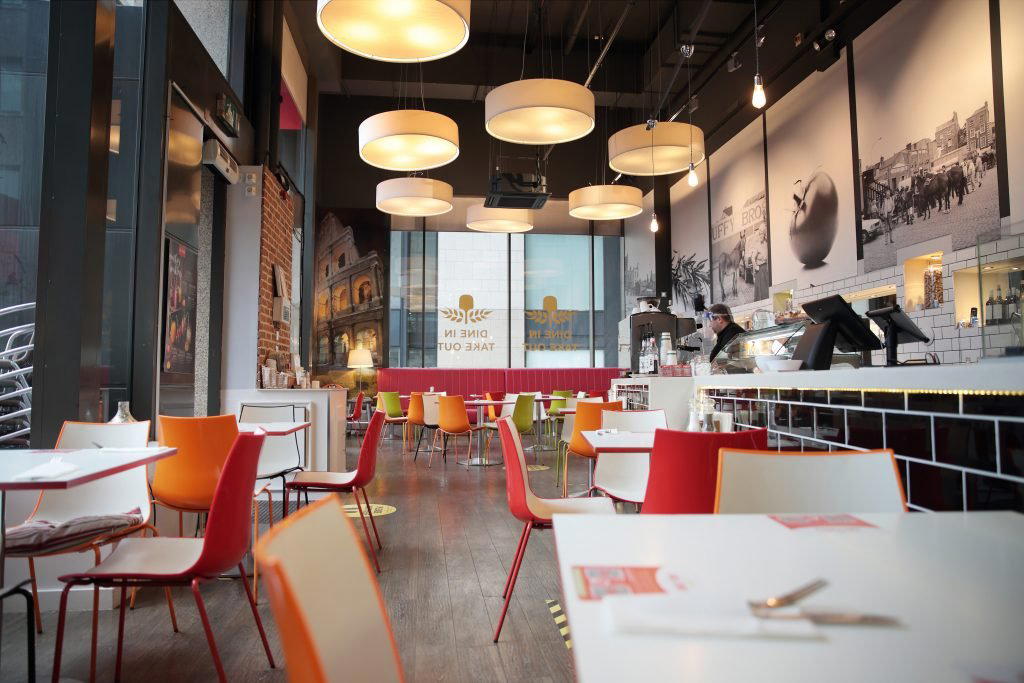
Bel Cibo Smithfield sits inside one of Dublin 7's most architecturally charged addresses, where the cobbled expanse of Smithfield Market frames a dining room that has quietly become part of the neighbourhood's shift from wholesale market to considered urban destination. The kitchen works within the broader Irish movement toward ingredient-led, sourcing-conscious cooking that has redefined how Dublin's mid-tier dining scene operates in the 2020s.

Pearl is the En Primeur Club membership app — saves, bookings, and concierge access live there. Same editors, same standards.
- Address
- Smithfield Market, 11, Smithfield, Dublin 7, D07 ND82, Ireland
- Phone
- +35318749733
- Hours
- Mon–Wed 12:30–9:30 PMThu–Sun 12:30–10 PM
- Website
- belcibo.ie
- Directions
- Get directions
- Booking
- Book on OpenTable
Smithfield's Changing Table
Smithfield Market spent most of the twentieth century as a working horse market and wholesale hub, its granite cobbles more familiar with early-morning commerce than evening dining. The square's turn toward residential and hospitality use over the past two decades has been gradual but decisive, and the restaurants that have opened along its edges reflect a Dublin 7 that now draws diners across the Liffey on purpose rather than by accident. Bel Cibo Smithfield sits within this shift, occupying a Smithfield address at number 11 where the scale of the market square outside gives the approach a distinct character that the city's more central dining corridors cannot replicate.
Arriving via the cobbled plaza rather than through a conventional restaurant entrance places the visit in a different register from the moment you step off the street. Smithfield's proportions are generous by Dublin standards, and that openness carries into the way the area has positioned itself: not a destination that competes directly with the Michelin-weighted rooms of St. Stephen's Green or Parnell Square, but a neighbourhood making a quieter, more habitual case for itself.
The Irish Sourcing Conversation
Across Ireland's dining scene, the conversation about environmental accountability has moved from novelty to expectation. Restaurants from Aniar in Galway to Bastible in Dublin have built their reputations on supply chain transparency, and the pressure on kitchens throughout the country to demonstrate provenance — not merely claim it — has intensified noticeably since 2020. That shift is most legible in the mid-market tier, where sourcing ethics can no longer be positioned as a premium add-on but must function as a baseline operating principle.
The broader Irish food network that underpins this shift is unusually strong: the country's geography compresses the distance between fishing harbours, hill farms, and urban kitchens to a degree that few European countries match. Dede in Baltimore draws on West Cork's seafood infrastructure; Homestead Cottage in Doolin makes the Burren's agricultural margins a selling point rather than a constraint. Dublin kitchens that lean into this network are increasingly well-positioned relative to those that treat sourcing as a marketing narrative without operational depth. Bel Cibo Smithfield's location in Dublin 7, a neighbourhood with direct logistical connections to the city's wholesale food infrastructure through its market history, situates it usefully within that conversation.
Where It Sits in Dublin's Dining Tiers
Dublin's restaurant market has stratified meaningfully over the past decade. At the leading, a small cluster of rooms with Michelin recognition or its near-equivalent, Chapter One by Mickael Viljanen, Patrick Guilbaud, and Glovers Alley, operate at price points and formality levels that make them occasion-specific for most diners. Below that, a more active and arguably more interesting middle tier has developed, where rooms like Bastible and D'Olier Street demonstrate that considered, sourcing-led cooking does not require a tasting-menu format or three-figure covers to be taken seriously.
Smithfield's dining offer has been thinner than comparable Dublin postcodes, which means a kitchen operating at a credible level in this square carries a neighbourhood significance beyond its individual size. The area draws a residential population that has grown substantially with new apartment development along the Liffey quays, and those residents have created demand for dining options that work on a weeknight cadence rather than a special-occasion one. That demand pattern rewards consistency and supplier relationships over theatrical presentation.
For Irish coastal and rural comparisons, Liath in Blackrock, Bastion in Kinsale, Chestnut in Ballydehob, and Terre in Castlemartyr all illustrate how ingredient-led kitchens outside Dublin's centre have built national reputations from geographically specific sourcing. The urban equivalent of that approach, building a Dublin room's identity around what the island's producers can supply across seasons, is the project that Smithfield-area kitchens like Bel Cibo are positioned to advance. Further afield, The Morrison Room in Maynooth and Campagne in Kilkenny demonstrate that the sourcing-conscious model travels well beyond Dublin's postal codes, while The Oak Room in Adare shows how the format scales into more formal estate settings.
Internationally, the movement toward waste-reduction menus and ethical sourcing has produced some of the most discussed dining formats of the decade. Lazy Bear in San Francisco built a communal-table format around local and seasonal supply chains that redefined what a ticket-based dining experience could look like. Le Bernardin in New York City has operated sourcing protocols for its seafood program that set a standard for traceability in fine dining. These international reference points matter not because Smithfield kitchens are competing at that level, but because the criteria, supply transparency, seasonal coherence, waste reduction, are now legible to Dublin diners who have encountered them at home and abroad.
Planning a Visit
Smithfield is accessible on foot from the city centre in under fifteen minutes, and the Red Line Luas stops at Smithfield station directly adjacent to the market square, making it one of the more straightforwardly reached dining addresses in Dublin 7 without requiring a taxi. The square itself functions as an orientation point: number 11 is positioned along the market's edge, and the address is findable without the kind of laneway navigation that characterises some of Dublin's more theatrically hidden dining rooms. For a broader read on where Bel Cibo sits within Dublin's full dining picture, our full Dublin restaurants guide maps the city's options by neighbourhood and price tier.
Frequently asked questions
Where do I go for Bel Cibo Smithfield?
Bel Cibo Smithfield is located at Smithfield Market, 11, Smithfield, Dublin 7, D07 ND82, Ireland, Dublin.
Is Bel Cibo Smithfield well placed for visitors staying in central Dublin?
The address at Smithfield Market, Dublin 7, is reachable on foot from the city centre in under fifteen minutes. The Red Line Luas stops at Smithfield station directly adjacent to the square, making it straightforward to reach from both the south city and outlying areas without needing a taxi or car.
What's the signature dish at Bel Cibo Smithfield?
A specific signature dish isn't documented in available editorial records for Bel Cibo Smithfield. The restaurant sits within Smithfield Market at number 11, a neighbourhood whose food scene has leaned increasingly toward produce-led cooking over the past decade. Visiting directly or checking with the restaurant will give the most current picture of what's on the menu.
Should I book Bel Cibo Smithfield in advance?
Smithfield has become one of Dublin's more active dining corridors, and restaurants at this address on Smithfield Market tend to fill on weekends. Booking ahead is the practical approach, particularly for Friday and Saturday evenings. Contacting Bel Cibo directly will confirm current availability and any reservation policies.
What It’s Closest To
Comparable venues nearby, for context on price, style, and recognition.
| Venue | Cuisine | Price | Awards | Notes |
|---|---|---|---|---|
| Bel Cibo SmithfieldThis venue — the venue you are viewing | Italian Pizza & Pasta | $20–30 | Not listed | Not listed |
| Carluccio's | Authentic Italian | $20–30 | Not listed | Mansion House A |
| Impasto 48 | Authentic Neapolitan Pizza | $20–30 | Not listed | Sutton |
| Hidden By One Society | Italian Brunch & Pizza | $20–30 | Not listed | Arran Quay B |
| Little Pyg | Authentic Neapolitan Pizza | $20–30 | 50 Top Pizza World Best Pizza #82 | Royal Exchange B |
| Aperitivo | Italian Cicchetti Bar | $20–30 | Not listed | Mansion House A |