BŪCCANN
Our verdict
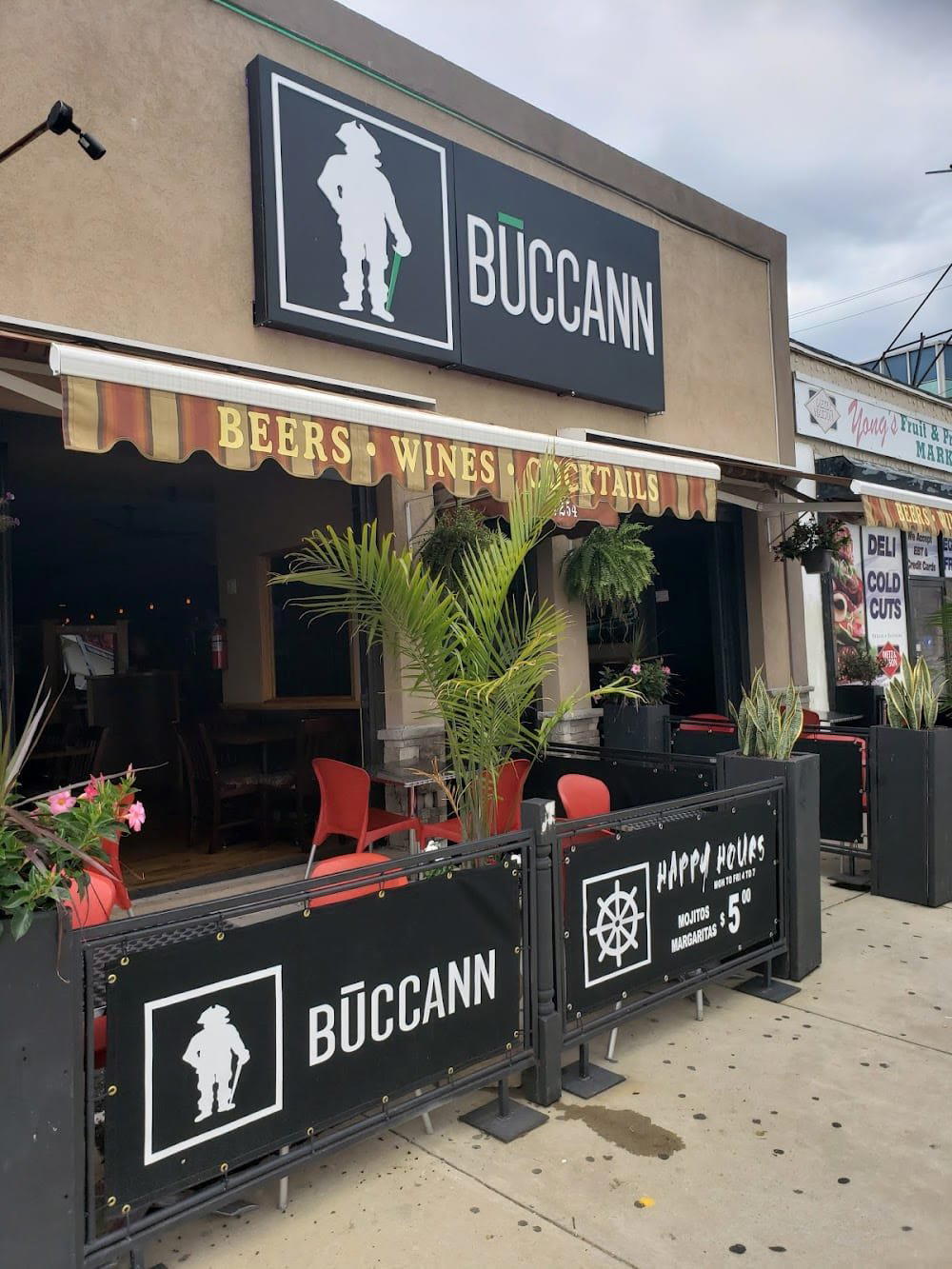
BŪCCANN occupies a corner of Northeast Philadelphia's Castor Avenue dining scene, where the city's appetite for neighborhood-rooted cooking plays out well outside Center City's established restaurant corridors.

Pearl is the En Primeur Club membership app — saves, bookings, and concierge access live there. Same editors, same standards.
- Address
- 7254 Castor Ave, Philadelphia, PA 19149
- Phone
- (267) 686-2961
- Hours
- Mon–Thu 3–10 PMFri 3 PM–12 AMSat 12 PM–12 AMSun 12–10 PM
- Website
- buccann.com
- Directions
- Get directions
- Booking
- Book on OpenTable
Northeast Philadelphia and the Case for Eating Outside the Center
Philadelphia's dining conversation defaults to a familiar geography: Rittenhouse Square, Fishtown, South Philly, Old City. The city's critical infrastructure, its press coverage, its reservation queues, all orbit these corridors. But Northeast Philadelphia, stretching along arteries like Castor Avenue, has long sustained a parallel food culture built on neighborhood loyalty rather than editorial attention. Venues here compete on consistency and community trust rather than tasting-menu prestige, and that structural difference shapes what regulars expect and what kitchens deliver. BŪCCANN, at 7254 Castor Ave, operates within that context: a Northeast address that places it deliberately outside the Center City circuit and its associated pricing and format expectations.
That geography is not a liability. Across American cities, the most durable neighborhood restaurants tend to sit at exactly this distance from the critical center, close enough to benefit from a city's broader food culture, far enough to avoid the pressure to perform for out-of-towners. Philadelphia has seen this pattern in South Philly's Mexican traditions (see South Philly Barbacoa for how deep-rooted cultural cooking can anchor a city block) and in Cambodian and pan-Asian cooking further east (as Mawn demonstrates for immigrant-led kitchens earning wider recognition). BŪCCANN's Castor Avenue address positions it inside that longer tradition of Philadelphia restaurants whose primary audience is the neighborhood itself.
What the Name Signals
The name BŪCCANN carries a phonetic and etymological link to buccaneering traditions and, more directly, to the process of cooking meat over open flame or smoke, a technique rooted in Caribbean and coastal Indigenous cooking practices. The word "buccaneer" itself derives from the French "boucanier," referring to those who used a "boucan," a wooden frame for smoking or grilling meat over fire. That etymological line, from the Caribbean coast to French colonial contact to English nautical slang, is not merely decorative. It points toward a cultural history of fire cooking that predates modern barbecue taxonomy and connects smoked and grilled traditions across the Atlantic world.
What the name does establish, regardless of the kitchen's specific execution, is a frame of reference that places fire, smoke, and the cultural weight of open-flame cooking at the center of the venue's identity. That is a meaningful commitment in a city where grilled and smoked cooking has tended to appear either in high-end contexts (wood-fired programs at restaurants competing with Friday Saturday Sunday or Fork downtown) or in stripped-back neighborhood formats that prioritize volume over technique.
Fire Cooking as Cultural Tradition, Not Trend
Across American restaurant culture, open-flame and smoke-forward cooking has spent the past decade cycling through phases: wood-fired pizza, live-fire steakhouse formats, high-concept ember cooking at destination restaurants like Smyth in Chicago or Blue Hill at Stone Barns. What often gets flattened in that cycle is the deeper cultural history that fire cooking carries, particularly in Caribbean, Latin American, and Indigenous American traditions where smoking and grilling are not aesthetic choices but inherited techniques tied to specific ingredients, climates, and communities.
The boucane tradition that gives BŪCCANN its name belongs to that longer story. In 17th-century Hispaniola, the term described the smoky cooking frames used by the Arawak people and later adopted by the mixed-race hunting communities that French and Spanish colonizers encountered. Those communities, the original "boucaniers," were smoking meat in ways that European arrivals had no prior framework for, and the technique traveled back across the Atlantic, into colonial kitchens, and eventually into the global vocabulary of grilled and smoked food. Understanding that line of transmission matters for how a contemporary restaurant invoking that name positions itself, whether as a venue engaging seriously with those roots or as one borrowing the name's romance without the substance.
In Philadelphia, that question has real stakes. The city's dining culture has increasingly rewarded restaurants willing to anchor their cooking in specific cultural traditions rather than abstract culinary concepts. My Loup demonstrates how French-influenced cooking can operate with specific regional conviction. South Philly Barbacoa has become a reference point for Mexican cooking grounded in a particular regional practice rather than generalized cuisine. BŪCCANN's name invites similar scrutiny, and the question of whether its kitchen delivers on that cultural specificity is one worth investigating in person.
Castor Avenue in Context
Castor Avenue runs northeast through neighborhoods that have seen significant demographic shifts over the past two decades, with growing Filipino, Southeast Asian, and Latino communities reshaping the commercial corridors. That demographic mix tends to produce the kind of food culture that critics eventually discover a generation after it establishes itself: ingredient-driven, price-conscious, technically rooted in specific cultural knowledge rather than culinary school frameworks. The Philadelphia dining scene has tracked this pattern before, and Castor Avenue sits in the geographic zone where that kind of discovery tends to happen.
For reference points at the national level, the gap between neighborhood-rooted fire cooking and destination-level live-fire programs is substantial. Restaurants like The French Laundry, Le Bernardin, or Addison in San Diego operate at a tier defined by tasting menus, extensive wine programs, and formal service architecture. Neighborhood venues on Castor Avenue operate at a different register entirely, one where the food's quality is measured against community standards and repeat-customer loyalty rather than critic scores. Both tiers can produce serious cooking; they simply answer to different audiences.
Planning Your Visit
EP Club's available data for BŪCCANN is limited to the address at 7254 Castor Ave, Philadelphia, PA 19149. Visitors should contact the venue or check local listings before making a trip. Northeast Philadelphia is accessible by public transit from Center City, with the Market-Frankford Line and several surface routes reaching the Castor Avenue corridor. Driving from downtown takes approximately 20 to 30 minutes depending on traffic, with street parking generally available in the surrounding blocks.
| Venue | Cuisine Focus | Neighborhood | Format |
|---|---|---|---|
| BŪCCANN | Fire/smoke-influenced (unconfirmed) | Northeast Philly (Castor Ave) | Unconfirmed |
| Friday Saturday Sunday | New American | Rittenhouse Square | Tasting menu |
| Fork | New American | Old City | À la carte |
| South Philly Barbacoa | Mexican (barbacoa tradition) | South Philly | Counter service |
| Mawn | Cambodian, Pan-Asian | East Passyunk area | À la carte |
For a broader view of where Philadelphia's dining scene is heading, EP Club's full Philadelphia restaurants guide covers the city's major corridors, emerging neighborhoods, and the cultural traditions shaping its kitchens.
Frequently asked questions
Where is BŪCCANN located?
BŪCCANN is located at 7254 Castor Ave, Philadelphia, PA 19149, Philadelphia.
Is BŪCCANN connected to a specific cultural fire-cooking tradition, or is it a contemporary American live-fire concept?
The name BŪCCANN carries an etymological link to the boucaner method associated with Caribbean and Atlantic buccaneering cultures, a wood-smoking and open-flame meat preparation practice that predates American barbecue as a commercial category. The Philadelphia address on Castor Avenue, a corridor with growing Southeast Asian and Caribbean communities, adds a layer of cultural plausibility to the former reading.
What do regulars order at BŪCCANN?
The venue's name ties directly to buccaneering fire-cooking tradition, which points toward smoke-forward, open-flame preparations as the likely through-line. Check directly with the restaurant for current offerings.
Should I book BŪCCANN in advance?
Reservation policy for BŪCCANN has not been confirmed in EP Club's records. Given that Castor Avenue draws a neighborhood-loyal crowd and is not on the standard tourist circuit, walk-in availability may differ from what you'd expect at a Fishtown or Rittenhouse spot. Contacting the restaurant ahead of your visit is the safest approach.
What makes BŪCCANN worth seeking out?
BŪCCANN sits at 7254 Castor Ave in a corridor of Northeast Philadelphia that Philadelphia's critical establishment rarely covers, placing it outside the Fishtown-to-Rittenhouse circuit that dominates city press. The venue's name signals a deliberate commitment to fire-cooking traditions with cultural roots predating American barbecue trend cycles. That combination of geographic remove and a cooking philosophy anchored in something older than the current live-fire moment is the draw.
Is BŪCCANN allergy-friendly?
No allergen or dietary accommodation data for BŪCCANN is held in EP Club's records. Open-flame and smoke-forward kitchens frequently work with cross-contact risk from shared cooking surfaces, so guests with serious allergies should check the venue's official channels before visiting at 7254 Castor Ave, Philadelphia, PA 19149.
Is eating at BŪCCANN worth the cost?
Northeast Philadelphia restaurants on Castor Avenue have historically offered value relative to Center City counterparts, though that calculus depends entirely on the menu format BŪCCANN operates. Verify current pricing directly with the restaurant before your visit.
Booking and Cost Snapshot
Comparable venues nearby, for context on price, style, and recognition.
| Venue | Cuisine | Price | Notes |
|---|---|---|---|
| BŪCCANNThis venue — the venue you are viewing | Spanish Caribbean | $20–30 | Not listed |
| Tierra Colombiana | Authentic Colombian and Latin American | $20–30 | Hunting Park, Authentic Colombian and Latin American |
| Loco Pez | West Coast Taco-Truck Mexican Taqueria | $20–30 | Fishtown, West Coast Taco-Truck Mexican Taqueria |
| Philadelphia Distilling | Northern Liberties, Modern Gastropub | $30–50 | Not listed |
| Cafe Lift | Seasonal American Brunch Cafe | $20–30 | Callowhill, Seasonal American Brunch Cafe |
| Rangoon | Burmese | Not listed | Chinatown, Burmese |
Continue exploring
More in Philadelphia
Restaurants in Philadelphia
Browse all →
Bars in Philadelphia
Browse all →
Details
- Lively
- Cozy
- Casual Hangout
- Late Night
- Live Music
- Craft Cocktails
- A La Carte
Current opening hours
- Monday
- 3–10 PM
- Tuesday
- 3–10 PM
- Wednesday
- 3–10 PM
- Thursday
- 3–10 PM
- Friday
- 3 PM–12 AM
- Saturday
- 12 PM–12 AM
- Sunday
- 12–10 PM
Hours can change for holidays and private events. Last verified .
Club-like with lively energy, well-suited for an enjoyable evening.