Bayerischer Hof

Michelin Plate
Our verdict
Bayerischer Hof earns a Michelin Plate in both 2024 and 2025 for country cooking that reflects the agricultural rhythms of the Lake Constance hinterland rather than the fine-dining circuits of Germany's major cities. At the budget-friendly single-euro price point, it occupies a distinct position: serious kitchen credentials without the expense or formality of the region's starred establishments.

Pearl is the En Primeur Club membership app — saves, bookings, and concierge access live there. Same editors, same standards.
- Address
- Bayerischer Hof, Röhrenbacher Straße 1, 88633 Heiligenberg, Germany
- Phone
- +49 7554 217
- Directions
- Get directions
The menu
What to order
- Spanferkelbraten with Altbier sauce and Spätzle
- Lamb back with mustard cream lentils
- Viennese schnitzel
Where the Swabian Uplands Set the Menu
Röhrenbacher Straße is not a destination address that appears in airport lounges or hotel concierge binders. Heiligenberg sits on a ridge above Lake Constance, a small Swabian market town more associated with its medieval castle and forestry than with food tourism. That geographical remove is precisely the condition that makes country cooking here legible: the kitchen does not perform for passing trade. It cooks for a place.
Approaching Bayerischer Hof along the refined plateau, the surrounding range of mixed farmland and spruce forest signals the ingredient logic before a single dish arrives. The Lake Constance region — running from Konstanz westward into the Hegau hills — supports one of Baden-Württemberg's more diverse smallholder economies, with orchards, dairy farms, freshwater fisheries, and market gardens all operating within a tight radius. Restaurants that root themselves in this geography face a different seasonal calculus than urban kitchens, where supply chains flatten the year into approximate consistency. Here, the calendar genuinely dictates the plate.
Country Cooking as a Culinary Category
German country cooking occupies an ambiguous tier in the national dining conversation. Below the creative, internationally referenced menus of restaurants like Aqua in Wolfsburg or JAN in Munich, and removed from the classic French formalism of Schwarzwaldstube in Baiersbronn, it draws from a tradition of Hausmannskost, direct, filling, regionally rooted cooking, that does not always receive critical attention proportionate to its quality.
The Michelin Plate is a relevant signal here. It is awarded not as a stepping stone toward star status but as recognition that a kitchen produces food worth seeking out: well-sourced, competently executed, honest in intent. Bayerischer Hof holding the Plate in both 2024 and 2025 positions it within a tier of German kitchens that prioritise the integrity of the ingredient over technical novelty. That places it in useful comparison with places like 21.9 in Piobesi d'Alba or Andrea Monesi at Locanda di Orta in Orta San Giulio, European country-cooking addresses where the localism of the sourcing, not the elaborateness of the technique, defines the value proposition.
The creative end of German dining, represented by addresses like CODA Dessert Dining in Berlin, Vendôme in Bergisch Gladbach, or ES:SENZ in Grassau, operates in a different mode entirely: multi-course tasting formats at the leading price tier, where the chef's conceptual vision takes priority. Bayerischer Hof sits at the opposite end of that spectrum, both financially and philosophically, and the single-euro price indicator is itself an editorial statement about accessibility.
The Sourcing Logic of the Lake Constance Hinterland
Baden-Württemberg's southwestern corner produces more agricultural variety than its size might suggest. The Bodensee catchment delivers freshwater fish, Felchen (whitefish) and Hecht (pike) appear regularly in regional menus. The Hegau and Linzgau hills support cattle and dairy production. Orchards around the lake yield apples, pears, and stone fruit that drive both dessert cooking and the region's cider and schnapps traditions. Asparagus from the Rhine plain arrives in spring; mushrooms from the upland forests follow in autumn. A kitchen that takes this geography seriously does not need to import novelty.
Country cooking traditions in this part of Germany converge with Alemannic culinary culture: Maultaschen, Käsespätzle, Zwiebelrostbraten, and preparations that emphasise slow cooking and storage techniques developed before refrigeration standardised the pantry. The discipline of that tradition is that waste is not design philosophy, it is historical necessity, and the resulting cooking has a coherence that more eclectic menus sometimes lack.
That pattern of return visits is the signature of a kitchen that earns its audience through reliability rather than spectacle.
Atmosphere and Format
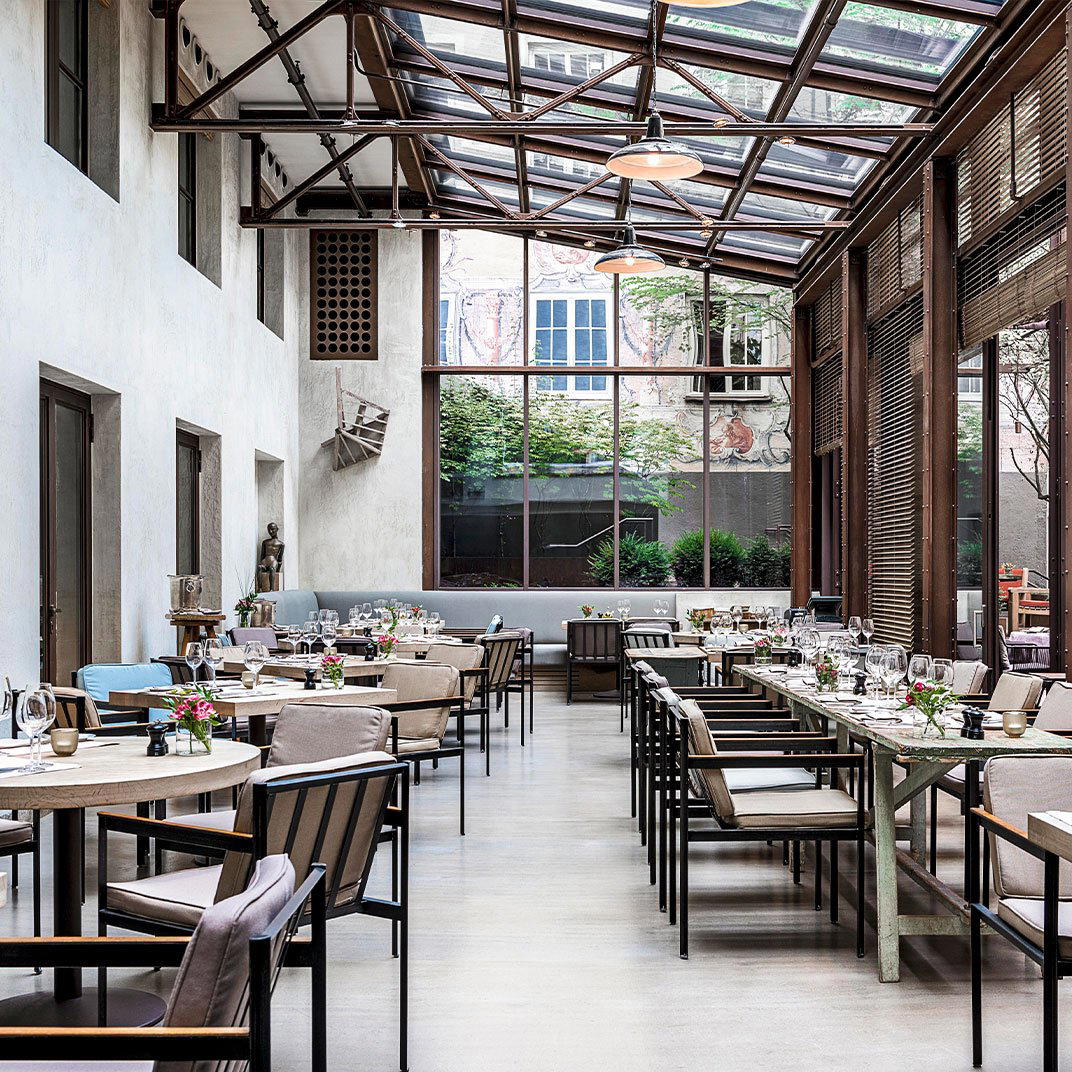
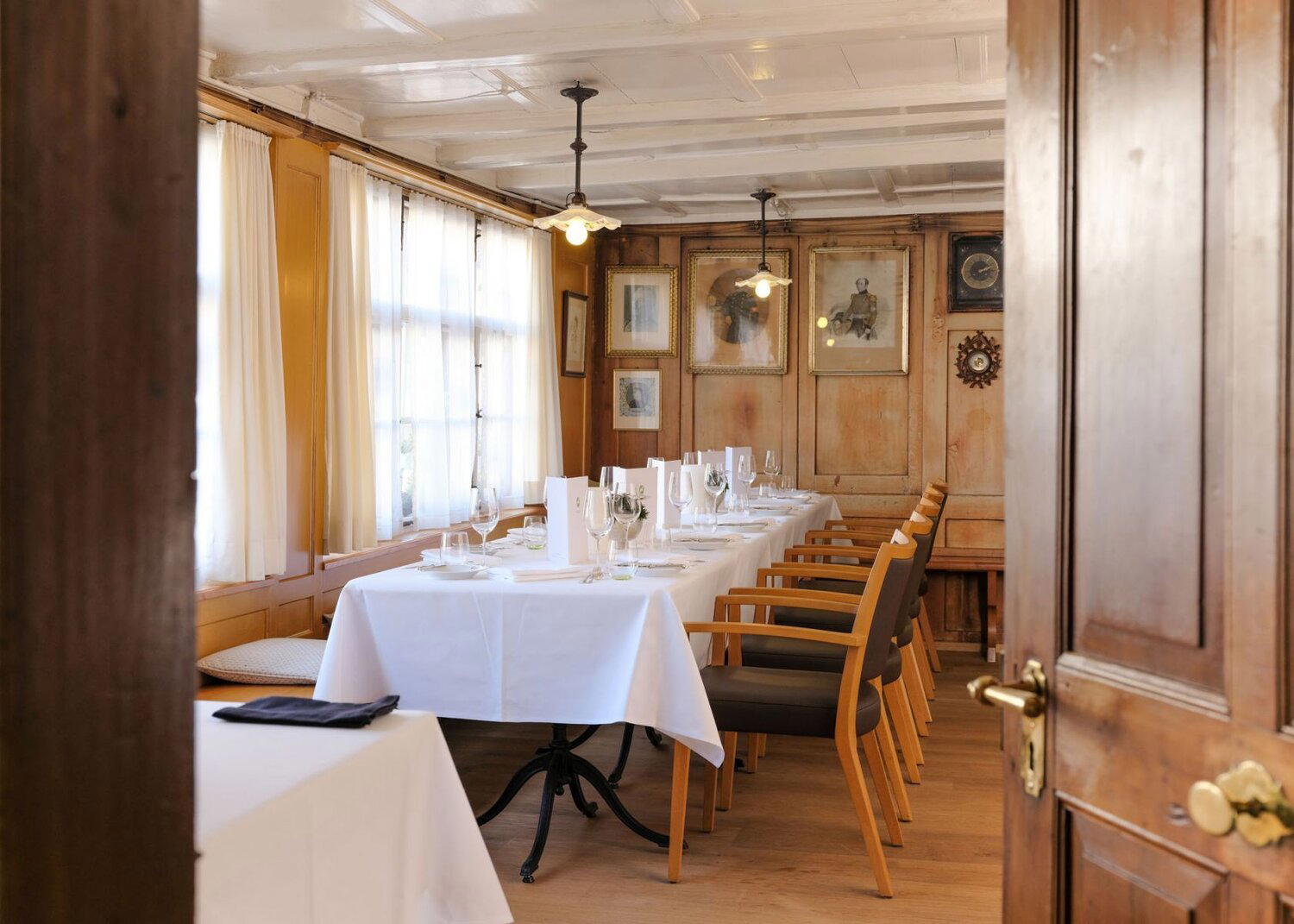
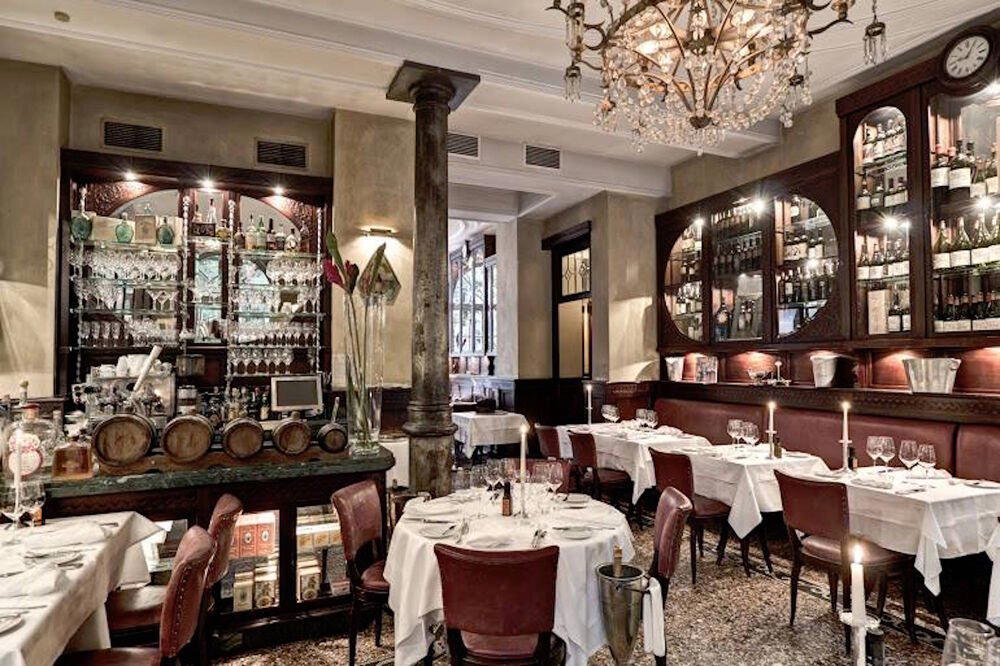
Country inn dining in southwest Germany carries specific spatial conventions: panelled rooms, tablecloths or bare wood depending on register, a Stammtisch for regulars, and a service rhythm tied to the pace of a meal rather than a turn. The format does not replicate the hushed formality of addresses like Restaurant Haerlin in Hamburg or Waldhotel Sonnora in Dreis. The register is warmer, less staged, and more tolerant of extended, unscheduled stays at table.
That atmosphere is not incidental to the food. Country cooking reads differently when it arrives in a room that does not require it to compete with minimalist plating conventions or timed courses. The pacing at a Gasthof-style setting allows for the kind of meal where a second helping is an option, where the vegetable side arrives in a shared bowl, and where the bread basket is replenished without ceremony. Families, multi-generational groups, and long lunches are normal rather than exceptional here. If you are travelling the Bodensee region with children, the setting and price point are a natural fit, the single-euro price tier means a family meal remains affordable in a way that regional starred restaurants simply cannot match.
Planning a Visit
Heiligenberg sits roughly 15 kilometres north of Konstanz and around 20 kilometres from Überlingen, accessible by road through rolling Linzgau countryside. It is not served by the direct rail routes that connect the Bodensee towns, so a car is the practical assumption for most visitors arriving from outside the immediate area. The address at Röhrenbacher Straße 1 is within the town itself rather than on an outlying rural road, which matters if you are timing around the last service of the day in a town without much late-night transport.
For visitors building a broader Heiligenberg itinerary, EP Club maintains guides across the area's main categories: see our full Heiligenberg restaurants guide, hotels guide, bars guide, wineries guide, and experiences guide. The Bodensee region as a whole supports a range of dining registers, from the rural country inns of the uplands to more formal addresses on the lakefront, and Bayerischer Hof occupies the accessible, locally rooted end of that range with two years of consecutive Michelin recognition to support the detour.
Those following a broader sweep of German regional dining might also consider Schanz in Piesport, Victor's Fine Dining by Christian Bau in Perl, or Bagatelle in Trier as counterpoints at the formal end of the spectrum.
Frequently asked questions
What should I budget for a meal at Bayerischer Hof?
Pricing at Bayerischer Hof is listed as €.
Where is Bayerischer Hof in Heiligenberg?
Bayerischer Hof is located at Bayerischer Hof, Röhrenbacher Straße 1, 88633 Heiligenberg, Germany, Heiligenberg.
Side-by-Side Snapshot
| Venue | Cuisine | Price | Awards |
|---|---|---|---|
| Bayerischer HofThis venue — the venue you are viewing | Traditional German Gasthaus Cuisine | $20–30 | Michelin Plate |
| Schwarzwaldstube | French, Classic French | Not listed | Michelin 3 Star |
| Aqua | Contemporary German, Italian/Japanese, Creative | Not listed | Michelin 3 Star |
| CODA Dessert Dining | Creative | Not listed | Michelin 2 Star |
| Tantris | Modern French, French Contemporary | Not listed | Michelin 2 Star |
| Vendôme | Modern European, Creative | Not listed | Michelin 2 Star |
Recognition history
Dated appearances from independent guides and award organizations, with the underlying list record or original source where available.
Michelin Plate
Michelin · 2026 Michelin Plate
Full recognition history (3 entries)
Michelin Plate
Michelin
Michelin Plate
Michelin
Continue exploring
More in Heiligenberg
Restaurants in Heiligenberg
Browse all →
Bars in Heiligenberg
Browse all →

Hotels in Heiligenberg
Browse all →

Details
- Rustic
- Cozy
- Classic
- Quiet
- Family
- Group Dining
- Business Dinner
- Casual Hangout
- Private Dining
- Garden
- Historic Building
- Beer Program
- Local Sourcing
- Garden
- A La Carte
- Set Menu
- Local Wine
- Beer
- Vegetarian Friendly
Relaxed, warm country inn atmosphere with rustic wooden furnishings; multiple dining rooms accommodate different party sizes; separate cigar lounge available.