Bauernstube Morgenitz
Our verdict
Bauernstube Morgenitz sits in the quiet village of Mellenthin on the island of Usedom, where northern German rural dining traditions hold ground against the coast's seasonal tourism pull. The name itself signals the format: a farmhouse parlour rooted in the agricultural rhythms of Mecklenburg-Vorpommern. For travellers moving through the Baltic region, it represents the kind of address that makes sense only when you understand the land around it.

Pearl is the En Primeur Club membership app, where members save venues, book tables and use the concierge.
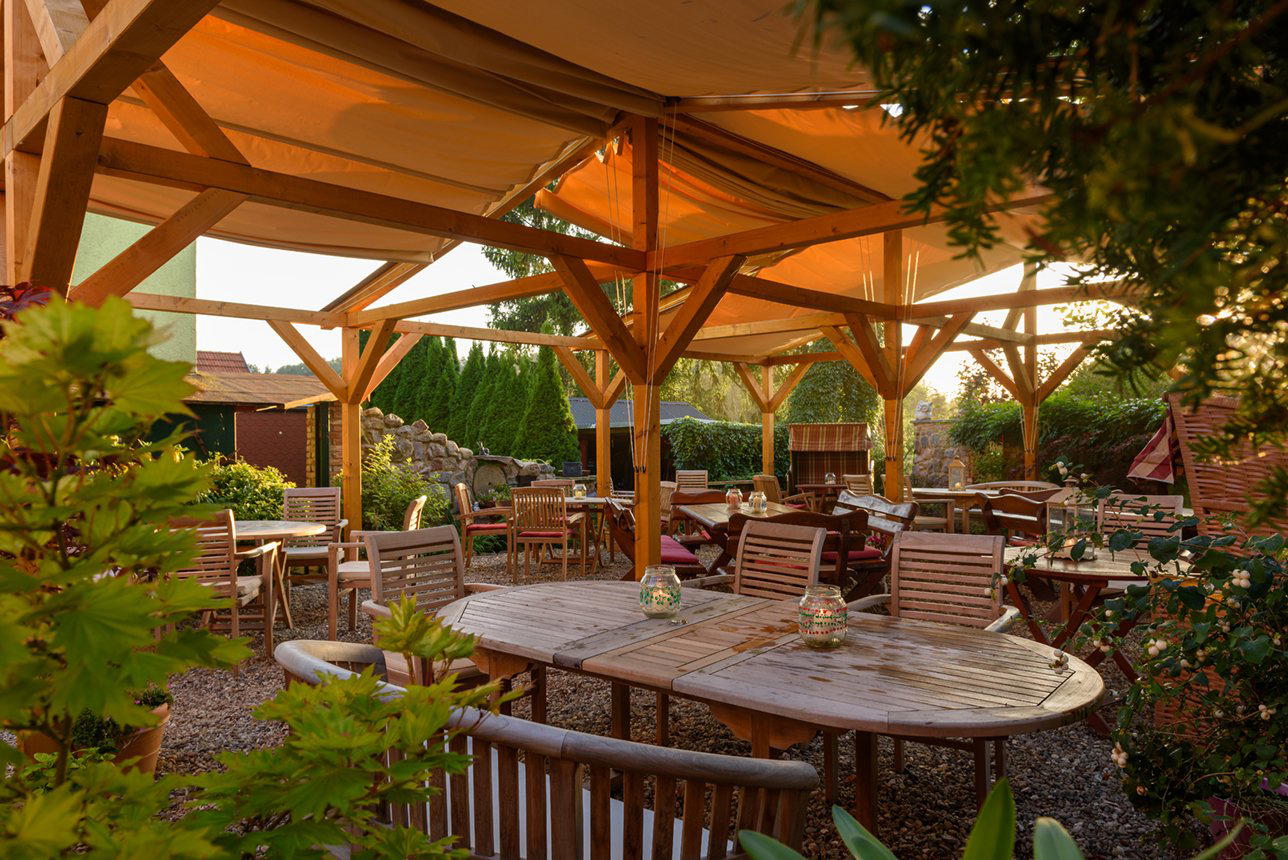
Where the Land Sets the Terms
The Baltic coast of Mecklenburg-Vorpommern does not produce the kind of dining scene that accumulates Michelin stars and long reservation queues. What it does produce is something harder to replicate in urban kitchens: immediate proximity to the source. On the island of Usedom, where Mellenthin sits inland from the tourist-facing shoreline, the Bauernstube format has a logic that urban restaurant concepts spend considerable effort trying to approximate. A farmhouse dining room in this part of Germany is not a concept. It is a structural response to where the food actually comes from.
The word Bauernstube translates roughly as farmer's parlour, and that etymology carries weight. Across northern Germany, the tradition describes interiors built around low ceilings, heavy timber, and the kind of furniture that suggests the room was used before the guests arrived. The atmosphere is warm in the way that old agricultural buildings become warm: slowly, through use, rather than through design decisions. Approaching Morgenitz along the Dewichower Strasse, the village scale is immediate. There are no city-block transitions here, no shift from commercial to residential. The setting is already the thing.
Usedom's Larder and Why It Matters
Northern German coastal cooking occupies a distinct position within Germany's broader dining map. It draws from the Baltic rather than the North Sea, which means different fish species, different salinity profiles, and different smoking traditions than what you encounter further west. Inland from the coast, the agricultural flatlands of Mecklenburg-Vorpommern have historically supplied grain, root vegetables, pork, and dairy to a region that never developed the vineyard culture or the French-inflected refinement of southwestern Germany.
That separation is part of what makes the Bauernstube tradition legible here. The €€€€ fine-dining tier operating elsewhere in Germany, at addresses like Schwarzwaldstube in Baiersbronn or Aqua in Wolfsburg, builds its identity around sourcing narratives that often travel considerable distances to reach the plate. The farmhouse dining model on Usedom works from a different premise: the sourcing radius is short because the agricultural context is immediate. Pork from Mecklenburg farms, pike-perch from the Stettiner Haff lagoon system, potatoes and brassicas from the flat fields between the island's villages. These are not ingredients that require a story about how they arrived. The distance is visible from the dining room window.
This is the key distinction between rural northeastern German dining and the creative tasting-menu format that defines Germany's most-discussed restaurant tier. At places like Vendôme in Bergisch Gladbach or CODA Dessert Dining in Berlin, sourcing is a curatorial act, a decision made among many possible options. In a Mellenthin Bauernstube, the season and the surrounding farms largely make those decisions first.
The Seasonal Logic of the Format
Usedom functions on a compressed seasonal calendar. Summer brings the Baltic resort crowd from Berlin and beyond, filling the coastal towns of Heringsdorf, Ahlbeck, and Bansin. The island's interior, where Mellenthin sits, operates at lower intensity but absorbs some of that seasonal energy. Winter strips the tourist layer entirely, leaving the island to its year-round population and the particular quietness of a Baltic landscape in February.
For a farmhouse dining address, this rhythm has practical consequences. The menu logic in northern German rural restaurants has historically tracked the agricultural calendar closely: spring greens and early pork cuts, summer crayfish and pike-perch, autumn game from the surrounding forests, winter preparations heavy with preserved and smoked ingredients. That tradition predates the contemporary farm-to-table framing that restaurants in cities now apply as a positioning strategy. Here, it is the default operating condition.
Travellers planning a visit to the region should account for this seasonality in their timing. The shoulder months of May and September offer the clearest read on the format: the summer pressure has not yet arrived or has just subsided, the produce calendar is at an interesting transition point, and the island's quieter character is easier to access. For a broader orientation to the area's dining options, our full Mellenthin restaurants guide maps the local field.
How Bauernstube Morgenitz Sits in Germany's Wider Dining Map
Germany's restaurant scene spans a considerable range. At one end, the country holds some of Europe's most technically ambitious kitchens: JAN in Munich, Victor's Fine Dining by Christian Bau in Perl, Schanz in Piesport, and Waldhotel Sonnora in Dreis all operate within the upper bracket of European fine dining. Addresses like Restaurant Haerlin in Hamburg, GästeHaus Klaus Erfort in Saarbrücken, and Ösch Noir in Donaueschingen represent the dense mid-tier of serious German dining.
Bauernstube Morgenitz occupies a different coordinate entirely. It is not in competition with those addresses, and framing it as such would misread what the format is for. The relevant comparison is not to ES:SENZ in Grassau or Jante in Hanover. It is to the tradition of rural German communal dining, where the measure of quality is faithfulness to the local agricultural cycle and the integrity of the preparation, not the complexity of the technique or the length of the sourcing story.
That same logic applies in other international contexts. The community-rooted dining model that informs addresses like Lazy Bear in San Francisco, or the produce-first discipline that drives kitchens like Le Bernardin in New York City in its relationship to fish, shares a structural commitment to ingredient integrity. The scale and format differ enormously, but the underlying premise, that what you cook with determines what you can cook, is the same. In Mellenthin, that premise is simply more visible because the supply chain is shorter and the surrounding land is always in frame.
For travellers moving through the Baltic coastal region, it is also worth noting how the Bauernstube model contrasts with the wine-driven dining corridors of western Germany. Addresses like Bagatelle in Trier or L.A. Jordan in Deidesheim operate within vineyard landscapes that shape their identity as clearly as the Baltic shapes northeastern coastal cooking. The ingredients differ, the beverage context differs, but the principle that geography sets the terms of the table holds across both regions.
Planning a Visit
Mellenthin is accessible from Heringsdorf Airport, which connects seasonally to several German cities, or by road from the mainland via the island's causeway. Bauernstube Morgenitz is located at Dewichower Strasse 5, 17429 Mellenthin. Given the rural location and the farmhouse format, arriving by car is the practical choice for most visitors. Booking in advance is advisable, particularly during the summer season when Usedom's visitor numbers peak and local dining capacity tightens across the island.
Frequently asked questions
Would Bauernstube Morgenitz be comfortable with kids?
A farmhouse-style address in Mellenthin, a village of under 500 residents on Usedom, suggests an informal, unhurried setting rather than a white-tablecloth room. That format tends to be tolerant of families. Usedom itself draws a significant share of Berlin-area holiday visitors in summer, many travelling with children, so local restaurants typically accommodate them without issue.
What's the vibe at Bauernstube Morgenitz?
The name signals it directly: Bauernstube translates literally as 'farmer's parlour', the traditional German term for the main room of a farmhouse used for eating and gathering. That framing points toward a grounded, unaffected atmosphere in the village of Mellenthin rather than anything resort-facing or trend-driven. Morgenitz is the hamlet within Mellenthin at Dewichower Strasse 5, which sits well away from the busier coastal towns of Heringsdorf and Bansin.
Is Bauernstube Morgenitz open year-round or only in summer?
Usedom functions on a compressed seasonal calendar: the island's hospitality businesses largely orient around the summer influx from Berlin and broader Germany, and a number of smaller rural venues reduce hours or close entirely outside that window. Checking directly before visiting in the off-season is advisable.
What dish is Bauernstube Morgenitz famous for?
The Bauernstube format across northern Germany typically centres on Baltic fish, pork-based farmhouse preparations, and seasonal produce from the surrounding Mecklenburg-Vorpommern countryside. Usedom's coastal position also places locally caught herring and perch within the natural range of any kitchen drawing on the island's larder.
How do I find Bauernstube Morgenitz?
Bauernstube Morgenitz is located at Dewichower Str 5, 17429, Mellenthin, Germany, Mellenthin.
A Quick Peer Check
| Venue | Cuisine | Price | Awards | Notes |
|---|---|---|---|---|
| Bauernstube MorgenitzThis venue (the venue you are viewing) | Traditional German Fish Specialties | Not listed | Not listed | Not listed |
| Schwarzwaldstube | Modern French Fine Dining | $150–200 | 3 Michelin Stars · World's 50 Best #47 | French, Classic French |
| Aqua | Contemporary German, Italian/Japanese, Creative | Not listed | Michelin 3 Star | Not listed |
| Vendôme | Modern German Haute Cuisine | $200–300 | 2 Michelin Stars · World's 50 Best #47 | Modern European, Creative |
| CODA Dessert Dining | Dessert-Inspired Fine Dining | $200–300 | 2 Michelin Stars · World's 50 Best #79 | Creative |
| Tantris | Modern French Fine Dining | $300–500 | 2 Michelin Stars · World's 50 Best #73 | Modern French, French Contemporary |
Continue exploring
More in Mellenthin
Restaurants in Mellenthin
All restaurants in Mellenthin →
Hotels in Mellenthin
Browse all →
Wineries in Mellenthin
Browse all →
Details
- Cozy
- Rustic
- Intimate
- Date Night
- Special Occasion
- Historic Building
- Extensive Wine List
- Local Sourcing
- Family Style
Homely farmhouse parlor with cozy, authentic charm and attentive personal service.