Basilico
Our verdict
Basilico at 142 Fifth Ave brings Italian cooking to Pelham, a Westchester village that increasingly draws New York City diners north in search of neighborhood restaurants without Manhattan prices or reservation queues. The kitchen's approach sits within a broader regional movement toward ingredient-driven Italian cooking, where sourcing decisions carry as much weight as technique. For Pelham, it represents a serious dining option in a quieter suburban register.

Pearl is the En Primeur Club membership app — saves, bookings, and concierge access live there. Same editors, same standards.
- Address
- 142 Fifth Ave, Pelham, NY 10803
- Phone
- (914) 740-5900
- Hours
- Mon–Fri 12–10 PMSat–Sun 11 AM–10 PM
- Website
- basilicopelham.com
- Directions
- Get directions
- Booking
- Book on OpenTable
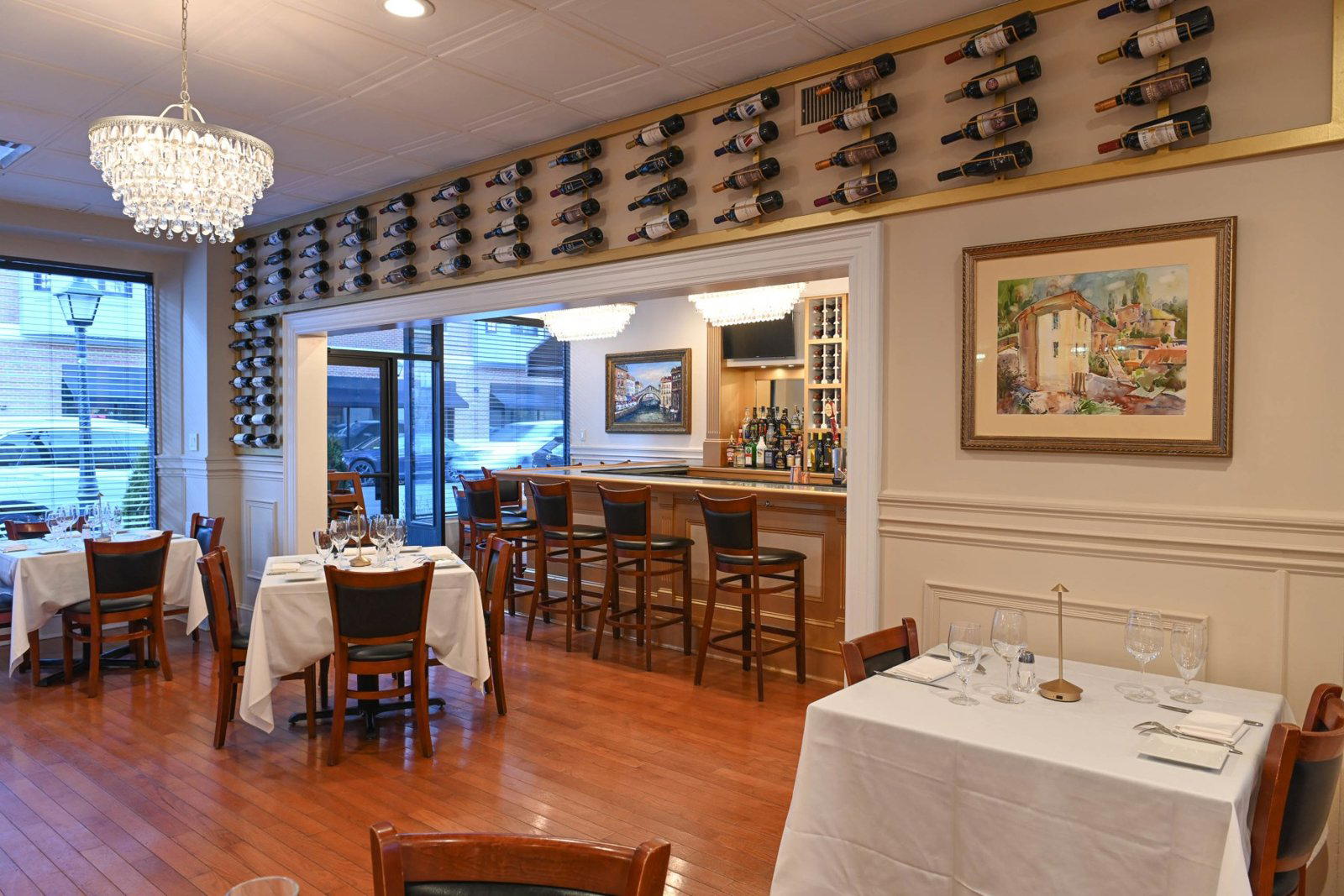
Fifth Avenue, Pelham: A Quiet Address With Serious Intentions
Pelham sits at the southern edge of Westchester County, close enough to the city that Metro-North deposits you there in under thirty minutes from Grand Central, yet far enough that the dining room at 142 Fifth Ave operates on a different rhythm entirely. The tempo here is unhurried. Westchester's restaurant corridor has long been anchored by larger towns like White Plains or Bronxville, but smaller villages like Pelham have been accumulating their own dining gravity quietly, as residents who commute into Manhattan increasingly want something serious within walking distance rather than another trip to the city on a Saturday. Basilico sits inside that shift.
Italian cooking in suburban New York occupies a wide spectrum, from red-sauce institutions that have barely changed since the 1970s to kitchens that treat the Italian tradition as a framework for local sourcing and seasonal discipline. The latter approach has gained ground across the region over the past decade, driven partly by proximity to the Hudson Valley's agricultural output and partly by a dining public that has grown more attentive to where ingredients originate. Basilico's address in Pelham places it within reach of that supply network, and the broader Italian tradition it draws from has always rewarded sourcing quality above technique complexity. A good San Marzano tomato or a properly aged domestic Parmigiano equivalent does more work than any culinary flourish.
Ingredient Logic: Why Sourcing Defines Italian Cooking at This Level
The argument for ingredient-forward Italian cooking is direct: the cuisine's canon was built on the premise that exceptional raw materials require minimal intervention. This is not a recent discovery — it is the foundational logic of a cooking tradition that produced the concept of cucina povera, where restraint and quality were the same thing. What changes in contemporary American interpretations is geography. Restaurants like Blue Hill at Stone Barns in Tarrytown have made the case at the high end that the Hudson Valley can supply a kitchen as reliably as any European agricultural region. That argument has filtered down to neighborhood-scale restaurants throughout Westchester, creating an expectation that even a suburban Italian room should be able to speak credibly about where its produce, proteins, and dairy originate.
For context on how far that sourcing conversation has traveled across American fine dining, consider that restaurants as different in format as Single Thread Farm in Healdsburg, Smyth in Chicago, and Oyster Oyster in Washington, D.C. have each built their identity around supply chain specificity. The approach is no longer a differentiator at the top tier; it has become a baseline expectation that is now working its way into suburban and neighborhood dining. A Pelham Italian restaurant that treats sourcing as secondary competes in a different and increasingly difficult market position.
Italian cooking's structure also makes sourcing transparency easier to communicate: pasta flour, olive oil, cured meats, and aged cheeses each have recognized regional origins that carry meaning with a reasonably informed diner. When a kitchen can point to specific sources for these foundational ingredients, the menu becomes a document of choices rather than a list of dishes.
The Westchester Suburban Italian Tradition
Westchester County has a longer and denser Italian-American dining history than most parts of the country. The communities that developed along the train lines north of the Bronx through the mid-twentieth century brought with them cooking traditions from Southern Italy, and the restaurant culture that emerged reflected those roots. The red-sauce canon — braised meats, long-cooked Sunday gravies, fresh pasta in a handful of formats, became the default register for Italian dining in the suburbs, and it held that position comfortably for decades.
What has shifted is the second and third generation of that tradition engaging with Italian cooking as a culinary discipline rather than a comfort inheritance. The same movement that produced Frasca Food and Wine in Boulder, a restaurant that treats regional Italian cuisine as a serious study rather than a generic category, has a quieter parallel in suburban New York, where a number of kitchens have started applying more rigorous thinking to ingredient sourcing, wine lists, and menu seasonality without abandoning the Italian framework that local diners recognize and trust. Basilico operates within that evolving tradition.
For a point of comparison at the high end of the national Italian conversation, Le Bernardin in New York City demonstrates what ingredient obsession looks like when budgets and supply relationships are unlimited. The lesson that filters down is that the discipline of asking where something comes from, and making procurement decisions based on the answer, improves a kitchen at every price point. Other national examples worth noting for how American restaurants handle origin-driven menus include Bacchanalia in Atlanta, Providence in Los Angeles, and Addison in San Diego, each operating in a different register but each treating sourcing as editorial rather than logistical.
Pelham as a Dining Destination
The practical case for Pelham as a dining destination is partly about what it is not. It is not the Bronx, where restaurant density creates a different competitive environment. It is not Scarsdale or Larchmont, where the dining scene has attracted enough attention to push reservation lead times. Pelham retains the character of a village where neighborhood regulars anchor a restaurant's economics, which tends to produce a specific kind of hospitality: attentive without performance, familiar without presumption. That dynamic suits Italian cooking well, since the cuisine's leading expression has always lived somewhere between the domestic and the professional. For practical planning, 142 Fifth Ave is the address; Metro-North's New Haven Line serves Pelham Station, making the venue accessible without a car from Manhattan. For a fuller picture of what the town's dining scene looks like beyond a single address, see our full Pelham restaurants guide.
Among the broader set of ingredient-committed American restaurants worth knowing, from The French Laundry in Napa and Lazy Bear in San Francisco at the upper tier to Emeril's in New Orleans, ITAMAE in Miami, The Wolf's Tailor in Denver, Atomix in New York City, The Inn at Little Washington, and Atelier Moessmer Norbert Niederkofler in Brunico, Basilico occupies a neighborhood register rather than a destination one. That is not a diminishment. The neighborhood register is where most people actually eat, and getting it right at that scale is its own discipline.
Frequently asked questions
Is Basilico good for families?
Pelham's dining culture skews residential and community-oriented, and Basilico's Fifth Avenue address puts it squarely in that neighborhood context. Italian cooking at this level tends to suit mixed-age tables well, with shareable formats and familiar reference points. For specific seating arrangements or children's menu options, check the venue's official channels.
Is Basilico formal or casual?
Basilico sits on Fifth Avenue in Pelham, a residential Westchester address that sets a relaxed rather than ceremony-driven tone. Ingredient-forward Italian restaurants in this part of the county generally run toward convivial rather than stiff, though the cooking is taken seriously. Arriving put-together is appropriate; a jacket is not required.
How close is Basilico to New York City, and is it worth the trip from Manhattan?
Pelham is on the New Haven Metro-North line, putting 142 Fifth Ave roughly 25 to 30 minutes from Grand Central Terminal. That commute places Basilico within reach for a weeknight dinner without the cost or noise floor of dining in Manhattan. For Westchester residents, it functions as a serious local option in a county with a deep Italian-American dining history.
What should I order at Basilico?
Basilico's identity, as framed by its address and the broader Westchester Italian tradition, centers on sourcing-led cooking where the raw material does the work. Italian menus at this level typically reward ordering pasta and whatever protein reflects the season. For current menu specifics, check directly with the restaurant at 142 Fifth Ave, Pelham, NY 10803.
At-a-Glance Comparison
Comparable venues nearby, for context on price, style, and recognition.
| Venue | Cuisine | Price | Notes |
|---|---|---|---|
| BasilicoThis venue — the venue you are viewing | Authentic Italian | $50–100 | Not listed |
| Arte Cafe | Upscale Italian with Artisanal Pizzas | $50–100 | Upper West Side-Lincoln Square |
| All'Antico Vinaio | Tuscan Schiacciata Sandwiches | $10–20 | Hell's Kitchen |
| Tartufo Osteria | Contemporary Italian Trattoria | $30–50 | Hell's Kitchen |
| Allora Fifth Ave | Classic Italian-American Steakhouse | $50–100 | Midtown South-Flatiron-Union Square |
| Maialino (vicino) | Roman Trattoria | $100–150 | Midtown South-Flatiron-Union Square |
Continue exploring
More in Pelham
Restaurants in Pelham
Browse all →
Bars in Pelham
Browse all →

Hotels in Pelham
Browse all →






Details
- Cozy
- Classic
- Elegant
- Date Night
- Special Occasion
- Business Dinner
- Standalone
- Extensive Wine List
- Local Sourcing
- A La Carte
- Prix Fixe
- Wine
- Gluten Free Options
Current opening hours
- Monday
- 12–10 PM
- Tuesday
- 12–10 PM
- Wednesday
- 12–10 PM
- Thursday
- 12–10 PM
- Friday
- 12–10 PM
- Saturday
- 11 AM–10 PM
- Sunday
- 11 AM–10 PM
Hours can change for holidays and private events. Last verified .
Cozy and inviting atmosphere with a welcoming, traditional feel.