Bareli's
Bareli's sits on Route 3 in Secaucus, a short drive from Manhattan, occupying the kind of spot that rewards locals who know where to look. The kitchen draws on ingredient-driven cooking at a point in the market where sourcing decisions separate serious operations from the merely convenient. It belongs to a dining tier that Secaucus has quietly developed alongside the region's broader food culture.
Pearl is the En Primeur Club membership app — saves, bookings, and concierge access live there. Same editors, same standards.
- Address
- 219 NJ-3, Secaucus, NJ 07094
- Phone
- +12018652766
- Website
- barelisrestaurantandbar.com
- Directions
- Get directions
 Saves & bookings on Pearl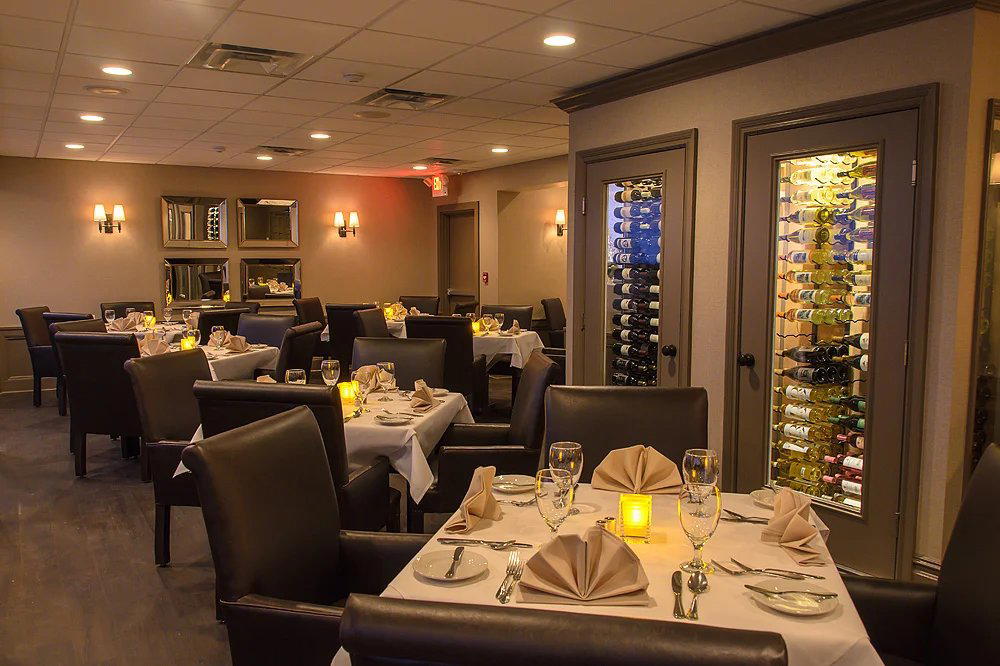
Route 3 and What It Says About Where You're Eating
The approach to Bareli's along Route 3 in Secaucus tells you something about the dining culture here before you've sat down. New Jersey's corridor towns have long operated as functional satellites to New York City, and their restaurant scenes have historically followed a similar logic: feed the commuter, feed the family, keep it comfortable. What has shifted over the past decade is the degree to which some of those restaurants have moved toward ingredient-led menus that ask more of both kitchen and diner. Bareli's, at 219 NJ-3, sits inside that shift. The address is not romantic. The significance is in what's happening at the table.
Secaucus occupies an interesting position in the regional dining picture. It is close enough to Manhattan that comparisons are inevitable, yet far enough removed that it has developed its own dining identity rather than simply mirroring the city. For context on how the wider region is eating, see our full Secaucus restaurants guide, which maps out that broader character in detail.
The Case for Sourcing in a Suburban Market
Ingredient sourcing is where many suburban restaurants make or lose their argument. The pressure to keep prices accessible while maintaining quality often pushes kitchens toward commodity supply chains, which is precisely why the exceptions matter. Across American dining, the restaurants that have most successfully closed the gap between suburban address and serious food have done so by making sourcing a structural decision rather than a marketing one. Blue Hill at Stone Barns in Tarrytown made the farm-to-table relationship literal and visible; Single Thread Farm in Healdsburg built its entire identity around agricultural provenance. Those are reference points at a different price tier, but they illustrate the principle: when a kitchen commits to where its food comes from, the commitment shows up in what lands on the plate.
The ingredient-sourcing question is also a regional one. New Jersey has legitimate agricultural depth, from the tomatoes and corn of the southern counties to the seafood coming through the Atlantic coast. A kitchen in Secaucus that draws on that supply network is operating with different raw material than one relying on broadline distribution. Whether Bareli's makes that argument explicitly or implicitly, the positioning along Route 3 places it in a competitive set where the sourcing decision is increasingly the differentiating one.
How Bareli's Fits the Secaucus Scene
The Secaucus dining scene is not homogenous. It contains a range of formats and price points, and the more interesting operations tend to occupy a middle tier that is neither fast-casual nor fine dining in the formal sense. La Reggia represents one strand of that picture, with its own approach to Italian cooking in the same market. The restaurant sits alongside rather than against it, addressing a diner who wants cooking that takes its ingredients seriously without requiring the ceremony of a Manhattan tasting menu.
That positioning matters because it reflects a broader national pattern. Restaurants in secondary markets have increasingly found that the demand for quality sourcing is not confined to major urban centers. Frasca Food and Wine in Boulder and The Wolf's Tailor in Denver are examples of kitchens that have demonstrated serious intent in markets that could have excused a lower standard. The same argument applies in northern New Jersey, where proximity to New York raises the expectation without guaranteeing the execution.
Ingredient-Led Cooking and the American Context
The American restaurants that have most clearly defined what ingredient sourcing looks like at the highest level tend to be coastal and heavily decorated. Le Bernardin in New York City built its reputation on the direct relationship between sourcing and technique, particularly with seafood. Providence in Los Angeles and Addison in San Diego each operate within a similar philosophy on the West Coast. Further afield, Oyster Oyster in Washington, D.C. has made plant-forward sourcing its editorial statement, while ITAMAE in Miami applies Nikkei precision to Florida's ingredient supply.
These are not direct comparisons to the restaurant. They are markers in a national conversation about where food comes from and why that question has moved from niche concern to mainstream expectation. A kitchen in Secaucus that is paying attention to that conversation is operating in a different register than one that isn't. The gap between Route 3 and the reference points above is real, but the underlying argument, that sourcing determines flavor and that flavor determines reputation, travels across price tiers and zip codes.
Internationally, the sourcing-first principle has its own articulations. Atelier Moessmer Norbert Niederkofler in Brunico has made regional Alpine sourcing its defining constraint. The discipline involved in that kind of commitment, using only what the surrounding territory produces and cooking around seasonal limits rather than against them, represents one end of what ingredient-led cooking can mean. Most restaurants, including those in suburban New Jersey, operate with more flexibility. The question is how that flexibility is used.
Practical Matters
The restaurant is located at 219 NJ-3 in Secaucus, accessible by car from Manhattan in under twenty minutes outside peak traffic, or via NJ Transit with a short cab or rideshare connection from Secaucus Junction station. Given the Route 3 address, driving is one practical approach for most visitors. Contact and reservation details are best confirmed directly through current listings, as hours and booking formats in this segment of the market can vary seasonally. Diners coming from New York who want a point of comparison at the higher end of the metropolitan dining spectrum can look to Atomix in New York City for modern Korean at the $$$$ tier, or Lazy Bear in San Francisco for the progressive American format; the restaurant operates in a different register, which is part of its practical appeal for Secaucus locals and Hudson County regulars.
Continue exploring
More in Secaucus
Restaurants in Secaucus
Browse all →
Bars in Secaucus
Browse all →

Hotels in Secaucus
Browse all →






At a Glance
- Elegant
- Intimate
- Sophisticated
- Cozy
- Business Dinner
- Date Night
- Special Occasion
- Group Dining
- Private Dining
- Extensive Wine List
- Garden
Current opening hours
- Monday
- Closed
- Tuesday
- 12–10 PM
- Wednesday
- 12–10 PM
- Thursday
- 12–10 PM
- Friday
- 12–10 PM
- Saturday
- 4–10 PM
- Sunday
- Closed
Hours can change for holidays and private events. Last verified .
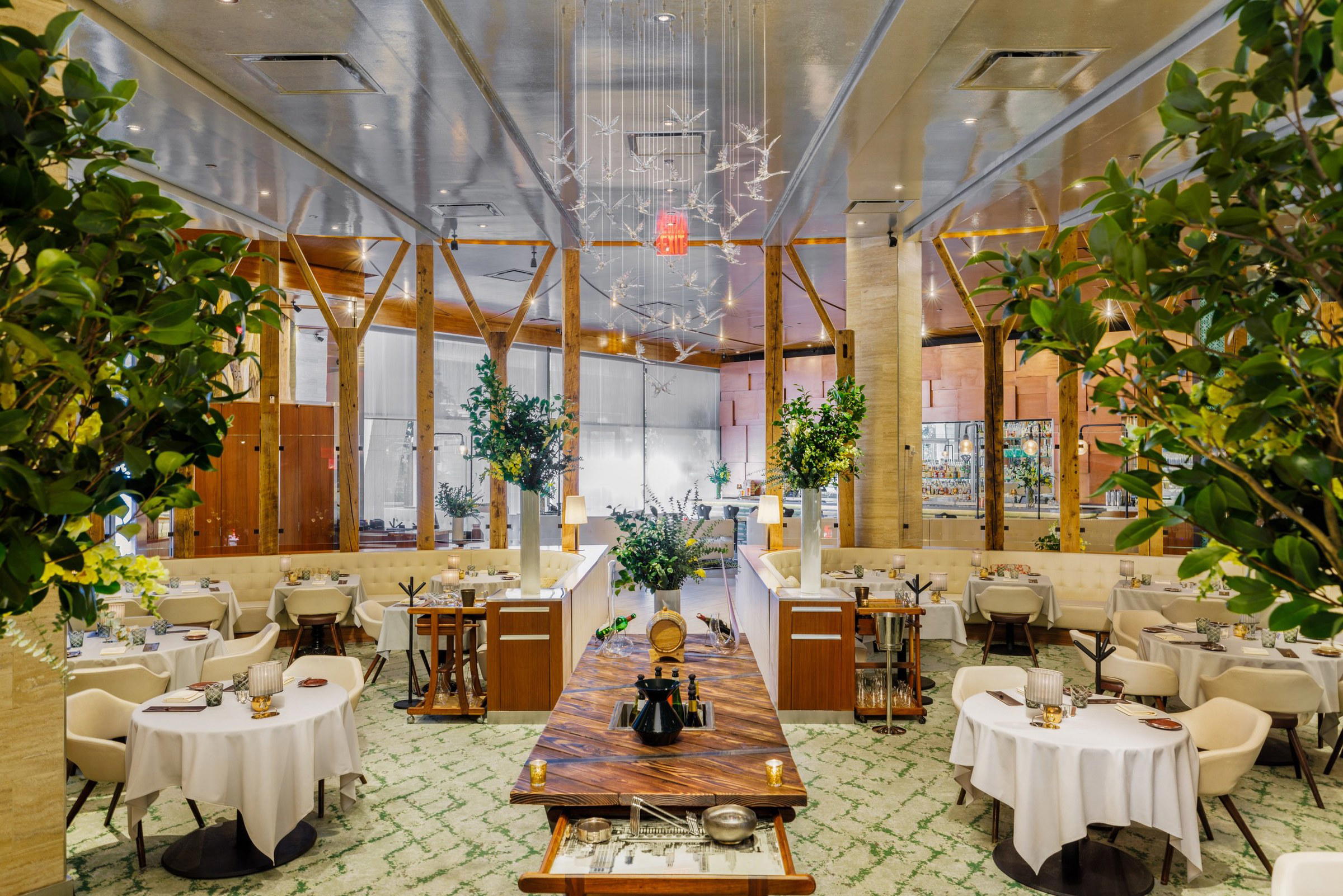
Warm and inviting with elegant dining room, comfortable chairs, lively horseshoe bar, and polished service.