

Michelin Plate · Canada's 100 Best Restaurants #22
Our verdict
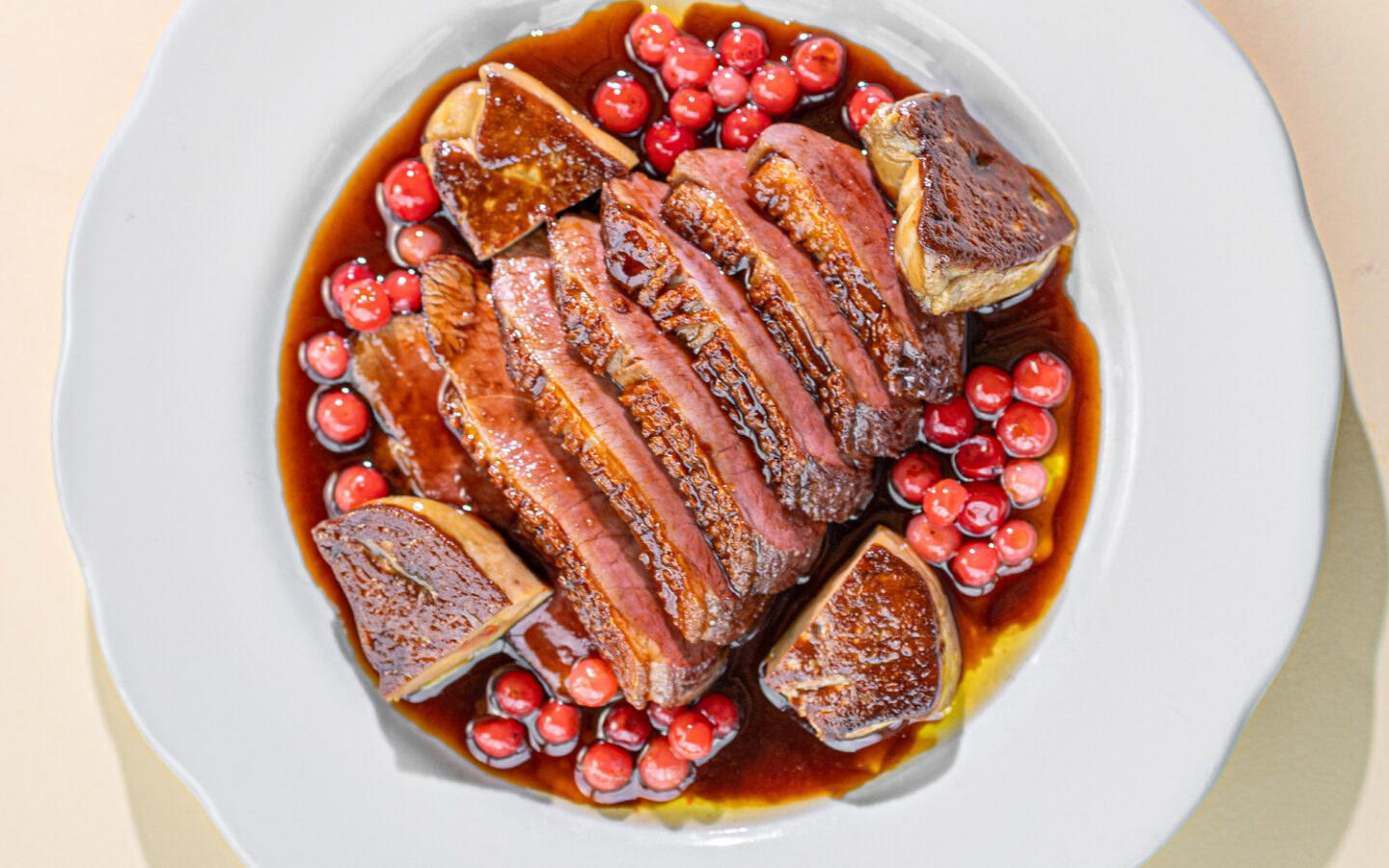
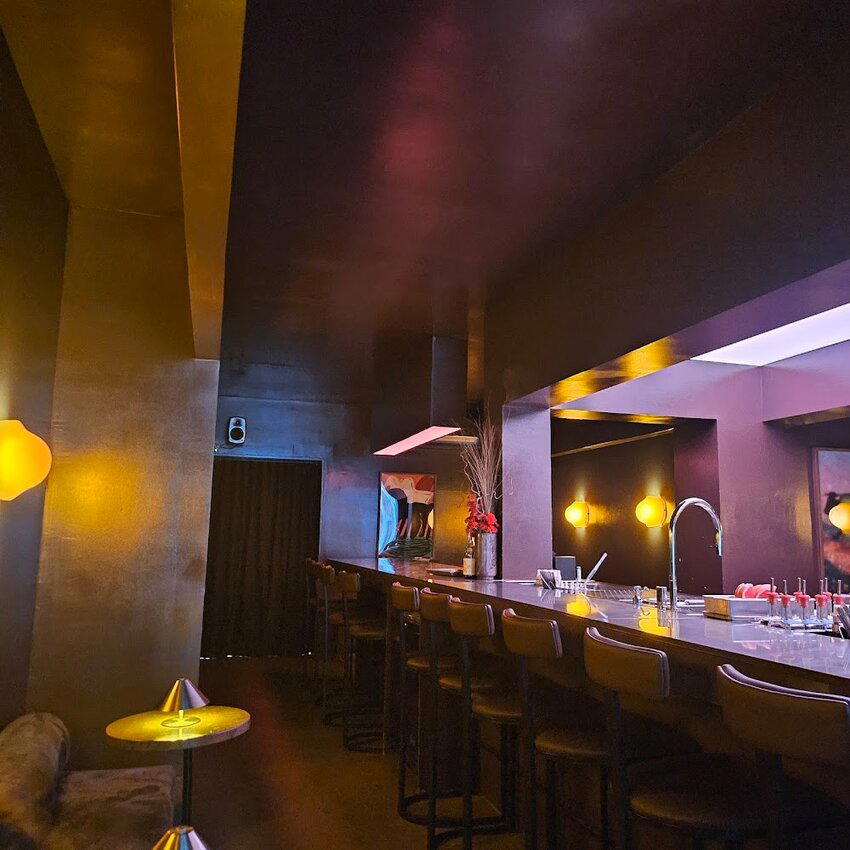
Bar St-Denis occupies a former dive bar on one of the Plateau's defining streets, transformed by Appareil Architecture into a spacious yet intimate dining room where French technique meets Middle Eastern influence. The kitchen's seasonal menu runs from veal tartare with white anchovies to duck sausage with foie gras and pistachios, backed by a wine list that balances natural pours with classic choices. Few addresses on Saint-Denis convert first-time visitors into regulars as consistently.

Pearl is the En Primeur Club membership app, where members save venues, book tables and use the concierge.
The menu
What to order
- Razor clams with tabbouleh
- Labneh
- Aged pork chop
- Boudin blanc
Saint-Denis and What It Asks of a Restaurant
Rue Saint-Denis runs through the Plateau-Mont-Royal as one of Montreal's most contested dining corridors: long enough to absorb trends, old enough to have outlasted several of them. The street has hosted celebrated bistros, neighbourhood staples, and a rotating cast of concepts that never quite found their footing. What it has rarely produced is a room that reads simultaneously as a serious kitchen and a genuinely welcoming bar. Bar St-Denis, at number 6966, attempts both at once, and the attempt lands.
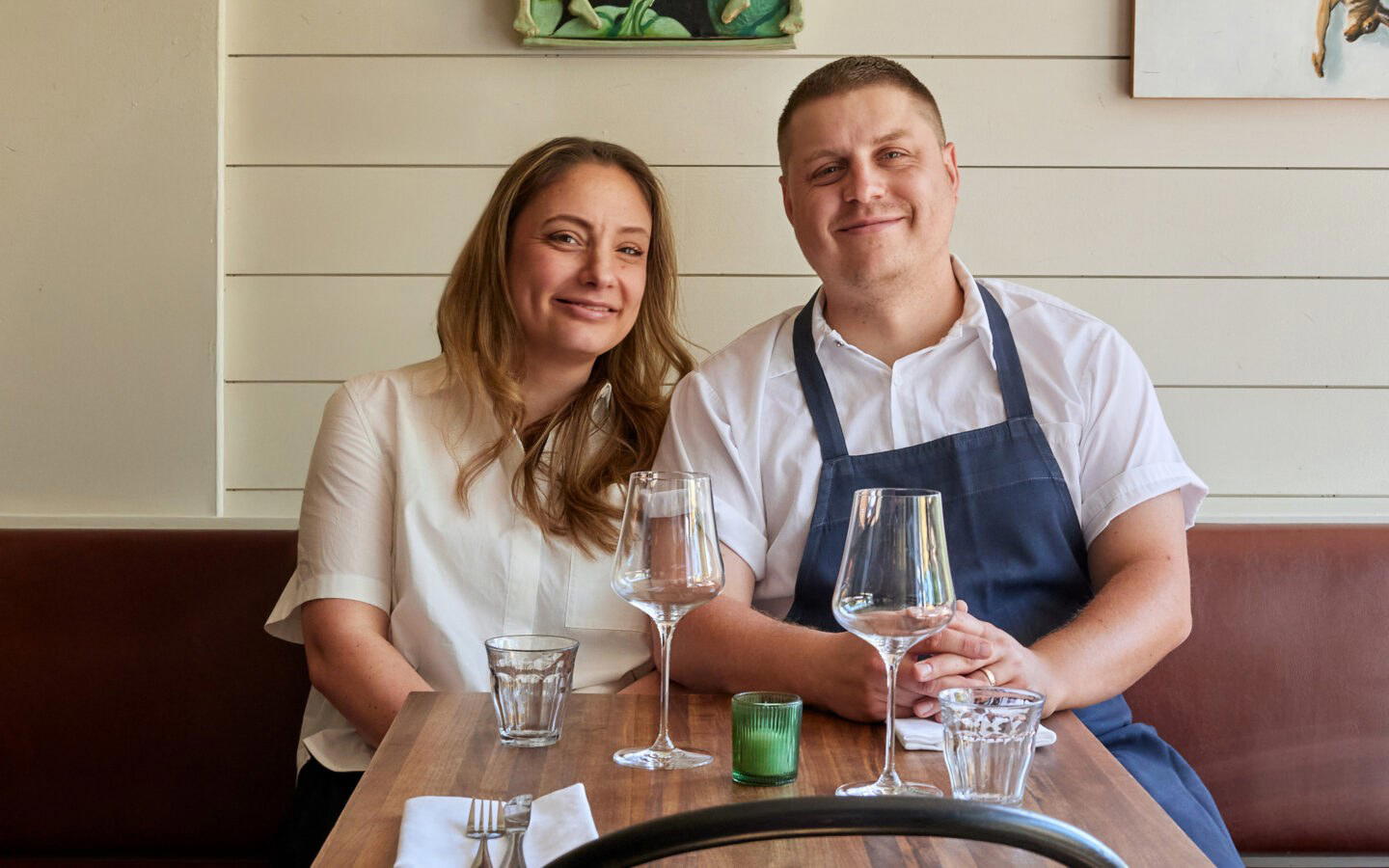
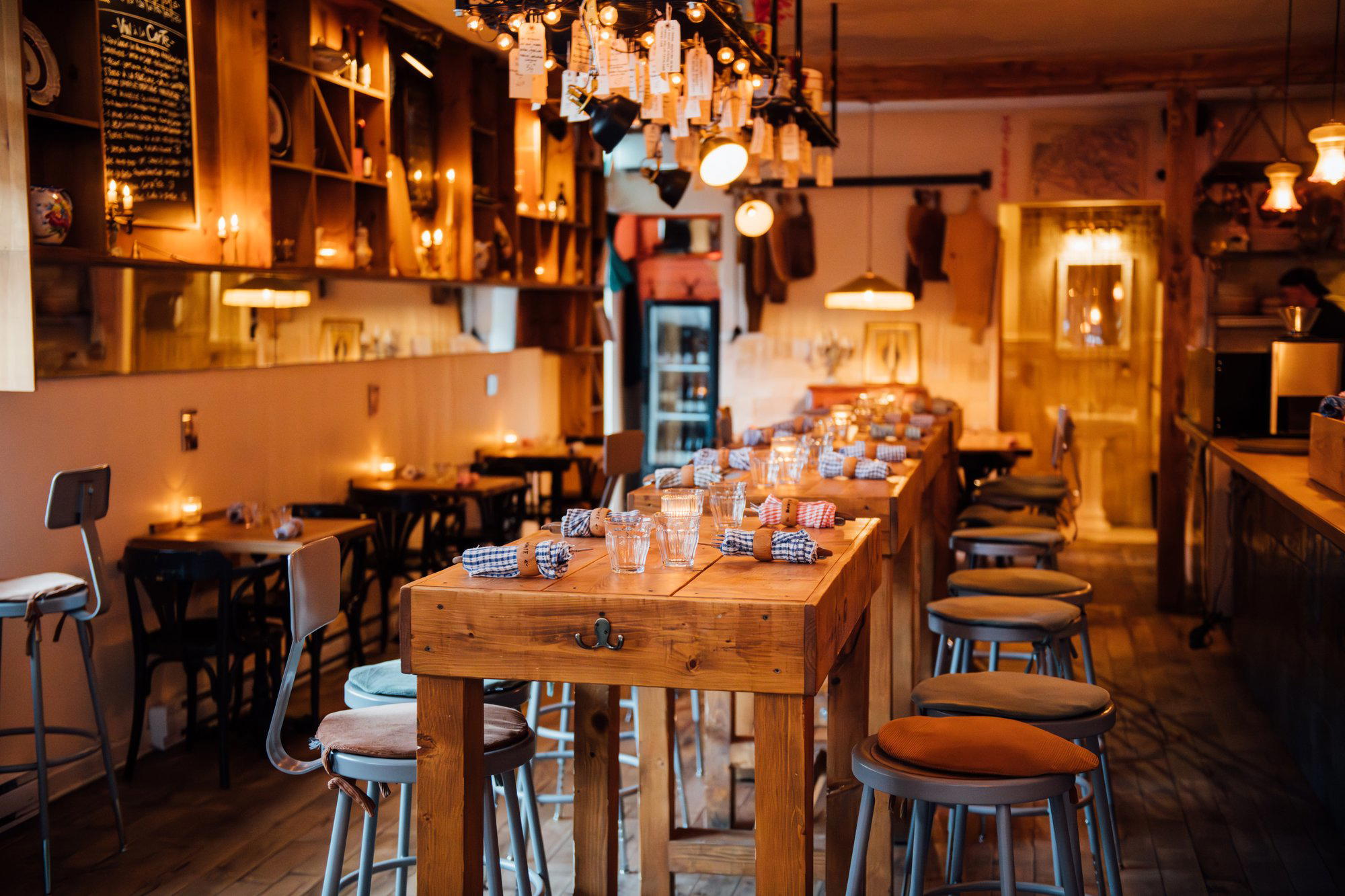
The physical transformation matters here. Co-owners David Gauthier and Emily Homsy took a former dive and commissioned Appareil Architecture to rework the space into something that balances scale with warmth. The result is a long dining room paired with an underlit bar, generous enough to avoid feeling crowded, arranged in a way that keeps the room from losing its intimacy as it fills. That kind of spatial calibration is harder to execute than it sounds on a street where converted bones often betray their past. In this context, the design is evidence of intent: this address is playing a longer game than a seasonal concept or a neighbourhood stop-gap.
Where French Cooking Meets the Middle East
Montreal's contemporary French dining has fractured into several distinct lanes over the past decade. The grand-occasion tier, anchored by addresses like Jérôme Ferrer - Europea and Sabayon, occupies one extreme. The neighbourhood bistro, L'Express being the enduring reference point, sits at the other. Bar St-Denis positions itself somewhere between those poles, with technique and ingredient sourcing that belong in the upper tier, and a tone and pricing that suggest it is not chasing the occasion-dining market.
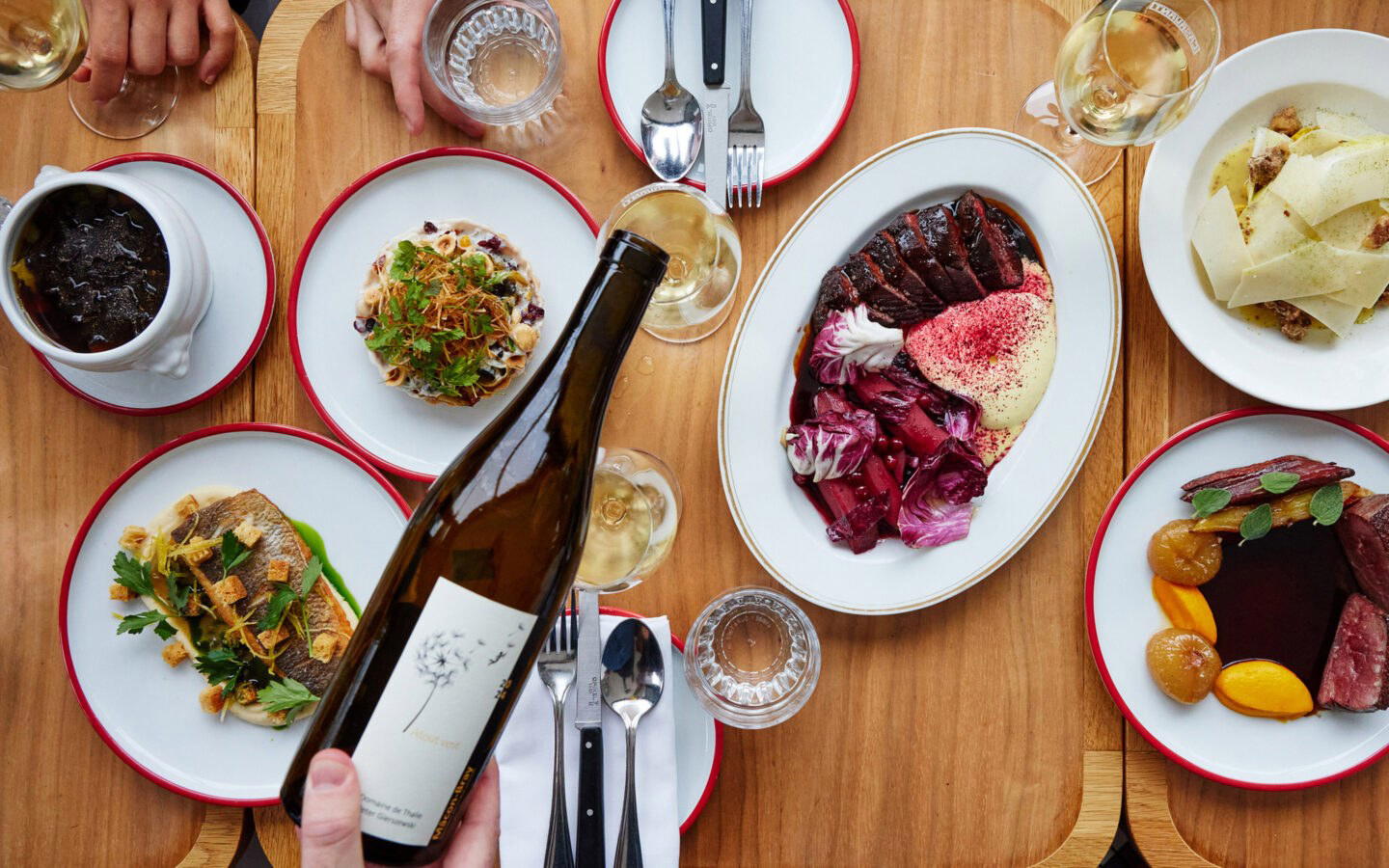
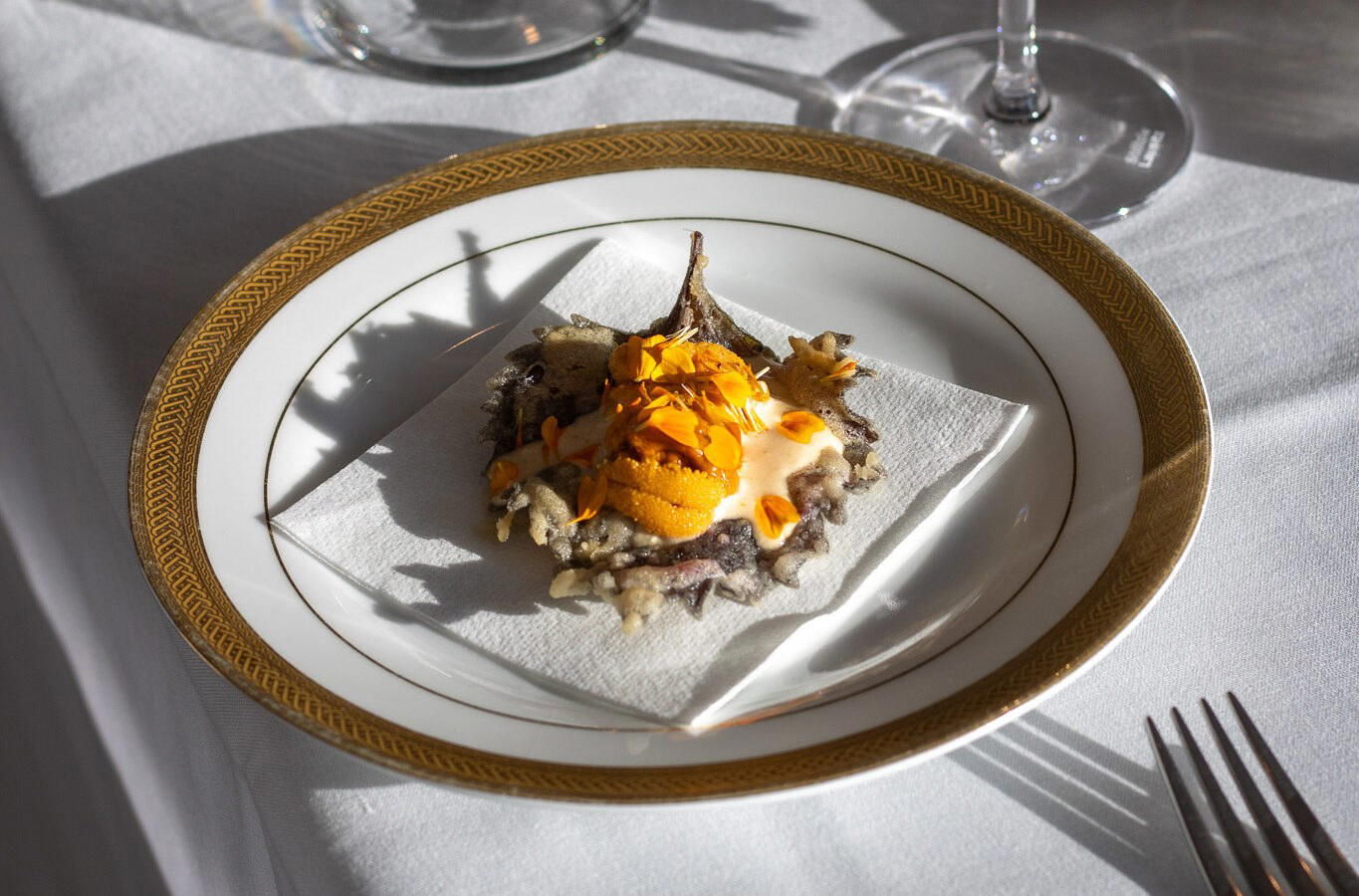
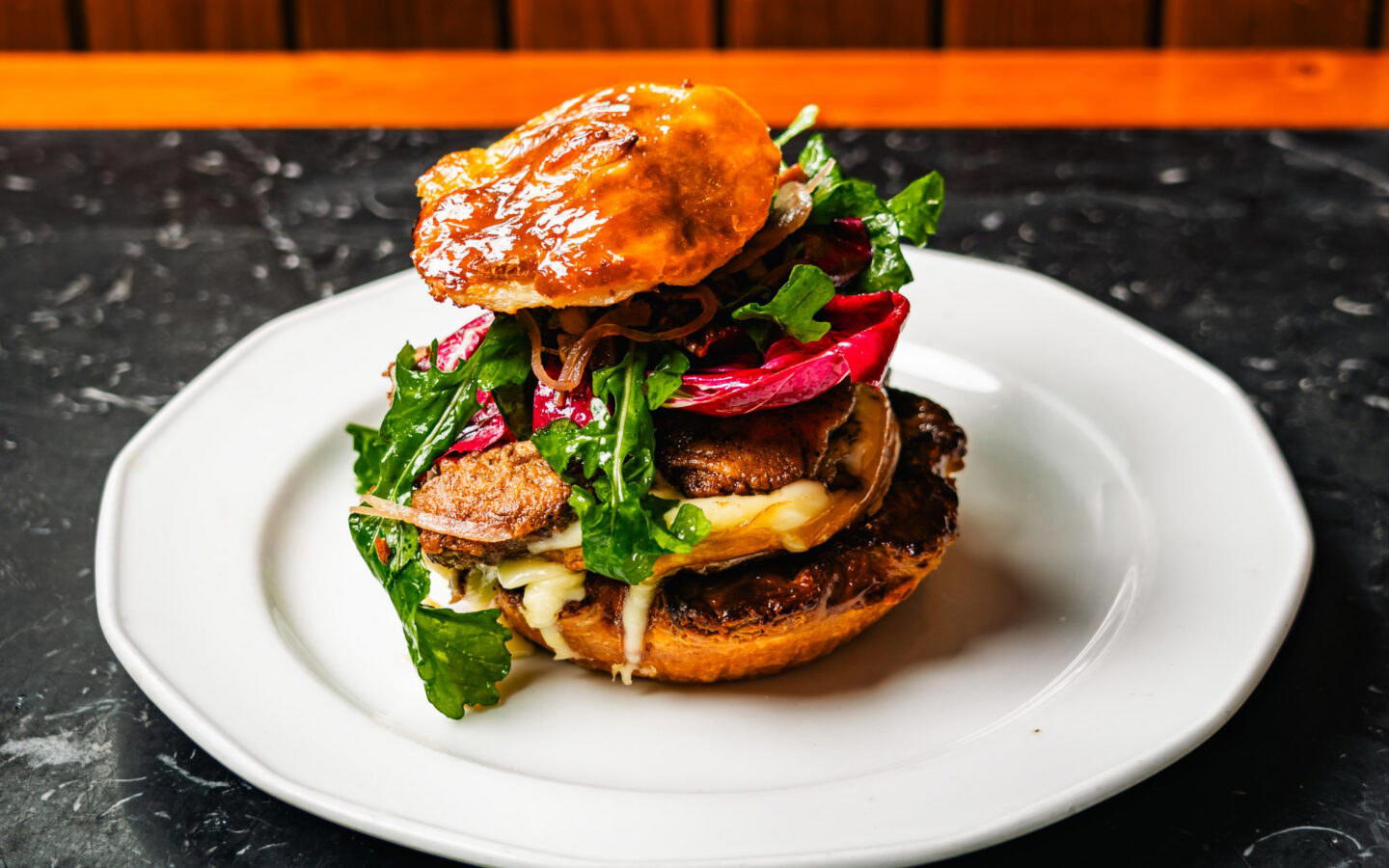
What distinguishes the kitchen's direction most sharply is the deliberate crossover between French classicism and Middle Eastern cooking. These two culinary traditions are not obvious companions, and a lesser kitchen would let them drift into uneasy fusion. Here, the menu holds both registers with some confidence: falafel and tournedos Rossini occupy the same card without either appearing as an afterthought. Veal tartare arrives with white anchovies and Arbequina olives; duck sausage comes alongside foie gras, pistachios, and turnips. Mussels are paired with crosnes, daylily, and sea asparagus. This is not pan-Mediterranean eclecticism, the French scaffolding is load-bearing throughout, and the Middle Eastern elements arrive as considered counterweights rather than decorative gestures.
Desserts follow the same logic. White chocolate cheesecake with sea buckthorn, and rice pudding perfumed with Tahitian vanilla and elderberry apply local Quebec sourcing to international frameworks. Seasonal attunement runs through the menu at a level that links Bar St-Denis to the broader movement in Canadian fine dining toward place-specific ingredients, a thread visible in restaurants like AnnaLena in Vancouver and Narval in Rimouski, where geography shapes the plate as much as technique.
The Wine List as Editorial Statement
Emily Homsy's wine program is worth treating separately from the food, because it reflects a curation philosophy rather than a default selection. The list combines natural wines with classic choices, a pairing that has become a cliché at lesser addresses but requires genuine knowledge to execute without one side of the ledger undermining the other. A natural-wine-heavy list that ignores structural wines ends up limiting the kitchen's range; a classical list that treats natural wines as a token category signals a different kind of limitation. The balance here is reported to be extensive and considered, which positions Bar St-Denis alongside Montreal addresses like Annette bar à vin, where the beverage program carries the same editorial weight as the food menu.
How Bar St-Denis Sits in Montreal's Current Scene
Montreal's mid-to-upper restaurant tier is increasingly well-populated. Michelin arrived in the city in 2024, and its first wave of stars, including one each for Mastard and Europea, confirmed what local diners had known for years: the city punches above its international profile. Bar St-Denis does not currently carry Michelin recognition, but the address is cited by Scott Usheroff as producing some of Montreal's most exceptional food, which places it firmly in the conversation. The more instructive comparison may be with addresses like Alma, where the emphasis on ingredient quality and seasonal sourcing operates at a similar level of seriousness without the formal occasion-dining framing.
Against the broader Canadian modern-cuisine picture, Bar St-Denis occupies a niche that runs from Alo in Toronto through Tanière³ in Québec City: serious French-influenced cooking that draws on local ingredients and international technique without locking itself into the tasting-menu-only format. That flexibility, the ability to eat at the bar or settle into a full dinner in the dining room, is itself a positioning decision, and it separates Bar St-Denis from the more ceremony-heavy end of Canadian fine dining, as practised at places like Restaurant Pearl Morissette in Lincoln or The Pine in Creemore.
Addresses like Atomix in New York City demonstrate how a kitchen can fuse distinct culinary traditions without losing structural rigour; the comparison is not exact, but the underlying challenge is shared. Le Bernardin remains the reference point for disciplined French technique in North America, and measuring any kitchen against that standard is useful context rather than hyperbole.
Planning Your Visit
Bar St-Denis sits at 6966 Rue Saint-Denis in the Plateau-Mont-Royal, accessible by metro via the Mont-Royal station on the Orange Line. The room can be approached as a full dinner in the dining room or a shorter meal at the bar, which extends the address's utility across different visit types. Given the reported tendency of first-time guests to become regulars, booking ahead is the sensible approach, particularly on weekend evenings when the Plateau's dining traffic is at its densest. For a complete picture of what Montreal offers across price points and neighbourhoods, the EP Club Montreal restaurants guide covers the full range, alongside dedicated guides for hotels, bars, wineries, and experiences.
Frequently asked questions
Is Bar St-Denis award-winning?
Bar St-Denis has received recognition including: Co-owners David Gauthier and Emily Homsy have transformed this former dive on Saint-Denis into a refined and welcoming restaurant. Designed by Appareil Architecture, the elegant setting is spacious yet feels intimate, whether you are seated….
How do I find Bar St-Denis?
Bar St-Denis is located at 6966 R. Saint-Denis, Montréal, QC H2S 2S4, Canada, Montreal.
What's the must-try dish at Bar St-Denis?
The veal tartare with white anchovies and Arbequina olives is a reliable indicator of what chef David Gauthier does well: restrained technique applied to ingredients that don't require embellishment. The duck sausage with foie gras, pistachios, and turnips shows the same logic applied to something richer. For dessert, the white chocolate cheesecake with sea buckthorn applies a local ingredient to a familiar format without forcing the combination.
Do they take walk-ins at Bar St-Denis?
The long underlit bar at 6966 Rue Saint-Denis is designed for exactly this scenario, walk-in seating at the counter is the most practical option if you haven't booked ahead. The dining room draws regulars and tends to fill, so arriving early in the evening gives you the better odds. No booking policy details are published, so calling ahead is the safer approach for weekend visits.
What makes Bar St-Denis worth seeking out?
The kitchen holds an unusual position in Montreal's French dining scene: it runs a full French repertoire, including tournedos Rossini, alongside falafel and dishes built around Middle Eastern flavour logic, without treating either tradition as a novelty. Co-owner Emily Homsy's wine list reinforces the seriousness, offering natural wines alongside classical selections rather than defaulting to one or the other. Scott Usheroff has called it home to some of Montreal's most exceptional food, and Appareil Architecture's room, spacious but intimate, makes the experience work at any pace.
Is Bar St-Denis allergy-friendly?
The menu spans a wide range of ingredients, from shellfish (mussels, white anchovies) and foie gras to falafel and pistachios, so allergen exposure is plausible across multiple categories. No specific allergy accommodation policy is documented for the venue. The service is described as attentive and knowledgeable, which suggests dietary queries at the table are handled seriously, but confirming specifics with the restaurant directly before visiting is the practical approach.
How does Bar St-Denis blend French and Middle Eastern cooking on the same menu?
Chef David Gauthier structures the menu so that French classical dishes and Middle Eastern-inflected preparations sit alongside each other without a unifying theme forcing them into artificial coherence. Tournedos Rossini and falafel appear in the same service, while dishes like mussels with crosnes and sea asparagus reflect a seasonal French sensibility, and desserts such as rice pudding with Tahitian vanilla and elderberry draw from international references filtered through local ingredients. The result, at 6966 Rue Saint-Denis in Plateau-Mont-Royal, is a kitchen that treats both traditions as equal technical commitments rather than contrasting concepts.
Compact Comparison
| Venue | Cuisine | Price | Awards | Notes |
|---|---|---|---|---|
| Bar St-DenisThis venue (the venue you are viewing) | Modern French Bistro with Middle Eastern Influences | $50–100 | Michelin Plate · Canada's 100 Best Restaurants #22 | Not listed |
| L’Express | Classic French Bistro | $50–100 | Michelin Plate · Star Wine List | French Bistro |
| Schwartz’s | Montreal Smoked Meat Deli | $20–30 | Michelin Plate | Delicatessen |
| Toqué | Modern Quebecois Fine Dining | $100–150 | Michelin Plate · La Liste Top Restaurants | French |
| Jérôme Ferrer - Europea | Modern French Fine Dining with Quebec Influences | $150–200 | 1 Michelin Star · Relais Chateaux Award | Modern Cuisine |
| Mastard | Modern Quebec Terroir Fine Dining | $50–100 | 1 Michelin Star · Canada's 100 Best Restaurants #63 | Modern Cuisine |
Recognition history
Dated appearances from independent guides and award organizations, with the underlying list record or original source where available.
Michelin Plate
Michelin
Canada's 100 Best Restaurants #22
Canada's 100 Best
Full recognition history (3 entries)
Canada's 100 Best Restaurants #27
Canada's 100 Best
Continue exploring
More in Montréal
Restaurants in Montréal
All restaurants in Montréal →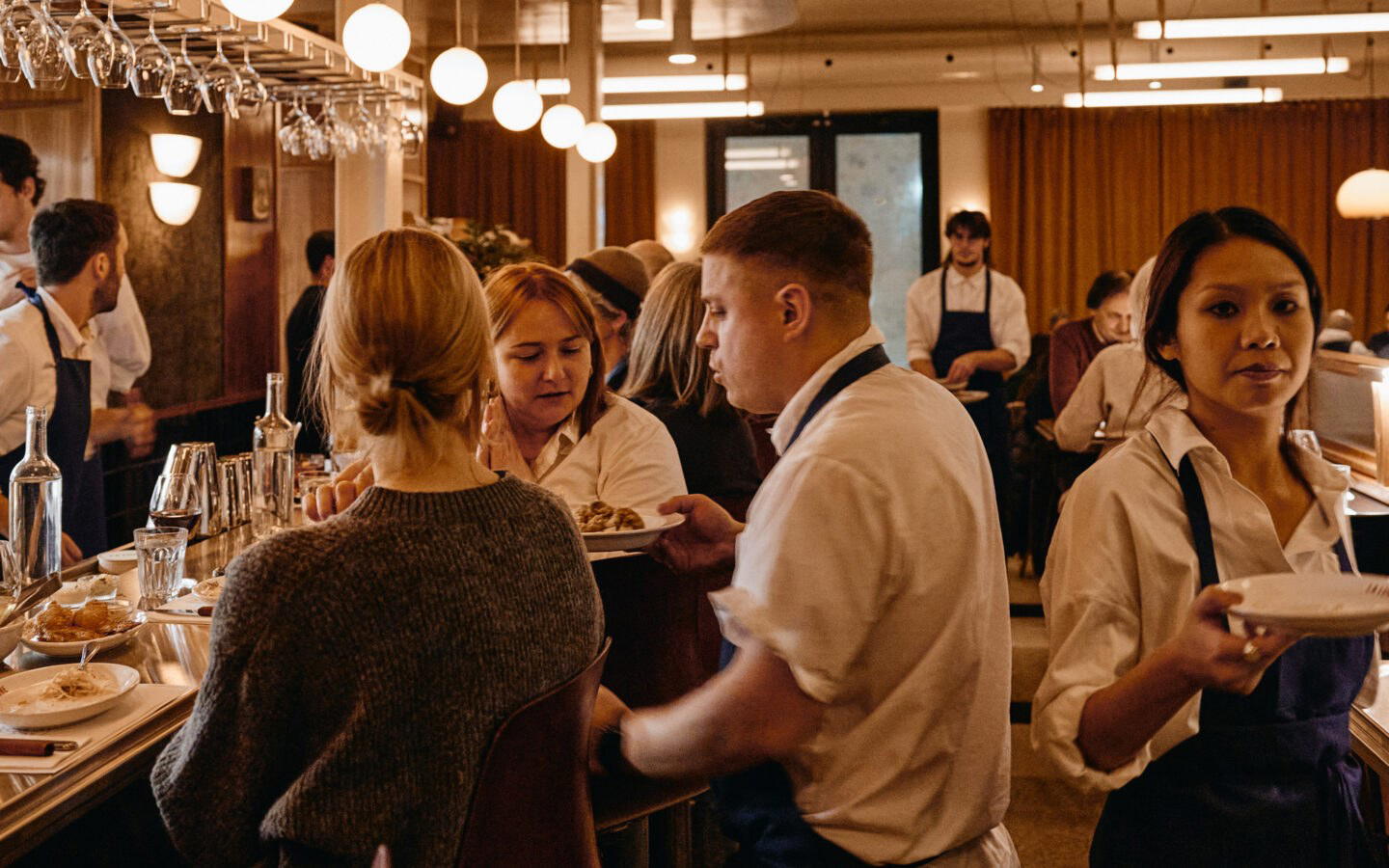
Bars in Montréal
All bars in Montréal →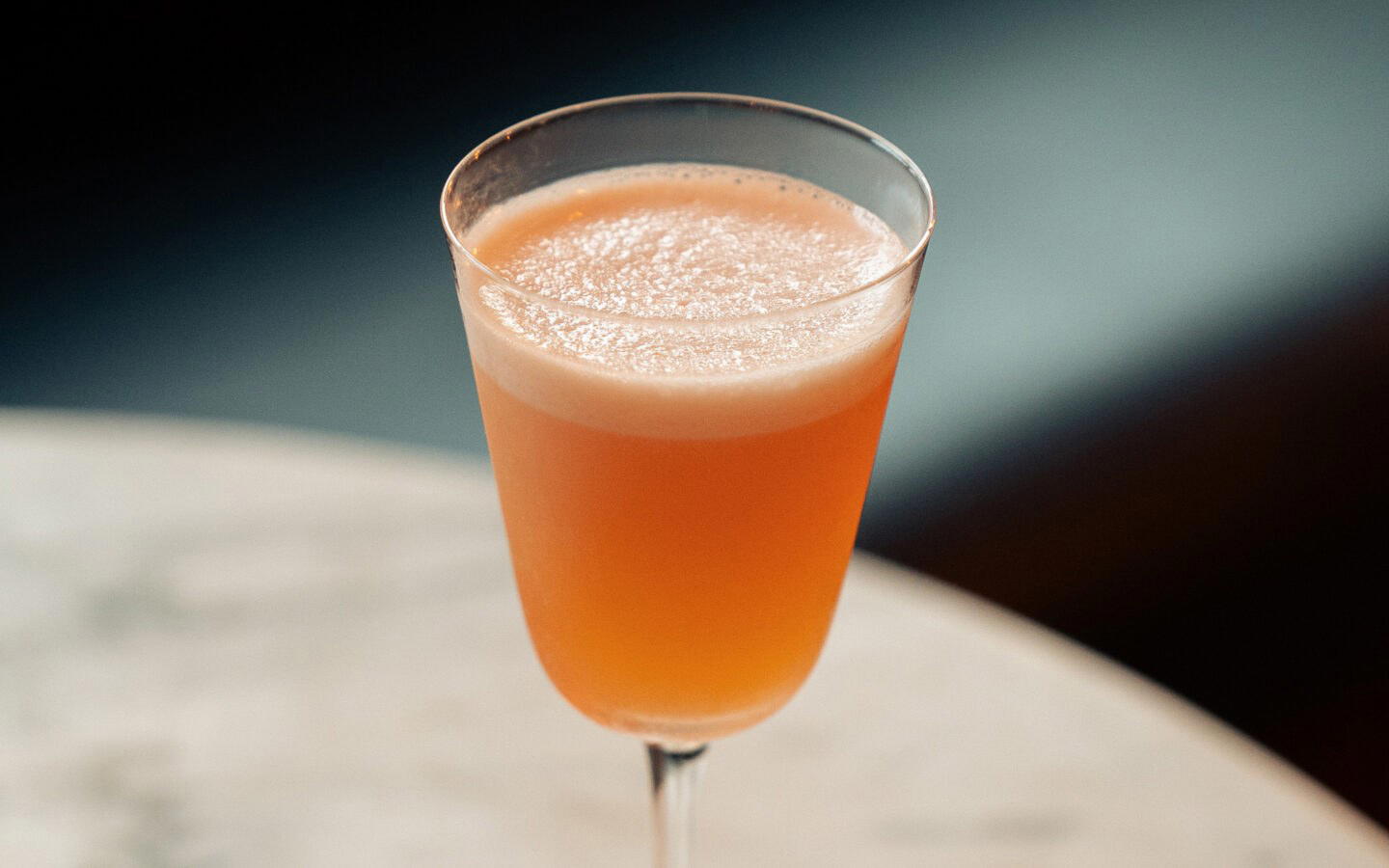
Bar St-Denis
The wine
- Wine program
- Deep wine list
- Extensive wine list
- Natural wine
- Craft cocktails
Details
- Lively
- Trendy
- Elegant
- Intimate
- Modern
- Date Night
- Special Occasion
- Group Dining
- Open Kitchen
- Extensive Wine List
- Natural Wine
- Craft Cocktails
- Local Sourcing
- Small Plates
- A La Carte
- Tasting Menu
- Wine
- Cocktails
- Allergy Accommodating
Current opening hours
- Monday
- 5–11 PM
- Tuesday
- 5–11 PM
- Wednesday
- 5–11 PM
- Thursday
- 5–11 PM
- Friday
- 5–11 PM
- Saturday
- 5–11 PM
- Sunday
- Closed
Hours can change for holidays and private events. Last verified .
Lively and energetic atmosphere with open kitchen, retro backlit ceiling, bright lighting early evening, and warm hospitality.