Our verdict
Bar de Ocho Asientos by Marco Palma brings Lima’s counter-dining mood into sharp focus: small-format, close-range cooking in a city where cevicherías, anticucho grills, Nikkei rooms, and tasting menus all compete for attention. The draw is the tasting counter format itself, which suits diners who want the kitchen’s rhythm rather than a conventional à la carte evening.

Pearl is the En Primeur Club membership app, where members save venues, book tables and use the concierge.
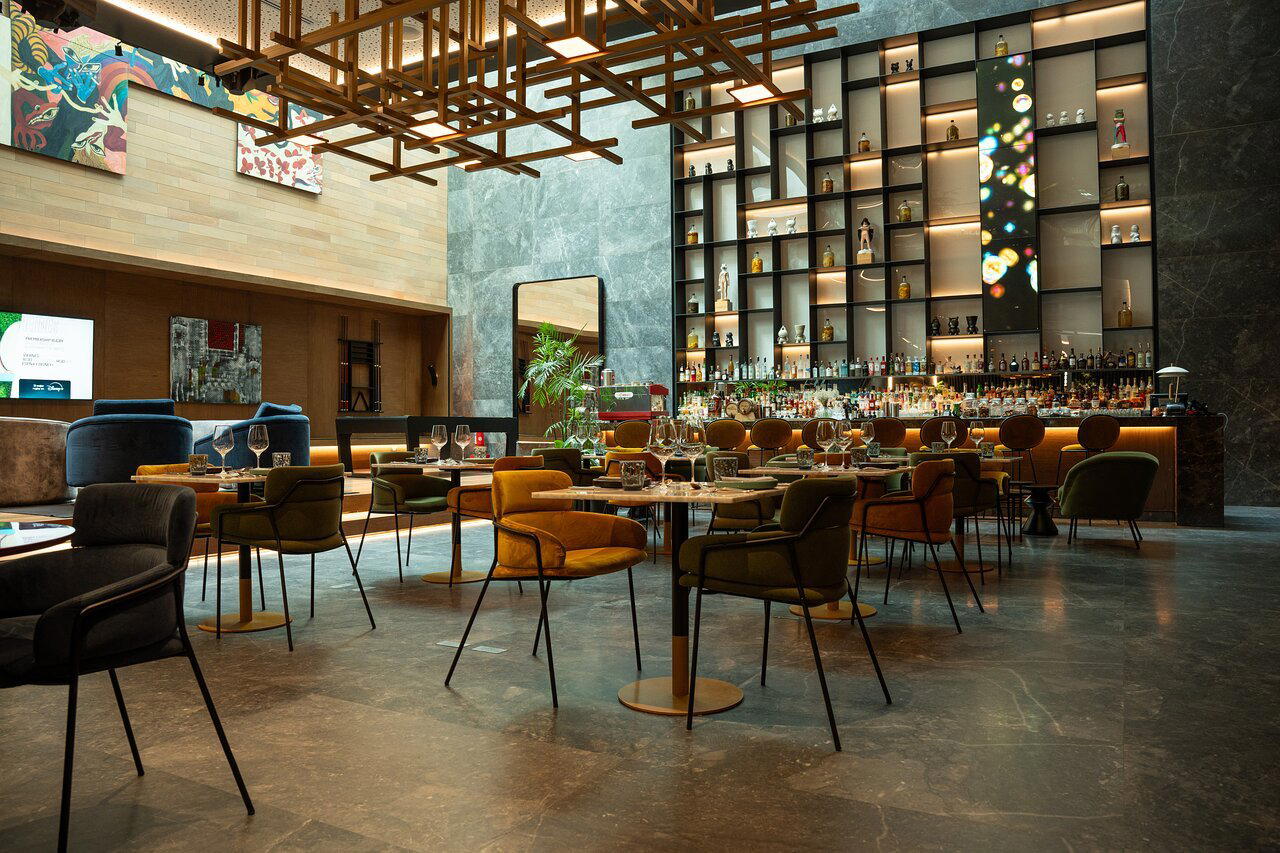
At a tasting counter, the room does not need much theatre. The view is compressed: hands, plates, glassware, timing, the small pauses between courses. In Lima, that format lands differently than it does in cities where counter dining is mainly associated with sushi or cocktail bars. Here it sits against a much older habit of eating close to the source, from market cevicherías to anticucho stands, where the cook’s rhythm has always been part of the meal.
Bar de Ocho Asientos by Marco Palma belongs to that newer Lima category: intimate, kitchen-facing, and built around sequence rather than menu browsing. The name signals scale before anything else. Eight seats means the experience is defined by proximity, and that changes the way a tasting format reads. There is less room for grand dining-room choreography and more pressure on pacing, editing, and the relationship between Peruvian ingredients and contemporary technique.
A counter format that fits Lima's appetite for immediacy
Lima’s modern dining culture is often discussed through awards and tasting menus, but its deeper logic is more direct. The city eats by heat, acidity, smoke, seafood, and speed. Ceviche is not only a dish category; it is a timing discipline. Anticuchos are not only grilled skewers; they are a street-side lesson in fire management. A compact tasting counter can make sense in this context when it keeps that immediacy intact rather than turning Peruvian cooking into a long, over-explained performance.
The tasting-counter format also reflects how Lima has matured as a dining city. Large dining rooms and heritage houses still matter, but smaller formats now give chefs a way to work with fewer covers and tighter control. For travellers, the distinction is practical as much as culinary: a counter meal asks for attention. It suits diners who want to watch a menu unfold at close range, not those looking for a long social dinner where the food recedes into the background.
That makes Bar de Ocho Asientos by Marco Palma part of a broader local conversation rather than a standalone curiosity. Lima has spent years translating regional Peruvian cooking into restaurant formats, and the counter is one of the sharper tools for that translation. It can compress the country’s produce, coastal habits, and urban technique into a single sitting without pretending to represent all of Peru.
Peruvian context matters more than spectacle
The strongest way to read this kind of room is through Lima’s overlapping food traditions. Northern coastal cooking brings brightness and seafood discipline; the capital’s anticucho culture brings smoke and offal traditions into the centre of everyday eating; Japanese and Chinese immigration shaped the city’s comfort with raw fish, rice, soy, wok heat, and clean knife work. A tasting counter in Lima does not need to imitate foreign counter rituals. Its credibility comes from how well it understands the city’s own habits of eating close to the cook.
For travellers building a wider Lima itinerary, the contrast is useful. Regional cooking, grill culture, formal contemporary Peruvian rooms, and European-inflected dining all occupy different registers across the city. The point is not to rank those rooms; it is to understand how varied Lima’s dining grammar has become, and why a focused counter can sit comfortably within it.
The counter format suits a narrower kind of evening. It is not the broadest introduction to Peruvian food, and it is not the easiest format for diners who want menu freedom. Its value is concentration. In a city where meals can stretch from ceviche lunch to late-night skewers, an eight-seat tasting counter offers a controlled lens on what contemporary Lima cooking can be when scale is deliberately reduced.
How to place it in a Lima trip
Plan this as a focused dinner rather than a casual add-on. Lima rewards diners who separate meal types: seafood at lunch, grills after dark, tasting menus when the evening can revolve around the kitchen. A counter of this size is better treated as the anchor of the night, with drinks or a lighter stop before or after depending on the schedule.
For broader planning, use Our full Lima restaurants guide alongside Our full Lima bars guide, Our full Lima hotels guide, Our full Lima wineries guide, and Our full Lima experiences guide. Travellers extending the Peru route can widen the frame with other dining in the country, from regional restaurants to coastal stops and destination dining rooms. For another view of casual, Japanese-leaning formats, compare the idea more generally with similar small-format dining elsewhere in the Americas.
Frequently asked questions
Can I bring kids to Bar de Ocho Asientos by Marco Palma?
As a tasting counter in Lima, Bar de Ocho Asientos by Marco Palma suits older children who can handle a seated, close-range format. The eight-seat setup leaves little room for movement, so it works better for a calm family meal than a casual outing.
How would you describe the vibe at Bar de Ocho Asientos by Marco Palma?
The vibe is compact and service-led, shaped by the tasting counter format and the eight-seat setup in Lima. Expect a room built for focus at the counter rather than the churn of a larger dining room.
Is Bar de Ocho Asientos by Marco Palma focused on a specific cuisine style?
Bar de Ocho Asientos by Marco Palma is described as a tasting counter.
Do I need a reservation for Bar de Ocho Asientos by Marco Palma?
An eight-seat tasting counter in Lima is the kind of room where planning ahead makes sense, especially for dinner. The format itself leaves limited seating, so a reservation is the practical move.
What is Bar de Ocho Asientos by Marco Palma known for?
It is known for being a tasting counter in Lima with an eight-seat format, which shapes the entire experience. The name and format point to an intimate service style rather than a large à la carte room.
Reputation & Price
Comparable venues nearby, for context on price, style, and recognition.
| Venue | Cuisine | Price | Notes |
|---|---|---|---|
| Bar de Ocho Asientos by Marco PalmaThis venue (the venue you are viewing) | other | Not listed | Not listed |
| Jirón de la Unión 926 | Traditional Peruvian Bar & Tapas | $10–20 | Lima, Traditional Peruvian Bar & Tapas |
| Anticuchería Doña Pochita | Authentic Peruvian Anticuchería | $10–20 | Lince, Authentic Peruvian Anticuchería |
| Pucusana | Peruvian Seafood Cevicheria | $10–20 | Pucusana, Peruvian Seafood Cevicheria |
| Bonbons Confits et Chocolats | Peruvian Confectionery and Chocolates | Not listed | San Isidro, Peruvian Confectionery and Chocolates |
Continue exploring