Bap
Our verdict
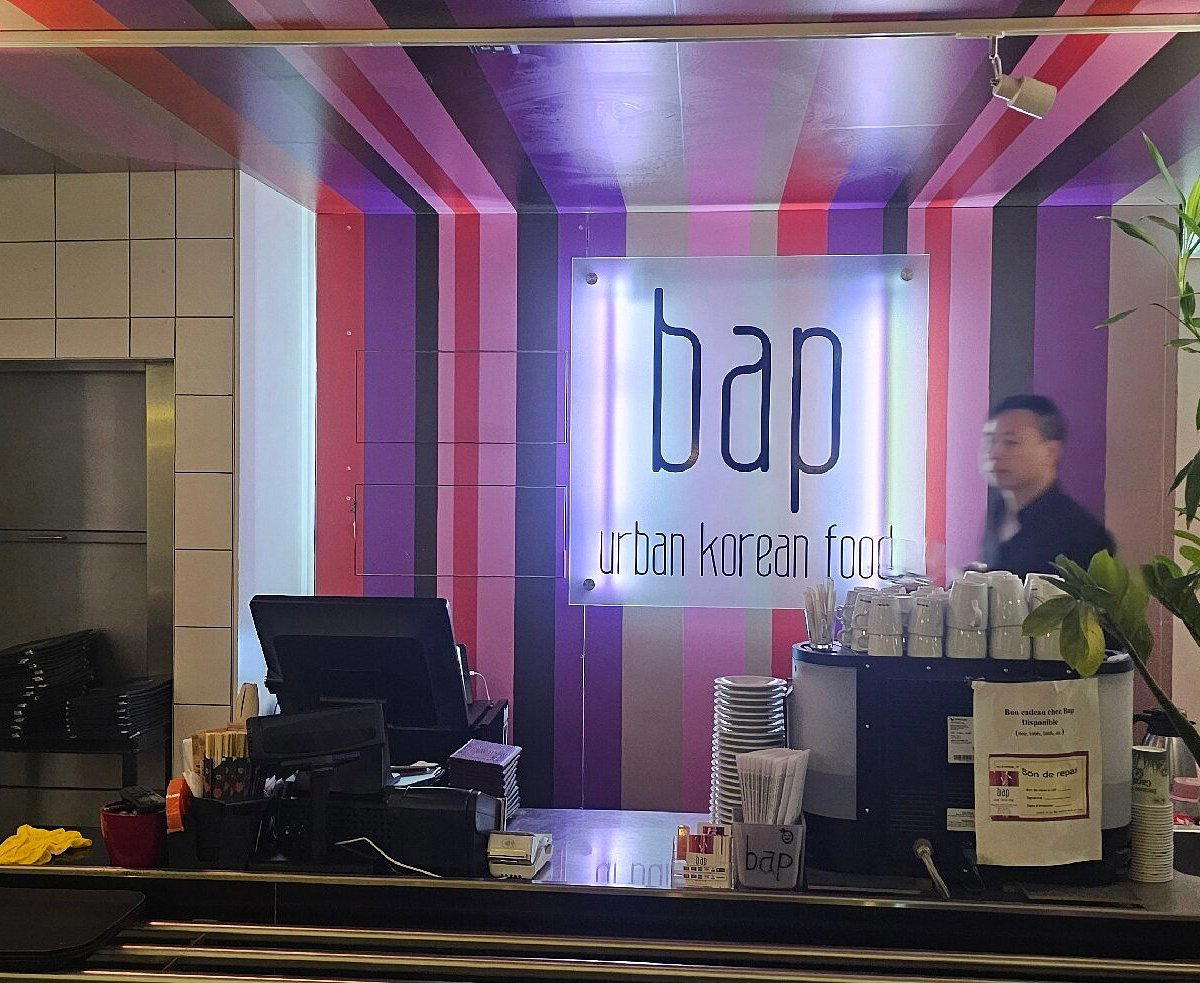
Bap sits on Rue de Coutance in Geneva's Pâquis quarter, a neighbourhood that has long absorbed the city's most culturally diverse dining. The address places it within walking distance of the lake and the international district, where Korean and broader Asian cooking traditions have quietly established a foothold among Geneva's cosmopolitan dining public.

Pearl is the En Primeur Club membership app — saves, bookings, and concierge access live there. Same editors, same standards.
- Address
- Rue de Coutance 25, 1201 Genève, Switzerland
- Phone
- +41227311133
- Hours
- Mon–Fri 11:30 AM–2:30 PM, 6–10 PMSat 11:30 AM–3 PM, 6–10 PMSun Closed
- Website
- b-a-p.ch
- Directions
- Get directions
- Booking
- Book on the venue's website
Pâquis and the Quiet Rise of Korean Dining in Geneva
Geneva's Pâquis neighbourhood has always operated on a different register from the polished lakefront dining rooms and hotel restaurants that define the city's international reputation. Rue de Coutance and the streets around it have historically absorbed the city's more adventurous, less ceremonial eating: small rooms, direct service, kitchens drawing on traditions that have little to do with fondue or Michelin tasting menus. It is in this context that Korean cooking has found its most natural footing in the city. Bap, at Rue de Coutance 25, sits inside that pattern.
The word bap in Korean means cooked rice, and by extension, a meal itself. It is the most grounded possible name for a restaurant, carrying none of the romanticised distance that often accompanies Asian dining concepts presented to European audiences. Rice is not a garnish or a side in Korean culinary tradition; it is the structural centre around which fermented, braised, grilled, and pickled elements are arranged. That distinction matters when reading what a kitchen committed to Korean idiom is actually doing, and it separates serious practitioners from those offering an approximation.
Korean Cooking in a European Financial Capital
Switzerland's dining culture is not where most food writers look first for Korean food. The country's restaurant economy skews heavily toward French technique, Italian produce, and the kind of neutral European Contemporary that appeals to the international professional population passing through Geneva, Zurich, and Basel. The starred houses that define Swiss fine dining, from Hotel de Ville Crissier in Crissier to Schloss Schauenstein in Fürstenau and Cheval Blanc by Peter Knogl in Basel, are overwhelmingly rooted in European frameworks. Korean dining in this environment is not competing for the same occasion or the same table.
What Korean restaurants in Geneva do occupy is a specific gap: the demand for confident, culturally grounded cooking from a population that includes Korean expatriates, diplomats connected to the city's international organisations, and a broader dining public that has grown familiar with Korean food through travel, urban dining in larger cities, and the broader visibility of Korean culture over the past decade. That demand has grown faster than the supply of kitchens equipped to meet it seriously.
In Geneva specifically, the mid-market and upper-mid dining tier is dominated by French and Italian rooms. Il Lago represents the Italian end of that bracket at the top of the price range, while French Contemporary formats from L'Atelier Robuchon and L'Aparté occupy the formal and semi-formal French space. Korean cooking sits in a different lane entirely, one defined less by price tier and more by the specificity of its culinary tradition.
The Cultural Architecture of Korean Food
What makes Korean cuisine structurally different from the European frameworks that dominate Geneva's dining is the centrality of fermentation and communal serving. Kimchi is not a condiment appended to a dish; it is a living preparation that has been aging in the kitchen for weeks or months before it reaches the table. Doenjang, the fermented soybean paste that underlies much of Korean savoury cooking, carries a depth that has more in common with aged miso or long-fermented European cheeses than it does with any fresh sauce-based cuisine. Gochujang, the fermented chilli paste, adds heat that arrives slowly and builds, rather than the immediate spike of fresh chilli.
These preparations take time and commitment. Kitchens that shortcut them produce food that reads as Korean in outline but lacks the layered, slightly sour-sweet complexity that characterises the tradition at its most considered. The presence of banchan, the small shared plates that arrive before or alongside the main dishes, signals how seriously a kitchen is engaging with the format. In a city where table service and individual plating are the default, the shared, communal structure of a Korean meal asks something different from both the kitchen and the diner.
For travellers calibrating Geneva across a wider Swiss dining itinerary, the city's Korean options represent something the country's fine dining circuit, however accomplished, cannot replicate. Memories in Bad Ragaz, Maison Wenger in Le Noirmont, and Einstein Gourmet in Sankt Gallen offer technical depth and regional identity within European frameworks. That is not the occasion Korean dining in Geneva is built for.
The Pâquis Address and What It Signals
Rue de Coutance sits in the heart of Pâquis, a quartier that runs north from the main train station toward the lake. The area has a density and informality that sets it apart from the Eaux-Vives and Champel neighbourhoods where Geneva's more formal dining rooms tend to cluster. It is also more diverse, in terms of both population and restaurant type, than most other parts of the city. An address here signals a certain relationship with the diner: direct, without the overhead that comes with lakefront visibility or hotel adjacency.
That positioning puts Bap in loose company with other neighbourhood-anchored rooms in Geneva. La Micheline operates in a similar register for Mediterranean cooking, and Arakel holds a comparable position in the modern cuisine space. None of these are destination restaurants in the way that Da Vittorio in St. Moritz or focus ATELIER in Vitznau might anchor a dining itinerary around them. They are neighbourhood fixtures that serve their local population first, which is often where the most honest cooking happens.
Planning Your Visit
Bap's address on Rue de Coutance places it within easy reach of Gare Cornavin, Geneva's central station, making it direct to incorporate into an evening before or after travel. Pâquis is walkable from the lake and most central hotels. As with many smaller neighbourhood restaurants of this type in Geneva, specific booking arrangements, hours, and current pricing are best confirmed directly with the venue before visiting, since these details can shift with the seasons and with the rhythms of a kitchen-led operation. For a broader view of where Bap sits within Geneva's dining scene, the EP Club Geneva restaurant guide maps the full range of options across neighbourhoods and price tiers.
Travellers who want a point of comparison for culturally specific cooking in a European financial city might look at what Le Bernardin in New York City or Lazy Bear in San Francisco represent in their respective cities: rooms that are grounded in a specific culinary tradition and serve a clientele that values that groundedness over spectacle. The scale and format differ, but the principle of specificity over generalisation translates. And at the neighbourhood level, in a city as internationally minded as Geneva, Mammertsberg in Freidorf and La Table du Valrose in Rougemont show how regional Swiss kitchens anchor themselves in place. Bap does something analogous on Rue de Coutance, anchoring Korean culinary tradition in a city that mostly looks the other direction.
Frequently asked questions
What's Bap's location?
Bap is located at Rue de Coutance 25, 1201 Genève, Switzerland, Geneva.
Is Bap in Geneva a good option for Korean food near the central train station?
Rue de Coutance 25 places Bap within walking distance of Gare Cornavin, Geneva's main rail hub, making it one of the more accessible Korean options in the city for travellers moving through. Korean restaurants of any kind are sparse in Geneva's broader restaurant economy, which trends toward French and Swiss-French cooking. That scarcity alone makes Bap a practical reference point for anyone seeking Korean food in the city centre.
What's the signature dish at Bap?
The restaurant sits on Rue de Coutance 25 in Pâquis, a Geneva neighbourhood known for direct, ingredient-led cooking rather than show-piece presentations. Korean kitchens of this type typically anchor around fermented staples and shared banchan rather than a single headline dish.
Do they take walk-ins at Bap?
Walk-in policy for Bap has not been formally documented. Pâquis restaurants at this address tend to operate with limited covers, so arriving early or contacting the venue directly is the practical approach. No booking platform or phone number is currently listed in public records.
What's the defining dish or idea at Bap?
The name itself signals the concept: 'bap' is the Korean word for cooked rice, the everyday foundation of the cuisine rather than its flourish. That framing places the restaurant in a category interested in structural Korean cooking — fermentation, communal sharing, and the logic of a full table — rather than fusion or fine-dining adaptation. It is a meaningful distinction in a Geneva dining scene that skews heavily French and European.
Pricing, Compared
| Venue | Cuisine | Price | Awards | Notes |
|---|---|---|---|---|
| BapThis venue — the venue you are viewing | Urban Korean Food | $30–50 | Not listed | Not listed |
| Il Lago | Michelin-Starred Italian | $200–300 | 1 Michelin Star · Wine Spectator Best of Award of Excellence | Italian |
| Tsé Fung | Michelin-Starred Cantonese | Not listed | 1 Michelin Star · Falstaff Restaurant - 93 Falstaff Points | Chinese |
| Fiskebar | Nordic Seafood | $100–150 | Michelin Plate | Not listed |
| Le Jardinier | Contemporary Seasonal French | Not listed | Michelin Plate | Not listed |
| L'Atelier Robuchon | Modern French Fine Dining | $200–300 | 2 Michelin Stars · La Liste Top Restaurants | French Contemporary |
Continue exploring
More in Geneva
Restaurants in Geneva
Browse all →
Bars in Geneva
Browse all →
Hotels in Geneva
Browse all →

Details
- Modern
- Trendy
- Casual Hangout
- Terrace
- A La Carte
- Vegetarian Friendly
Current opening hours
- Monday
- 11:30 AM–2:30 PM, 6–10 PM
- Tuesday
- 11:30 AM–2:30 PM, 6–10 PM
- Wednesday
- 11:30 AM–2:30 PM, 6–10 PM
- Thursday
- 11:30 AM–2:30 PM, 6–10 PM
- Friday
- 11:30 AM–2:30 PM, 6–10 PM
- Saturday
- 11:30 AM–3 PM, 6–10 PM
- Sunday
- Closed
Hours can change for holidays and private events. Last verified .
Urban and modern atmosphere across two floors with terrace on the street.