Ô Baozi
Our verdict
Ô Baozi brings the Chinese street food staple to Rue du Jeu-des-Enfants in Strasbourg's pedestrian quarter, where steamed and pan-fried buns occupy a format that sits well outside the city's Alsatian-Franco dining mainstream. For visitors working through Strasbourg's broader restaurant scene, the address offers a counterpoint to the region's heavier meat-and-pastry tradition — fast, ingredient-driven, and compact in scope.

Pearl is the En Primeur Club membership app — saves, bookings, and concierge access live there. Same editors, same standards.
- Address
- 49 Rue du Jeu-des-Enfants, 67000 Strasbourg, France
- Phone
- +33986608888
- Hours
- Mon ClosedTue–Fri 11:45 AM–2:30 PM, 4:30–9:30 PMSat 11:45 AM–9:30 PMSun Closed
- Website
- obaozi.fr
- Directions
- Get directions
The menu
What to order
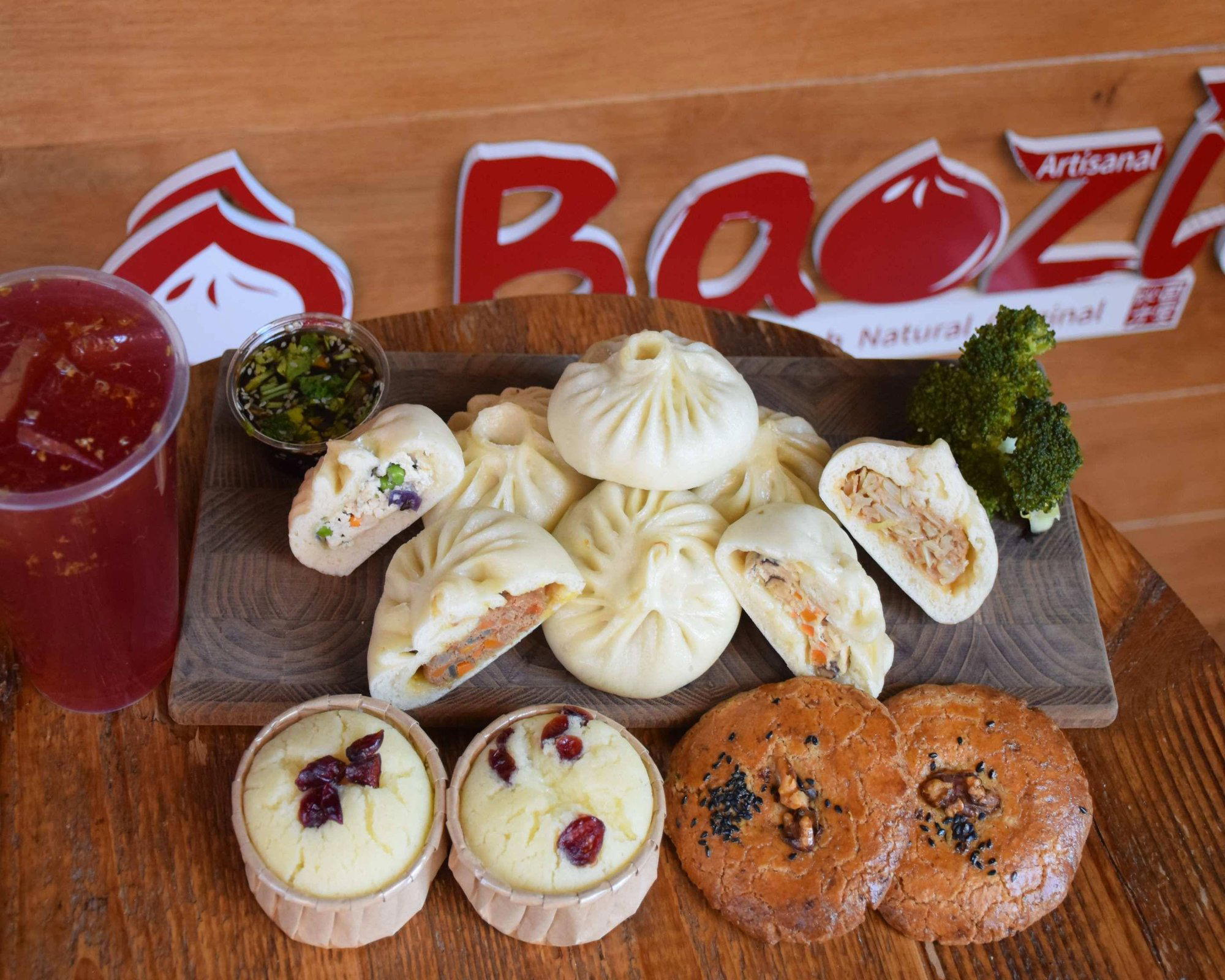
- Vegan baozi with tofu seaweed and shiitake
- Baozi with beef pork shrimp scallops mushrooms
A Different Kind of Dough on Rue du Jeu-des-Enfants
Strasbourg's dining identity is built around choucroute, tarte flambée, and the kind of slow-braised Alsatian cooking that has anchored the region's reputation for centuries. That tradition runs deep enough that even the city's more contemporary addresses — places like Au Crocodile or 1741 — tend to pull from that same regional vocabulary. Against that backdrop, a baozi counter on Rue du Jeu-des-Enfants registers as a deliberate departure. The steamed bun is a format with its own long tradition, one rooted in northern Chinese kitchens where wheat-based doughs, not rice, define the staple. Ô Baozi works inside that tradition, applying it to a pedestrian street in a city whose food culture rarely ventures far from the Rhine valley's own pantry.
The name does exactly what it says. Baozi, steamed or pan-fried filled buns, are the product, the format, and the editorial frame. In Chinese culinary terms, the baozi sits in a category that includes everything from humble breakfast stalls in Shanghai to the more considered dim sum preparations found at higher-end Cantonese houses. The version that tends to land in European cities leans toward the accessible end of that spectrum: yielding dough, a defined filling, a light char on the base if pan-fried, or a clean steam finish if not. The ingredient question matters here, because the quality of a baozi is largely a function of what goes inside and how the dough is proofed and cooked, rather than elaborate technique applied at the pass.
Ingredient Logic in a Steamed Format
The baozi format is, by design, ingredient-forward. There is nowhere to hide a filling that lacks flavour or texture, because the dough, when made correctly, is neutral enough to let the interior carry the eating experience. That makes sourcing a genuine differentiator in this category, in a way that it might not be in formats where sauce, reduction, or plating can compensate. A pork-and-cabbage filling tastes precisely as good as the pork and the cabbage. A vegetable bun succeeds or fails on the quality of what was put in it before the fold.
Strasbourg has an advantage here that does not always get acknowledged in food writing about the city: it sits inside one of France's most productive agricultural regions, with Alsatian market gardens, charcuterie producers, and cross-border supply chains with Germany all within reach. The city's heavier dining tradition draws on that supply directly, and there is no structural reason why a baozi operation at 49 Rue du Jeu-des-Enfants cannot do the same.
For comparison, consider how the sourcing conversation has shaped similar venues in more documented markets. At the top of France's ingredient-led dining, addresses like Mirazur in Menton and Bras in Laguiole have made provenance the organising principle of their menus. Further along the spectrum, Troisgros in Ouches has rebuilt its entire supply logic around named local producers. That conversation exists at a very different price tier, but the underlying principle, that the quality ceiling of any dish is set by what goes into it before cooking begins, applies equally to a €5 bun and a €250 tasting menu.
Where Ô Baozi Sits in Strasbourg's Broader Scene
Strasbourg's mid-range and casual dining has diversified considerably over the past decade. The city's student population, its European Parliament constituency, and a steady stream of visitors arriving via the TGV from Paris (roughly 1 hour 50 minutes direct) have all contributed to a more heterogeneous food culture than the traditional Alsatian-French axis might suggest. Addresses like de:ja, Les Funambules, and Umami sit at the creative and modern end of that shift, while Ô Baozi operates in a different register entirely, fast, specific, low-barrier to entry.
That positioning matters in a city where dining can skew toward formality. The Alsatian winstub tradition is convivial, but it is also sit-down, time-consuming, and pork-heavy in a way that does not always suit a quick lunch or a solo meal mid-afternoon. A baozi counter addresses a gap in the format spectrum, occupying the space between a bakery grab-and-go and a proper restaurant lunch. In cities like Paris or Lyon, that space is filled by a dense ecosystem of street food formats. Strasbourg has been slower to build that layer, which gives a focused operation like Ô Baozi a more defined role in the local food map than it might in a larger city.
For visitors building a broader French dining itinerary, Strasbourg pairs naturally with nearby Alsatian fine dining. Auberge de l'Ill in Illhaeusern is the region's most historically significant address, holding three Michelin stars across multiple decades. Further afield, the French table at its most formal runs through addresses like Alléno Paris au Pavillon Ledoyen, Assiette Champenoise in Reims, Auberge du Vieux Puits in Fontjoncouse, and Paul Bocuse in Collonges-au-Mont-d'Or. At the opposite end of the register, comparisons across Asian-influenced formats in Western cities are instructive: Atomix in New York City shows how Korean culinary logic can be applied with technical precision, while Le Bernardin and AM par Alexandre Mazzia in Marseille demonstrate how ingredient purity at any format level shapes the eating experience. Flocons de Sel in Megève similarly anchors its identity in alpine sourcing rather than classical French technique alone.
Planning a Visit
Ô Baozi is located at 49 Rue du Jeu-des-Enfants, in central Strasbourg, within walking distance of the Grande Île and the cathedral quarter. The address is direct to reach on foot from the main tram network. Rue du Jeu-des-Enfants sits in a section of the city that mixes residential streets with small independent food shops, which places the venue away from the most tourist-dense areas around Place Gutenberg. Autumn and early winter are worth noting as a visiting frame: Strasbourg's Christmas market season draws significant crowds from late November through December, and the pedestrian streets in this quarter become considerably busier. Visiting in October or early November gives access to the city's food culture at a more measured pace. See our full Strasbourg restaurants guide for broader context on the city's dining scene across price points and formats.
Frequently asked questions
How do I find Ô Baozi?
Ô Baozi is located at 49 Rue du Jeu-des-Enfants, 67000 Strasbourg, France, Strasbourg.
Is Ô Baozi in Strasbourg suitable for a quick lunch near the cathedral district?
The address at 49 Rue du Jeu-des-Enfants places Ô Baozi squarely within Strasbourg's Grande Île, a short walk from the cathedral. The steamed baozi format is by design a fast, self-contained meal — there is no drawn-out service structure. For visitors working through the city centre, it functions as a practical midday stop rather than a sit-down destination.
What's the must-try dish at Ô Baozi?
The baozi themselves are the core offering at this address on Rue du Jeu-des-Enfants — the entire kitchen logic is built around the steamed bun format. The fillings are the variable, so visiting during different sessions gives you a clearer picture of what the kitchen does best. Without a published menu on record, ordering across several options in a single visit is the practical approach.
How hard is it to get a table at Ô Baozi?
Ô Baozi operates from a central Strasbourg address within walking distance of the cathedral quarter, which means foot traffic from tourists, students, and European Parliament staff all converge nearby. No booking data is publicly documented for this spot, which typically signals a walk-in format rather than advance reservations. Arriving outside peak lunch hours on weekdays is the most reliable way to avoid a wait.
Comparable Spots
Comparable venues nearby, for context on price, style, and recognition.
| Venue | Cuisine | Price | Notes |
|---|---|---|---|
| Ô BaoziThis venue — the venue you are viewing | Traditional Chinese Baozi | $10–20 | Not listed |
| Chez Rita | Authentic Lebanese Mezza | $10–20 | Centre |
| Muensterstuewel | Traditional Alsatian Winstub | $20–30 | Centre |
| Pfifferbriader | Traditional Alsatian Winstub | $30–50 | Centre |
| L'Oignon | Traditional French Alsatian | $30–50 | Centre |
| La Nouvelle Poste | French Brasserie | $20–30 | Centre |