漠河北极村七掌柜齐市烤肉
Our verdict
Located in Beijicun village within Mohe City, China's northernmost settlement, 漠河北极村七掌柜齐市烤肉 brings the grilled-meat traditions of Qiqihar to the edge of the Arctic. The restaurant sits on Tongjiang Street in a region where extreme cold shapes both ingredient sourcing and dining culture. Contact and booking details are not publicly listed; visiting in person or through local accommodation is the practical approach.

Pearl is the En Primeur Club membership app, where members save venues, book tables and use the concierge.
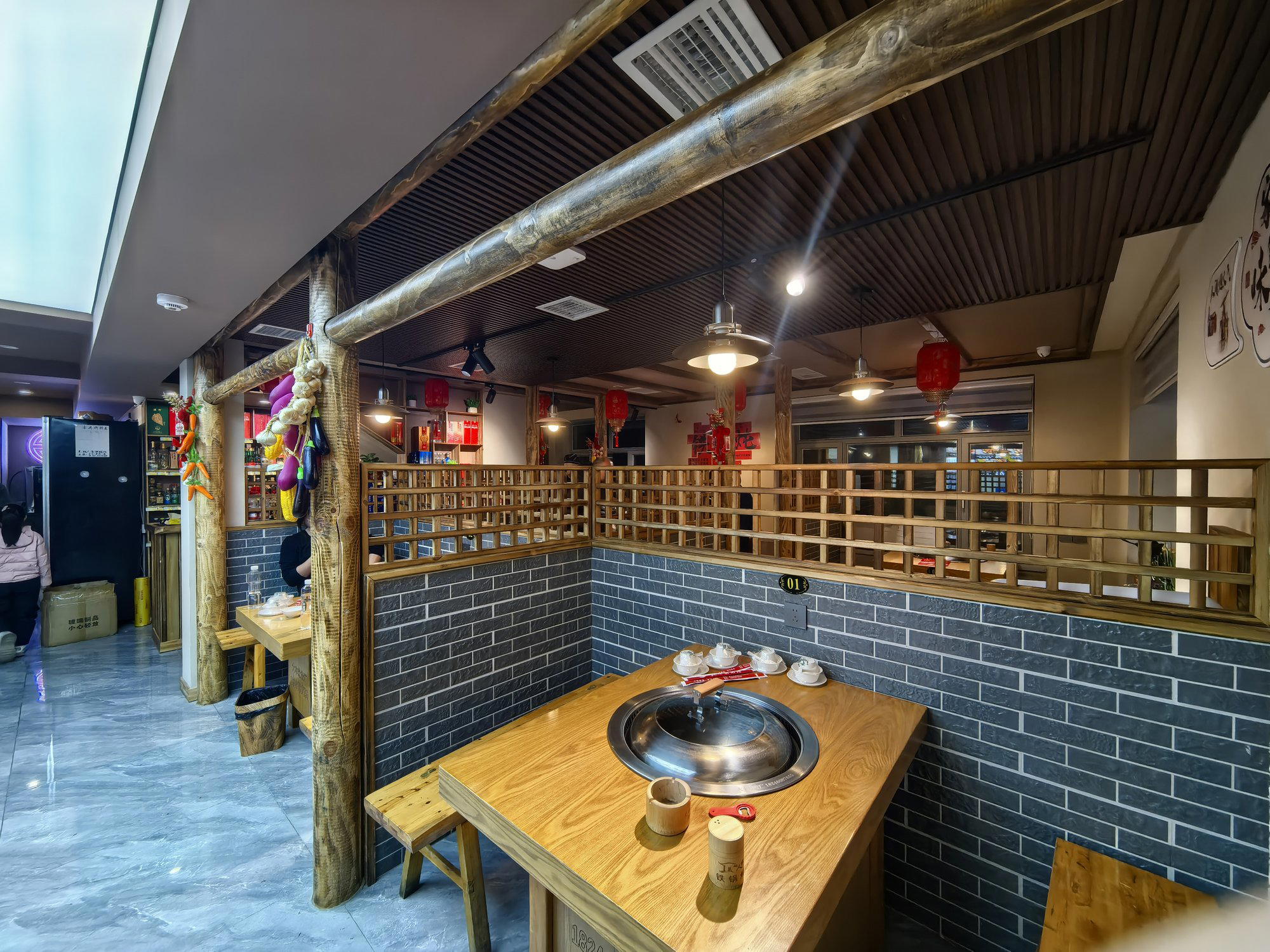
Where the Steppe Meets the Smoke: Qiqihar Barbecue at the top of China
At China's northernmost latitude, where the Heilongjiang River marks the border with Russia and winter temperatures drop well below minus thirty degrees Celsius, the act of gathering around fire and grilled meat is not a dining trend. It is a structural feature of life. Beijicun, the village formally known as Arctic Village, administered under Mohe City in Da Hinggan Ling prefecture, draws visitors from across China during the brief summer months to see the midnight sun, and in winter for the spectacle of extreme cold and northern lights. What they eat when they arrive tells a more specific story about how regional Chinese food traditions travel and survive at the margins of the country.
漠河北极村七掌柜齐市烤肉 plants Qiqihar-style roast meat squarely in this context. The name signals its origin directly: Qiqihar (齐市, shorthand for Qiqihar) is Heilongjiang's second city and holds a distinct place in northeastern Chinese barbecue. Qiqihar roast meat, known colloquially as 烤肉 in the style particular to that city, is grilled over charcoal, typically on refined iron grates, with lamb or beef as the dominant proteins. The technique prioritises high heat and directness, producing charred edges and rendered fat in a format closer to Korean or Central Asian grilling traditions than to the sweet, sauce-heavy barbecue of southern China. That this tradition now operates inside a tourist village at the far northern end of Heilongjiang Province says something about the reach of Qiqihar's culinary identity across its own region.
Northeastern China's Barbecue Tradition in Geographic Context
Da Hinggan Ling is among the least-populated prefectures in China, a vast forested region that produces timber, supplies cold-climate agriculture, and sends visitors through Mohe on their way to Beijicun. The food culture here has historically been shaped by the Evenki and Daur peoples, by Russian proximity, and by Han Chinese migration patterns that brought Heilongjiang provincial cooking, hearty, starch-forward, meat-centred, into the region's towns and settlements. For diners accustomed to the coastal registers of Chinese cuisine, the cooking of this part of China can feel like a different country entirely.
Qiqihar's specific contribution to Heilongjiang food culture is its charcoal grilling tradition, which developed in the city's markets and night-food strips over decades. The style typically involves marinated lamb and beef cuts grilled to order, paired with raw garlic, cumin, and chilli flakes applied at the table rather than cooked in. Compared to venues in China's major cities where regional traditions are often repackaged for cosmopolitan tastes, places like Xin Rong Ji (Xinyuan South Road) in Beijing or Xin Rong Ji in Chengdu, where polished presentation and provenance storytelling frame the dining, a Qiqihar-style grill house in Beijicun operates in a more direct register. The format is functional and social rather than theatrical.
Restaurants in the same category as 村姑铁锅炖, another Da Hinggan Ling venue representing the region's iron-pot stewing tradition, suggest that this prefecture's dining scene is defined by a small number of cooking methods that have deep roots in the landscape and climate. Iron-pot braises and charcoal grills are both built around the same principle: sustained heat, strong cuts, communal eating. For the traveller in Beijicun, these places are not amenities appended to tourism infrastructure, they are part of why local food culture here feels coherent rather than assembled.
The Village Setting and What It Means for the Dining Experience
Tongjiang Street in Beijicun is the main artery of a small settlement that transforms dramatically by season. In summer, it operates as a tourist strip where visitors from Harbin, Beijing, and further afield crowd guesthouses and restaurants for the novelty of being at the northernmost point of China. In winter, the same street serves a far smaller, more local population alongside the cold-weather tourism market. A Qiqihar-style barbecue restaurant operating in this environment serves both audiences but on different terms: summer brings volume and unfamiliarity, winter brings cold so extreme that charcoal warmth is as much environmental as culinary.
This geographic specificity matters for understanding what 漠河北极村七掌柜齐市烤肉 represents within the broader context of Chinese dining. The premium end of Chinese cuisine is well documented: venues like Chef Tam's Seasons in Macau, Ru Yuan in Hangzhou, or Imperial Treasure Fine Chinese Cuisine in Guangzhou represent a tier where technique, provenance, and institutional recognition converge. Northeastern street-level barbecue operates at the other end of that spectrum, not as a lesser version but as a structurally different proposition: the value is in the directness, the communality, and the regional specificity, not in refinement for its own sake.
For context on how regional Chinese cooking traditions sit across price tiers and cities, Dai Yuet Heen in Nanjing and Dingshan·Jiangyan (Xiangcheng) in Suzhou illustrate how southern Chinese dining traditions translate into formal restaurant formats, while places like Jiangnan Wok·Rong in Fuzhou and Fleurs Et Festin in Xiamen show how those regions engage with contemporary positioning. The northeastern grill house tradition has not followed the same institutionalisation path, which is itself a data point about how the region's food culture has developed.
Planning a Visit: Practical Considerations
Reaching Beijicun requires either a flight to Mohe Gulian Airport followed by road transfer, or a longer overland journey through the Da Hinggan Ling interior. The village is accessible year-round but summer (June to August) and the deep-winter period (December to February) carry the highest tourist volumes. During summer, accommodation and restaurants in Beijicun fill quickly; arriving without a plan for where to eat is common among first-time visitors, and walking Tongjiang Street to assess options on arrival is a practical approach given the settlement's small scale.
No phone, website, or advance booking contact is publicly listed for 漠河北极村七掌柜齐市烤肉. Walk-in appears to be the standard format, consistent with how Qiqihar-style barbecue houses typically operate across Heilongjiang, as immediate, queue-and-sit venues rather than reservation-driven dining rooms. Timing visits for early evening, before peak dinner service in summer, gives the leading chance of a table without a long wait. Travellers staying at local guesthouses can often get current information on hours and availability from hosts who have working knowledge of the local restaurant circuit. Also worth noting in the area: 马木海兰州牛肉拉面馆 offers another reference point for the kind of direct, regional-specific eating that defines dining in this part of China.
For a broader view of what Da Hinggan Ling's food scene looks like across formats and budgets, the full Da Hinggan Ling restaurants guide maps the prefecture's dining options in detail.
Frequently asked questions
Where is 漠河北极村七掌柜齐市烤肉 in Da Hinggan Ling?
漠河北极村七掌柜齐市烤肉 is located at F9H9+55F, Tongjiang St, Beijicun, Mohe City, Da Hinggan Ling, Heilongjiang, China, 676005, Da Hinggan Ling.
Is 漠河北极村七掌柜齐市烤肉 worth visiting specifically for the location, or just for the food?
Both factors are inseparable here. Beijicun in Da Hinggan Ling sits at approximately 53°N latitude, making it the northernmost publicly accessible settlement in China, and the journey via Mohe Gulian Airport alone filters out casual visitors. A Qiqihar-style grill operating in that context, rather than in a Harbin commercial district, offers a version of northeastern barbecue tradition anchored to the cold-climate region that shaped it.
What do regulars order at 漠河北极村七掌柜齐市烤肉?
The restaurant's name references Qiqihar-style roasted meat, a northeastern Chinese barbecue tradition associated with charcoal grilling and bold seasoning. Regulars in Beijicun tend to gravitate toward the core grilled meat cuts that define that regional style. Because no menu data is on file, ask staff on arrival about the current selection, in a village setting like Tongjiang Street, the offering often reflects what is seasonal and locally sourced.
Can I walk in to 漠河北极村七掌柜齐市烤肉?
Beijicun operates on sharply seasonal rhythms: summer months bring a concentrated wave of tourists making the journey to China's northernmost settlement, while winter sees dramatically fewer visitors. During peak summer season, walk-in availability at small local restaurants on Tongjiang Street can be unpredictable. No reservation contact details are on file so arriving early or asking your accommodation to assist with local arrangements is the practical approach.
What is 漠河北极村七掌柜齐市烤肉 known for?
The restaurant brings Qiqihar-style barbecue, one of the most recognized grilling traditions in northeastern China, to Beijicun, the village that sits at China's northernmost latitude along the Heilongjiang River border with Russia. That geographic context is itself part of the draw: eating grilled meat in Da Hinggan Ling, one of China's least-populated and most remote prefectures, carries a specificity that restaurants in Harbin or Shenyang cannot replicate.
Do they accommodate allergies at 漠河北极村七掌柜齐市烤肉?
No allergy or dietary accommodation policy is documented. In a small settlement like Beijicun on Tongjiang Street, Mohe City, English-language communication may be limited, so guests with serious dietary requirements should prepare to communicate needs in Mandarin or consult a local guide before visiting.
Cost Snapshot
Comparable venues nearby, for context on price, style, and recognition.
| Venue | Cuisine | Price | Awards | Notes |
|---|---|---|---|---|
| 漠河北极村七掌柜齐市烤肉This venue (the venue you are viewing) | Chinese Barbecue (烤肉) | Not listed | Not listed | Not listed |
| 村姑铁锅炖 | Northeast Chinese Iron Pot Stew | $10–20 | Not listed | Da Hinggan Ling / Harbin area, Northeast Chinese Iron Pot Stew |
| 马木海兰州牛肉拉面馆 | Lanzhou Beef Noodles | $1–10 | Not listed | Da Hinggan Ling, Lanzhou Beef Noodles |
| Black Tent Dinner | 甘南, Tibetan Black Tent Dinner | Not listed | Not listed | Not listed |
| Fresh Wood Beef Hot Pot | Chinese hot pot | Not listed | Black Pearl 1 Diamond | Not listed |
| Sirene Hill | 大连市, 当地风味早餐 | Not listed | Not listed | Not listed |
Continue exploring
More in Da Hinggan Ling
Hotels in Da Hinggan Ling
All hotels in Da Hinggan Ling →
Details
- Lively
- Energetic
- Casual
- Group Dining
- Casual Hangout
- Late Night
- A La Carte
- Family Style
Casual, energetic atmosphere with grilled meat aromas and social dining environment typical of Chinese barbecue restaurants.