Atelier Binchotan

A 17-seat counter built around a binchotan grill in Taman Desa Business Park, Atelier Binchotan has held a Michelin Plate in both 2024 and 2025. The short, frequently rotating menu spans meat, seafood, and vegetables, with signatures like kaya toast topped with foie gras terrine and shima-aji with lightly charred edges anchoring the experience. Price range: $$$
Pearl is the En Primeur Club membership app — saves, bookings, and concierge access live there. Same editors, same standards.
- Address
- 5, Jalan 1/109e, Taman Desa Business Park, 58100 Kuala Lumpur, Wilayah Persekutuan Kuala Lumpur, Malaysia
- Phone
- +60 17-788 9096
- Website
- atelierbinchotan.com
- Directions
- Get directions
 Saves & bookings on Pearl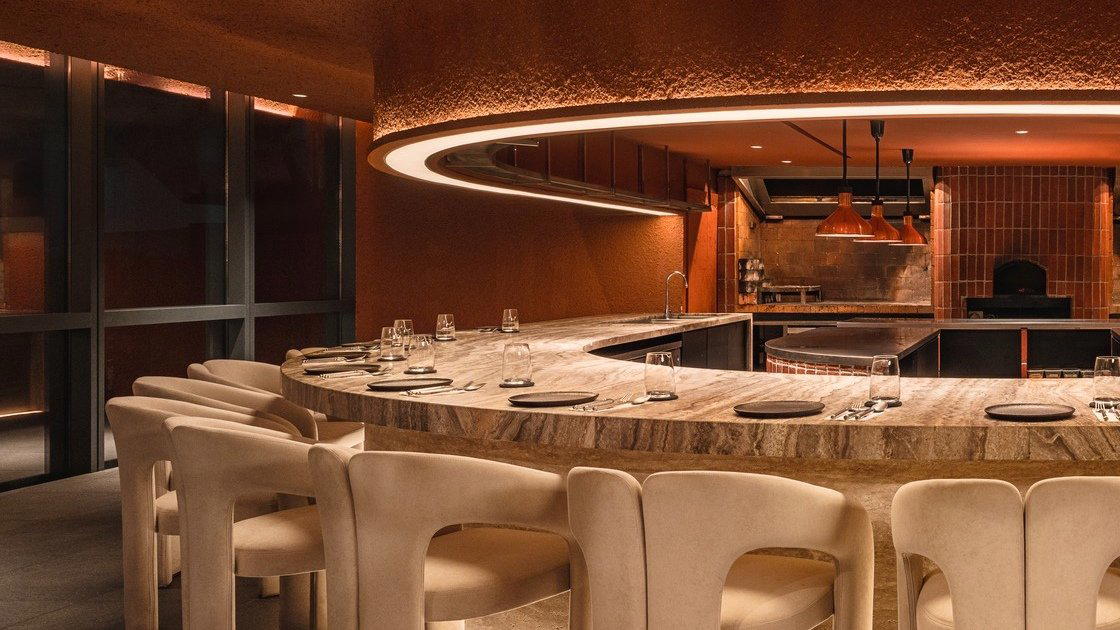
Fire Without Sauce: The Binchotan Philosophy in Kuala Lumpur
In barbecue's oldest and most contentious argument, the question is simple: does smoke need help? Across the American South, that debate plays out in sauce pots and dry rub recipes, with Carolina vinegar traditions, Texas oak-and-salt orthodoxy, and Kansas City's molasses-thick gloss each staking territory. In Southeast Asia, the argument arrives through a different tradition entirely. Japanese binchotan charcoal, made from white oak and burning at temperatures that can exceed 1,000 degrees Celsius, produces almost no smoke and no flavour contamination. The ingredient is the point. Whatever goes on the grill must speak entirely for itself.
That is the operating logic at Atelier Binchotan in Kuala Lumpur's Taman Desa Business Park, a neighbourhood better known for low-key commerce than destination dining.
The Counter as Classroom
Binchotan-format dining places every guest in direct view of the cooking surface, and at Atelier Binchotan, this is taken literally. The 17-seat configuration wraps around an open kitchen, putting the grill at the centre of the room rather than behind a pass. There is no staging area between the cook and the plate, no sauce station to mask a decision made too early or too late. What happens on the grill is what arrives in front of you.
This format has precedents across Asia, from the yakiniku houses of Tokyo and Osaka to the charcoal-grilled seafood stalls of coastal Malaysia. But the counter-around-an-open-kitchen setup, more common in fine Japanese dining and kaiseki, brings a different kind of accountability to the experience. The 17-seat count is small enough that cooking cannot be batch-processed; each plate is the result of individual attention.
The Menu Argument
Atelier Binchotan's menu rotates frequently, which in binchotan cooking is less a stylistic choice than a practical necessity. The format demands ingredients that justify the charcoal's heat: proteins and produce with enough fat, moisture, or structural integrity to develop colour under dry, intense heat without sauce or marinade to compensate. This is precisely where the sauce-versus-smoke debate resolves itself differently in Japanese-influenced grilling than in American barbecue tradition. Where Texas pit culture has increasingly moved toward letting the meat carry proceedings, with practitioners like those behind InterStellar BBQ in Austin and la Barbecue building their reputations on smoke discipline and salt-only rubs, binchotan takes that logic further still. Smoke is nearly absent. Heat is everything.
Two dishes have remained through menu rotations as signatures. The kaya toast arrives as grilled brioche, its edges crisped by radiant heat rather than a toaster, topped with kaya jam and shaved foie gras terrine. The combination reads as a technical restatement of a Malaysian breakfast staple, using the charcoal grill's precise surface temperature to achieve a crust that other methods cannot replicate cleanly. The shima-aji, a Japanese striped jack, is described as arriving with oily pink flesh and lightly charred edges, which is the precise outcome binchotan heat produces: a clean sear with minimal moisture loss, the fish's own fat acting as the only flavour agent. No sauce. No intervention beyond fire management.
This places the restaurant in an interesting position relative to Kuala Lumpur's current Michelin-recognised dining. Dewakan (Malaysian), the city's most decorated kitchen, operates at the $$$$ tier with a tasting menu format that contextualises Malaysian ingredients inside a broader fine-dining argument. Molina (Innovative), also at $$$$, takes an ingredient-led innovative approach. The restaurant, priced at $$$, makes the same argument about ingredient quality but through a single-technique lens rather than a multi-course narrative. The Michelin Plate, awarded to restaurants with good cooking rather than the star-level elaboration of the above, reflects that positioning accurately.
Taman Desa and the Off-Centre Advantage
Kuala Lumpur's recognised dining has historically concentrated in the Golden Triangle and the pockets of Bangsar and Damansara that surround it. Taman Desa sits further out, in a business park setting that does not signal destination restaurant in any conventional way. This geography works in two directions: it keeps the room from filling with casual walk-in traffic, and it means the 17 seats are occupied by people who came deliberately. Restaurants that operate this way, without the foot-traffic insurance of a central address, tend to depend more heavily on repeat bookings and word of mouth, which creates a different kind of guest relationship than a high-visibility city-centre room.
Across Malaysia, charcoal grilling in various forms appears at every price point, from the hawker-level satay stalls that define outdoor night markets to the refined applications at restaurants like Auntie Gaik Lean's Old School Eatery in George Town. What distinguishes the binchotan format specifically is its Japanese provenance and the particular quality of heat it produces: consistent, radiant, and almost completely clean in terms of combustion byproducts. Where mesquite in Texas or hickory in the American Southeast is chosen precisely for the flavour compounds its smoke introduces, binchotan is chosen to eliminate that variable. The grill becomes a precision instrument rather than a flavour source.
Planning Your Visit
Given 17 seats and Michelin Plate recognition in consecutive years, the restaurant is the kind of room that fills on reputation rather than capacity. The restaurant is located at 5, Jalan 1/109e, Taman Desa Business Park, 58100 Kuala Lumpur, accessible by car or rideshare from the city centre. The $$$ price positioning makes it comparable to other technically focused mid-to-upper restaurants in the city, and the rotating menu means return visits are not repetitive. Booking ahead is advisable; 17 seats is not a margin that accommodates last-minute decisions, particularly on weekends.
A Credentials Check
Comparable venues nearby, for context on price, style, and recognition.
| Venue | Cuisine | Price | Awards | Notes |
|---|---|---|---|---|
| Atelier BinchotanThis venue — the venue you are viewing | Modern Binchotan Grill | $$$$ | Michelin Plate | Not listed |
| Sushi Ori | Traditional Japanese Omakase | $$$$ | Michelin Plate | Kampong Dollah |
| Bōl | Modern Nyonya & Peranakan with Malaysian Twists | $$$ | Michelin Plate | Bukit Bintang |
| Sushi Masa | Edomae-style Japanese Omakase | $$$$ | Michelin Plate | Kampong Baharu |
| The Brasserie | French-Mediterranean Brasserie | $$$$ | Michelin Plate | Brickfields |
| Unwined Plus | Asian-Inspired Fusion Small Plates | $$$ | Not listed | Bangsar Baru |
Recognition history
Dated appearances from independent guides and award organizations, with the underlying list record or original source where available.
Michelin Plate
Michelin
Michelin Plate
Michelin
Michelin Plate
Michelin
Continue exploring
More in Kuala Lumpur
Restaurants in Kuala Lumpur
Browse all →
Bars in Kuala Lumpur
Browse all →
At a Glance
- Intimate
- Minimalist
- Cozy
- Date Night
- Special Occasion
- Open Kitchen
- Chefs Counter
- Corkage Allowed
- Local Sourcing
Current opening hours
- Monday
- Closed
- Tuesday
- Closed
- Wednesday
- Closed
- Thursday
- 6–10 PM
- Friday
- 11:30 AM–3:30 PM, 6–10 PM
- Saturday
- 11:30 AM–3:30 PM, 6–10 PM
- Sunday
- 11:30 AM–3:30 PM, 6–10 PM
Hours can change for holidays and private events. Last verified .
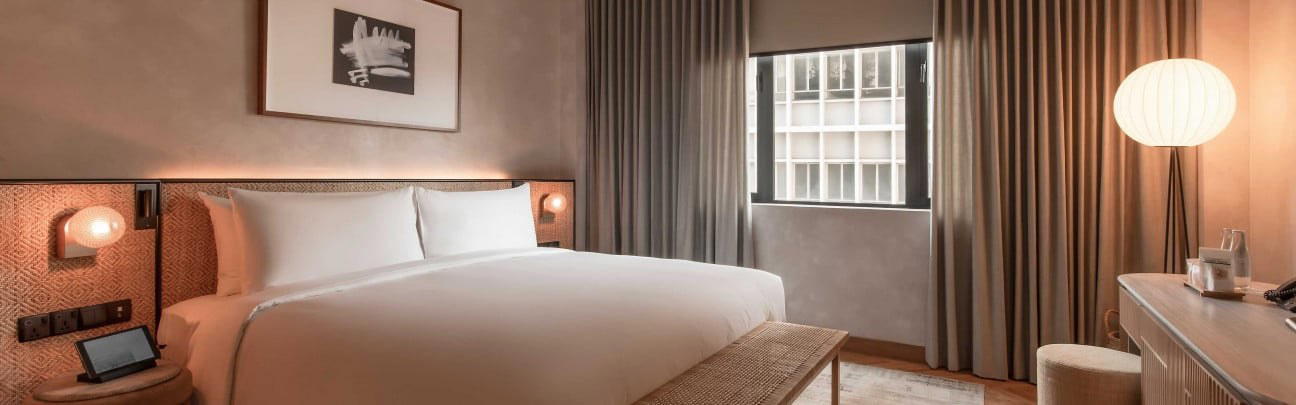
No-frills, minimalist space centered around an open kitchen with a casual, substance-focused atmosphere.