Our verdict
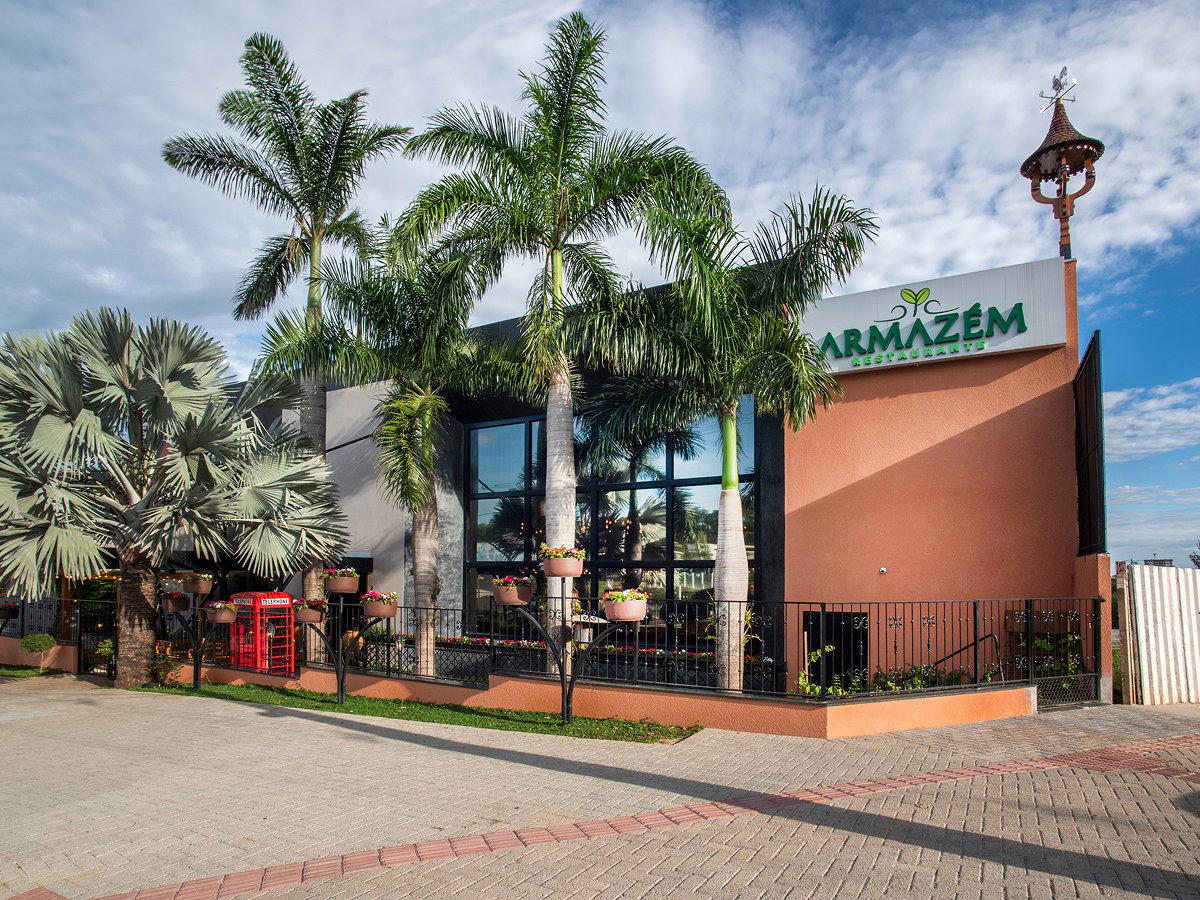
Armazém Restaurante operates out of Jardim Alamar in Maringá, Paraná, a city whose agricultural backbone shapes what ends up on plates across its dining scene. The restaurant sits within a broader shift in interior Brazilian dining toward ingredient provenance and regional identity, placing it in a category where sourcing decisions carry as much weight as technique. For visitors mapping Maringá's table, it belongs on the shortlist.

Pearl is the En Primeur Club membership app — saves, bookings, and concierge access live there. Same editors, same standards.
The menu
What to order
- Parmegiana de camarão
- Tamboril
- Burrata
Maringá at the Table: What the Interior of Paraná Produces
Maringá is not a city that appears in the same breath as São Paulo or Rio de Janeiro when Brazil's dining conversation turns to ingredient-led cooking. That gap is closing. Paraná's northern agricultural belt, of which Maringá is the commercial hub, produces some of the most consistent livestock, soy, and coffee outputs in the country. The question that defines serious restaurants here is not whether good produce is available — it is — but whether a kitchen is organized to use it deliberately. Armazém Restaurante, on Rua Demétrio Koteski in the Jardim Alamar district, operates in that context.
The address places it outside the city's more trafficked commercial corridors, in a residential stretch that filters for intention. Guests arriving here are not passing through. The name itself, armazém, translates as warehouse or general store, a reference form with deep roots in Brazilian interior culture, where the armazém was the provisioning point for rural communities, the place where what the land produced was stored, traded, and eventually cooked. That framing, whether deliberate or ambient, does editorial work before a plate arrives.
Why Provenance Matters More in Interior Brazil
Brazil's most discussed ingredient-led restaurants tend to cluster in the southeast. D.O.M. in São Paulo built an international reputation around Amazonian and cerrado ingredients deployed at high technical register. Lasai in Rio de Janeiro anchors its menu in a kitchen garden and a rotating roster of small producers. Both operate at the $$$$ price tier, with booking windows and international press that locate them in a global conversation about regional sourcing.
Interior Paraná is a different operating environment. The supply chains are shorter, producer to kitchen distances that coastal restaurants engineer expensively are here a function of geography. Maringá sits within reach of the Alto Paraná watershed, cattle country, grain country, and a coffee-producing belt that extends into the northern reaches of the state. A restaurant with genuine sourcing discipline in this city has structural advantages that a São Paulo counterpart does not. The editorial point is this: provenance-led cooking in Maringá does not require importing a philosophy from elsewhere. It requires a kitchen that treats its surroundings as an asset rather than a default.
That framing is what makes restaurants like Armazém relevant to readers who track how Brazilian cuisine moves outside its headline cities. For further reference across the country's interior dining scene, the full Maringá restaurants guide maps the broader picture. Comparable regional anchoring can be found at Bistrô Fitz Carraldo in Manaus, where Amazonian sourcing defines the menu logic, or at Casa da Flor Restaurante in Dourados, another interior city where proximity to agricultural production shapes what kitchens can credibly offer.
The Jardim Alamar Setting
Jardim Alamar sits in the southern arc of Maringá's urban grid, a district that reads as residential rather than gastronomic. The street-level experience approaching Armazém is quieter than the city's central dining strips, which concentrate around Avenida Getúlio Vargas and the Zone 01 corridor. That displacement has a structural effect on the dining room: without ambient foot traffic, the room self-selects toward guests who arrived with purpose rather than impulse.
This pattern, where a restaurant positioned slightly off the primary hospitality axis operates with a more committed clientele, appears across Brazilian cities. Bistrô Vila Graziella in Bauru occupies a similar position in its city's geography, and the dynamics are comparable. Guests plan ahead, the pace is deliberate, and the kitchen is not calibrated for tourist throughput.
Maringá's Dining Register and Where This Restaurant Sits
Maringá's restaurant scene spans a wide register, from the churrascaria tradition that anchors Brazilian interior dining culture to a growing tier of European-influenced houses. Taberna Portuguesa represents the Portuguese-influenced end of that spectrum, with Iberian technique applied to local ingredients. Armazém Restaurante sits within a different category logic: the name and district positioning suggest a kitchen oriented around Brazilian interior tradition rather than European import.
Across Brazil, the tension between European technique and native ingredient vocabulary has produced some of the most interesting cooking of the last decade. The restaurants that resolve this tension most legibly tend to be in cities where the ingredient supply is local enough to anchor the menu without explanation. Maringá qualifies on that criterion. For comparison, Cantina Pozzobon in Santa Maria demonstrates how Italian-descended cooking adapts to southern Brazilian produce networks, a different tradition, but the same structural question about what local means in a given region.
Planning Your Visit
Armazém Restaurante is located at Rua Demétrio Koteski, 50, in the Jardim Alamar district, Maringá, Paraná (CEP 87014-460). Given its residential location and Maringá's general dining culture, arriving by car or rideshare is the practical approach. The city's Salgado Filho Regional Airport connects to São Paulo's Congonhas and Guarulhos airports, making Maringá accessible as a day-trip extension from São Paulo for travellers already in the region.
Readers mapping a broader Paraná itinerary will find useful counterpoints at Fornazzo Pizzaria in Passo Fundo and Kampeki Sushi in Canoas, both of which illustrate how Brazilian interior cities build dining identity around imported culinary traditions adapted to local supply. For reference across a wider Brazilian geography, Aero Burguer e Grill in Santa Cruz do Sul, Arte e Café Imperial in Angra dos Reis, Casa da Dika in Bragança, Casa da Picanha Penedo in Itatiaia, Famosa Pizza in Ribeirão Preto, and Madê in Santos each anchor a specific regional dining tradition. For a global technical register comparison, Le Bernardin in New York City and Atomix in New York City represent the kind of sourcing-and-technique discipline that the leading ingredient-led restaurants in Brazil's interior are, in their own way, working toward.
Frequently asked questions
Where is Armazém Restaurante in Maringa?
Armazém Restaurante is located at R. Demétrio Koteski, 50 - Jardim Alamar, Maringá - PR, 87014-460, Brazil, Maringa.
What kind of dining experience does Armazém Restaurante offer compared to other Maringá restaurants?
Maringá's dining culture is anchored by the churrascaria tradition common across Brazil's interior, with a smaller tier of more produce-focused restaurants emerging alongside it. Armazém Restaurante's Jardim Alamar address places it outside the city's main commercial corridors, which tends to signal a venue built on repeat local clientele rather than tourist volume.
What should I order at Armazém Restaurante?
The kitchen's focus, consistent with what ingredient-led restaurants in Brazil's interior Paraná tend to do well, is on produce sourced from the surrounding agricultural region rather than imported references. Without a published menu available, the practical move is to ask staff what is driving the kitchen that week. Maringá sits in one of Brazil's most productive agricultural states, which gives any serious kitchen here access to protein and produce that São Paulo restaurants pay a premium to import.
Is Armazém Restaurante reservation-only?
No booking policy is publicly documented for Armazém Restaurante. Given its location on Rua Demétrio Koteski, 50 in Jardim Alamar, a residential district not oriented around foot traffic, arriving without contacting the venue first carries real risk. Calling ahead or reaching out through the address directly before visiting is the practical approach.
In Context: Similar Options
Comparable venues nearby, for context on price, style, and recognition.
| Venue | Cuisine | Price | Notes |
|---|---|---|---|
| Armazém RestauranteThis venue — the venue you are viewing | Contemporary Brazilian-Italian | Not listed | Not listed |
| Taberna Portuguesa | Authentic Portuguese | Not listed | Centro |
| Must Restaurant & Bar | Modern Brazilian with Indigenous Flavors | Not listed | Belem |
| Restaurante La Gondola | Traditional Italian Trattoria | $50–100 | Aeroporto |
| Açougue Central | Modern Brazilian Churrascaria | $30–50 | Vila Madalena |
| Integralle Comida Saudável | Healthy Brazilian Cuisine | Not listed | Estrela |
Continue exploring
More in Maringa
Details
- Rustic
- Elegant
- Cozy
- Date Night
- Family
- Group Dining
- Special Occasion
- Open Kitchen
- A La Carte
- Buffet
- Wine And Beer
Current opening hours
- Monday
- Closed
- Tuesday
- 7–11 PM
- Wednesday
- 7–11 PM
- Thursday
- 7–11 PM
- Friday
- 7–11 PM
- Saturday
- 7–11 PM
- Sunday
- 11:30 AM–2:30 PM
Hours can change for holidays and private events. Last verified .
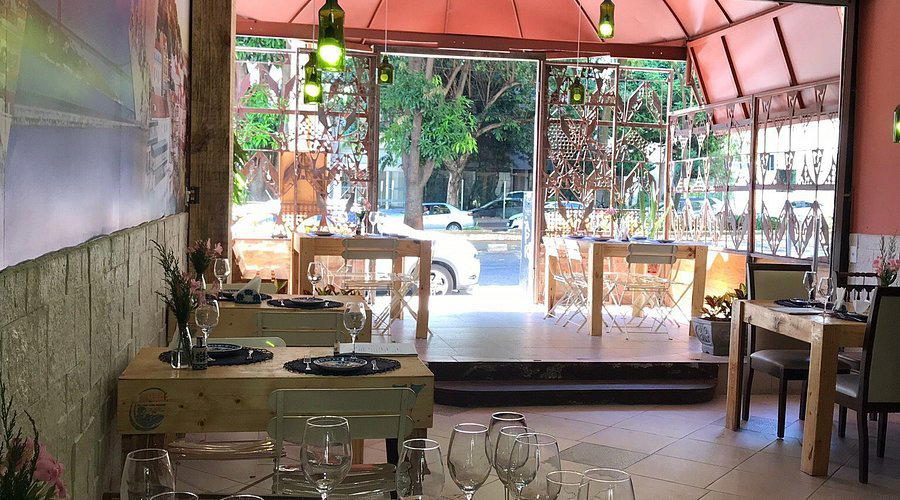
Homey decoration with welcoming, elegant, and cozy atmosphere well-suited for special dinners or gatherings with friends.