Aquila Nera occupies a corner of central Udine where the city's appetite for serious regional dining is most concentrated. The address on Via Piave places it within reach of the historic centre, inside a dining culture that draws on Friulian tradition without apology. For a city of this size, the competition is specific and the expectations are formed accordingly.
Pearl is the En Primeur Club membership app — saves, bookings, and concierge access live there. Same editors, same standards.
- Address
- Via Piave, 2/a, 33100 Udine UD, Italy
- Phone
- +393943221645
- Website
- aquilanera.biz
- Directions
- Get directions
 Saves & bookings on Pearl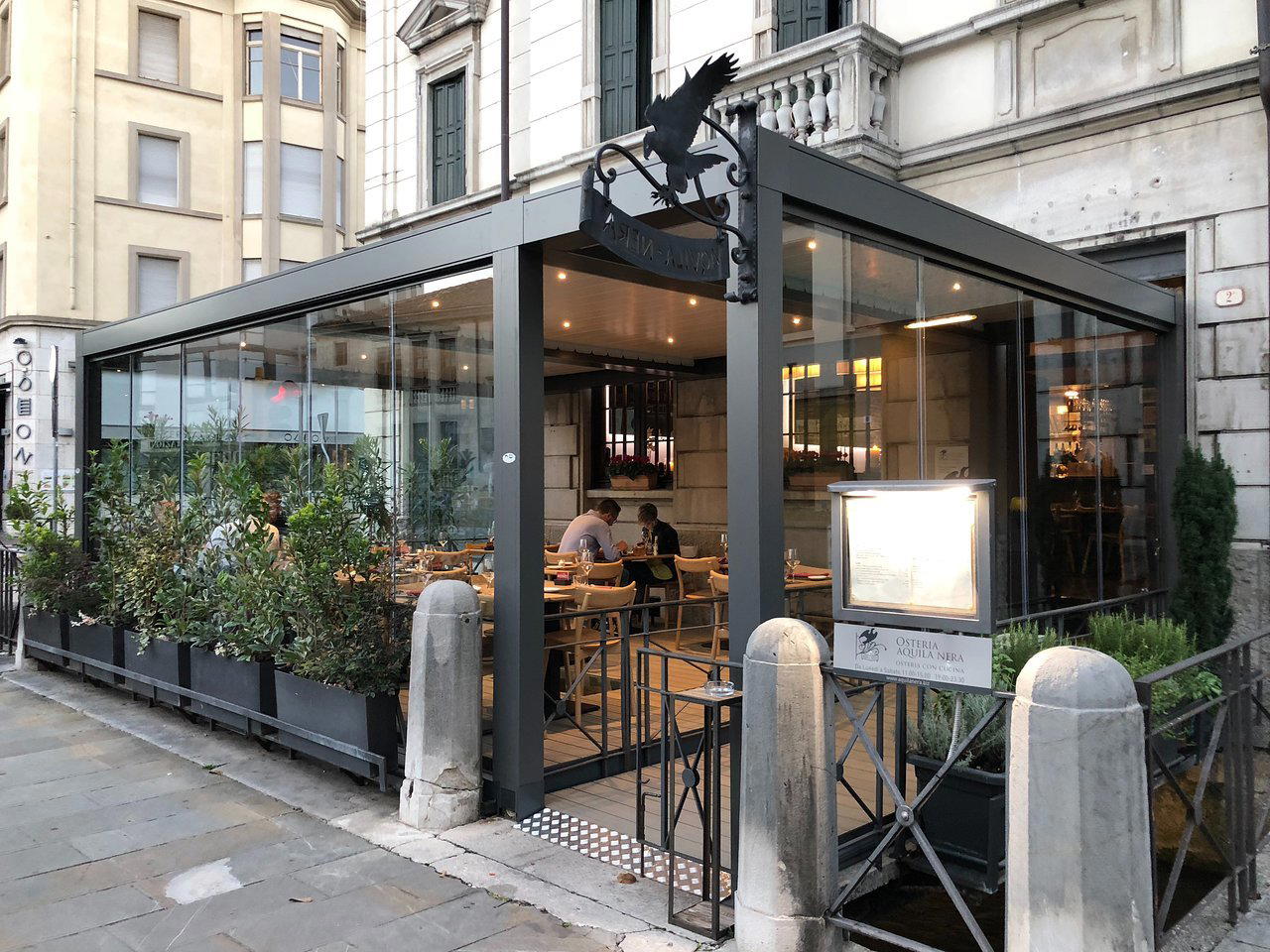
Via Piave and the Weight of a Friulian Address
Udine does not announce its restaurant culture the way larger Italian cities do. There are no boulevards lined with terrace seating designed for visibility, no neighbourhoods that function primarily as dining districts. What the city has instead is a diffuse but serious eating tradition, shaped by proximity to Slovenia and Austria, by a wine region that produces Friulano, Ribolla Gialla, and some of Italy's most underappreciated whites, and by a civic pride that treats the table as something close to a civic institution. On Via Piave, Aquila Nera sits within that tradition, at an address close enough to the Piazza della Libertà that the surrounding architectural weight of the city is present even before you step inside.
That setting matters because Friulian dining at this level is not decorative. The region's cooking has always carried a certain directness: cured meats, braised cuts, polenta in its several forms, freshwater fish from the Tagliamento corridor, and a set of dairy traditions that differ meaningfully from those of Veneto or Lombardy. A restaurant positioned in this part of the city is implicitly making a claim about where it sits in relation to that tradition, whether it is working within it, refining it, or stepping outside it toward a more nationally inflected style.
Reading the Menu as a Document
The editorial angle that matters most for a room like this is menu architecture: what a restaurant chooses to serve, in what order, and with what degree of commitment to a regional identity, tells you more than décor or table count. In the context of Udine's dining scene, that question has a particular shape. The city supports a range of formats, from the Ai Frati style of neighbourhood trattoria to the more composed register of places like 1905, and the choices a kitchen makes about how to sequence a meal, how much space to give to primi versus secondi, and how openly to reference the Friulian larder, position it within that range immediately.
A menu built around Friulian logic typically front-loads cured and preserved items, moves through a pasta course that owes more to egg-rich northern traditions than to the semolina south, and arrives at a meat or fish second that reflects seasonal availability rather than year-round programming. The wine list, in this region, is not a secondary consideration: Friuli Venezia Giulia produces whites that have shaped Italian fine dining for decades, and a serious address in Udine is expected to hold a list that reflects that fact with some depth. How the menu sequences food against wine, whether the kitchen designs courses with pairing in mind or treats the cellar as a separate department, is one of the clearest signals of where a room positions itself within the local hierarchy.
For comparison, the formational restaurants of northern Italy's serious dining tier, places like Dal Pescatore in Runate or Le Calandre in Rubano, have built reputations over decades by treating regional identity not as a constraint but as the source of specificity that separates them from the national fine-dining consensus. The same logic applies at the city level: a restaurant in Udine that commits fully to the Friulian pantry will always have a more coherent argument to make than one that treats regional cuisine as an occasional reference.
Udine's Competitive Set and Where Aquila Nera Fits
The Udine dining scene distributes across a fairly clear set of tiers. At the neighbourhood level, places like Al Contadino, Al Vecchio Stallo, and Alla Ghiacciaia serve the daily eating habits of the city with a trattoria format that prioritises accessibility and repetition over curation. One step up, restaurants operating in the €€€ range, such as Vitello d'Oro with its seafood focus, compete on product quality and kitchen discipline rather than on volume. Aquila Nera, on Via Piave, sits in proximity to this mid-to-upper tier, and the address alone places it in a conversation about what serious dining means in a city that has historically exported culinary ambition to the surrounding region rather than concentrating it in a single district.
Italy's most recognised fine dining addresses, from Osteria Francescana in Modena to Piazza Duomo in Alba, share a quality that smaller-city restaurants often strain toward: a menu that is coherent enough to be read as a point of view, not just a list of dishes. In Udine, that ambition operates at a different scale but is no less present in rooms that have earned local regard over time.
Arriving and Planning Your Visit
The restaurant's address at Via Piave, 2/a places it in the central zone of Udine, walkable from the main piazza and accessible by public transport from the train station on the western edge of the city. Udine Centrale connects to Venice, Trieste, and Gorizia by regular rail service, making it reachable as a day trip or as part of a broader Friulian circuit that might include the wine estates of Collio or Colli Orientali del Friuli.
Reservations are recommended, and the restaurant is open Monday, Tuesday, Thursday, Friday, and Saturday from 12 to 2:30 PM and 7 to 10:30 PM, with Wednesday and Sunday closed. That dynamic, where the clientele is predominantly residential, tends to produce a different atmosphere from destination-dining rooms that rely on out-of-town visitors: service is more likely to be calibrated around familiarity, and the pace of the meal is set by the room rather than by external throughput pressure.
For readers building a longer itinerary across northern Italy's serious dining addresses, the broader region offers strong points of comparison: Uliassi in Senigallia, Reale in Castel di Sangro, and Atelier Moessmer Norbert Niederkofler in Brunico each illustrate how a kitchen anchored to a specific regional tradition can build a reputation that travels beyond its immediate geography.
Credentials Lens
Comparable venues nearby, for context on price, style, and recognition.
| Venue | Cuisine | Price | Notes |
|---|---|---|---|
| Aquila NeraThis venue — the venue you are viewing | Modern Friulian Osteria | $$$ | Not listed |
| Ai Frati | Traditional Friulian Trattoria | $$$ | Historic Center |
| Alla Ghiacciaia | Traditional Friulian Osteria | $$ | city center |
| Mamm Ciclofocacceria | Italian Focaccia Sandwiches | $$ | Largo del Teatro |
| Trattoria Antica Maddalena | Traditional Friulian Trattoria with Seafood | $$ | Udine city center |
| Alla Vedova | Traditional Friulian Trattoria | $$$ | .ud |
Continue exploring
More in Udine
Restaurants in Udine
Browse all →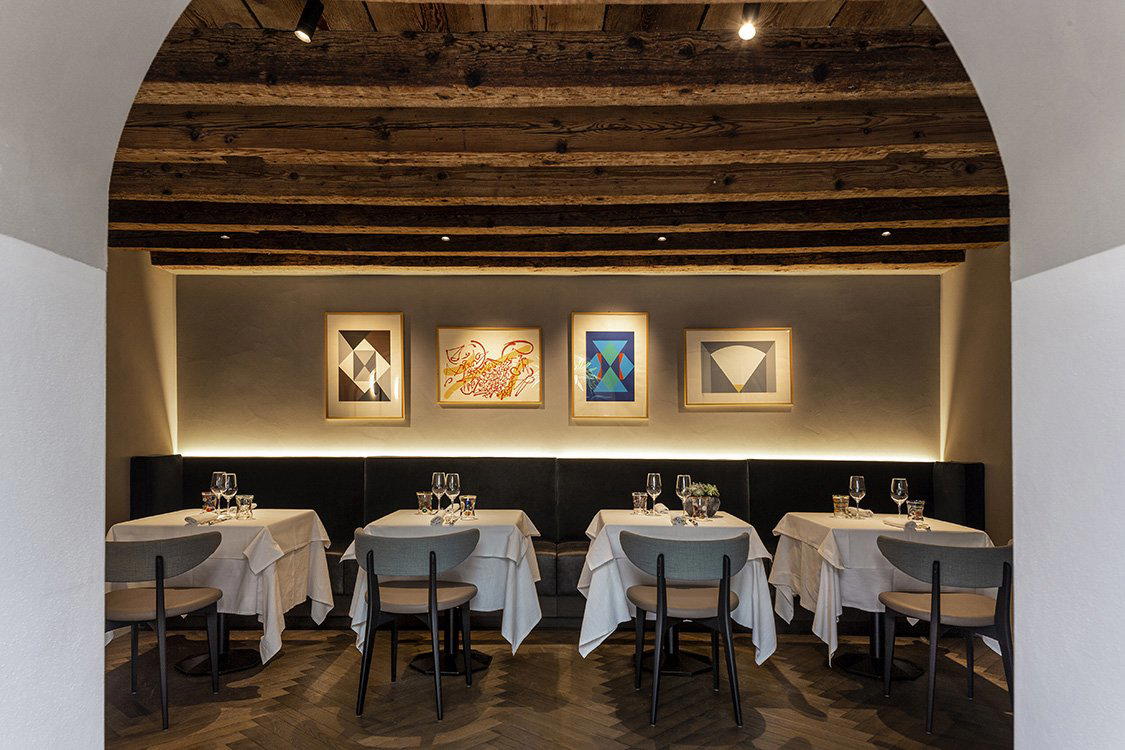
Bars in Udine
Browse all →
Hotels in Udine
Browse all →
At a Glance
- Cozy
- Elegant
- Classic
- Intimate
- Date Night
- Business Dinner
- Special Occasion
- Historic Building
- Extensive Wine List
- Local Sourcing
Current opening hours
- Monday
- 12–2:30 PM, 7–10:30 PM
- Tuesday
- 12–2:30 PM, 7–10:30 PM
- Wednesday
- Closed
- Thursday
- 12–2:30 PM, 7–10:30 PM
- Friday
- 12–2:30 PM, 7–10:30 PM
- Saturday
- 12–2:30 PM, 7–10:30 PM
- Sunday
- Closed
Hours can change for holidays and private events. Last verified .
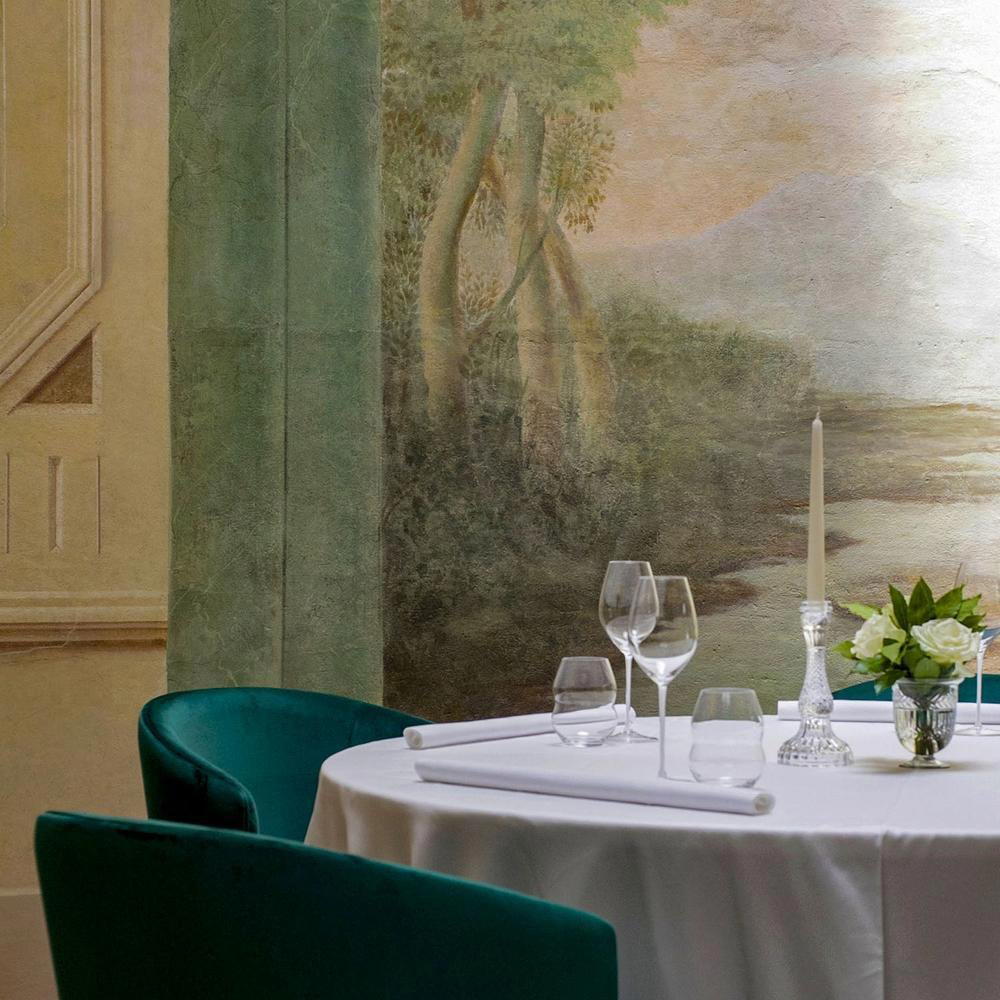
Soft, beautiful, quiet atmosphere with carefully curated and welcoming environments.