Anglesea Arms
A West London pub that has long held a reputation among locals and food writers for cooking that punches well above the gastropub average. Situated on Wingate Road in Hammersmith, the Anglesea Arms is the kind of neighbourhood address that earns loyalty through consistency rather than spectacle, direct seasonal cooking in a room that rewards a slow afternoon.
Pearl is the En Primeur Club membership app — saves, bookings, and concierge access live there. Same editors, same standards.
- Address
- 35 Wingate Rd, London W6 0UR, United Kingdom
- Phone
- +44 20 8749 1291
- Website
- angleseaarmspub.co.uk
- Directions
- Get directions
 Saves & bookings on Pearl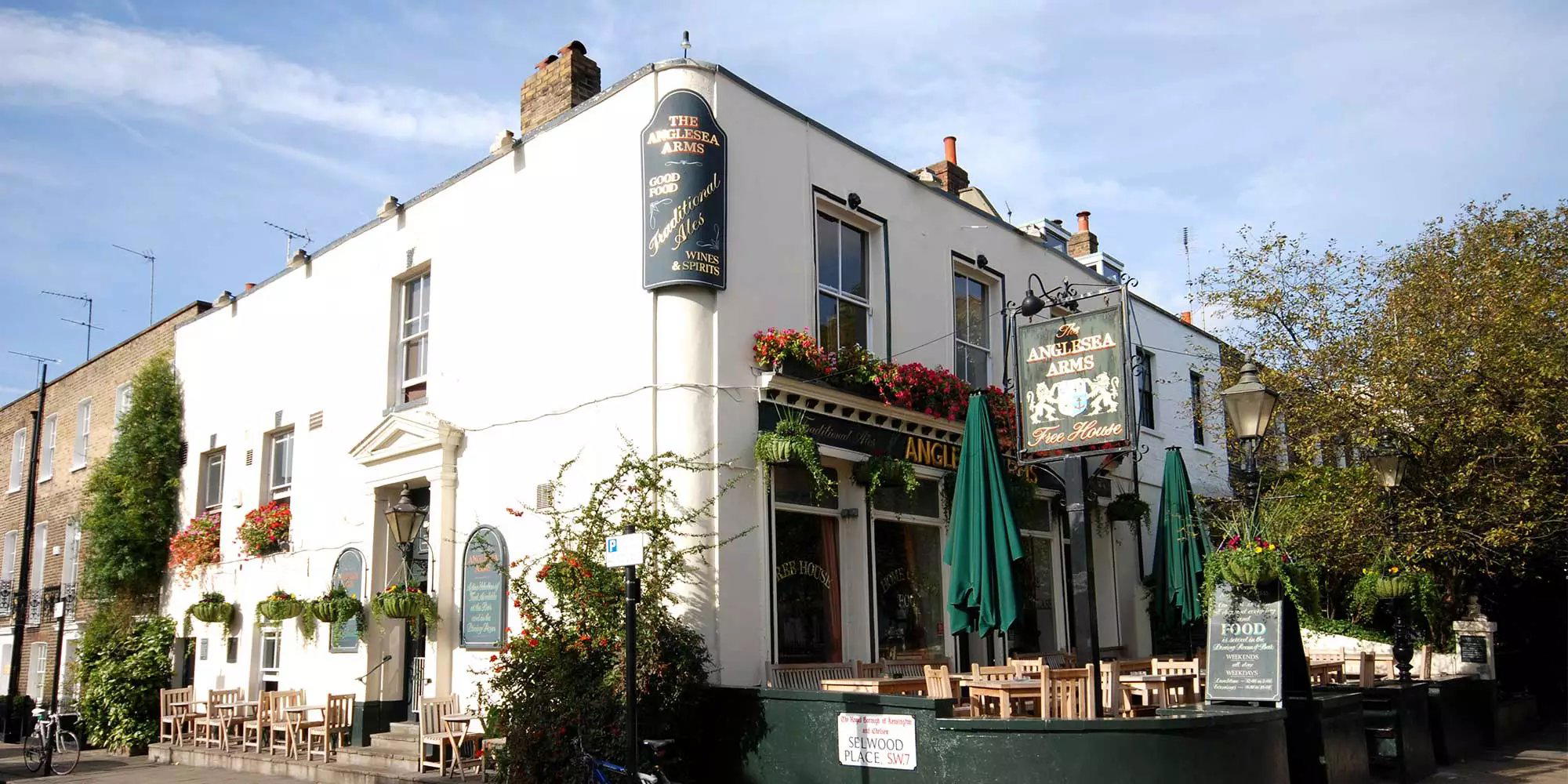
A Room That Has Earned Its Place
In the stretch of West London between Ravenscourt Park and Shepherd's Bush, the gastropub format has been tested and refined over two decades. The Anglesea Arms on Wingate Road sits at the quieter, more residential end of that tradition, a corner pub whose physical presence reads as intentional understatement. Anglesea Arms is a Modern British Gastropub in London, with a casual dress code, recommended reservations, and an approximate price of $50 per person. The exterior gives little away: Victorian brickwork, painted signage, the kind of frontage that passes without comment unless you are specifically looking for it. That restraint carries inside. The interior is a working pub first and a dining room second, with the two functions sharing space in the way that defined London's gastropub movement before the category split into destination restaurants with beer taps and unreformed boozers with microwaved pies.
The design does not perform. Wooden floors, mismatched furniture, and the ambient noise of a local that actually gets used on weekday afternoons, these are not features bolted on for atmosphere, but the accumulated character of a room that has served the neighbourhood consistently. For a certain type of diner, that physical context is precisely the point. London's higher-end restaurant tier, represented by addresses like Sketch, The Lecture Room and Library or CORE by Clare Smyth, demands a corresponding shift in register from the diner: jacket optional but mentally required, booking windows measured in months, rooms designed to signal their own significance. The Anglesea Arms operates in a different register entirely, one where the room's job is to recede and let the glass and the plate do the talking.
Where the Gastropub Format Holds
London's gastropub history is worth understanding as context for any serious assessment of the restaurant. The format emerged in the early 1990s in response to a specific failure: British pub food had become a byword for indifference, and a generation of young cooks returning from French kitchens saw an opportunity to apply classical technique to unfussy rooms. The Eagle in Clerkenwell is routinely cited as the origin point, but the format spread quickly across West and South London, embedding itself in neighbourhoods where the middle class wanted good food without the formality of a proper restaurant.
What separated the better gastropubs from the imitators was cooking discipline. The format does not hide behind elaborate plating or tasting-menu sequencing; a handful of dishes, chalked on a board or printed on a single sheet, face direct scrutiny. At this price point and in that physical context, consistency matters more than ambition. The restaurant has built its neighbourhood reputation on exactly that kind of cooking, seasonal, British-leaning, technically competent without announcing itself as such. It occupies a different tier from Michelin-tracked addresses like The Ledbury or Dinner by Heston Blumenthal, but it is also not competing with them. Its comparable set is the group of serious neighbourhood pubs, a smaller group than the marketing of London hospitality sometimes suggests, that treat the kitchen as a real operation rather than a revenue afterthought.
For comparison beyond London, the gastropub at its most successful shares structural DNA with places like Hand and Flowers in Marlow, which holds two Michelin stars while maintaining a pub format and physical informality. The restaurant does not carry that level of award recognition, but the underlying logic, serious cooking inside a room designed for ease rather than ceremony, is the same.
The Physical Logic of the Space
Editorial angles focused on design and space tend to reward restaurants that have made deliberate architectural choices: the carefully considered counter, the bespoke lighting rig, the dining room whose proportions have been engineered to produce a particular effect. The restaurant is more interesting precisely because none of that applies. The room's seating arrangement reflects the building's original function, not a hospitality designer's brief. Tables are close enough to suggest conviviality without becoming a noise problem; the bar anchors one end of the ground floor, reinforcing the sense that drinking here is as legitimate as eating.
This is worth stating directly because the physical container shapes what is possible on the plate and in the glass. A room that carries no atmosphere debt, no expectation of theatre, no design statement demanding to be validated, frees the kitchen from the pressure to match an aesthetic. The food at a pub like this does not need to look like anything in particular. It needs to taste right and arrive at the correct temperature, and the room does nothing to contradict that priority. In West London's dining geography, that is a position held by fewer addresses than the neighbourhood's density might suggest.
For those exploring the broader range of what serious cooking looks like across the UK, the contrast is instructive: L'Enclume in Cartmel and Moor Hall in Aughton represent the end of the spectrum where the room and the cooking form a single designed experience. Gidleigh Park in Chagford offers a country-house version of the same proposition. The restaurant represents the opposite commitment: that good cooking is good cooking regardless of whether the room has been designed to announce it.
Planning a Visit
The restaurant is on Wingate Road in W6, within walking distance of Ravenscourt Park tube station on the District line. As a neighbourhood pub rather than a destination restaurant, the address tends to accommodate walk-ins with more flexibility than the booking-led venues at London's leading table, though weekend lunchtimes, when the local residential trade peaks, will fill the better tables early. Arriving mid-week, or early on a weekend, gives the leading range of options.
Beyond the UK, Le Bernardin in New York City and Atomix in New York City offer a different set of reference points for serious eating in a major city context. The restaurant occupies none of those positions, and that is the argument for it.
Cost and Credentials
Comparable venues nearby, for context on price, style, and recognition.
| Venue | Cuisine | Price |
|---|---|---|
| Anglesea ArmsThis venue — the venue you are viewing | Not listed | $$ |
| Pique Café | Battersea, British Bakery Café | $$ |
| Thatched House | Hammersmith Broadway, British Gastropub | $$ |
| Annie's | River Thames, British Brasserie | $$ |
| The Fox and Pheasant | West Brompton, British Gastropub | $$ |
| Bistro Union | Clapham, British Bistro | $$ |
Continue exploring
More in London
Restaurants in London
Browse all →
Bars in London
Browse all →
Hotels in London
Browse all →

At a Glance
- Cozy
- Lively
- Classic
- Rustic
- Casual Hangout
- Family
- Historic Building
- Terrace
- Extensive Wine List
Current opening hours
- Monday
- 5–11 PM
- Tuesday
- 5–11 PM
- Wednesday
- 5–11 PM
- Thursday
- 5–11 PM
- Friday
- 12–11 PM
- Saturday
- 12–11 PM
- Sunday
- 12–10 PM
Hours can change for holidays and private events. Last verified .
Cozy pub atmosphere with roaring fires in winter, candles on tables, lively bar buzz, and a relaxed, welcoming feel.