
The Best Chef One Knife
Our verdict
Alto sits at the upper tier of Caracas fine dining, with Chef Carlos García bringing a level of technical discipline rarely found in Venezuelan restaurants. Located in Los Palos Grandes, the address has become a reference point for serious dining in the city. For anyone tracing the development of contemporary Venezuelan cuisine, Alto is where that conversation tends to start.

Pearl is the En Primeur Club membership app, where members save venues, book tables and use the concierge.
The menu
What to order
- Tierra de Cacao
Arriving in Los Palos Grandes
Los Palos Grandes occupies a particular position in Caracas: residential enough to feel grounded, yet dense with the kind of addresses that draw the city's most serious diners. The neighbourhood's tree-lined avenidas and mid-century apartment blocks give it a different register from the glass-tower corridors of Chacao or the more chaotic commercial energy of Sabana Grande. When a restaurant lands here with serious intent, it tends to stay. The address on Primera Avenida de Los Palos Grandes con Tercera Trasversal is one that Caracas diners know.
Walking toward Alto, the building reads quietly. There is no theatrical signage or grand entrance sequence. The restraint at the threshold is a signal: the dining room, not the facade, is where the argument gets made. That approach reflects a broader shift in how ambitious Latin American restaurants have chosen to present themselves over the past decade, moving away from baroque statement architecture toward spaces that ask the food to carry the weight.
The Culinary Formation Behind the Menu
Understanding what Alto is doing requires some understanding of the chef's formation. Carlos García's training traces through European fine dining at a point when Venezuelan cooks seeking that depth of technical grounding had to look abroad. That kind of international formation, then brought back into a Venezuelan context, defines a particular generation of Latin American chefs who occupy the space between global technique and local ingredient. The challenge, for any chef in that position, is avoiding two failure modes: the pastiche of European cooking in a tropical city, or the forced folkloric gesture toward local produce that never quite integrates.
García's approach at Alto has been positioned closer to the second risk than the first. The cooking takes Venezuelan ingredients seriously as the primary material, with technique serving the product rather than overriding it. In regional terms, that places Alto alongside a generation of restaurants across Latin America, from Lima to São Paulo, that have used European-trained chefs to reframe national produce as fine dining material. Globally, the parallel is with chefs at venues like Lazy Bear in San Francisco or Atomix in New York City, where the chef's trajectory is inseparable from the restaurant's argument about what high-end cooking in a specific place should mean.
Fine Dining in Caracas: Where Alto Sits
Caracas has a fine dining tier that most international visitors underestimate. The city's complexity, its security considerations and economic volatility, tends to obscure the fact that a serious restaurant culture has persisted, and in some respects sharpened, through decades of difficulty. In that context, Alto operates at the upper end of a relatively small competitive set. The restaurants that sit closest to it in register include Cordero and El Bosque Bistró, both of which occupy a similar space between serious cooking and neighbourhood accessibility. La Casa Bistró works a different angle, more bistro-inflected and less technically demanding, but still part of the same broader conversation about what contemporary Caracas dining can be.
The comparison set at the global level is instructive. When Venezuelan food writers or international critics position Alto, the references tend toward restaurants like Le Bernardin in New York City or Alain Ducasse at Louis XV in Monte Carlo in terms of technical seriousness, and toward Alinea in Chicago or Alléno Paris au Pavillon Ledoyen in terms of the ambition to redefine a national or regional idiom through fine dining methodology. That is a high bracket to reference, and the comparison is about direction of travel rather than claim of equivalence. What it signals is that Alto's frame of reference is international, even if its ingredients and its city are specifically Venezuelan.
The Scene at the Table
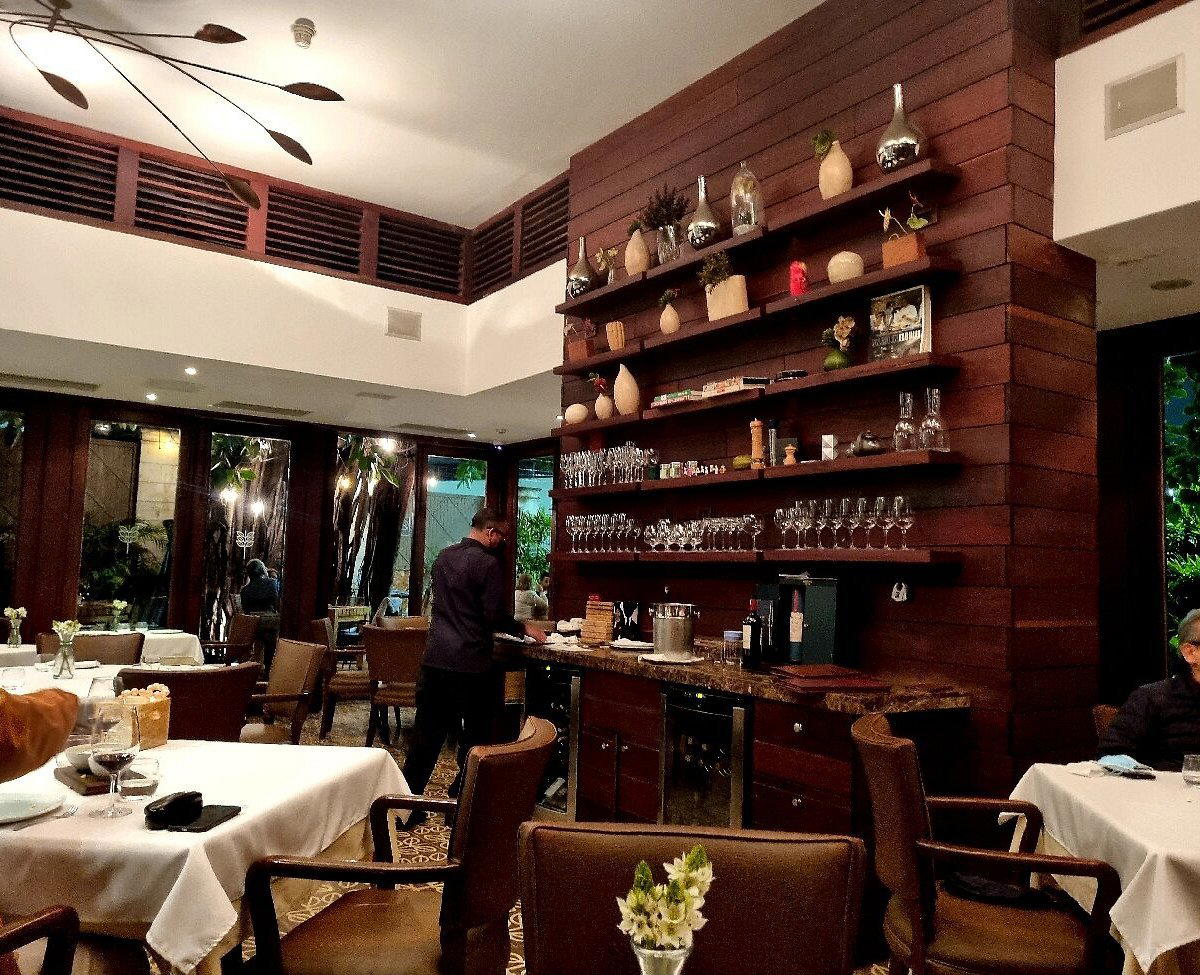
The dining room at Alto operates at a pace and register that differentiates it from the more casual end of Los Palos Grandes eating. Service is structured without being rigid, the kind of floor management that knows when to step back and when to engage. For diners used to the more theatrical service formats at restaurants like 8½ Otto e Mezzo Bombana in Hong Kong or Amber in Hong Kong, Alto's approach reads as more direct, less ceremonial. The food is presented with explanation but without excessive narrative performance around each plate.
For context on what a serious Caracas dinner looks like in practice: this is a city where dining out has long been a social ritual with real weight. The Venezuelan tradition of extended table time, multiple courses, and wine as central rather than peripheral to a meal maps reasonably well onto what Alto asks of its guests. The restaurant does not feel at odds with its city in the way that some transplanted European fine dining formats do when placed in Latin American contexts.
Venezuelan Fine Dining Beyond Caracas
Caracas is not the only reference point for serious Venezuelan cooking. Portarossa in Pampatar represents the island-facing end of Venezuelan fine dining, with a different set of ingredient influences drawn from the Caribbean coast and Margarita Island's seafood tradition. The contrast between the two addresses, one urban and landlocked in the capital's eastern residential zone, the other coastal and resort-adjacent, maps a meaningful split in how Venezuelan cuisine is being interpreted at the serious end of the market.
For visitors approaching Caracas with an appetite for the broader food culture rather than just the fine dining tier, the city rewards deeper investigation. Our full Caracas restaurants guide maps the range, from neighbourhood spots to address-level fine dining. The Caracas bars guide and experiences guide extend the picture into the city's drinking and cultural programming, while the Caracas hotels guide and wineries guide cover the accommodation and wine context. For reference on comparable ambition elsewhere in the region, Emeril's in New Orleans offers a useful parallel: a chef whose training in European kitchens became the foundation for a distinctly local culinary identity.
Planning a Visit
Alto sits on Primera Avenida de Los Palos Grandes con Tercera Trasversal, in the eastern residential district of Caracas. Los Palos Grandes is generally considered one of the more navigable parts of the city for visitors, with a concentration of restaurants and a neighbourhood rhythm that makes it easier to orient around. Booking ahead is the practical approach for any serious meal here: at this level of the Caracas market, availability at short notice is not guaranteed, and the restaurant operates with a level of intentionality that rewards arriving with a reservation rather than testing walk-in luck. Dress code is not formally specified, but the room and its price point read as smart casual at minimum.
Frequently asked questions
Is Alto child-friendly?
Alto operates at the top of the Caracas fine dining tier in both format and expectation, which makes it better suited to adult evenings than meals with younger children. The pacing and room register at Los Palos Grandes favour a composed, unhurried dinner rather than a flexible family setting.
How would you describe the vibe at Alto?
Composed and deliberate. In a city where dining out carries genuine social weight, Alto sits at the serious, lower-temperature end of the Caracas spectrum, closer to a considered European dining room than to the louder, more social end of Los Palos Grandes eating. Service is structured; the room is not performative.
What awards or recognition does Alto have?
Alto has received recognition including: Chef: Carlos García.
What dish is Alto famous for?
The framework matters more than a single signature: Carlos García's cooking centres on Venezuelan ingredients filtered through European fine dining technique, the training axis that defines Alto's position in Caracas.
Fast Comparison
| Venue | Cuisine | Price | Awards |
|---|---|---|---|
| AltoThis venue (the venue you are viewing) | Modern Venezuelan Fine Dining | Not listed | The Best Chef One Knife |
| Cordero | Farm-to-Table Lamb Specialty | Not listed | World's 50 Best #29 · The Best Chef Two Knives |
| El Bosque Bistró | Contemporary Venezuelan Bistro | $30–50 | The Best Chef One Knife |
| La Casa Bistró | Venezuelan Bistro | $10–20 | World's 50 Best #89 |
Recognition history
Dated appearances from independent guides and award organizations, with the underlying list record or original source where available.
The Best Chef One Knife
The Best Chef
Alto
Featured Guides
Continue exploring
More in Caracas
Restaurants in Caracas
All restaurants in Caracas →
Hotels in Caracas
All hotels in Caracas →
Details
- Elegant
- Sophisticated
- Modern
- Special Occasion
- Date Night
- Business Dinner
- Open Kitchen
- Local Sourcing
- Mountain
- Tasting Menu
- A La Carte
- Vegetarian Friendly
- Vegan Options
- Gluten Free Options
Contemporary and elegant with mountain views, described as quiet, fresh, and sophisticated, though some note a cold feel.